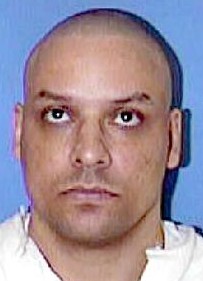
James Lee Clark
Murderer Brian Kevin Rosenfeld
Murderer · USA · 1985
Brian Kevin Rosenfeld Brian Kevin Rosenfeld was sentenced to three concurrent l…
23 victims
Brian Kevin Rosenfeld
Murderer · USA · 1985
Brian Kevin Rosenfeld Brian Kevin Rosenfeld was sentenced to three concurrent l…
23 victims
 Russell Ellwood
Murderer · USA · 1991
Russell Ellwood was a former taxi driver. Authorities suspected him of killing…
20 victims
Russell Ellwood
Murderer · USA · 1991
Russell Ellwood was a former taxi driver. Authorities suspected him of killing…
20 victims
 Robert Martines Perez
Murderer · USA · 1994
Name: Robert Martines Perez · Other name used in proceedings: Robert Martinez P…
15 victims
Robert Martines Perez
Murderer · USA · 1994
Name: Robert Martines Perez · Other name used in proceedings: Robert Martinez P…
15 victims
 Billy Frank Vickers
Murderer · USA · 1993
Billy Frank Vickers Vickers was executed by lethal injection in Texas on Januar…
14 victims
Billy Frank Vickers
Murderer · USA · 1993
Billy Frank Vickers Vickers was executed by lethal injection in Texas on Januar…
14 victims
 Julianne McCrery
Murderer · USA · 2011
Julianne McCrery was a Texas woman from Irving, Texas, who was 42 years old. Sh…
1 victim
Julianne McCrery
Murderer · USA · 2011
Julianne McCrery was a Texas woman from Irving, Texas, who was 42 years old. Sh…
1 victim
 Tiffany Hall
Murderer · USA · 2006
Tiffany Hall was 24 when she was charged in September 2006. She later entered a…
5 victims
Tiffany Hall
Murderer · USA · 2006
Tiffany Hall was 24 when she was charged in September 2006. She later entered a…
5 victims
 Curtis Paul Harris
Homicide · USA · 1978
Curtis Paul Harris was convicted of murder in a Texas court and sentenced to de…
1 victim
Curtis Paul Harris
Homicide · USA · 1978
Curtis Paul Harris was convicted of murder in a Texas court and sentenced to de…
1 victim
 Chen Fuzhao
Mass murderer · China · 2003
Chen Fuzhao was a 29-year-old Falun Gong practitioner. He was described as an a…
16 victims
Chen Fuzhao
Mass murderer · China · 2003
Chen Fuzhao was a 29-year-old Falun Gong practitioner. He was described as an a…
16 victims
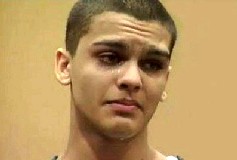 Dominic Culpepper
Homicide · USA · 2001
Dominic Culpepper was 14 years old when he fatally beat 16-year-old Frank Wesle…
1 victim
Dominic Culpepper
Homicide · USA · 2001
Dominic Culpepper was 14 years old when he fatally beat 16-year-old Frank Wesle…
1 victim
- Gender
- male
- Country
- USA
- Location
- Denton County, Texas, USA
- Date of birth
- May 13, 1968
- Age at first offence
- 25
- Characteristics
- rape, robbery
- Victim profile
- Shari Catherine Crews (female, 17) and Jesus Gilberto Garza (male, 16)
- Method of murder
- Shooting
- Date(s) of murder
- June 7, 1993
- Years active
- 1993
- Date of arrest
- Same day
- Status
-
Executed
Executed by lethal injection in Texas on April 11, 2007
Case details
James Lee Clark (also referred to as James Lee Clark Jr.) was convicted in Denton County of capital murder arising out of the June 7, 1993 rape, robbery, and murder of Shari Catherine “Cari” Crews, and the trial court sentenced him to death. He was executed by lethal injection in Texas on April 11, 2007.
Timeline
- June 7, 1993 — The bodies of 17-year-old Shari Catherine “Cari” Crews and 16-year-old Jesus Gilberto Garza were found in Clear Creek north of Denton; both had been robbed and shot in the head.
- June 28, 1991 — Clark pled guilty to theft by a check and was confined to the county jail for 20 days, fined, and ordered to pay restitution.
- July 12, 1987 — Clark was arrested for auto theft.
- Oct. 18, 1989 — Clark was convicted and incarcerated in state prison for burglary of a building.
- June 4, 1993 — Clark and James Brown stole a shotgun and a rifle in car burglaries.
- April 29, 1994 — A Denton County jury found James Clark guilty of capital murder in the death of Shari Crews.
- May 3, 1994 — The trial court sentenced Clark to death.
- Oct. 2, 1996 — The Texas Court of Criminal Appeals affirmed Clark’s conviction and sentence.
- Oct. 6, 1997 — Clark filed a post-conviction application for writ of habeas corpus presenting eleven challenges to the validity of his conviction and sentencing.
- April 8, 1998 — The trial judge adopted the State’s findings of fact and conclusions of law and recommended that relief be denied.
- July 8, 1998 — The Texas Court of Criminal Appeals adopted these findings and denied relief.
- Sept. 30, 1998 — Clark filed a federal petition for writ of habeas corpus.
- Nov. 10, 1999 — The magistrate court entered findings recommending that the petition for writ of habeas corpus be denied.
- Dec. 13, 1999 — The district court adopted these findings and denied Clark’s petition for federal writ of habeas corpus.
- Jan. 28, 2000 — The district court denied Clark’s request for a certificate of appealability (COA).
- March 3, 2000 — The district court denied Clark’s motion for reconsideration.
- Sept. 12, 2000 — Clark’s application for COA in the Fifth Circuit Court of Appeals was denied.
- Feb. 20, 2001 — The U.S. Supreme Court denied Clark’s petition for writ of certiorari.
- Nov. 11, 2002 — Clark filed a subsequent application for writ of habeas corpus in the state court raising seven allegations for relief.
- Nov. 18, 2002 — The Texas Court of Criminal Appeals concluded that Clark’s allegation of mental retardation pursuant to Atkins v. Virginia deserved consideration, issued a stay of execution, and remanded the case to the trial court.
- April 27, 2004 — The trial court reset Clark’s execution date for April 27, 2004.
- April 23, 2004 — The 5th U.S. Circuit Court of Appeals granted Clark’s motion to file a successive habeas petition in federal district court and stayed his execution.
- Jan. 20, 2005 — The district court rendered final judgment denying the successive habeas corpus petition.
- March 16, 2005 — The district court granted Clark’s application for a certificate of appealability.
- July 20, 2006 — The 5th Circuit affirmed the judgment and denied habeas relief.
- Aug. 29, 2006 — The court denied Clark’s petition for rehearing.
- Feb. 26, 2007 — The Supreme Court denied Clark’s petition for writ of certiorari.
- April 11, 2007 — Clark was executed by lethal injection in Texas.
- 6:17 p.m. Wednesday, April 11, 2007 — Clark was pronounced dead after the lethal injection process began about seven minutes earlier.
The offence
Victims and conduct
On June 7, 1993, the bodies of Shari Catherine “Cari” Crews (17) and Jesus Gilberto Garza (16) were found in Clear Creek north of Denton. Both victims were robbed and shot in the head on the night of June 7, 1993.
Crews’ nude body was pulled from the water. Crews had a pair of shorts around her neck and her bra tied around her wrist. Marks on her other wrist indicated that she had been bound. A medical examiner later verified that Crews had been sexually assaulted and died from a shotgun blast to the back of the head. Evidence also showed that rings Crews normally wore were missing, along with keys she usually carried with her, and keys kept in the glove compartment of her car.
Garza’s body was also pulled from the water later that day. Garza died from a shotgun blast to the head fired from fairly close range.
Additional allegations and accomplice
Evidence and testimony at trial indicated Clark and James Brown found the teens at Clear Creek off FM428 north of Denton on June 7, 1993. Trial testimony stated that Clark and Brown had stolen a rifle and shotgun from vehicles and were looking for someone to rob that night.
The evidence presented included that Clark sexually assaulted Crews and shot her with a shotgun blast to the back of her head. Evidence also included that Clark put a shotgun under Garza’s chin and fired, and then tossed Garza’s body into the creek. Clark was charged with capital murder arising out of robbery, sexual assault, and death of Crews, and he was convicted and sentenced to death for Crews’ murder. Clark was not tried for Garza’s death.
Investigation
Physical evidence and forensic links
DNA evidence taken from Crews’ body was compared with a sample provided by Clark and proved Clark sexually assaulted Crews. Blood found on Clark’s tennis shoes was shown to be consistent with a mixture of Crews’ and Garza’s blood.
Police recovered a .22 rifle with the stock sawed off from the water and a .12 gauge shotgun, later determined to be the murder weapon. A search of Clark’s trailer yielded the sawed-off rifle stock found matching the .22 rifle recovered at the creek, and ammunition for the rifle. Evidence was also presented that, a day or two prior to the murders, Clark, accompanied by Brown, bought ammunition for the .12 gauge shotgun.
Reporting of the initial gunshot victim
Earlier that same morning, paramedics and police officers were dispatched to a service station in response to a gunshot victim. Officers arrived to find James Lee Clark and James Brown, who was suffering from a gunshot wound to the leg. Both men told officers that they had been fishing at the Three Rivers Bridge in Denton County when Brown was accosted by a robber and shot in the leg. When Clark led police to the area where this shooting allegedly took place, there was no sign the men had been fishing or that someone had been shot.
After Clark gave police several conflicting statements, police further talked with Brown and other witnesses, returned to the creek to look for a second body and two weapons, and later that day pulled Garza’s body from the water.
Arrest and custody
Arrest at a trailer in Aubrey
Clark and Brown were later arrested. Officers drove to the trailer shared in Aubrey by James Lee Clark and James Richard Brown, pried open the door, and rushed inside with guns drawn. Clark had barricaded the hallway with a table; the officers shoved the table aside. Clark reached for a knife and dropped the knife when an MP-5 was trained on him.
Officers read Clark his rights and handcuffed him. Paper bags were put on Clark’s hands to preserve possible evidence such as gunshot residue. Clark was taken to jail.
Trial
Charges and verdict
A Denton County jury found James Clark guilty of capital murder in the death of Shari Crews. On May 3, 1994, the trial court sentenced Clark to death.
Trial duration and transport
Clark’s trial took three months in 1994. Sheriff’s Sgt. Roger Dunham was assigned to transport Clark back and forth to trial and his jail cell.
Mental-retardation-related proceedings affecting execution eligibility
After the 5th Circuit and Supreme Court litigation tied to Atkins v. Virginia, the Texas Court of Criminal Appeals concluded that Clark’s allegation of mental retardation deserved consideration, issued a stay of execution, and remanded the case for an evidentiary hearing on whether Clark was exempt from the death penalty under Atkins.
An evidentiary hearing was held in the trial court. Based on the findings of the trial court, the Texas Court of Criminal Appeals concluded that Clark failed to show, by a preponderance of the evidence, that he was mentally retarded and thus exempt from the death penalty under Atkins.
Sentencing
The trial court sentenced Clark to death on May 3, 1994.
Appeals
Direct appeal
On Oct. 2, 1996, the Texas Court of Criminal Appeals affirmed Clark’s conviction and sentence.
State habeas proceedings
Clark filed a post-conviction application for writ of habeas corpus on Oct. 6, 1997 presenting eleven challenges. On April 8, 1998, the trial judge adopted the State’s findings of fact and conclusions of law and recommended relief be denied. On July 8, 1998, the Texas Court of Criminal Appeals adopted these findings and denied relief.
Federal habeas proceedings
Clark filed a federal petition for writ of habeas corpus on Sept. 30, 1998. The magistrate court entered findings recommending denial on Nov. 10, 1999. The district court adopted the findings and denied the petition for federal writ of habeas corpus on Dec. 13, 1999.
On Jan. 28, 2000, the district court denied Clark’s request for a certificate of appealability (COA), and on March 3, 2000 it denied a motion for reconsideration. On Sept. 12, 2000, Clark’s COA application in the Fifth Circuit was denied. On Feb. 20, 2001, the U.S.
Subsequent state habeas and Atkins-related stay
Clark filed a subsequent state writ application on Nov. 11, 2002 raising seven allegations for relief. On Nov. 18, 2002, the Texas Court of Criminal Appeals concluded that Clark’s Atkins mental-retardation allegation deserved consideration, issued a stay of execution, and remanded for consideration of the claim.
The trial court reset the execution date for April 27, 2004. On April 23, 2004, the 5th U.S. Circuit Court of Appeals granted Clark’s motion to file a successive habeas petition in federal district court and stayed execution. On Jan. 20, 2005, the district court denied the successive habeas corpus petition and later granted a certificate of appealability on March 16, 2005.
On July 20, 2006, the 5th Circuit affirmed the district court judgment and denied habeas relief. On Aug. 29, 2006, the court denied a petition for rehearing. On Feb. 26, 2007, the Supreme Court denied Clark’s petition for writ of certiorari.
Outcome
Clark’s conviction and death sentence were affirmed on direct appeal. He pursued state and federal habeas relief, including Atkins-related litigation on whether he was mentally retarded and exempt from the death penalty, and relief was denied at multiple stages.
Aftermath
Execution details and witnesses
On April 11, 2007, Clark was strapped to a gurney when witnesses arrived. He was asked if he had a last statement. Clark said: “Uh, I don’t know,” with a nervous chuckle. He also said: “Um, I don’t know what to say. I don’t know …” Clark then turned and appeared to see the witnesses behind the glass, and said: “I didn’t know anybody was there,” followed by: “Howdy.” After making a noise like a gurgle, he was still. It took seven minutes for the three drugs administered in a lethal injection to take effect, and Clark was pronounced dead at 6:17 p.m.
Garza’s mother, Linda Garza, an uncle, and one of his sisters watched through the glass. Afterward they were led away by guards and did not comment on the execution.
Statements by officials and attorneys (included as facts)
Denton County Sheriff’s Cpl. Virginia Nichols said: “I’m glad he’s finally getting his time to die,” and: “It’s been too long coming.” Nichols later described Clark as “public enemy No. 1.”
Sheriff’s Detective Danny Brown said: “I’m happy that he finally is getting what is due him,” and: “He can meet his maker and explain it to him.”
Sheriff Benny Parkey said: “The execution by lethal injection is much more humane than the inhumanities these kids suffered that night,” and: “It’s time that justice is done for the teens who were terrorized before being shot in the head and thrown in the creek.”
Detective Danny Brown said: “Those were the hardest pictures I’ve ever taken,” and: “I feel that two kids never got to know their lives. They were never given that opportunity,” and: “Clark and Brown have made their own destinies.”
Texas Ranger Kyle Dean said: “It still is one of the most brutal I’ve seen,” and: “I’m glad to see some resolution to it after all these years. This execution is proper under the laws of Texas. I hope it provides some closure for their families.”
Former Denton County District Attorney Bruce Isaacks said after watching the execution: “I was surprised at how clean, sterile and humane that process was,” and: “It was an easy way out for someone who committed such horrendous crimes.” He also said: “I’m surprised that he didn’t have the decency to tell the mothers that he was sorry for all he put them through,” and: “He is the poster child for the death penalty.” Former prosecutor Vicki Foster said: “I wanted to have an end to it,” and: “I’m glad to be able to witness the final chapter in the ugly story that was Clark’s life.”
During the execution, Clark’s father-in-law replied “Howdy” as Clark gasped. Irene Wilcox, Clark’s spiritual adviser, said: “He didn’t know we were here,” and: “He didn’t act like he was scared.”
Other details
Co-defendant
James Richard Brown was convicted of robbery for his part in the crime and was sentenced to 20 years. Brown was incarcerated in the Wynn Unit in Huntsville.
Brown was charged with capital murder but was convicted of robbery, and he was not tried for the capital murder charge relating to Crews’ death in the same context as Clark’s trial described here. Brown told police there was a second body under the waters of Clear Creek, and Garza was pulled from the creek about midnight.
Brown blamed the fatal shootings on Clark; Clark blamed them on Brown. Brown later expressed sorrow and attempts to stop the murders in taped statements.
Clark’s age and personal background elements described
Clark was 25 at the time of the June 7, 1993 murders as described in the background narrative. In coverage related to the execution, Clark was described as 38 at the time of execution.
Clark repeatedly dropped out of formal education and was described as repeating two grades and dropping out in the ninth grade. At 15, he was sent to Gainesville State School. After his release at 18, his mother would have nothing more to do with him.
Clark met James Richard Brown in prison on burglary charges. After their releases, both came to live in a decrepit trailer at a mobile home park in Aubrey.
Items connected to the case and evidence described
Investigators recovered from the creek a .22 rifle with the stock sawed off and a .12 gauge shotgun that was later determined to be the murder weapon. Evidence also showed a sawed-off rifle stock was found in Clark’s trailer and matched the .22 rifle found in the creek, along with ammunition for the rifle. Evidence also included blood on Clark’s tennis shoes consistent with a mixture of Crews’ and Garza’s blood.
Additional scene-related items described included that Crews had her bra tied around her wrist and shorts around her neck.
Spotted an error, or have more information about this case?