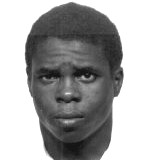
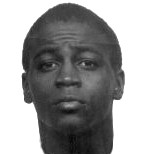
Curtis Paul Harris
Homicide Edward Charles Allaway
Homicide · USA · 1976
Edward Charles Allaway Edward Charles Allaway was found not guilty by reason of…
7 victims
Edward Charles Allaway
Homicide · USA · 1976
Edward Charles Allaway Edward Charles Allaway was found not guilty by reason of…
7 victims
 Clinton Bankston
Homicide · USA · 1987
15 August 1987 — Ann Morris (63), her sister Sally Nicholson (59), and Sally’s…
5 victims
Clinton Bankston
Homicide · USA · 1987
15 August 1987 — Ann Morris (63), her sister Sally Nicholson (59), and Sally’s…
5 victims
 David Francis Brom
Homicide · USA · 1988
David Francis Brom (born October 3, 1971) killed his parents, brother, and sist…
4 victims
David Francis Brom
Homicide · USA · 1988
David Francis Brom (born October 3, 1971) killed his parents, brother, and sist…
4 victims
 Ronford Styron
Murderer · USA · 1993
Ronford Lee Styron was convicted of the capital murder of his eleven-month-old…
1 victim
Ronford Styron
Murderer · USA · 1993
Ronford Lee Styron was convicted of the capital murder of his eleven-month-old…
1 victim
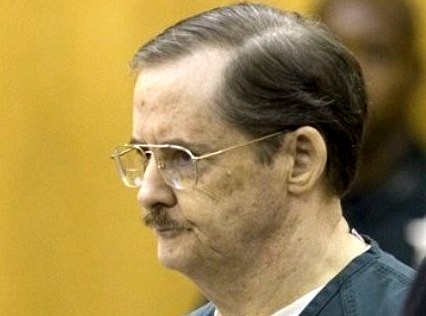 Nelson Serrano
Mass murderer · USA · 1997
Nelson Iván Serrano Sáenz was sentenced to death by lethal injection on June 26…
4 victims
Nelson Serrano
Mass murderer · USA · 1997
Nelson Iván Serrano Sáenz was sentenced to death by lethal injection on June 26…
4 victims
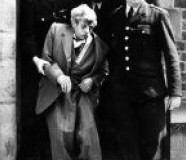 Tom Lionel Burns
Homicide · 1958
Tom Lionel Burns was a retired driver and played the piano. He was 71 years old…
2 victims
Tom Lionel Burns
Homicide · 1958
Tom Lionel Burns was a retired driver and played the piano. He was 71 years old…
2 victims
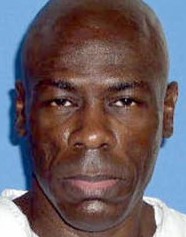 Lorenzo Morris
Murderer · USA · 1990
Lorenzo Morris was executed by lethal injection in Texas on November 2, 2004. M…
1 victim
Lorenzo Morris
Murderer · USA · 1990
Lorenzo Morris was executed by lethal injection in Texas on November 2, 2004. M…
1 victim
 John David Smith
Murderer · USA · 1974
Betty Fran Smith went by her middle name, Fran. Her last name prior to her 1990…
4 victims
John David Smith
Murderer · USA · 1974
Betty Fran Smith went by her middle name, Fran. Her last name prior to her 1990…
4 victims
- Gender
- male
- Country
- USA
- Location
- Brazos County, Texas, USA
- Date of birth
- August 31, 1961
- Age at first offence
- 17
- Characteristics
- juvenile (17), robbery
- Victim profile
- Timothy Michael Merka, 27
- Method of murder
- Beating with a tire tool
- Date(s) of murder
- December 11, 1978
- Years active
- 1978
- Date of arrest
- —
- Status
-
Executed
Executed by lethal injection in Texas on July 1, 1993
Case record: Curtis Paul Harris
Background
Curtis Paul Harris was convicted of murder in a Texas court and sentenced to death. He was tried, convicted, and sentenced to death again, and he unsuccessfully sought relief on direct appeal and by habeas corpus in state court. After Harris filed a federal petition for writ of habeas corpus, the district court denied relief on all claims and refused to grant a certificate of probable cause to appeal. Harris appealed the denial of the certificate of probable cause.
The offence
On the night of December 11, 1978, Curtis Paul Harris, James Manuel, Curtis’s girlfriend Valerie Rencher, and his brother Danny Harris drove their car to visit a friend in Bryan.
They discovered that the friend was not there. Their car would not start, and the three men began to beat up the car and tear up the interior. When no neighbor could be found to help with the car, the group walked down the road and flagged a passing pick-up truck.
A would-be Good Samaritan, Tim Merka, stopped his truck and attempted for 20-25 minutes to repair their car. Frustrated at the car’s continued breakdown, the group decided to take Merka’s truck.
Danny pushed Merka down and pinned him to the ground. While Danny sat on Merka’s chest, Curtis Harris began to beat him in the head with an automobile jack.
Valerie Rencher testified that she begged him to stop but Harris hit the victim at least six more times. Merka died of severe injuries to the head and brain. He suffered fifteen head lacerations that were consistent with having been inflicted by a bumper jack shaft and ratchet mechanism.
The group left Merka’s body in a ditch and absconded with Merka’s pick-up. They appropriated Merka’s shotgun and drove to a U-Totem store in Waller. At the store, they robbed it at gunpoint of the cash in the till and a change bottle that contained donations for the Multiple Sclerosis Society.
Upon their return to Bryan about midnight, Danny Harris secreted Merka’s truck. The truck was found at 10:00 a.m. on December 12, 1978 on the Old Mumford Road in Bryan approximately four blocks from the Harris house.
Investigation
Harris was found guilty based particularly on the testimony of his girlfriend Valerie Rencher and the testimony of the U-Totem clerk who saw him during the robbery in which Merka’s shotgun was used.
Physical evidence against him included Merka’s Texas A & M identification card, gun case, and payment book, which were found in the woods behind Harris’s home.
Trial
Harris was found guilty of murder and sentenced to death.
During his trial, Harris moved for mistrial under state law based on the allegations of an improper separation of the jury.
In denying the petitioner’s motion, the trial judge described on the record the events surrounding his supervision of the jury while they transported their cars from the county parking lot to parking spaces underneath the courthouse before commencing deliberations.
The separation occurred after the jury had been given the charge at the end of the guilt/innocence phase of the trial. After providing his recollection of the event, the trial judge testified that he was "positive that none of the jurors had access to any information or contact with any other person during this process."
The brothers were convicted and sentenced for the 1978 murder of Timothy Merka in what became known as the "Good Samaritan" slaying.
Mr. Merka, 27, was an employee of Texas A&M University. According to testimony, Danny Harris held Mr. Merka, who was pleading for his life, while Curtis Harris clubbed the man with a tire iron. The jury found Harris guilty of murder.
In the account of the events surrounding the murder, it was stated that at the time of the murder, Danny Harris was 18 and Curtis Harris was 17.
Sentencing
The jury sentenced Harris to death.
The Texas Court of Criminal Appeals reversed Harris’s convictions due to improper restrictions on cross-examination. Harris v. State, 642 S.W.2d 471 (Tex.Crim.App.1982). Harris was retried and again sentenced to death.
The conviction was affirmed by the Texas Court of Criminal Appeals. Harris v. State, 738 S.W.2d 207 (Tex.Crim.App.1987). A petition for writ of certiorari was denied by the U.S. Supreme Court. Harris v. Texas, 484 U.S. 872, 108 S.Ct. 207, 98 L.Ed.2d 158 (1987).
After exhausting state collateral remedies, Harris applied for a stay of execution in the United States District Court for the Southern District of Texas. Eventually, the district court denied relief and denied Harris’s request for a certificate of probable cause to appeal.
Appeals
Harris appealed the denial of the certificate of probable cause to the United States Court of Appeals for the Fifth Circuit.
Court information
Curtis Paul Harris, Petitioner-appellant, v. James A. Collins, Director, Texas Department of Criminal Justice Institutional Division, Respondent-appellee. United States Court of Appeals, Fifth Circuit.
Before GARWOOD, JONES, and EMILIO GARZA, Circuit Judges. EDITH H. JONES, Circuit Judge.
The appeal was taken April 22, 1993, from the United States District Court for the Southern District of Texas.
Issues raised for a certificate of probable cause
Harris argued four issues in his effort to obtain CPC.
First, he asserted that the prosecutor utilized peremptory challenges in a racially discriminatory way.
Second, he stated that under the Texas death penalty law, the jury was unable to consider and give effect to mitigating evidence of Harris’s role in committing the offense.
Third, he contended that the trial court violated his due process rights by "testifying" into the record about events surrounding the separation of jurors.
Finally, he argued that two prospective jurors were improperly excused for cause in violation of Witherspoon v. Illinois.
Batson claim (prosecutor’s peremptory challenges)
The prospective juror was Georgia Fay Harris, a black woman.
It was stated that Harris’s counsel did not object at trial to the exclusion of Ms. Harris. The appellate court stated it had to follow established circuit precedent and find that Harris failed to assert a proper Batson claim as a matter of federal law.
Harris asserted that Powers v. Ohio announced a new rationale for Batson that would dispense with the contemporaneous objection rule. The appellate court stated that this was not correct because Powers applied Batson to peremptory challenges of jurors of a different race from the defendant. The appellate court also stated that Powers strongly suggested that a contemporaneous objection must be made, noting that the trial court has a duty to make a prompt inquiry during voir dire when the issue is raised. The appellate court stated it could not consider the argument further.
Possible mitigating evidence / Penry and Graham
Harris asserted that, according to the law of parties instruction given to the jury during the guilt phase, the jury was never required to decide whether the petitioner physically caused the death of Merka in order to find him guilty of capital murder.
Harris also asserted that the penalty phase inquiries posed by Texas law to the jury failed to allow mitigating effect to Harris’s allegedly less culpable role in the offense.
It was stated that these conditions were said to render Texas law unconstitutional under Penry v. Lynaugh.
The appellate court described a lack of evidentiary support, stating it was uncontroverted that Harris struck the deceased with an automobile jack and that there was no direct evidence that any other person struck Merka with a jack or any instrument. The appellate court also stated it was uncontroverted that every blow delivered to the defendant’s head could have been fatal and that Merka’s hair and blood were found on the jack.
It was further stated that although a hammer found under Merka’s body could have been used as the murder weapon, blood was found only on its handle, a spot inconsistent with aggressive use.
The appellate court stated that Graham v. Collins undercut Harris’s argument and explained that Penry addressed an atypical factual scenario and that Graham described that Penry’s scope was limited.
The appellate court stated that, in this case, the only other person who could have struck a fatal blow to Merka was Danny Harris as he bestrode Merka’s chest, and that the possibility that Harris did not fatally wound Merka was not beyond the effective reach of the jury.
It also cited Bridge v. Collins and stated that, if the jury believed Bridge’s accomplice killed the victim, they could have answered "no" to the first question, and if the jury believed Bridge did not shoot the victim, they could have concluded that Bridge would not be a future threat.
The appellate court stated Harris attempted to distinguish Bridge but found the argument unpersuasive and listed reasons including that the jury need only be provided one fair vehicle for considering mitigating evidence, that Drew and Bridge involved instructions to convict under the law of parties, that Nichols did not discuss the controlling law of the circuit in Bridge, and that Graham appeared to vitiate any legitimate disagreement among jurors otherwise attributable to Nichols.
Judge’s statements and due process
Harris moved for mistrial based on allegations of an improper separation of the jury.
The appellate court stated that the trial judge described on the record events within the judge’s observations and that Harris offered no evidence contrary to the trial judge’s statements.
It discussed that Tyler v. Swenson provided that when the testimony of the trial judge addresses material and disputed facts, a due process violation may occur. The appellate court stated that, under Tyler, Harris failed to demonstrate a material conflict regarding disputed facts.
Exclusion of jurors Easley and Koy for cause
Harris contended that the prosecutor improperly challenged for cause two prospective jurors, Easley and Koy, in a manner that evaded and violated Witherspoon v. Illinois.
It was stated that Harris admitted that the state may challenge jurors for cause on the basis of state law even if their answers regarding capital punishment did not entitle the state to a strike under Witherspoon.
Harris alleged that the prosecution acted differently toward another member who voiced no personal concern about the death penalty but gave the same answers regarding minimum punishment under state law as Easley and Koy, and that the prosecution’s use of a state law principle to challenge for cause a juror perceived to be "soft" on the death penalty was a subterfuge designed to circumvent Witherspoon.
The appellate court declined to reach the merits, stating that under Teague, such an examination would constitute a new rule of constitutional criminal procedure. The appellate court stated that the new rule neither made conduct beyond the reach of criminal law nor was it implicit in the concept of ordered liberty.
Decision on certificate of probable cause
The appellate court held that Harris had raised no issues on which reasonable jurists could disagree and denied Harris’s motion for CPC.
The motion for CPC was denied.
Outcome
Curtis Paul Harris was executed by lethal injection in Texas on July 1, 1993.
It was also stated that the United States Supreme Court voted 8 to 0 to reject an appeal from the condemned man.
Danny Harris was described as having been executed earlier, nearly a month before Curtis Harris was executed.
Danny Harris’s lawyer, John Hottigner, insisted that his client was not the same person he was 15 years ago and stated: "the seed of goodness seems to have grown" in him.
Mr. Harris said in an interview this week: "I have peace. I have strength. I have courage, the comfort of Christ, the grace of God."
The Brazos County District Attorney, Bill Turner, said of Danny Harris: "If facing the death penalty caused him to reckon with his maker, so be it. I applaud him for that. But that doesn't make me think he's any less dangerous."
Other details
The appellate court stated: "Because Harris has raised no issues on which reasonable jurists could disagree, we are compelled to DENY Harris ' motion for CPC. Motion for CPC DENIED."
Spotted an error, or have more information about this case?