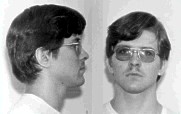
James Dean Clark
Mass murderer David Burke
Mass murderer · USA · 1987
David Augustus Burke (May 18, 1952–December 7, 1987) was an employee of USAir,…
43 victims
David Burke
Mass murderer · USA · 1987
David Augustus Burke (May 18, 1952–December 7, 1987) was an employee of USAir,…
43 victims
 James Huberty
Mass murderer · USA · 1984
James Oliver Huberty was a 41-year-old unemployed security guard. He was born i…
21 victims
James Huberty
Mass murderer · USA · 1984
James Oliver Huberty was a 41-year-old unemployed security guard. He was born i…
21 victims
 Ronald Gene Simmons
Mass murderer · USA · 1987
Ronald Gene Simmons was a retired United States Air Force sergeant. Over the Ch…
16 victims
Ronald Gene Simmons
Mass murderer · USA · 1987
Ronald Gene Simmons was a retired United States Air Force sergeant. Over the Ch…
16 victims
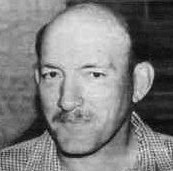 Patrick Henry Sherrill
Mass murderer · USA · 1986
Patrick Henry Sherrill Patrick Henry Sherrill committed suicide by shooting him…
14 victims
Patrick Henry Sherrill
Mass murderer · USA · 1986
Patrick Henry Sherrill Patrick Henry Sherrill committed suicide by shooting him…
14 victims
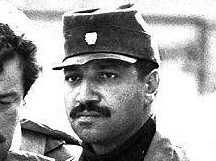 George Emil Banks
Mass murderer · USA · 1982
George Emil Banks was an American mass murderer and a former Camp Hill prison g…
13 victims
George Emil Banks
Mass murderer · USA · 1982
George Emil Banks was an American mass murderer and a former Camp Hill prison g…
13 victims
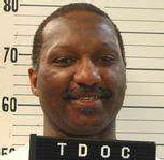 Byron Lewis Black
Murderer · USA · 1988
Byron Lewis Black was convicted in 1989 of three counts of first degree murder…
3 victims
Byron Lewis Black
Murderer · USA · 1988
Byron Lewis Black was convicted in 1989 of three counts of first degree murder…
3 victims
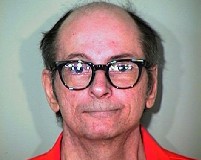 Richard Michael Rossi
Murderer · USA · 1983
Richard Michael Rossi was convicted in Superior Court (Maricopa) of first-degre…
1 victim
Richard Michael Rossi
Murderer · USA · 1983
Richard Michael Rossi was convicted in Superior Court (Maricopa) of first-degre…
1 victim
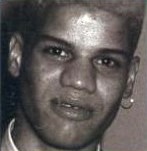 Thierry Paulin
Serial killer · France · 1984
Thierry Paulin was born in Fort-de-France, Martinique on November 28, 1963. His…
21 victims
Thierry Paulin
Serial killer · France · 1984
Thierry Paulin was born in Fort-de-France, Martinique on November 28, 1963. His…
21 victims
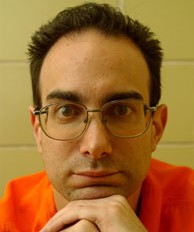 Martin Tankleff
Homicide · USA · 1988
Martin (“Marty”) Tankleff (born August 29, 1971) was a Long Island, New York re…
2 victims
Martin Tankleff
Homicide · USA · 1988
Martin (“Marty”) Tankleff (born August 29, 1971) was a Long Island, New York re…
2 victims
 Janet Redmond-Mercereau
Murderer · USA · 2007
Janet Redmond-Mercereau was convicted of second-degree murder for killing her h…
1 victim
Janet Redmond-Mercereau
Murderer · USA · 2007
Janet Redmond-Mercereau was convicted of second-degree murder for killing her h…
1 victim
- Gender
- male
- Country
- USA
- Location
- Cochise County, Arizona, USA
- Date of birth
- October 18, 1957
- Age at first offence
- 20
- Characteristics
- armed robbery, drugs
- Victim profile
- George Martin, Jr., Gerald McFerron, Charles and Mildred Thumm
- Method of murder
- St abbing with knife / Shooting
- Date(s) of murder
- December 4, 1977
- Years active
- 1977
- Date of arrest
- 4 days after
- Status
-
Executed
Executed by lethal injection in Arizona on April 14, 1993
Case details
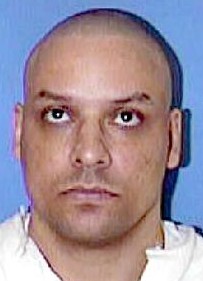
James Dean Clark was a ranch hand and later a death-row prisoner in Arizona. He was executed by lethal injection on April 14, 1993.
Timeline
- December 4, 1977 — Clark killed George Martin, Jr. and 17-year-old Gerald McFerron at a dude ranch and then killed Charles and Mildred Thumm.
- Early morning hours of December 4, 1977 — Clark stabbed George Martin, Jr. numerous times in the chest and shot Gerald McFerron three times in the head while both victims were asleep.
- After the killings — Clark took a .357 Magnum, shot Charles Thumm twice, and shot Mildred Thumm through the head as she slept; he stole jewelry, credit cards, and money; he stole their car; and after slashing the tires of all the vehicles at the ranch he drove to El Paso.
- January 1978 — Clark told the primary investigating officer that John Doe committed the murders.
- December 15, 1977 — At the preliminary hearing, John Doe, a confidential informant for the Drug Enforcement Agency (“DEA”), testified over the objection of the defense.
- May 4, 1978 — Trial began.
- June 23, 1978 — Verdict was returned.
- July 28, 1978 — Sentencing occurred.
- August 1987 — Clark filed his first petition for a writ of habeas corpus in the United States District Court for the District of Arizona pursuant to 28 U.S.C. Sec. 2254.
- September 28, 1989 — Clark v. Ricketts was decided by the United States Court of Appeals for the Ninth Circuit.
- September 1992 — Clark filed his third state petition for post-conviction relief in Cochise County Superior Court, Arizona.
- January 1993 — The Arizona Supreme Court set Clark’s execution date for April 14, 1993.
- February 9, 1993 — The Cochise County Superior Court summarily dismissed Clark’s third petition for post-conviction relief.
- March 26, 1993 — The court denied Clark’s petition for rehearing.
- April 1, 1993 — Clark mailed a petition for review to the state trial court.
- April 2, 1993 — Clark filed a motion in the Arizona Supreme Court to stay his execution.
- April 11, 1993 — Clark filed in the United States District Court for the District of Arizona a second federal habeas petition, an emergency application for stay of execution, a motion to vacate and reopen judgment pursuant to Federal Rule of Civil Procedure 60(b), a motion for an evidentiary hearing, and a motion for leave to conduct discovery.
- April 13, 1993 — The Ninth Circuit opinion filed April 13, 1993 was withdrawn and replaced with an order for publication; the execution stayed application was denied and the appeal was dismissed.
- July 1, 1993 — The Ninth Circuit opinion filed April 13, 1993 was withdrawn and replaced as amended.
- April 14, 1993 — Clark was executed.
- April 15, 1993 — The New York Times article dated April 15, 1993 described the execution.
Background
For most of 1977, Clark worked as a wrangler at a dude ranch in Elfrida.
The offence
In the early morning hours of December 4, 1977, Clark killed two other wranglers at the ranch, George Martin, Jr. and 17-year-old Gerald McFerron. Clark stabbed Martin numerous times in the chest and shot McFerron three times in the head. Both victims were asleep at the time of the attacks.
Clark then took a .357 Magnum and walked to the house of the owners, Charles and Mildred Thumm. After shooting Mr. Thumm twice, Clark shot Mrs. Thumm through the head as she slept. He took jewelry, credit cards and money from the Thumms, stole their car, and after slashing the tires of all the vehicles at the ranch, drove to El Paso.
A pathologist testified that:
- Martin died of seven stab wounds to the chest, which penetrated the heart and lungs.
- McFerron died of three gunshot wounds to the head, one in the temple, one in the ear, and one to the top of the head.
- Charles Thumm was shot three times, once in the chest, once in the left shoulder and once, from a distance of three to four inches, in the head.
- Mildred Thumm died of a gunshot wound near the left earlobe, fired from a distance of approximately two to six inches.
Clark was apprehended a few days later in El Paso, Texas. Clark volunteered the statement to the El Paso police that he had been given permission to use the car and some credit cards to pick up his girlfriend and take her back to Arizona to get married.
When accused of killing the Thumms, Martin and McFerron, Clark stated that he might have killed them, but he did not remember.
When he was arrested, the police found that Clark had retained as a souvenir from the murders the bullet that had passed through the head of one of the victims.
Investigation
Before the trial, a hearing was held in chambers. The trial court ordered that the record of these proceedings be sealed.
John Doe, a confidential informant for the Drug Enforcement Agency (“DEA”), testified over the objection of the defense at the preliminary hearing on December 15, 1977. John Doe wore a ski mask, but removed it briefly during the hearing so that Clark could observe his face. John Doe stated his true name and his location in El Paso, Texas. John Doe testified that he felt his life was in danger, and had received threats because he was a paid informant for the DEA. He was therefore allowed to testify as John Doe.
Before John Doe’s testimony, the defense was provided with Doe’s true name, date of birth, place of residence, and prior criminal record.
John Doe testified before the jury that he met Clark in the late night hours of December 4, 1977, at a bar in El Paso, Texas and, the next day, at Clark’s request, he bought heroin for Clark and sold four guns Clark had in his possession, including a .357 Magnum. John Doe also testified that Clark said he had already killed three people in “Elvira,” Arizona.
Clark told the primary investigating officer in January 1978 that John Doe committed the murders.
During the execution reporting, Clark kept his eyes locked on his wife, Adele Schoterman Clark, through the witness room window and mouthed “I love you” to the psychiatric nurse he met and married on death row. The jury execution account stated that he was pronounced dead within two minutes.
Arrest
A spent lead bullet, which appeared to have organic matter on it, was removed from the pocket of a jacket in Clark’s hotel room.
Clark slashed all the tires on the vehicles at the ranch and then fled the area in the Thumms’ station wagon. Clark drove to El Paso, Texas, where he sold Mildred Thumm’s engagement and dinner rings to a jeweler.
Trial
Clark was convicted by a jury of four counts of first-degree murder. One of the four murder victims was fatally stabbed and another was shot to death; a couple, Mr. and Mrs. Thumm, were shot and killed.
After dinner on December 3, 1977, Clark had dinner at the lodge with Mr. and Mrs. Rush Allen, guests at the lodge, and with George Martin and Gerry McFerron, wranglers at the ranch. After dinner, the Allens went to Tombstone with Martin. McFerron and Clark called Janie Hendrickson, who met them at the lodge. The three of them went to the Elfrida tavern and then to a disco lounge in Douglas. Hendrickson and Clark went into the disco lounge. McFerron had drunk too much, vomited and stayed outside. The three returned to the lodge between 1:00 and 1:30 a.m., and Hendrickson left in her car.
Clark did not appear to be intoxicated. During the evening, McFerron told Hendrickson that Clark was dangerous when he was drunk. Clark overheard the statement, but he chuckled and made no comment. Clark had been playing with a .357 Magnum pistol at one point during the evening.
After McFerron went to bed, Clark entered the wranglers’ quarters and stabbed to death Martin, an older wrangler who was passed out in his bed. Clark then fatally shot McFerron as the young wrangler slept in his sleeping bag. Clark picked up a .357 Magnum from McFerron’s room, walked from the wranglers’ quarters to the Thumms’ house and shot to death both Charles and Mildred Thumm.
A jury sentenced Clark to death. Following his convictions, a separate non-jury sentencing hearing was held by the trial judge pursuant to Arizona Revised Statute Sec. 13-902.
Sentencing
The sentencing judge found three aggravating factors present in the case:
- Clark created a grave risk of death to a second victim, Mildred Thumm, in shooting Charles Thumm in the hallway of their home, Ariz. Rev. Stat. Sec. 13-902(F)(3).
- Clark murdered Mildred and Charles Thumm with the expectation of receiving something of pecuniary value, including credit cards, jewelry and automobile, Ariz. Rev. Stat. Sec. 13-902(F)(5).
- Clark committed the offenses in an especially cruel and depraved manner, Ariz. Rev. Stat. Sec. 13-902(F)(6).
In mitigation, Clark asserted that he was only twenty years old at the time of the crimes, had a poor home life during his formative years, lacked any adult criminal record, suffered emotional problems stemming from his antisocial personality, and had been cooperative with the police.
The sentencing judge found the mitigating factors not sufficiently substantial to warrant leniency and sentenced Clark to death on each of the four counts.
Aggravating circumstances were listed as:
- Pecuniary gain.
- Especially cruel/depraved (cruel struck on appeal).
- Grave risk of death to others (struck on appeal).
Mitigating circumstances were listed as:
- None sufficient to call for leniency.
A transcript included in the appeals material stated the trial proceeding context: Clark filed direct appeal, and the Arizona Supreme Court addressed aggravating circumstances and constitutional claims relating to confrontation and Doe.
Appeals
State appeal
Clark filed a direct appeal with the Arizona Supreme Court.
The Arizona Supreme Court found that the first aggravating circumstance was not present because Mildred Thumm was actually in another room at the time Charles Thumm was killed and therefore she was not within the zone of danger contemplated by section 13-902(F)(3). It also determined that none of the murders had been committed in an especially cruel manner because there was no evidence that any of the victims had suffered any pain.
The court upheld the sentencing judge’s findings that the murders were committed for pecuniary gain and in a depraved manner. After independently reviewing all the evidence, the court concluded that the aggravating circumstances had been established and that the mitigating circumstances were not sufficiently substantial to call for leniency.
The Arizona Supreme Court also determined that Clark’s Sixth Amendment right to confront witnesses had not been violated when the prosecution called the John Doe witness to testify against him.
Federal habeas corpus and related appeals
Clark filed a petition for a writ of habeas corpus in the United States District Court for the District of Arizona pursuant to 28 U.S.C. Sec. 2254. The petition was denied by summary judgment and Clark appealed.
The United States Court of Appeals for the Ninth Circuit considered three issues on appeal in Clark v. Ricketts, 886 F.2d 1152:
- Whether Clark’s Sixth Amendment right of confrontation was violated when the district court precluded him from eliciting, during cross-examination, the name and address of a government “John Doe” witness.
- Whether the district court erred in determining that Clark had waived any claim of constitutional error stemming from a probation officer's failure to apprise Clark of his Miranda rights and his right to counsel prior to conducting a presentence interview upon which the sentencing judge relied in sentencing Clark to death.
- Whether the Arizona death penalty statute under which Clark was sentenced to death, Ariz. Rev. Stat. Sec. 13-902, is constitutional.
The Ninth Circuit affirmed the determination that Clark’s Sixth Amendment right of confrontation was not violated by the refusal to permit cross-examination as to Doe’s true name and address.
The Ninth Circuit also affirmed the determination that Clark waived his Fifth and Sixth Amendment claims based upon the sentencing judge’s consideration of information obtained from Clark in his presentence interview.
Finally, the Ninth Circuit reversed the district court and remanded with instructions to grant the writ of habeas corpus unless the State, within a reasonable time, imposed a sentence other than death.
The Ninth Circuit disposition stated:
- “AFFIRMED IN PART, REVERSED IN PART, and REMANDED.”
A subsequent Ninth Circuit case included Clark v. Lewis, Director, Arizona Department of Corrections and Roger Crist, Warden, Arizona State Prison, with an order denying a certificate of probable cause and dismissing the appeal. The panel stated the opinion filed April 13, 1993 was withdrawn and replaced with an order for publication, and that Clark’s application for a certificate of probable cause and stay of execution was denied and the appeal was dismissed.
Outcome
Clark’s execution occurred on April 14, 1993 by lethal injection in Arizona.
The New York Times account dated April 15, 1993 stated that the Supreme Court rejected two late-hour appeals by votes of 7 to 2.
Clark’s execution included that he mouthed “I love you” to the psychiatric nurse he met and married on death row, and he was pronounced dead within two minutes.
Aftermath
The New York Times account described that Clark met his future wife, Adele Schoterman Clark, in 1985 while working in the prison, and married him in 1988. It said she had pleaded with a parole board to spare him and included her statement: “He's gentle, strong, sensitive, loving,” “I can't picture life without him.”
Other details
People
- James Dean Clark — defendant; executed.
- George Martin, Jr. — wrangler killed.
- Gerald McFerron — 17-year-old wrangler killed.
- Charles Thumm — ranch owner killed.
- Mildred Thumm — ranch owner killed.
- Adele Schoterman Clark — wife.
- John Doe — confidential informant for the DEA; testified at preliminary hearing and trial.
- Joe Fuller — prosecutor.
- Anthony T. Deddens — presiding judge.
- Janie Hendrickson — met Clark and others at the lodge; left in her car.
- George Martin — wrangler involved in events before the murders.
- Gerry McFerron — wrangler involved in events before the murders.
- Mr. and Mrs. Rush Allen — lodge guests; went to Tombstone with Martin.
- Detective Hemenway — referenced in claims within the appellate material (as the detective Clark allegedly gave an incriminating statement to while medicated).
Procedural details and citations
- Presiding Judge: Anthony T. Deddens.
- Prosecutor: Joe Fuller.
- Published opinions included:
- State v. Clark, 126 Ariz. 428, 616 P.2d 888 (1980).
- Clark v. Ricketts, 886 F.2d 1152 (9th Cir. 1989).
- Clark v. Ricketts, 942 F.2d 567 (9th Cir. 1991).
- Clark v. Ricketts, 958 F.2d 851 (9th Cir. 1991).
- Clark v. Lewis, 1 F.3d 814 (9th Cir. 1993).
Clark’s statement to a friend
Clark gloated to a friend: “You should have seen Charley when I hit him with those [wad] cutters.”
Last meal
Clark’s last meal included:
- Porter House Steak (medium rare),
- 2 lbs of Large Shrimp and sauce,
- A-1 Steak Sauce,
- Baked Potato with sour cream,
- cole slaw,
- Banana Cream Pie,
- Rice Pudding with Raisins,
- 2 Dinner rolls with butter,
- and a Strawberry milkshake.
Spotted an error, or have more information about this case?