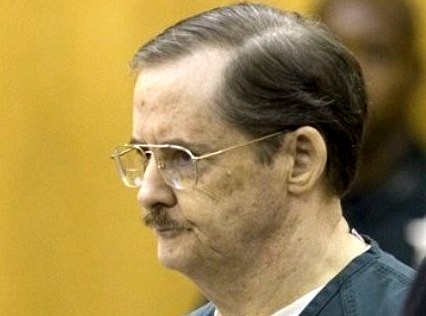
Nelson Serrano
Mass murderer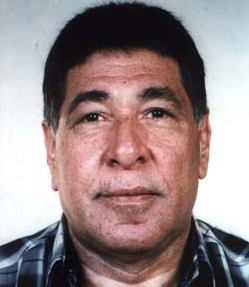 Gameel Al-Batouti
Mass murderer · USA · 1999
Gameel Al-Batouti (also rendered “Gamil ElBatouty” or “El Batouty” in U.S. offi…
216 victims
Gameel Al-Batouti
Mass murderer · USA · 1999
Gameel Al-Batouti (also rendered “Gamil ElBatouty” or “El Batouty” in U.S. offi…
216 victims
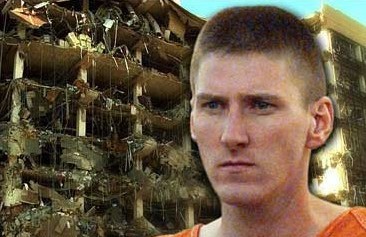 Timothy McVeigh
Mass murderer · USA · 1995
Timothy James McVeigh (April 23, 1968 – June 11, 2001) was a United States Army…
168 victims
Timothy McVeigh
Mass murderer · USA · 1995
Timothy James McVeigh (April 23, 1968 – June 11, 2001) was a United States Army…
168 victims
 Julio Gonzalez
Mass murderer · USA · 1990
Julio Gonzalez was sentenced to 174 twenty-five-year sentences (a total of 4,35…
87 victims
Julio Gonzalez
Mass murderer · USA · 1990
Julio Gonzalez was sentenced to 174 twenty-five-year sentences (a total of 4,35…
87 victims
 David Burke
Mass murderer · USA · 1987
David Augustus Burke (May 18, 1952–December 7, 1987) was an employee of USAir,…
43 victims
David Burke
Mass murderer · USA · 1987
David Augustus Burke (May 18, 1952–December 7, 1987) was an employee of USAir,…
43 victims
 Seung-Hui Cho
Mass murderer · USA · 2007
Seung-Hui Cho was a mass murderer who shot and killed 32 people and wounded man…
32 victims
Seung-Hui Cho
Mass murderer · USA · 2007
Seung-Hui Cho was a mass murderer who shot and killed 32 people and wounded man…
32 victims
 George Jo Hennard
Mass murderer · USA · 1991
George Jo Hennard carried out a mass killing at a Luby’s Cafeteria in Killeen,…
23 victims
George Jo Hennard
Mass murderer · USA · 1991
George Jo Hennard carried out a mass killing at a Luby’s Cafeteria in Killeen,…
23 victims
 John Jerry Jancar
Homicide · USA · 1983
John Jerry Jancar was a 17-year-old high school student when he was convicted i…
2 victims
John Jerry Jancar
Homicide · USA · 1983
John Jerry Jancar was a 17-year-old high school student when he was convicted i…
2 victims
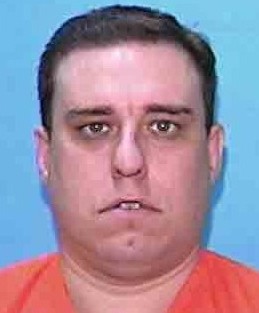 Frank Athen Walls
Serial killer · USA · 1985
Frank Athen Walls was convicted in connection with the murders of Edward Alger…
5 victims
Frank Athen Walls
Serial killer · USA · 1985
Frank Athen Walls was convicted in connection with the murders of Edward Alger…
5 victims
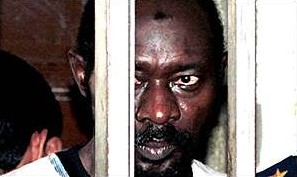 Mohammed Adam Omar
Murderer · Yemen · 1995
Mohammed Adam Omar was a morgue assistant at Sanaa University’s medical faculty…
16 victims
Mohammed Adam Omar
Murderer · Yemen · 1995
Mohammed Adam Omar was a morgue assistant at Sanaa University’s medical faculty…
16 victims
 Caruthers Alexander
Murderer · USA · 1981
Caruthers Alexander was convicted of capital murder and was executed by lethal…
1 victim
Caruthers Alexander
Murderer · USA · 1981
Caruthers Alexander was convicted of capital murder and was executed by lethal…
1 victim
- Gender
- male
- Country
- USA
- Location
- Polk County, Florida, USA
- Date of birth
- September 15, 1938
- Age at first offence
- 59
- Characteristics
- disputes, financial gain, to avoid arrest
- Victim profile
- George Gonsalves, 69; Frank Dosso, 35; Diane Patisso, 28; and George Patisso Jr., 26
- Method of murder
- Shooting
- Date(s) of murder
- December 3, 1997
- Years active
- 1997
- Date of arrest
- September 2002 (in Ecuador)
- Status
-
Sentenced to death
Sentenced to death on June 26, 2007
Status
Nelson Iván Serrano Sáenz was sentenced to death by lethal injection on June 26, 2007.
Background
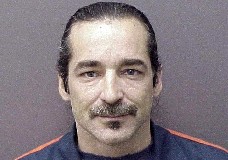
Nelson Iván Serrano Sáenz (born September 15, 1938) was a former Ecuadorian businessman and nationalized US-citizen (since 1971). He was convicted of murdering Frank Dosso, Diane Patisso, George Patisso, and George Gonsalves in 1997 in Bartow, Florida.
Serrano was a partner in two sister companies, Erie Manufacturing and Garment Conveyor Systems, alongside Frank Dosso and George Gonsalves. The businesses made the men wealthy, and conflicts with Serrano over money began to tear them apart. Dosso and Gonsalves accused Serrano of graft, then theft, and eventually forced him out. Serrano claimed that he had been 500 miles away on a business trip in Atlanta, Georgia when the killings occurred. Prosecutors convinced the jury that Serrano flew back to Florida under assumed names to commit the crimes.
Serrano left Erie to start his own installation company, but prosecutors claimed that he returned six months later to kill Gonsalves, whom he “detested,” and came upon the other victims in the process. The acrimony culminated with Dosso and Gonsalves voting to remove Serrano from his position of president of Garment, which performed installations of dry-cleaning conveyor systems, and cutting his salary.
Serrano’s supporters claimed that he was beaten and kept in a dog kennel at the airport after his arrest in Ecuador. Police said Serrano was kept in an office of the canine police unit at the airport and slept on a couch. Police said Serrano received a minor injury from a fall as he attempted to escape as he boarded the plane, and a flight attendant witnessed the incident.
The U.S. State Department did not respond to a protest in April 2009 by the current Ecuadorian Government that Serrano was illegally extradited. Prosecutors said he was not extradited but deported back to the United States, where he was a citizen.
The offence
On December 3, 1997, Frank Dosso, Diane Patisso, George Patisso, and George Gonsalves were found shot execution style at the Erie Manufacturing plant in Bartow. Diane Patisso, a young state prosecutor, had gone to pick up her brother Frank and her husband George at the factory that evening, and prosecutors said she was murdered to prevent her from identifying the killer.
During the trial, prosecutors argued that Serrano shot the victims in retaliation for being ousted from Erie Manufacturing and Garment Conveyor Systems in June that year. Prosecutors said Serrano shot to death the three other victims—Frank Dosso and Diane and George Patisso—to eliminate witnesses to the crime. Prosecutors said Serrano gunned down former partner George Gonsalves on December 3, 1997, and then killed the others execution-style.
Defense counsel argued that there was no physical evidence connecting Serrano to the slayings and no proof he was in Polk County the night of the slayings. Serrano denied involvement and insisted he was in Atlanta on business at the time.
Investigation
Law enforcement agents suspected Serrano from the beginning but could not bring charges until March 2001, when they discovered his fingerprint on a parking garage ticket at Orlando International Airport the day of the murders. Prosecutors said that discovery broke Serrano’s Atlanta alibi.
Assistant State Attorney John Aguero said an airline ticket from Atlanta to Orlando on the day of the shootings was discovered in the name of Serrano’s estranged son. Aguero said that son testified in Serrano’s trial that he did not make the trip. Aguero also said an Orlando airport parking receipt bearing Serrano’s fingerprint placed Serrano in Florida the day of the murders.
From there, authorities believed Serrano picked up a car that his nephew rented for him and drove an hour south to Erie’s offices where he knew Gonsalves would be working late. Prosecutors said Dosso, the company’s general manager, and his brother-in-law George Patisso, a salesman for the company, were waiting for Patisso’s wife, Diane, to pick them up and bring them home for a birthday party for Dosso’s twin daughters.
Prosecutors said Diane Patisso walked onto the scene after Serrano shot the three men first execution-style in Dosso’s office. Diane Patisso’s body was found in a hallway outside her brother’s office.
Arrest
Serrano was arrested in Ecuador in September 2002 and deported back to the United States to face murder charges.
He filed a defense motion claiming that he was illegally deported from Ecuador to the United States. Documents related to the deportation were presented during trial and were confirmed by the Ecuadorian Ombudsman through testimony. Judge Susan Roberts denied the defense motion, finding no cause to dismiss the case based on these facts.
Trial
After five weeks of testimony, a Florida jury found Serrano guilty of killing four people in the offices of the company where he once served as president. The jury deliberated for nearly six weeks of trial, hearing from 58 witnesses and viewing more than 400 exhibits.
Serrano’s lawyers fought for a mistrial, claiming that he was illegally deported from Ecuador to the United States. Roberts denied the motion. Roberts also denied a defense motion for a change of venue despite the fact that one of the victims, Diane Patisso, was an Assistant State Attorney who worked in the same courthouse.
A jury recommended the death penalty for Serrano after he was convicted in October 2006. The recommendation was made by a 9-3 vote. Serrano, described as a hearing-impaired engineer, appeared shocked as he stared at his monitor reading the verdicts as they were transcribed by the court reporter. He cast several glances at his family but showed no emotion.
In the defense closing argument Monday, attorney Robert Norgard argued that the state failed to place Serrano in Florida on the day of the murders. The parents of George Patisso and other victims reacted outside the courtroom as verdicts were read.
Mary Ann Patisso said: "Diane and George were good kids," and: "This doesn't bring them back, but we have justice." When asked if Serrano got what he deserved, Mary Ann Patisso responded: "In hell, he'll get what he deserves." Nicoletta Dosso, the first person to discover the bodies of her children, said: "No parent should ever have to see what I saw," and: "He took away everything from me." Assistant State Attorney John Aguero said: "I thought it was an overwhelming case and that was the verdict we expected and that was the verdict we got." Aguero also described evidence including the airline ticket and parking receipt.
The prosecution described a timeline of events tied to Serrano traveling from Atlanta to Florida and returning after using aliases. The jury of seven women and five men sat through the trial.
Sentencing
On June 26, 2007, Judge Susan Roberts sentenced Serrano to death by lethal injection.
Appeals
No appeal information appeared in the provided material.
Timeline
- December 3, 1997 12:21 p.m. — Nelson Serrano was captured on La Quinta Hotel surveillance video in Atlanta.
- December 3, 1997 1:36 p.m. — Allegedly using his son’s name, Juan Agacio, Serrano boarded Delta Flight 1807 bound for Orlando.
- December 3, 1997 3:05 p.m. — Delta Flight 1807 landed in Orlando.
- December 3, 1997 3:49 p.m. — A parking garage ticket from Orlando International Airport with Serrano’s fingerprint was stamped.
- December 3, 1997 5:00 p.m. — Maria Dosso called her husband, Frank Dosso, at Erie Manufacturing and Garment Conveyor Systems in Bartow, Fla.
- December 3, 1997 5:05 p.m. — Erie employee Karen Stevens clocked out along with David Catalan.
- December 3, 1997 5:20 p.m. — Diane Patisso left Bartow courthouse and headed to the office, approximately five minutes away.
- December 3, 1997 5:45 p.m. — Maria Dosso, expecting her husband to arrive at 5:30, called the office.
- December 3, 1997 5:50 to 6:15 p.m. — Witness John Purvis noticed a man dressed in a suit standing on the sidewalk outside of Erie Manufacturing.
- December 3, 1997 7:28 p.m. — Passenger John White, an alias allegedly used by Serrano, checked in at Tampa International Airport.
- December 3, 1997 7:34 p.m. — Phil Dosso called 911 to report discovering the dead bodies of his son, Frank Dosso, his daughter, Diane Patisso, her husband, George Patisso, and his other business partner, George Gonsalves.
- December 3, 1997 7:36 p.m. — First police officer arrived at the scene.
- December 3, 1997 8:20 p.m. — Flight left Tampa bound for Atlanta.
- December 3, 1997 9:49 p.m. — Flight arrived in Atlanta.
- December 3, 1997 10:17 p.m. — Serrano was captured on surveillance video at La Quinta Hotel in Atlanta.
Outcome
Serrano was convicted of murdering four people in connection with the December 3, 1997, shootings at Erie Manufacturing in Bartow, Florida. A jury recommended the death penalty in October 2006, and on June 26, 2007, Judge Susan Roberts sentenced Serrano to death by lethal injection.
Other details
Serrano was convicted in 1997 of murdering four people: George Gonsalves (69), Frank Dosso (35), Diane Patisso (28), and George Patisso Jr. (26). The jury found him guilty on four counts of first-degree murder.
The case was set for trial three times before the scheduled trial begin; the material stated delays due to illness, judicial issues, or newly discovered information. Assistant State Attorney John Aguero said that if convicted, Serrano could face the death penalty. The trial was described as a six-week trial scheduled to begin April 24 in Bartow.
Serrano’s lawyer was Cheney Mason. Serrano had appeared in court with family members at the time of verdict reading. The material also described that the victims were threatened with jail if they made a sound as verdicts were read, and that the victims’ family members wept in the hallway outside the courtroom and hugged each other following the verdict.
The material described that Phil and Nicoletta Dosso discovered the bodies of their son, daughter, son-in-law and business partner at the Erie Manufacturing offices in Bartow. The victims’ bodies included Frank Dosso, Diane Patisso, George Patisso Jr., and George Gonsalves. The timeline of events included calls and observations by Maria Dosso and witness John Purvis.
The material described an allegation that Serrano was framed by or used assumed identities, including use of his son’s name Juan Agacio and an alias John White. The material also described that authorities believed Serrano used aliases to book flights and rental cars and returned to Erie Manufacturing just after dusk on December 3, 1997.
Spotted an error, or have more information about this case?