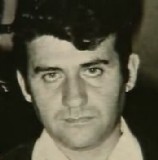
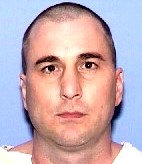
Marcel Barbeault
Serial killer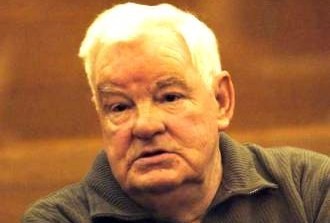 Emile Louis
Serial killer · France · 1975
Émile Louis (born January 21, 1934 in Pontigny, Bourgogne) was a retired French…
7 victims
Emile Louis
Serial killer · France · 1975
Émile Louis (born January 21, 1934 in Pontigny, Bourgogne) was a retired French…
7 victims
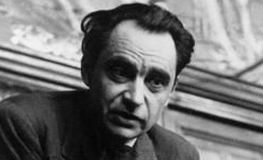 Marcel Petiot
Serial killer · France · 1942
Marcel André Henri Félix Petiot was a French doctor. He was convicted of multip…
27 victims
Marcel Petiot
Serial killer · France · 1942
Marcel André Henri Félix Petiot was a French doctor. He was convicted of multip…
27 victims
 Thierry Paulin
Serial killer · France · 1984
Thierry Paulin was born in Fort-de-France, Martinique on November 28, 1963. His…
21 victims
Thierry Paulin
Serial killer · France · 1984
Thierry Paulin was born in Fort-de-France, Martinique on November 28, 1963. His…
21 victims
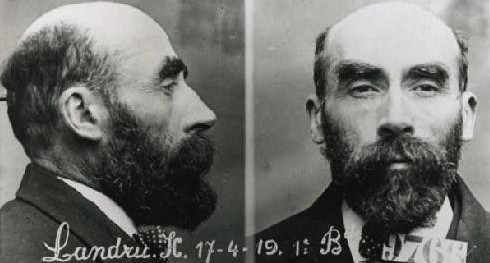 Henri Landru
Serial killer · France · 1915
Henri Désiré Landru (born April 12, 1869; died February 25, 1922) was a French…
11 victims
Henri Landru
Serial killer · France · 1915
Henri Désiré Landru (born April 12, 1869; died February 25, 1922) was a French…
11 victims
 Joseph Vacher
Serial killer · France · 1894
Joseph Vacher (November 16, 1869 – December 31, 1898) was a French serial kille…
11 victims
Joseph Vacher
Serial killer · France · 1894
Joseph Vacher (November 16, 1869 – December 31, 1898) was a French serial kille…
11 victims
 Francis Heaulme
Serial killer · France · 1984
Francis Heaulme was sentenced to several life sentences in different trials, 19…
9 victims
Francis Heaulme
Serial killer · France · 1984
Francis Heaulme was sentenced to several life sentences in different trials, 19…
9 victims
 Adrian Bayley
Murderer · Australia · 2012
Adrian Ernest Bayley was convicted for the rape and murder of Jill Meagher. · S…
1 victim
Adrian Bayley
Murderer · Australia · 2012
Adrian Ernest Bayley was convicted for the rape and murder of Jill Meagher. · S…
1 victim
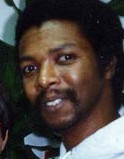 Dobie Gillis Williams
Murderer · USA · 1984
Dobie Gillis Williams was black and was staying at the home of his grandfather…
1 victim
Dobie Gillis Williams
Murderer · USA · 1984
Dobie Gillis Williams was black and was staying at the home of his grandfather…
1 victim
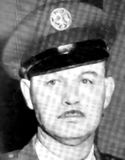 Marcus Marymont
Murderer · United Kingdom · 1958
Marcus Marymont was the husband of Mary Helen Marymont. He served as a Master S…
1 victim
Marcus Marymont
Murderer · United Kingdom · 1958
Marcus Marymont was the husband of Mary Helen Marymont. He served as a Master S…
1 victim
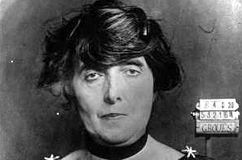 Madame Bessarabo
Murderer · France · 1920
Madame Bessarabo was tried for murder after the death of Paul Jacques and later…
1 victim
Madame Bessarabo
Murderer · France · 1920
Madame Bessarabo was tried for murder after the death of Paul Jacques and later…
1 victim
- Gender
- male
- Country
- France
- Location
- Nogent-sur-Oise, Picardy, France
- Date of birth
- August 10, 1941
- Age at first offence
- 28
- Characteristics
- serial rapist, motive unknown, shooting spree
- Victim profile
- Therese Adam, 49 / Suzanne Merienne, 44 / Annick Delisle, 29 / Eugene Stephan, 25 / Mauricette Van Hyfte, 23 / Josette Routier, 29 / Julia Goncalves, 29 / Francoise Jakubowska, 20
- Method of murder
- Shooting (.22 rifle)
- Date(s) of murder
- 1969 / 1973 - 1976
- Years active
- 1969–1976
- Date of arrest
- December 1976
- Status
-
Sentenced to life in prison on June 10, 1981; conviction quashed in March 1982; retrial held on November 1982; again found guilty; sentence reduced to twenty years’ imprisonment.
Case record
Marcel Barbeault was convicted for murders described as involving him as “Random shooter of victims age 20-49, mostly female” and as someone who shot his first victims while hiding in the shadows of nearby trees. He was also identified as “The Shadow Killer” because of the method used to shoot his victims from hiding.
Background
Marcel Barbeault was described as a nice father of two and a good husband.
It was suggested that Barbeault may have started his criminal career after his mother passed away, having suffered breast cancer. Two weeks after her death, the attacks began to occur, and it was speculated that the death of his mother was the catalyst.
The offence
Several victims were described as having been hit on the head. Josette Routier and Francoise Jakubowska had also been cut on their breasts and stomach.
A separate murder, described as “The murder of Suzanne Merienne,” was distinguished because the killer came into her house and ordered her and her 19-year-old daughter to leave and walk to wasteland next to the railway. The 19-year-old managed to escape.
The account also described a criminal career featuring the “Random shooter of victims age 20-49, mostly female.”
There was another weapon involved in the murders, but it has never been recovered.
Investigation
During the investigation into the murder of Eugene Stephan and his girlfriend, investigators found a gun casing by a standpipe in a nearby cemetry. At the time, this was not considered overly helpful, but it became the reason why Barbeault was caught.
The investigating officer considered that the gun casing had been dropped as the killer went to wash himself. Given that it was the middle of the night, the investigating officer concluded that the killer knew his way about the cemetry as he was a frequent visitor.
The investigating officer collated the names of all those who had cause to visit the cementry (around 2,500) and whittled that down to Barbeault.
Arrest and search
On 14th December 1976, the police searched Barbeault’s home.
In his communal cellar, they found a .22 rifle, a paratrooper’s knife, a cosh and some brown oilskins. These items were described as significant because they were what the killer wore in the murder of Mme Merienne.
The rifle was forensically proved to be the same one as had fired the shots from the last two murders.
Barbeault was also identified as a burglar. In 1970, during a burglary already attributed to Barbeault, a .22 Reina rifle was taken. This was forensically proven as being the gun that shot Eugene Stephan, Mauricette Van Hyfte and Josette Routier.
Trial
Barbeault received a sentence of life imprisonment for his crimes following his trial in May 1981.
In March 1982, his conviction was quashed and a retrial took place on November that year.
The verdict was once again guilty.
Sentencing and appeal
After the retrial, his sentence was reduced to twenty years’ imprisonment.
Outcome
Motive: Motive unknown.
Other details
The nickname “The Shadow Killer” was so named because he shot his first victims whilst hiding in the shadows of nearby trees.
Spotted an error, or have more information about this case?