
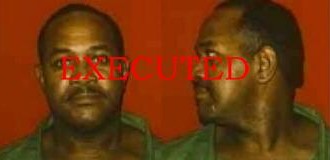
Robert Dewey Glock
Murderer Brian Kevin Rosenfeld
Murderer · USA · 1985
Brian Kevin Rosenfeld Brian Kevin Rosenfeld was sentenced to three concurrent l…
23 victims
Brian Kevin Rosenfeld
Murderer · USA · 1985
Brian Kevin Rosenfeld Brian Kevin Rosenfeld was sentenced to three concurrent l…
23 victims
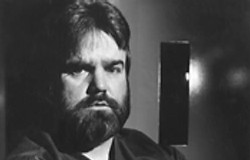 Marvin Gray
Murderer · USA · 1975
Marvin Gray was convicted killer who claimed responsibility for 23 slayings and…
23 victims
Marvin Gray
Murderer · USA · 1975
Marvin Gray was convicted killer who claimed responsibility for 23 slayings and…
23 victims
 Yahweh ben Yahweh
Murderer · USA · 1980
Yahweh ben Yahweh was born and legally named Hulon Mitchell Jr. (October 27, 19…
23 victims
Yahweh ben Yahweh
Murderer · USA · 1980
Yahweh ben Yahweh was born and legally named Hulon Mitchell Jr. (October 27, 19…
23 victims
 Russell Ellwood
Murderer · USA · 1991
Russell Ellwood was a former taxi driver. Authorities suspected him of killing…
20 victims
Russell Ellwood
Murderer · USA · 1991
Russell Ellwood was a former taxi driver. Authorities suspected him of killing…
20 victims
 John Frederick Thanos
Murderer · USA · 1990
John Frederick Thanos (c. 1951 – May 17, 1994) was executed in Maryland by leth…
3 victims
John Frederick Thanos
Murderer · USA · 1990
John Frederick Thanos (c. 1951 – May 17, 1994) was executed in Maryland by leth…
3 victims
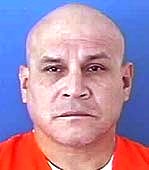 Edward Castro
Murderer · USA · 1987
Edward Castro was condemned for the choking and stabbing death of 56-year-old A…
3 victims
Edward Castro
Murderer · USA · 1987
Edward Castro was condemned for the choking and stabbing death of 56-year-old A…
3 victims
 Michael Edward Hooper
Murderer · USA · 1993
Michael Edward Hooper was an Oklahoma State Penitentiary death row inmate. He w…
3 victims
Michael Edward Hooper
Murderer · USA · 1993
Michael Edward Hooper was an Oklahoma State Penitentiary death row inmate. He w…
3 victims
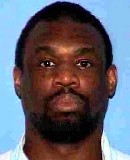 Geoffrey Griffin
Serial killer · USA · 2000
Geoffrey Griffin (also referred to as Geoffrey T. Griffin) was convicted of kil…
7 victims
Geoffrey Griffin
Serial killer · USA · 2000
Geoffrey Griffin (also referred to as Geoffrey T. Griffin) was convicted of kil…
7 victims
 Andrew DeYoung
Murderer · USA · 1993
Andrew DeYoung was convicted in Cobb County, Georgia of malice murder and was s…
3 victims
Andrew DeYoung
Murderer · USA · 1993
Andrew DeYoung was convicted in Cobb County, Georgia of malice murder and was s…
3 victims
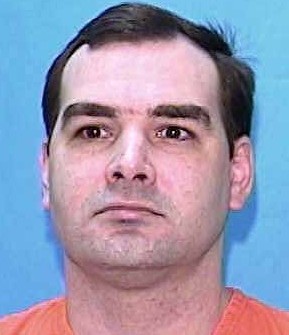 Jeffrey Allen Muehleman
Murderer · USA · 1983
Name: Jeffrey Allen Muehleman · Date of birth: 10/31/64 · Sixth Judicial Circui…
1 victim
Jeffrey Allen Muehleman
Murderer · USA · 1983
Name: Jeffrey Allen Muehleman · Date of birth: 10/31/64 · Sixth Judicial Circui…
1 victim
- Gender
- male
- Country
- USA
- Location
- Manatee County, Florida, USA
- Date of birth
- May 22, 1961
- Age at first offence
- 22
- Characteristics
- kidnapping, robbery
- Victim profile
- Sharilyn Johnson Ritchie (female, 34)
- Method of murder
- Shooting
- Date(s) of murder
- August 16, 1983
- Years active
- 1983
- Date of arrest
- 5 days after
- Status
-
Executed
Executed by lethal injection in Florida on January 11, 2001
Case details
Robert Dewey Glock, II was a Florida prison inmate who was convicted and sentenced to death for the 1983 kidnapping, robbery, and murder of Sharilyn Johnson Ritchie.
Timeline
- August 16, 1983 — Robert Glock and Carl Puiatti confronted a woman as she attempted to exit her vehicle at a shopping mall in Bradenton, Florida, forced her back inside her car at gunpoint, and coerced her into cashing a $100 check at her bank; they drove her to an orange grove outside Dade County, took her wedding ring, abandoned her, then returned and killed her.
- Four days later — Glock and Puiatti were stopped in New Jersey by a state trooper who noticed the automobile’s license plate was displayed improperly; the trooper seized a handgun and arrested both men for possession of two handguns without permits.
- August 21, 1983 — Glock and Puiatti made separate tape recorded statements to two Pasco County, Florida, detectives in which each confessed to the Florida kidnapping, robbery, and killing.
- August 24, 1983 — Glock and Puiatti gave the detectives a joint statement before a court reporter, in which Puiatti said: "[Glock] said to me that he thought we should shoot her ... [a]nd after going back and forth a little bit, I agreed, and turned the car around." Glock interrupted and continued the narration during the joint statement.
- October 12, 1983 — The State of Florida charged Glock and Puiatti with one count each of first degree murder, kidnapping, and robbery.
- March 1984 — Glock and Puiatti went to trial.
- 1984 — Circuit Judge Wayne Cobb sentenced Glock and Puiatti to death.
- January 12, 1989 — Florida Supreme Court affirmed the denial of Rule 3.850 relief in Glock v. Dugger, 537 So. 2d 99.
- January 11, 2001 — Glock was executed by lethal injection in Florida.
- January 12, 2001 — Glock was pronounced dead at 6:28 p.m. following the lethal injection.
The offence
On the morning of August 16, 1983, Glock and Carl Puiatti confronted Sharilyn Johnson Ritchie as she attempted to exit her vehicle at a shopping mall in Bradenton, Florida, and forced her back inside her car at gunpoint. As Puiatti drove from the mall, Glock took fifty dollars from the victim’s purse. Glock and Puiatti coerced the victim into cashing a $100 check at her bank. With the proceeds of the check in hand, the pair drove the victim across South Florida, eventually arriving at an orange grove outside Dade County, where they took the victim’s wedding ring and abandoned her at the side of the road.
After driving a short distance, Glock and Puiatti decided that the woman, if left alive, would be a potential witness against them and that she therefore should be killed. They returned to where they had left the victim, and Puiatti shot her twice at close range and drove away. Upon glancing back and realizing the victim had not fallen to the ground, Puiatti turned the car around. Glock then took the gun and fired a third shot into the victim and Puiatti drove away once more. When the woman still did not fall, Glock and Puiatti made a third pass, at which point Glock fired the shot that felled her; she died shortly thereafter.
Investigation and arrests
Four days after the killing, Glock and Puiatti were still in possession of the victim’s vehicle when they were stopped in New Jersey by a state trooper who noticed the automobile’s license plate was displayed improperly. Neither Puiatti nor Glock was able to present the trooper with a valid driver’s license, so the trooper asked to see the car’s registration. When Puiatti opened the glove box, the trooper noticed a handgun inside. The trooper then seized the firearm, and with permission from Puiatti and Glock, searched the vehicle, finding a second handgun. The officer arrested both men for possession of two handguns without permits. The handgun taken from the glove box proved to be the weapon used in the Florida slaying.
Confessions and statements
On August 21, 1983, Glock and Puiatti made separate tape recorded statements to two Pasco County, Florida, detectives in which each confessed to the Florida kidnapping, robbery, and killing. In his statement, Glock recounted the events described above, differing in just two respects: Glock claimed that Puiatti had suggested initially that the two men kill the victim and that Puiatti had fired the final shot. Puiatti’s statement, given later that day, was virtually identical to Glock’s statement. Puiatti claimed that the killing had been Glock’s idea and that Glock had fired the last shot.
Three days later, on August 24, Glock and Puiatti gave the detectives a joint statement before a court reporter. Puiatti spoke first and told the detectives that: "[Glock] said to me that he thought we should shoot her ... [a]nd after going back and forth a little bit, I agreed, and turned the car around." Puiatti then admitted to firing the first shot, at which point Glock interrupted and continued the narration. Glock reported, and Puiatti agreed, that Puiatti initially fired three shots and that at least two of those shots struck the victim, one in the right shoulder and one in the chest. Glock continued, stating that he also shot the victim twice—once on the second pass in the car and once on the third. Glock also confessed that the victim collapsed after he shot her on the third pass. At the conclusion of the joint statement, both men stated that they were in "full agreement with each other as to the [joint] statement ... [and] that the incident came down exactly that way."
The trial later introduced three confessions: Glock’s individual taped statement, Puiatti’s individual taped statement, and the joint statement.
Charges
On October 12, 1983, the State of Florida charged Glock and Puiatti with one count each of:
- first degree murder
- kidnapping
- robbery
Trial
Glock and Puiatti each moved for separate trials because the State intended to present both of their individual confessions to the jury. The trial court denied their requests for severance, and in March 1984, Glock and Puiatti went to trial. The State introduced all three confessions into evidence as part of its case in chief. Glock and Puiatti each objected to the introduction of the other defendant’s individual statement. As each defendant’s statement was received, the court instructed the jury to disregard it to the extent that it implicated the other defendant. With respect to the joint statement, no objection was made and no curative instruction was given.
After the State rested its case, neither defendant took the stand to rebut the State’s proof. The jury convicted each defendant on all three counts.
Sentencing
The trial proceeded to the penalty phase, where the same jury made a recommendation as to whether Glock and Puiatti should be sentenced to life imprisonment or death. The State called no witnesses in the penalty phase and relied instead upon the evidence adduced during the guilt phase. Glock called multiple witnesses, including his sister and his stepmother, who testified about difficult circumstances of Glock’s childhood. Glock also presented a mental health expert who testified that Glock would not have committed the crimes but for substantial domination exerted over him by Puiatti, and that Glock was capable of rehabilitation and unlikely to commit any future crimes. Glock testified that he felt remorse for what he had done.
At the close of the evidence in the penalty phase, the trial judge instructed the jury to consider five statutory aggravating circumstances:
- whether the murder was committed while the defendant was engaged in the commission, the attempted commission, or the flight after the commission or attempted commission of the crime of kidnapping (Fla.Stat.Ann. Sec. 921.141(5)(d) (West 1985 & Supp.1994));
- whether the murder was committed for the purpose of avoiding or preventing a lawful arrest (Fla.Stat.Ann. Sec. 921.141(5)(e));
- whether the murder was committed for financial gain (Fla.Stat.Ann. Sec. 921.141(5)(f));
- whether the murder was committed in a "cold, calculated, and premeditated [manner] without any pretense of moral or legal justification" (Fla.Stat.Ann. Sec. 921.141(5)(i));
- whether the murder was committed in a manner that was "especially wicked, evil, atrocious or cruel" (Fla.Stat.Ann. Sec. 921.141(5)(h)).
The court also instructed the jury with respect to both statutory mitigating circumstances and nonstatutory mitigating circumstances.
The jury recommended by a vote of eleven to one that both Glock and Puiatti receive the death penalty, without indicating the specific aggravating circumstances that formed the basis for its recommendation. The trial judge adopted the sentencing recommendations of the jury and imposed the death penalty.
The trial judge specifically found three aggravating circumstances for both defendants:
- the murder was committed for financial gain;
- the murder was committed to avoid arrest;
- the murder was committed in a cold, calculated, and premeditated manner.
The trial judge rejected two aggravating circumstances—whether the murder was heinous, atrocious, or cruel, and whether the murder was committed in the course of a kidnapping—because the facts necessary to support them comprised the basis for two other aggravating circumstances.
For Glock, the trial judge found one statutory mitigating circumstance—lack of a prior criminal history—and three nonstatutory mitigating circumstances: Glock’s cooperation in the police investigation, his capacity for rehabilitation, and his good behavior while incarcerated. The judge found that the mitigating circumstances did not outweigh the three aggravating circumstances attending the murder. Glock did not appeal his kidnapping and robbery convictions.
Appeals
Florida Supreme Court
After the imposition of sentence, Glock appealed his murder conviction and death sentence. The Florida Supreme Court affirmed. In Glock v. Dugger, 537 So. 2d 99, the Florida Supreme Court affirmed the denial of Rule 3.850 relief.
The Florida Supreme Court discussed two claims:
- that admission of a nontestifying codefendant’s confession violated the Confrontation Clause of the Sixth Amendment, as interpreted in Bruton v. United States and as applied in Cruz v. New York; and
- that Glock’s attorney rendered ineffective assistance during the penalty phase.
The Florida Supreme Court rejected Glock’s Bruton claim, stating that the joint statement Glock and Puiatti made to the police "clearly indicates [the] reliability" of Puiatti’s confession. The court rejected Glock’s ineffective assistance claim as meritless on its face.
United States Court of Appeals for the Eleventh Circuit
The United States Court of Appeals for the Eleventh Circuit considered Glock’s habeas corpus petition. The appellate court affirmed the refusal to disturb Glock’s murder conviction, concluding that there was no merit in Glock’s attack on his murder conviction. The appellate court directed that Glock’s death sentence be set aside, concluding that the trial court, at the conclusion of the sentencing phase, failed to provide an adequate instruction regarding the "heinous, atrocious, or cruel" aggravating circumstance relied upon by the State. The appellate court remanded for the district court to issue the writ with respect to Glock’s death sentence unless the State provided a new sentencing proceeding before a newly empaneled jury.
Outcome
Glock was executed by lethal injection in Florida on January 11, 2001.
Execution details and final statement
On January 11, 2001, Glock was executed by lethal injection at Florida State Prison. Glock was strapped to a gurney in the execution chamber and was covered with a sheet. Execution staff had trouble finding a vein in Glock’s left arm; the injection was administered through a vein in the back of Glock’s right hand. The execution was delayed for a few minutes, and then the lethal chemicals were administered.
Glock delivered a final statement before the procedure began. He said: "Hey everybody." "I killed Ms. Ritchie. I'm sorry for it." "I'm ready to go see Jesus."
He did not take a shot of Valium. Glock’s body went still, and a prison doctor declared Glock dead at 6:28 p.m.
Other details
Sharilyn Johnson Ritchie was described as a home economics teacher at Palmetto High School in Manatee County and as being kidnapped at gunpoint at a Bradenton shopping mall. She was described as 34 years old in multiple passages. She was reported to have been kidnapped on Aug. 16, 1983, and in some passages the date is described as Aug. 13, 1983. Glock and Puiatti stole her wedding ring and forced her to withdraw $100 from a bank, drove her approximately 60 miles to Pasco County, and released her in an orange grove near Dade City. She was found clutching her husband’s baseball mitt to her chest.
Glock’s wife, Sheila Glock, joined anti-death penalty protesters outside the prison. Glock’s final day included visiting with family members and his legal team, and he received communion from a prison chaplain. Glock married Sheila in September after meeting him through an Internet matching service.
Prosecutors and appellate discussion referenced a claim by Glock’s defense attorney Terri Backhus about alleged racial profiling by New Jersey state troopers in the stop leading to arrests. The appellate record also discussed confessions and jury instruction issues regarding the "especially wicked, evil, atrocious, or cruel" aggravating circumstance, including the failure to provide narrowing instructions to the jury as required under constitutional standards discussed in the appellate opinion.
Carl Puiatti was described as on death row, with no execution date set.
Spotted an error, or have more information about this case?