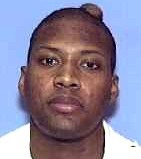
Charles Troy Coleman
Murderer Ervil LeBaron
Murderer · USA · 1972
Ervil Morrell LeBaron (1925 to August 16, 1981) was the leader of a polygamous…
35 victims
Ervil LeBaron
Murderer · USA · 1972
Ervil Morrell LeBaron (1925 to August 16, 1981) was the leader of a polygamous…
35 victims
 Brian Kevin Rosenfeld
Murderer · USA · 1985
Brian Kevin Rosenfeld Brian Kevin Rosenfeld was sentenced to three concurrent l…
23 victims
Brian Kevin Rosenfeld
Murderer · USA · 1985
Brian Kevin Rosenfeld Brian Kevin Rosenfeld was sentenced to three concurrent l…
23 victims
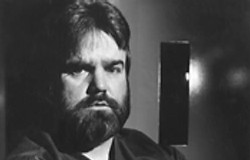 Marvin Gray
Murderer · USA · 1975
Marvin Gray was convicted killer who claimed responsibility for 23 slayings and…
23 victims
Marvin Gray
Murderer · USA · 1975
Marvin Gray was convicted killer who claimed responsibility for 23 slayings and…
23 victims
 Yahweh ben Yahweh
Murderer · USA · 1980
Yahweh ben Yahweh was born and legally named Hulon Mitchell Jr. (October 27, 19…
23 victims
Yahweh ben Yahweh
Murderer · USA · 1980
Yahweh ben Yahweh was born and legally named Hulon Mitchell Jr. (October 27, 19…
23 victims
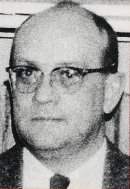 Leo Held
Mass murderer · followed by more bullets. This continued until he was finally hit in the head. He stopped firing then. He died later in the Lock Haven Hospital unable to answer any of the questions that police had. home last updates contact · 1967
Leo Held was a 39-year-old laboratory technician who was described as a quiet,…
6 victims
Leo Held
Mass murderer · followed by more bullets. This continued until he was finally hit in the head. He stopped firing then. He died later in the Lock Haven Hospital unable to answer any of the questions that police had. home last updates contact · 1967
Leo Held was a 39-year-old laboratory technician who was described as a quiet,…
6 victims
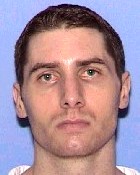 Justen Grant Hall
Murderer · USA · 2002
Justen Grant Hall Hall was sentenced to death on May 11, 2005. The trial court’…
2 victims
Justen Grant Hall
Murderer · USA · 2002
Justen Grant Hall Hall was sentenced to death on May 11, 2005. The trial court’…
2 victims
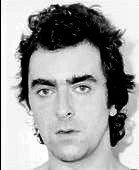 John Cannan
Murderer · United Kingdom · 1986
John Cannan Susannah “Suzy” Lamplugh was a British estate agent reported missin…
3 victims
John Cannan
Murderer · United Kingdom · 1986
John Cannan Susannah “Suzy” Lamplugh was a British estate agent reported missin…
3 victims
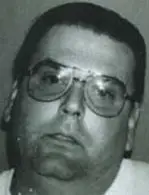 James Allen Kinney
Murderer · USA · 1997
James Allen Kinney was convicted for the rape and murder of Keri Lynn Sherlock.…
3 victims
James Allen Kinney
Murderer · USA · 1997
James Allen Kinney was convicted for the rape and murder of Keri Lynn Sherlock.…
3 victims
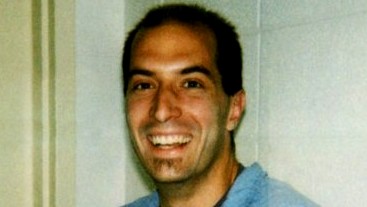 David Lynn Simonsen
Murderer · USA · 1988
David Lynn Simonsen was sentenced to death on February 24, 1989. The judgment o…
2 victims
David Lynn Simonsen
Murderer · USA · 1988
David Lynn Simonsen was sentenced to death on February 24, 1989. The judgment o…
2 victims
- Gender
- male
- Country
- USA
- Location
- California/Oklahoma, USA
- Date of birth
- 1947
- Age at first offence
- 29
- Characteristics
- robbery, escape
- Victim profile
- 4 men
- Method of murder
- Shooting
- Date(s) of murder
- 1976 - 1979
- Years active
- 1976–1979
- Date of arrest
- April 28, 1979
- Status
-
Executed
Executed by lethal injection in Oklahoma on September 10, 1990
Case record
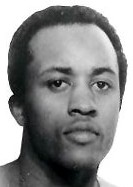
Charles Troy Coleman, a white man, was 32 when he was sentenced to death in Muskogee County for the 1979 murder of Muskogee resident John Seward. He also was accused of 2 other killings.
Coleman was convicted of Murder in the First Degree in Tulsa County District Court, Case No. CRF-79-2176, and the jury assessed the death penalty pursuant to 21 O.S. 1981 § 701.10. An appeal to the Oklahoma Court of Criminal Appeals resulted in the conviction being REVERSED and REMANDED for a new trial.
Coleman was later convicted of Murder in the First Degree in Muskogee County District Court, Case No. CRF-79-102, and sentenced to death under 21 O.S. 1981 § 701.10. The Oklahoma Court of Criminal Appeals AFFIRMED the judgment and sentence.
Coleman spent 10 years and 11 months on death row and was executed on Sept. 10, 1990.
Timeline
- April 24, 1979 — A police officer in Luther, Oklahoma, stopped a car driven by Coleman for speeding; after a driver’s license check, Coleman overpowered the officer, slashed his throat, and took his revolver; Coleman left the officer handcuffed and locked in the backseat of his patrol car.
- April 26, 1979 — Russell Lewis, the murder victim, stopped for a beer at a club he frequented and left around 8:30 p.m.; he was not seen alive again.
- April 28, 1979 — An employee of the Frisco Railroad in Tulsa found Mr. Lewis’s body down an embankment near Chandler Park and reported the discovery to the sheriff’s office; a search of the victim’s clothes produced no billfold or money; evidence showed death from a single gunshot wound to the head.
- April 28, 1979 — Officer Parrish of the Pima County, Arizona, Sheriff’s office stopped Coleman in Arizona for driving erratically; Coleman pulled a gun on Officer Parrish, took his gun, and drove the officer’s car into the desert and left him locked inside; other officers pursued and apprehended Coleman; Coleman was driving the victim’s pickup truck and possessed keys that fit door locks at the victim’s home; a Turner Turnpike ticket stub placed Coleman entering the turnpike at the Bristow, Oklahoma, entrance on April 27 at 12:42 a.m. and exiting in Oklahoma City at 3:34 a.m. the same morning.
- Approximately three months later — The Luther, Oklahoma, officer’s gun was discovered in the Arizona desert near the point where Coleman was apprehended.
- February 9, 1979 — John Seward was found in the basement of his sister’s home, dead as a result of a single shotgun wound to the back of his head; Roxie Seward was found next to him, dead as a result of four shotgun wounds inflicted from only inches away; the Sewards’ wallets, Mrs. Warren’s turquoise watch, packages of frozen meat stamped “Hogle, Not for Sale,” and various other food items were missing from the home of Mr. and Mrs. B.L. Warren.
- Later that same day (shortly after 6:00 p.m.) — Coleman was stopped and arrested for traffic violations; a search of the camper pickup truck he was driving revealed the Seward’s wallets, packaged meat, and other various food items identified by Mrs. Warren at trial as being from her pantry.
- August 27, 1979 — The State filed a notice of intent to offer evidence of other crimes; trial began on September 25, 1979.
- September 25, 1979 — Trial began in Muskogee County for the murder of John Seward.
- December 9, 1983 — COLEMAN v. STATE 1983 OK CR 138 was decided on 09/23/1983 (appeal decided 09/23/1983).
- July 11, 1983 — COLEMAN v. STATE 1983 OK CR 101 was decided on 07/11/1983 (modified 09/19/1983).
- September 10, 1990 — Coleman was executed by lethal injection in Oklahoma.
Background
Charles Troy Coleman was charged, tried, and convicted of Murder in the First Degree in Tulsa County District Court, Case No. CRF-79-2176, and sentenced to death, and he appealed.
Coleman was also convicted of Murder in the First Degree in Muskogee County District Court, Case No. CRF-79-102, and sentenced to death.
10, 1990.
The offence
Tulsa County: death of Russell Lewis
The evidence presented by the State to convict Coleman for the death of Russell Lewis was almost entirely circumstantial except for very damaging testimony given by a former cellmate.
Eli Maghe testified that while the two were in jail, Coleman confessed to killing a man near Chandler Park in Tulsa after robbing him. Coleman told Maghe that he shot the man using a revolver taken from a police officer and that he subsequently discarded the revolver in Arizona.
The events leading to the death included the following:
- On April 24, 1979, a police officer in Luther, Oklahoma, stopped a car driven by Coleman for speeding; Coleman overpowered the officer, slashed his throat, and took his revolver; Coleman left the officer handcuffed and locked in the backseat of his patrol car.
- On the night of April 26, Russell Lewis stopped for a beer at a club he frequented and left around 8:30 p.m.; he was not seen alive again.
- On April 28, 1979, Russell Lewis’s body was found down an embankment near Chandler Park; the body was found by an employee of the Frisco Railroad in Tulsa; a search of the victim’s clothes produced no billfold or money; evidence showed death from a single gunshot wound to the head.
- On April 28, 1979 in Arizona, Officer Parrish stopped Coleman for driving erratically; Coleman claimed a pickup truck belonged to his father, Mr. Lewis; Coleman pulled a gun on Officer Parrish, took his gun, drove the officer’s car into the desert, and left him locked inside; Coleman drove the victim’s pickup truck and possessed keys that fit door locks at the victim’s home; a Turner Turnpike ticket stub placed Coleman entering the turnpike at the Bristow, Oklahoma entrance on April 27 at 12:42 a.m. the same morning.
- Nearly three months later, the Luther, Oklahoma, officer’s gun was discovered in the Arizona desert near the point where Coleman was apprehended; the gun contained five shells and the sixth chamber was empty.
Muskogee County: death of John and Roxie Seward
At approximately 4:15 p.m. on February 9, John Seward was found in the basement of his sister’s home dead as a result of a single shotgun wound to the back of his head. Roxie Seward was found next to him dead as a result of four shotgun wounds inflicted from only inches away.
Missing items included the Sewards’ wallets, Mrs. Warren’s turquoise watch, packages of frozen meat stamped “Hogle, Not for Sale,” and various other food items from the home of Mr. and Mrs. B.L. Warren.
Investigation
Officer Ralph Rose, an off-duty dispatcher for the Wagoner County Sheriff’s Department, motioned Coleman for speeding and passing in a no passing zone, and Coleman pulled his pickup truck to the side of the road where a conversation ensued. Officer Rose testified he observed the passenger in the truck drinking a beer. Rose turned on his red lights and pursued Coleman at speeds up to 100 miles per hour. Officer Rose, with Highway Patrol Trooper Glen Smithson and Wagoner County Sheriff Tommy Gilbert, stopped Coleman and placed him under arrest for various traffic violations and possible driving under the influence.
Trooper Smithson testified he handed an inventory sheet to Officer Rose and instructed him to inventory the truck while he and Sheriff Gilbert transported the Colemans to the Wagoner County Jail.
Trooper Smithson testified that while taking Coleman into custody he observed, in plain view, open wallets in the truck’s glove compartment bearing the names “Seward,” and a box of frozen meat stamped “Hogle, Not for Sale,” in the truck’s camper. While en route, he radioed the ongoing homicide investigation in Muskogee County and inquired whether the victims’ names were “Seward” and if meat stamped “Hogle, Not for Sale” had been taken. Upon receiving an affirmative reply, Trooper Smithson stopped his cruiser, handcuffed Jeanette, read both Colemans their Miranda rights, turned his vehicle around, and transported the Colemans to the Muskogee County Jail.
Officer Rose testified that pursuant to a radio communication from Trooper Smithson, informing him that the Colemans had been arrested as suspects in the Muskogee murders, he stopped his inventory, without having written anything on the inventory sheet, and waited for homicide investigators to arrive.
Arrest
Later that same day, shortly after 6:00 p.m., Coleman was stopped and arrested for traffic violations; a search of the camper pickup truck he was driving revealed the Seward’s wallets, the packaged meat and other various food items identified by Mrs.
Coleman was also stopped and apprehended in Arizona following Officer Parrish’s stop and subsequent events in that case.
Trial
Tulsa County proceedings (appeal reversed and remanded)
In Tulsa County District Court, Case No. CRF-79-2176, Coleman was convicted of Murder in the First Degree and sentenced to death. He appealed.
Coleman presented thirteen assignments of error.
One assignment concerned denial of his right to self-representation. The appeal held that the trial court properly conducted a hearing and determined that Coleman’s later motions placing conditions on his assertion caused his expression not to be unequivocal, directing the trial court to Johnson v. State, 556 P.2d 1285 (Okl.Cr. 1976), for guidance and admonishing that a request to represent oneself must be unequivocal.
Another assignment challenged exclusion of prospective jurors who had expressed reservations about the death penalty, reviewed under Witherspoon v. Illinois, 391 U.S. 510, 88 S.Ct. 1770, 20 L.Ed.2d 776 (1968).
The appeal found that:
- Juror Wright was properly challenged for cause when she stated she could not impose the death penalty under any circumstances.
- Juror Able was improperly excused for cause because his voir dire reflected general objections to the death penalty or conscientious and religious scruples against its infliction, and because excusing him on that basis contravened Witherspoon.
The appeal reproduced the following voir dire exchange with Juror Abel:
"You have heard all the questions I have asked, do you feel you could be a fair and impartial juror in the trial of this case?"
MR. ABEL: "I guess."
THE COURT: "You say you guess — "
MR. ABEL: "I'm having a little bit of moral trouble with the death penalty."
THE COURT: "Okay. I'll get to that as soon as we have talked to all of the jurors a little bit more in detail. Do you feel at this point that you could be a fair and impartial juror in the trial of this case? Is that correct? or do you feel there is something — let me ask you this question. I'll just get into it right now, and I'll ask you this. In a case where the law and evidence warrant, in a proper case, could you without doing violence to your conscience agree to a verdict imposing the death penalty?"
MR. ABEL: "No."
"I'll get to the original question I asked. In a case where the law and the evidence warrant, in a proper case, could you without doing violence to your conscience agree to a verdict imposing the death penalty?"
MR. ABEL: "I really couldn't."
THE COURT: "You don't feel that you could?"
MR. ABEL: "To be honest, I couldn't. (Tr. 30-31)."
The appeal also reproduced defense counsel’s voir dire question sequence:
"MR. EARL: If Your Honor please, we would like to ask Mr. Abel a question. "
"Mr. Abel, we're not talking about this particular case, because quite obviously you don't know any of the facts of this case so far. Is it impossible for you to conceive of any situation whatsoever, regardless of how heinous it may be, that would prevent you from assessing the death penalty?"
MR. ABEL: "Well, I've been taught in church that God has the only right to do this thing, put someone to death."
"MR. EARL: As an obligation, as a citizen to serve on a jury panel, if the Court were to instruct you that under certain circumstances it was appropriate to assess such a penalty, can you conceive of any such factual situation where you would be able to follow the Court's instruction and do as the Court instructed you in applying to that factual situation?"
MR. ABEL: "I could, but I think it would bother my conscience."
"MR. EARL: You could follow the instructions of the Court and assess a death penalty if you thought it was appropriate in this particular situation?"
MR. ABEL: "Yes, but I couldn't with a clear conscience. If it really had to be, I could."
"MR. EARL: That's the question. I would understand, and I would hope that everybody would have a question or a problem, but given the factual situation are you now telling the Court that you would assess the death penalty if the Court instructed you it was correct?"
MR. ABEL: "I think I could, yeah. (Tr. 32-33)."
Because Juror Able was improperly excused, the subsequently imposed death penalty cannot stand, and the conviction was REVERSED and REMANDED for a new trial.
Muskogee County proceedings (affirmed)
In Muskogee County District Court, Case No. CRF-79-76, Coleman was convicted of Murder in the First Degree and the jury assessed the death penalty in the second stage pursuant to 21 O.S. 1981 § 701.10.
The opinion addressed multiple assignments of error.
Suppression of evidence from the pickup truck
Coleman alleged the trial court erred by failing to suppress evidence obtained from a warrantless search of his pickup truck, arguing it was not justifiable incident to arrest for a traffic offense, that the vehicle was illegally impounded on private property, that the inventory search was a subterfuge, and that there was no consent.
The appellate court held:
- Coleman’s arrest for traffic violations and possible driving under the influence was proper.
- The vehicle’s being on private property was distinguishable from Lee v. State and Kelly v. State because the chase ended when Coleman pulled into a residential driveway and stopped.
- Officers impounded the vehicle properly for caretaking purposes under South Dakota v. Opperman.
The court held that the evidence complained of had been legally discovered and properly in police custody by virtue of the impoundment and contents.
The court stated it found no merit in the assignment of error.
Miranda issues and statements at arrest
Coleman alleged the trial court erred by admitting inculpatory statements made at the time of arrest because he did not immediately receive Miranda warnings.
The appellate court found the issues unpreserved due to failure to object and failure to include in motion for new trial and petition in error. It further held that even if preserved, the questions were purely investigatory and not accusatory because the officer had no inkling of homicide when the questions were asked and Coleman became the focus of the homicide investigation only after Trooper Smithson called the homicide scene. The court concluded the questioning was not improper and also held that even if improper, any error was harmless.
The court discussed the defense and evidence, including:
- Sewards’ wallets and the Warrens’ meat and groceries were discovered in the defendant’s pickup two hours after the homicides.
- Approximately $210.00 in cash and a $2.00 bill were found in the defendant’s shirt pocket.
- Mrs. Warren’s testimony that her brother carried large sums of money and a $2.00 bill for good luck in his wallet.
- Two witnesses identifying Coleman’s white camper pickup truck as similar to a white camper pickup seen in front of the Warrens’ residence around the time of the homicides.
- Jeanette Coleman’s testimony that at approximately 3:30 p.m. on February 9, 1979, Coleman left their residence with a shotgun and shells and returned at approximately 4:15.
- Vernon Dale Coleman, Sr.’s testimony that after Coleman’s arrest on the evening of February 9, he retrieved a 28 gauge shotgun and a box of Federal brand, No. 6 load shotgun shells from Coleman’s residence and conveyed the evidence to Muskogee County Investigator Gary Sturm between February 10 and February 11, 1979.
- Tom Jordan’s testimony that State’s Exhibit No. 19 was an uncommon gauge and brand and was consistent with the weapon and ammunition used in the Seward homicides.
- Eli Maghee’s testimony that Coleman recounted the details of the homicides and explained the reasons as being that, “you just don't leave any witnesses cause you got a lot less chance of getting convicted.”
The opinion included a verbatim excerpt of Officer Smithson’s testimony as footnote 2:
OFFICER SMITHSON:
"A. I — uh, went back and asked Mr. Coleman if — what his last name was and he told me. And I asked him what his in-laws' name was, and he told me that, and I don't remember what his in-laws' name — what he said they were, but it was not Seward. And, at that point, I went over and asked Mrs. Coleman the same questions, and neither of her answers were Seward either. So, I went back then and asked, Mr. Coleman where he had got the wallet. And he told me he had been to the Eight-Ball the night before, which is a Club in Muskogee, and he said that he had picked up a woman and her husband there who were having an argument and they had pickup trouble and they gave them a ride home. He said, apparently, she had left her wallet in the pickup and about this time Sheriff Gilbert and Ralph Rose was in the rear of the vehicle looking in it and they had discovered some groceries and meat and stuff in it and they called me over to look at it, and on the meat it had a name stamped HOGLE, and it was processed meat, and it had NOT FOR SALE stamped on it. I went back and asked Mr. Coleman about this and he told me that they had been to the Warehouse Market to buy groceries and he said that they bought their groceries there. I asked him if he bought all of them there, and he said: Yes, we bought all of our groceries at the Warehouse Market. And, at this time I asked him, or I told him that he could not buy the meat there. And I asked him: Where did you get the meat that's stamped NOT FOR SALE? You can't buy it at Warehouse Market. He told me that apparently the meat was left in the vehicle, also, from the night before cause the people had left meat in there when they took them home. He said:We were all very drunk. Didn't know what we were doing.' * * * * * * "A. This is a picture of the groceries and frozen meat items that were also found in the rear of the pickup. I asked him about it, and he stated he had bought it at Warehouse Market. MR. TURPEN: Q. And he later stated what? A. He later stated that it belonged to the people that he had picked up at the Eight-Ball. MR. TURPEN: Q. The night before? A. Yes, sir. * * * * * * A. Okay. About that residence. Did you ever inquire as to why they stopped there? A. Yes, I did. I asked Mr. Coleman why they had stopped at this residence. He said: We live here. And I asked his wife later the same question. She verified — MR. PEARSON: Asked who later? I'm sorry. A. His wife. And she verified it. I asked them if they had a key to the residence? They said:No.' And later Mr. Coleman said: `It's a friend of ours house' and he called the friend's name. I don't remember what the name was. Sheriff Gilbert was there. He knew who lived there, who had built the house, and he stated that was not the name of the people that owned the house."
The court found the second assignment of error without merit.
Admission of photographs
Coleman argued error in admitting photographs, including State’s Exhibits No. 12F and 121 (black and white photos of murder victims taken at the scene) and State’s Exhibit No. 18A (a color photograph taken before the autopsy depicting the entrance wound in the back of the victim’s head).
The appellate court held probative value outweighed prejudicial effect under Oxendine v. State and that admission of allegedly gruesome photographs was within discretion absent abuse of discretion. It found no merit.
Testimony by Jeanette Coleman
Coleman argued Jeanette Coleman’s testimony violated husband/wife privilege under 22 O.S. 1981 § 702 and 12 O.S. 1981 § 2504.
The appellate court applied 12 O.S. 1981 § 2504, and determined Jeanette’s testimony did not breach confidential communications:
- Her testimony about Coleman coming home at approximately 3:30, retrieving a shotgun and shells, leaving in his white camper pickup, and returning at approximately 4:15 did not concern a privileged communication because it concerned observation of spouse’s non-communicative acts not intended to be confidential.
- Jeanette testified Coleman stated they owned groceries in the back of the camper and gave her a turquoise watch to keep during their arrest, then requested she give it back when they were being transported. The appellate court held these statements were made in the presence of third parties and thus were not confidential communications.
The appellate court found no merit.
Evidence of escape, burglary, and murder of Roxie Seward
Coleman contended the trial court committed reversible error by admitting evidence of his escape from the county jail, evidence of the burglary of the Warren residence, and evidence of the murder of Roxie Seward.
The appellate court found the State complied with procedures under Burks v. State, including written notice ten days before trial and specifying the exception (res gestae and identity and intent). The court held evidence of escape was admissible as showing consciousness of guilt and held burglary and Roxie Seward’s murder could be considered part of the res gestae of John Seward’s murder, being committed contemporaneously and inseparable as part of a single criminal episode.
The court found no merit.
Prosecutorial remarks during closing argument
Coleman alleged he was denied a fair trial due to the district attorney’s improper and inflammatory remarks during closing argument.
The appellate court noted defense counsel moved for a mistrial at the conclusion of State’s argument but did not object during the course of closing or request admonishment, and thus the issue was not properly preserved. The appellate court reviewed for fundamental error and held remarks were unnecessary and not to be condoned but were not so grossly improper as to have affected the verdict in light of the evidence, so no modification or reversal was required.
Alleged perjured testimony
Coleman alleged knowing use of perjured testimony by citing discrepancy between Eli Maghee’s testimony at Coleman’s preliminary hearing in Tulsa County for the murder of Russell Lewis and Maghee’s testimony at trial in Muskogee County for the murder of John Seward.
The appellate court held omission lacked an essential element of perjury because there was no questioning by the State about the Seward murders at the preliminary hearing, and held the defense had ample opportunity to cross-examine Maghee at trial and that the jury was properly instructed on credibility.
No merit was found.
Preliminary hearing on bill of particulars
Coleman contended he should have received a preliminary hearing on the bill of particulars and argued that preliminary hearing requirements in AFCF cases should apply in capital cases.
The court rejected the argument based on Brewer v. State and concluded these procedures eliminated any element of surprise.
No merit was found.
Notice of aggravating circumstance involving kidnapping of Arizona highway patrolman
Coleman alleged the trial court improperly admitted evidence in the second stage not previously made known to him, claiming he did not receive notice in the bill of particulars that the State intended to introduce evidence he kidnapped an Arizona highway patrolman after his escape from county jail.
The bill of particulars contained the following language:
- That there exists a probability that the defendant Charles Troy Coleman will commit future criminal acts of violence that will constitute a continuing threat to society, based on the following: * * * * * * On the 23rd day of April, 1979, after the defendant had been bound over for trial for the murders of John and Roxie Seward, and it appearing that he would be held accountable for these two deaths and would be taken to trial for the commission of the murders, he did then and there escape from lawful confinement in the Muskogee County jail, fleeing beyond the borders of the State of Oklahoma, further illustrating his contempt and total disregard for the rules of a structured and orderly society and creating a further danger to other lives, including those of the law abiding citizens of this state, and in other areas of this nation; . . .
The appellate court held Coleman received sufficient notice because the bill of particulars specifically alleged escape and described the kidnapping on the “five day spree” subsequent to escape, and because the Arizona highway patrolman testified to the kidnapping at the preliminary hearing and the transcript had been provided to defense counsel.
No merit was found.
Witherspoon challenges to juror excusals
Coleman alleged four prospective jurors were excused for cause in violation of Witherspoon.
The appellate court held it was proper to excuse jurors who stated unequivocally they would not impose death regardless of circumstances and found the assignment without merit. The footnote listed the jurors objected to: Juror Geisinger; Juror Barnes; Juror Halpain; Juror Crager.
Prior convictions as aggravating circumstances
Coleman alleged three convictions relied upon to establish the aggravating circumstance were void and that death should not have been imposed.
The appellate court addressed authenticated copies of minute entries from the District Court Clerk of Elmore County, Alabama, reflecting Coleman’s convictions in three cases, admitted as evidence of a prior felony involving use or threat of violence. Coleman argued convictions were void because they did not show on their face that he knowingly and voluntarily waived federal constitutional rights before entering guilty pleas.
The appellate court held the record indicated Coleman was represented by counsel upon entering pleas of guilty, that an appeal was never perfected from the 1967 convictions, that Coleman had not alleged pending collateral attacks, and that the Alabama convictions were properly introduced. It also held the State introduced another 1973 conviction from the Superior Court of San Luis Obispo County, California, supporting the aggravating circumstance of prior felony involving use or threat of violence, and found the final assignment without merit.
Sentencing
The jury assessed the death penalty in Tulsa County pursuant to 21 O.S. 1981 § 701.10.
In Muskogee County, the jury assessed the death penalty in the second stage pursuant to 21 O.S. 1981 § 701.10.
The appellate court’s statutorily imposed duty under 21 O.S. 1981 § 701.13 included holding:
- The sentence of death was not imposed “under the influence of passion, prejudice or any other arbitrary factor.”
- The evidence supported the jury’s finding of statutory aggravating circumstances enumerated in Section 701.12.
- The death penalty was not excessive after comparison with other first degree murder cases.
The jury found five aggravating circumstances, including:
- prior felony involving the use or threat of violence to the person;
- Coleman knowingly created a risk of death to more than one person;
- the murder was especially heinous, atrocious or cruel;
- the murder was committed for the purpose of avoiding or preventing a lawful arrest or prosecution;
- existence of probability Coleman would commit criminal acts of violence constituting a continuing threat to society.
Appeals
COLEMAN v. STATE 1983 OK CR 138
In COLEMAN v. STATE 1983 OK CR 138, 670 P.2d 596, the Oklahoma Court of Criminal Appeals decided 09/23/1983, in Case Number F-80-150. The opinion held the conviction must be reversed and remanded for a new trial.
The court held the death sentence could not stand because Juror Able was improperly excused in violation of Witherspoon.
COLEMAN v. STATE 1983 OK CR 101
In COLEMAN v. STATE 1983 OK CR 101, 668 P.2d 1126, Case Number F-79-600, decided 07/11/1983 and modified 09/19/1983, the Oklahoma Court of Criminal Appeals affirmed the conviction and sentence.
Outcome
Coleman’s Tulsa County conviction was REVERSED and REMANDED for a new trial.
Coleman’s Muskogee County conviction and death sentence were AFFIRMED.
10, 1990.
Other details
The appellate court included a closing argument excerpt transcribed in footnote 8, describing trial counsel’s statements and urging the jury to consider the “last few seconds” and “dignity,” including these quoted passages:
"Folks, what do we talk about when we talk about First Degree Murder? We're talking about — we're talking about this man's head! I don't mean to be shocking, ladies and gentlemen of the Jury, but we're talking about this man's head being turned into a puddle of blood and gray hairs at the bottom of the stairs. That's the reality of it. I'm not trying to shock anybody. That's the reality of it. That a living human being's head was turned into a puddle of blood and hair because of him, based on the evidence. (Tr. 787)."
"But I want you to think about the last few seconds in John Seward's life as he's being marched down those stairs with his wife, you know, to what became a human slaughter house, and think about the horror he must have felt. And think about the terror he must have felt as he spent his last few seconds on this earth — a man who, I suggest to you, had the right to die with more dignity. Let's think about it. (Tr. 788)."
"Last witness. Mrs. Warren. Mrs. Warren described this — the home she lived in here — that's where she lives. It's nice to live in a home where your brother was murdered in the back basement. Think about that, please. John Seward is dead and gone forever. Plus, there's more than one victim. We all suffer a little, but think of the family that's still living in the home and where her brother was murdered in the basement. See, it points out that there's more than one victim when it comes to cold-blooded murder. When a man does what this man did, Charles Coleman, on that day, February 9th, when he takes them down into the basement of the home and murders them in cold-blood, if you will, when you do that, you see you got more than one victim. You've got more than just Roxie and John Seward, you see, you got a family. You got people left behind. See, this was a pretty expensive shopping spree. I mean, a lot of people have suffered, if you know what I mean, based on the evidence, i mean, from the witness stand, that Mrs. Warren testified about. (Tr. 830)."
In footnote 5, the trial court’s ruling on Jeanette Coleman’s claim of common-law wife status stated it ruled Jeanette Coleman was the common law wife of the defendant’s older brother Abe Coleman, whom she had not divorced, and therefore she could not be the defendant’s common law wife.
The record included final statements and descriptions from a death row writing by Don Hawkins in 1990. It included the following quoted statements attributed to Charles Troy Coleman during the execution narrative:
Chuck would say, "Just tell everybody I love them, and I have peace in my heart."
During the reading of the Bible text. Chuck would say, "Thank you, Jesus."
He told her that he loved her.
Spotted an error, or have more information about this case?