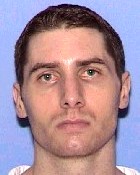
Justen Grant Hall
Murderer Robert Martines Perez
Murderer · USA · 1994
Name: Robert Martines Perez · Other name used in proceedings: Robert Martinez P…
15 victims
Robert Martines Perez
Murderer · USA · 1994
Name: Robert Martines Perez · Other name used in proceedings: Robert Martinez P…
15 victims
 Billy Frank Vickers
Murderer · USA · 1993
Billy Frank Vickers Vickers was executed by lethal injection in Texas on Januar…
14 victims
Billy Frank Vickers
Murderer · USA · 1993
Billy Frank Vickers Vickers was executed by lethal injection in Texas on Januar…
14 victims
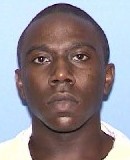 Beunka Adams
Murderer · USA · 2002
Beunka Adams was sentenced to death on August 30, 2004. He was executed by leth…
1 victim
Beunka Adams
Murderer · USA · 2002
Beunka Adams was sentenced to death on August 30, 2004. He was executed by leth…
1 victim
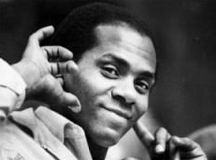 Franklin Lynch
Serial killer · USA · 1987
Franklin Lynch was involved in the case prosecuted as a serial murder matter co…
3 victims
Franklin Lynch
Serial killer · USA · 1987
Franklin Lynch was involved in the case prosecuted as a serial murder matter co…
3 victims
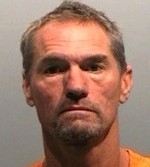 Duane Roger Morrison
Murderer · USA · 2006
Duane Roger Morrison (c. 1952—September 27, 2006) was the lone gunman who storm…
1 victim
Duane Roger Morrison
Murderer · USA · 2006
Duane Roger Morrison (c. 1952—September 27, 2006) was the lone gunman who storm…
1 victim
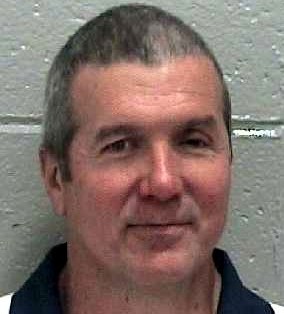 Jack Edward Alderman
Murderer · USA · 1974
Jack Edward Alderman was sentenced to death for the murder of his wife. He was…
1 victim
Jack Edward Alderman
Murderer · USA · 1974
Jack Edward Alderman was sentenced to death for the murder of his wife. He was…
1 victim
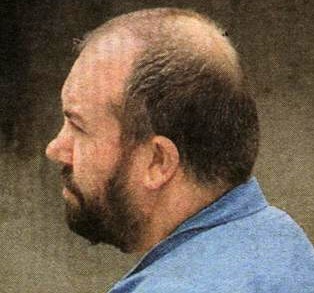 Mark Errin Rust
Murderer · Australia · 1999
Mark Errin Rust Mark Errin Rust was described as having started following prett…
2 victims
Mark Errin Rust
Murderer · Australia · 1999
Mark Errin Rust Mark Errin Rust was described as having started following prett…
2 victims
- Gender
- male
- Country
- USA
- Location
- El Paso County, Texas, USA
- Date of birth
- J une 16, 1981
- Age at first offence
- 21
- Characteristics
- hate crime, robbery, drugs
- Victim profile
- Arlene (Hector) Diaz / Melanie Billhartz
- Method of murder
- Shooting / Strangulation with a electrical cord
- Date(s) of murder
- April 10 / October 28, 2002
- Years active
- 2002
- Date of arrest
- November 23, 2002
- Status
-
Sentenced to death
Sentenced to death on May 11, 2005
Case identification
Justen Grant Hall
Status / outcome
Hall was sentenced to death on May 11, 2005.
The trial court’s judgment was affirmed on direct appeal. The opinion delivered June 27, 2007.
Timeline
- October 28, 2002 — Melanie Billhartz was killed after an assault and a confrontation involving Ted Murgatroyd and Hall; Hall and others went to talk with Murgatroyd after Billhartz drove back to the house.
- November 23, 2002 — Hall was apprehended following a routine safety check by Deputy Tommy Baker of the Hale County Sheriff’s Office; a license plate check resulted in a “missing or endangered” person report on the victim, and further investigation led to a search of the vehicle; Hall was later arrested for unauthorized use of a motor vehicle.
- November 25, 2002 — Hall signed a statement confessing to the murder.
- February 2005 — Hall was convicted in February 2005 of capital murder.
- May 11, 2005 — A jury sentenced Hall to death.
- June 27, 2007 — The appellate court delivered its opinion affirming the judgment.
Background
Hall was convicted in February 2005 of capital murder. During the trial, Hall was charged with murder April 22, and the case was classified as a hate crime.
Hall was incarcerated from April 2000 to November 2001 on two charges of burglary and one of auto theft.
Before the murder described in the appellate decision, Hall was involved with others “primarily at a drug house in El Paso.”
The offence
Melanie Billhartz murder (capital murder)
The victim was Melanie Billhartz.
Ted Murgatroyd and Hall were acquainted through mutual friends and because they “hung around the same crowd,” primarily at a drug house in El Paso.
On October 28, 2002, at roughly 4:00 p.m., Murgatroyd encountered Billhartz when she pulled up in front of the drug house. Murgatroyd asked Billhartz to take him to a convenience store, and she let him drive, with her as a passenger.
On the way back, Murgatroyd made a sarcastic comment. Billhartz “flipped out” and started hitting him and screaming at him to get out of her truck. Murgatroyd stopped the truck and attempted to leave the vehicle. Billhartz hit him in the face and jumped on him; as he put his hand up, he struck her on the lip. Billhartz drove to the house, with Murgatroyd following on foot.
When Murgatroyd reached the house, Billhartz was sitting in her truck, parked in front of the house. Murgatroyd’s associates, including Hall, came out to talk to him.
While Billhartz remained in the truck, they discussed the situation. The group’s dilemma was that Billhartz wanted to call the police and report an assault by Murgatroyd. Hall stated his disapproval of that possibility and his intention to kill the victim.
According to Murgatroyd, Billhartz was killed to prevent the discovery of the drug house.
Murgatroyd did not see Hall again until three to five hours later, when Hall pulled up to the drug house in Billhartz’s truck, with her body in the back of the cab.
Chase Hale testified that after Hall returned with Billhartz’s truck, Hall told Hale to stay away from it because Hall had just killed Billhartz. Hall ordered Murgatroyd to pick up a shovel and machete in order to go bury the victim.
After driving to New Mexico, Hall ordered Murgatroyd to cut off the victim’s fingers to prevent any DNA from being found under her fingernails.
Hall dumped the body in New Mexico. Murgatroyd was under the impression that Hall took the victim’s fingers with him.
Later, detectives questioned Murgatroyd; Murgatroyd led authorities to the victim’s body and gave them a written statement concerning the preceding events.
Causes of death and injuries described at autopsy
Dr. Patricia McFeeley, pathologist and assistant chief Medical Examiner, supervised the autopsy of the victim.
A power cord was wrapped around the victim’s neck three times and tied tightly. Her nasal bones were fractured. She had multiple fractures of the lower jaw bone, fractures in her right hand, a fractured rib, and fingers missing from her right hand.
Confession
After Hall was arrested for the victim’s murder, he confessed to the offense to Detective David Samaniego of the El Paso Police Department.
On November 25, 2002, Hall signed a statement confessing to the murder.
Investigation
Deputy Tommy Baker came upon Billhartz’s truck parked on the highway near Plainview.
Deputy Baker approached the truck to check on the welfare of the occupants because the vehicle was parked with its back wheels still on the highway. He advised the occupants, including Hall, of a safer place to rest, and he sent them on their way without asking for identification.
After Hall drove off, Deputy Baker’s dispatcher informed him that the license check on the truck showed that the owner had been reported as missing. Deputy Baker then activated his lights and stopped the vehicle to investigate.
During this investigation, he received a report from his dispatcher that the owner of the truck was the victim of a homicide.
Deputy Baker was told to seize the truck in connection with a murder investigation. He was also informed that Hall and the other occupants of the vehicle were suspects in the homicide.
Deputy Baker then placed Hall under arrest for unauthorized use of a motor vehicle.
A capital murder arrest warrant for Hall was later obtained by El Paso police.
Arrest
Hall was apprehended on November 23, 2002 following the routine safety check.
He remained jailed Tuesday in lieu of $75,000 bond, authorities said.
Hall was arrested for illegally carrying a loaded Bryco Arms 9 mm handgun at the Gas Light Square trailer park at 500 Talbot in Canutillo on April 20 (described as illegally carrying a loaded Bryco Arms 9 mm handgun).
Hall was out on bond when he was arrested two days later and charged with Diaz’s murder.
Trial
Conviction and verdict
During jury deliberations, the jury deliberated for close to 6 hours.
Voir dire
During voir dire, venire members were questioned separately. Each member was questioned by both the defense and the prosecution for a maximum of forty-five minutes each. In the case of venire member Gloria Lopez, the defense was granted an additional fifteen minutes for extra questioning.
Another request for five extra minutes by Hall was denied.
Hall argued that the limitation of voir dire, along with refusal to extend the time for Lopez, prevented him from asking additional questions regarding the burden of proof and Lopez’s possible bias towards law enforcement. The appellate court held that the trial court did not abuse its discretion by denying Hall’s request for additional time.
Hall also challenged the denial of challenges for cause of three venire members based on alleged bias in favor of law enforcement.
The appellate court found no abuse of discretion in denying those challenges for cause.
Motion to suppress evidence
Hall challenged the trial court’s denial of his motion to suppress evidence seized as a result of the vehicle stop conducted by Deputy Baker.
Hall argued that the second stop after the safety check was not justified under Texas law or the Fourth Amendment, and he argued that the second stop was not supported by specific, articulable facts.
The appellate court held that, at the time of the stop, Deputy Baker knew the owner of the vehicle, a female, had been reported missing and that her vehicle was being driven by a man, which was sufficient to warrant an investigative stop.
Motion to suppress confession (voluntariness)
Hall complained that the trial court erred in denying his motion to suppress his confession.
Hall claimed the confession was improperly obtained because it was not “freely and voluntarily made without compulsion or persuasion.”
Hall asserted he was under suicide watch, exhibited psychotic behavior, that El Paso detectives were aware of his suicide attempts, that he requested medication for his depression and nothing happened, and that he had not slept for six to seven days prior to arrest.
Detective Pantoja testified that when he met with Hall, Hall was advised of his rights, waived his rights, and never requested the presence of his attorney.
Pantoja also testified that while Hall mentioned he was taking medication, Hall never requested the medication.
Pantoja testified that Hall was coherent during the conversation, seemed to understand what he was saying, and was not emotional or distraught.
Detective Samaniego testified that Hall was coherent and stable when he spoke with the detective and when he signed the confession.
Hall testified that he did not take his prescribed medications because he was “paranoid of the deputies” assigned to his jail.
The appellate court held there was nothing in the record demonstrating official coercive conduct, and it found no evidence of overreaching by law enforcement.
Jury instructions and lesser included offense
Hall requested that the lesser-included charge of murder be removed, charging Hall solely with capital murder. The trial court refused that request and included jury instructions on both murder and capital murder.
The appellate court held the allegation of error was without merit because the record demonstrated that the trial court included a jury instruction on murder.
Sentencing
Hall was sentenced to death.
The trial judge sentenced Hall to death pursuant to the jury’s answers to the special issues set forth in Texas Code of Criminal Procedure art. 37.071 ??2(b) and 2(e).
During closing arguments, defense attorneys pushed for life in prison. They said Hall told them he’d rather get death than be in prison for the rest of his life.
Melanie’s sister read an impact statement after hearing the verdict and broke down in tears.
Hall looked fidgety after jurors handed down the verdict and gave an obscene gesture in the courtroom.
Hall blew a kiss at the prosecuting attorney while she gave her argument.
Hall’s family members said Hall had shown no remorse for what he had done.
Appeals
Hall appealed to the Court of Criminal Appeals of Texas.
The appellate court described that Hall was convicted in February 2005 of capital murder and that the trial judge sentenced Hall to death based on the jury’s special issues answers.
The appellate court stated that Hall raised sixteen points of error, and it found no reversible error.
Points of error addressed
- Sufficiency of the evidence: the appellate court overruled points of error one and two, concluding evidence was legally and factually sufficient to sustain the capital murder conviction, including the obstruction/retaliation theory.
- Motion to suppress: the appellate court overruled points of error three and four regarding the vehicle stop and related seizure.
- Motion to suppress confession: the appellate court overruled points of error five and six regarding voluntariness.
- Voir dire time limits: the appellate court overruled point of error seven regarding limitations on time to question venire member Gloria Lopez.
- Challenges for cause: the appellate court overruled points of error eight, nine, and ten regarding denial of challenges for cause of three venire members.
- Motion for continuance: the appellate court overruled point of error eleven about claims related to DNA laboratory work and claims about the victim’s family’s alleged involvement with criminal gangs.
- DNA evidence: the appellate court overruled point of error twelve regarding admission of DNA evidence and timing of disclosure.
- Lesser included offense: the appellate court overruled point of error thirteen regarding the requested jury charge for murder rather than capital murder.
- Death-qualified jurors: the appellate court overruled point of error fourteen and sixteen concerning empanelling juries and excluding or death-qualifying jurors.
- Mitigation burden: the appellate court overruled point of error fifteen concerning application of reasonable doubt to mitigation.
The appellate court affirmed the judgment of the trial court.
Other details
Alleged hate crime involving Arturo Diaz (Hector Arturo Diaz)
Arlene (Hector) Diaz attended a local transgender support group the night of the murder.
Diaz was fatally shot in the back, and police classified the murder as a hate crime.
Police believed the killing was motivated by prejudice over Diaz’s sexual orientation.
Police obtained an incriminating statement from the alleged killer, Justen Grant Hall, 20, of the 8500 block of Lakehurst.
Hall was charged with murder April 22, and police subsequently announced that the case was being classified as a hate crime.
The law describes a “hate crime” as an offense committed “because of the actual or perceived race, color, religion, national origin, sexual orientation, gender or disability” of the victim.
Diaz was 28 years old at death.
Diaz was described as transgender and “Arlene” in the gay scene in Downtown El Paso.
Diaz was buried in a man’s suit.
Diaz attended Gadsden High School in Anthony, N.M., and left it in the 11th grade. He obtained a GED from UTEP. He studied at a technical school and got a job filing records at Sierra Medical Center.
He lived with his mother, Rosa Diaz, and three sisters at their mother’s house on Yucca Street in Sunland Park. He shared a bedroom with his grandfather until the elderly man died two years ago. Stuffed animals and small helium balloons lined his shelves. His Bible lay open with a bookmark reading, “Be Happy, Share A Smile!”
Friends described him as funny, outspoken, and friendly, and they described him as “Arlene” in female clothing, with made-up face.
The report described friends Sascha Adams and Dan Nicotera referring to Diaz as “she” to respect Diaz’s wishes.
Adams said: “She would go to work in male clothing and dressed as a boy at home. She respected her family's wish not to see her like that.”
Adams said: “She'd wake up as a boy.”
Adams said: “She used to say as soon as she got her own apartment, she'd be a girl 24-7.”
Rosa Diaz said: “It’s Hector. That's the name he was born under,” after the mention of the name “Arlene.”
Nicotera said: “Supposedly, he was a real nice guy.”
Di az’s friends stated they were not dating, and police did not disclose the relationship between Diaz and Hall.
A witness saw the two early the next morning, and they appeared to be arguing. It was shortly before police reports alleged Hall shot Diaz in the back.
One report stated Diaz disappeared about 10:30 p.m. after going to Sergio’s Bar on Missouri Avenue, following the meeting at the Desert Rainbow Center.
Another part of the narrative described that on April 10, a passer-by found his body on Anapra Road.
Hall was arrested at the Gas Light Square trailer park at 500 Talbot in Canutillo on April 20 for illegally carrying a loaded Bryco Arms 9 mm handgun.
Hall had a dark GMC Yukon pickup, and police reports read he drove it.
A portion of the narrative stated: “The local police have classified this murder as a hate crime.”
The report included statements about hate crime underreporting in El Paso, including that Project volunteers monitor anti-gay violence through victims’ calls to a hot line and that “Project coordinator Rob Knight said such acts and the killing of Diaz are 'spawned by bigotry and hate.'” Knight also said: “No one should live in fear or lose their life simply for being who they are,”
Rosa Diaz said: “I am shattered,” “You have children. You raise them. You see them grow and someone kills them. He didn't deserve this. There is no reason for this.”
The report stated: “Diaz had left Gadsden High School in Anthony, N.M., in the 11th grade and obtained his GED from UTEP.”
The report described that Hall was out on bond when he was arrested two days later and charged with Diaz’s murder.
The report also included discussion that in 2001 the Anti-Violence Project of Lambda received testimonies of 117 bias-motivated incidents involving 172 victims, including 42 reported assaults, 85 cases of harassment, and 16 cases of vandalism, and that the number of anti-gay incidents remained constant between 2000 and 2001. It further stated that in 2000 police data showed there were nine hate crimes in El Paso and none were believed to have been committed over sexual orientation.
People involved
Defendants / accused
- Justen Grant Hall — accused in the capital murder case and alleged killer in the hate crime narrative
Victims
- Melanie Billhartz — victim in the capital murder conviction
- Hector Arturo Diaz (also referred to as Arlene) — victim in the hate crime narrative
Other named individuals
- Ted Murgatroyd — witness/participant in the narrative of the Billhartz killing
- Chase Hale — witness who testified about Hall’s statements
- Detective David Samaniego — El Paso Police Department detective who received a confession from Hall
- Deputy Tommy Baker — Hale County Sheriff’s Office deputy who conducted the safety check and later stopped the vehicle
- Detective Pantoja — El Paso Police Department detective who advised Hall of rights and testified about coherence and medication requests
- Dr. Patricia McFeeley — pathologist and assistant chief Medical Examiner who supervised the autopsy
- Keller, P.J. — identified as delivering the unanimous opinion of the court
- Gloria Lopez — venire member involved in voir dire time limitation dispute
- Griffith — venire member involved in challenge for cause discussion
- Sudimack — venire member involved in challenge for cause discussion
- Rob Knight — project coordinator quoted about hate crimes
- Arlene (Hector) Diaz — victim in the hate crime narrative
- Rosa Diaz — Diaz’s mother who was quoted
- Sascha Adams — transgender person quoted and described as referring to Diaz as “she”
- Dan Nicotera — quoted and described as a friend
- Rosemary Porras — Diaz’s sister quoted
Family members in the sentencing narrative
- Melanie’s sister — read an impact statement and broke down in tears
- Hall’s family members — were in the courtroom and said Hall had shown no remorse for what he had done
- The family of Arturo Diaz — were in the courtroom and broke down after hearing Hall’s sentence
Charges and legal characterisation
Hall’s conviction involved capital murder and included the jury’s special issues under Texas Code of Criminal Procedure art. 37.071 ??2(b) and 2(e).
The narrative classified Diaz’s murder as a hate crime.
The appellate decision discussed capital murder based on obstruction/retaliation concepts and the definition of obstruction under Texas law, including a statute describing obstruction as harming “another by an unlawful act to prevent or delay the service of another as a person who ... the actor knows intends to report the occurrence of a crime.”
Hall’s habeas-related mitigation and juror-bias arguments were addressed as points of error on direct appeal.
Verbatim quotations
Detective Pantoja testimony and other court-related quoted material included:
- “hung around the same crowd,”
- “flipped out”
- “flipped out” and started hitting him and screaming at him to get out of her truck.
- “I am shattered,”
- “You have children. You raise them. He didn't deserve this. There is no reason for this.”
- “because of the actual or perceived race, color, religion, national origin, sexual orientation, gender or disability”
- “spawned by bigotry and hate.”
- “No one should live in fear or lose their life simply for being who they are,”
- “Be Happy, Share A Smile!”
- “She would go to work in male clothing and dressed as a boy at home.
- “She'd wake up as a boy,”
- “She used to say as soon as she got her own apartment, she'd be a girl 24-7.”
- “It’s Hector. That's the name he was born under,”
- “Supposedly, he was a real nice guy,”
- “freely and voluntarily made without compulsion or persuasion.”
- “paranoid of the deputies”
- “probably” lie
- “Point of error one is overruled.”
- “Point of error two is overruled.”
- “Points of error five and six are overruled.”
- “Point of error seven is overruled.”
- “Points of error eight, nine, and ten are overruled.”
- “Point of error eleven is overruled.”
- “Point of error twelve is overruled.”
- “Point of error thirteen is overruled.”
- “Points of error fourteen and sixteen are overruled.”
- “Point of error fifteen is overruled.”
(Verbatim statutory quotation used in the appellate decision:)
- Hall’s obstruction definition discussion included the quoted phrase: “harms ... another by an unlawful act to prevent or delay the service of another as a person who ...
Spotted an error, or have more information about this case?