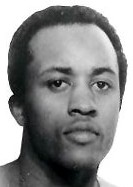
Alton Coleman
Serial Killer Jack Kevorkian
Homicide · USA · 1990
Jack Kevorkian (born May 26, 1928) was a controversial American pathologist. He…
130 victims
Jack Kevorkian
Homicide · USA · 1990
Jack Kevorkian (born May 26, 1928) was a controversial American pathologist. He…
130 victims
 Carl Eugene Watts
Serial killer · USA · 1974
Carl Eugene Watts (born November 7, 1953; died September 21, 2007), also known…
100 victims
Carl Eugene Watts
Serial killer · USA · 1974
Carl Eugene Watts (born November 7, 1953; died September 21, 2007), also known…
100 victims
 Rodney Alcala
Serial killer · USA · 1977
Rodney James Alcala (born August 23, 1943) was also known as Rodrigo Jacques Al…
100 victims
Rodney Alcala
Serial killer · USA · 1977
Rodney James Alcala (born August 23, 1943) was also known as Rodrigo Jacques Al…
100 victims
 Julio Gonzalez
Mass murderer · USA · 1990
Julio Gonzalez was sentenced to 174 twenty-five-year sentences (a total of 4,35…
87 victims
Julio Gonzalez
Mass murderer · USA · 1990
Julio Gonzalez was sentenced to 174 twenty-five-year sentences (a total of 4,35…
87 victims
 David Koresh
Homicide · USA · 1993
David Koresh (born Vernon Wayne Howell; August 17, 1959 – April 19, 1993) led t…
79 victims
David Koresh
Homicide · USA · 1993
David Koresh (born Vernon Wayne Howell; August 17, 1959 – April 19, 1993) led t…
79 victims
 Glen Edward Rogers
Serial killer · USA · 1993
Glen Edward Rogers was a spree killer whose cross-country rampage in 1994-95 le…
70 victims
Glen Edward Rogers
Serial killer · USA · 1993
Glen Edward Rogers was a spree killer whose cross-country rampage in 1994-95 le…
70 victims
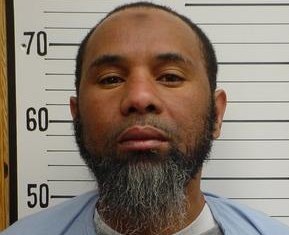 Michael Joe Boyd
Murderer · USA · 1983
Michael Joe Boyd was convicted of felony murder stemming from the shooting deat…
2 victims
Michael Joe Boyd
Murderer · USA · 1983
Michael Joe Boyd was convicted of felony murder stemming from the shooting deat…
2 victims
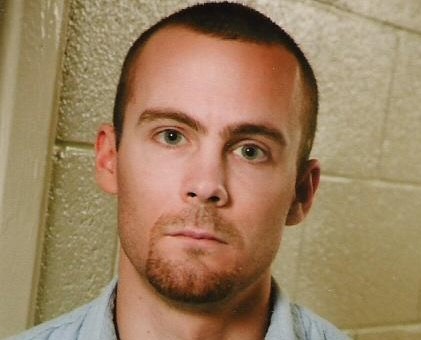 Jacob Lee Davis
Murderer · USA · 1998
Jacob Lee Davis · May 19, 1998 — Robert "Nick" Creson was shot in a parking lot…
1 victim
Jacob Lee Davis
Murderer · USA · 1998
Jacob Lee Davis · May 19, 1998 — Robert "Nick" Creson was shot in a parking lot…
1 victim
 Gary Gilmore
Murderer · USA · 1976
Gary Gilmore was born on December 4, 1940. He was an American career criminal w…
2 victims
Gary Gilmore
Murderer · USA · 1976
Gary Gilmore was born on December 4, 1940. He was an American career criminal w…
2 victims
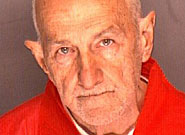 Roger Kibbe
Serial killer · USA · 1977
Roger Reece Kibbe was a middle-aged husband with a lengthy record that included…
7 victims
Roger Kibbe
Serial killer · USA · 1977
Roger Reece Kibbe was a middle-aged husband with a lengthy record that included…
7 victims
- Gender
- male
- Country
- USA
- Location
- Indiana/Ohio/Illinois, USA
- Date of birth
- November 6, 1955
- Age at first offence
- 29
- Characteristics
- kidnappings, rape, armed robbery
- Victim profile
- Vernita Wheat, 9 / Tamika Turks, 7 / Donna Williams, 25 / Virginia Temple and her daughter Rachelle, 9 / Tonnie Storey, 15 / Marlene Walters, 44 / A 77-year-old man
- Method of murder
- Strangulation
- Date(s) of murder
- May-July 1984
- Years active
- 1984
- Date of arrest
- J uly 20, 1984
- Status
-
Executed
Executed by lethal injection in Ohio on April 26 , 2002
Case record: Alton Coleman
Alton Coleman was executed by the state of Ohio for crimes committed during a 1984 multistate crime spree that involved kidnapping, rape, and armed robberies.
Timeline
- April 26, 2002 — Alton Coleman died by lethal injection at the Southern Ohio Correctional Facility in Lucasville, Ohio.
- April 19, 2002 — The Supreme Court of Ohio decided to deny habeas corpus relief and denied a motion for an alternative writ.
- April 16, 2002 — A hearing before the Ohio Parole Board considered Coleman's request to be spared from execution.
- April 25, 2002 — The Ohio Supreme Court rejected a claim by Coleman's attorneys about the state's plan for accommodating witnesses.
- April 23, 2002 — A Franklin County Common Pleas Court judge threw out a lawsuit seeking to prevent the state from televising the scheduled execution on closed-circuit television.
- March 26, 2001 — The U.S. Court of Appeals for the Sixth Circuit issued an opinion affirming the dismissal of Coleman's federal habeas corpus petition.
- October 15, 2001 — The U.S. Supreme Court denied Coleman's request to review the lower federal court rulings.
- December 5, 2000 — A three-judge panel of the U.S. Court of Appeals rejected Coleman's habeas petition in March 2001, following oral arguments in December 2000.
- August 3, 1994 — Coleman's Murnahan appeal was rejected.
- February 13, 1998 — The U.S. District Court denied habeas corpus relief pertaining to the murder of Mrs. Walters.
- January 6, 1995 — Coleman filed his habeas corpus petition in federal court.
- October 7, 1994 — The Ohio Supreme Court affirmed the Court of Appeals’ decision and revoked the stay of execution.
- July 9, 1993 — The Ohio Court of Appeals denied Coleman's application for delayed reconsideration of his direct appeal.
- June 17, 1985 — Coleman's present case was continued until this date because another Walters murder trial was in progress.
- May 6, 1985 — Coleman was sentenced to death in the Walters murder case.
- April 15, 1985 — Coleman's trial for the Walters murder began.
- January 7, 1985 — Coleman was returned to Hamilton County to stand trial on two separate capital indictments, including the case at issue and another involving the murder of one Marlene Walters.
- July 20, 1984 — Coleman was arrested in Evanston, Illinois; he and Debra Brown were taken into custody without incident.
- July 17, 1984 — Alton Coleman became the 388th fugitive listed by the FBI on the Ten Most Wanted list.
- July 13, 1984 — Coleman's crimes in Ohio included the beating death of Marlene Walters and the attack on Harry Walters; the Ohio incident began at about 9:30 a.m.
- July 11, 1984 — Tonnie Storey was the victim of a homicide in Cincinnati, Ohio; a body was discovered eight days after she left home.
- November 6, 1955 — Alton Coleman was born.
Background
Alton Coleman was also referred to as an Illinois native and was described as an African-American serial killer. The partnership with Debra Denise Brown was presented as part of a killing spree during the summer of 1984.
Coleman was described as a middle-school drop-out who lived with his grandmother in Waukegan, Illinois. He was described as the son of a prostitute and as having been charged with sex crimes multiple times between 1973 and 1983. The account said two cases were dismissed and Coleman pleaded guilty to lesser charges in two cases and was twice acquitted. It also said he claimed “to like it in the butt” and was scheduled to go on trial in Illinois on charges stemming from the rape of a 14-year-old girl when he fled and began his indiscriminate killing.
The account described Debra Denise Brown as engaged to another man when she met Coleman, and it said she left her family and moved in with him. In the account of Brown’s sentencing, Governor Richard Celeste commuted Brown’s Ohio death sentence to life imprisonment, stating that Brown was retarded, suffered from childlike emotional development, and had a “master-slave” relationship with Coleman. The commuting decision was described as occurring in 1991. Brown remained in prison and still faced a death sentence in Indiana described in the narrative.
A note attributed to Debra Brown was quoted in the material: “I killed the bitch and I don't give a damn. I had fun out of it.”
The offence
Coleman’s convictions and sentences in Ohio involved the beating death of Marlene Walters. The narrative also described the broader crime campaign as including up to 8 murders, 7 rapes, 3 kidnappings, and 14 armed robberies across multiple states.
Ohio: Tonnie Storey (Cincinnati)
On July 11, 1984, Tonnie Storey left her home in Cincinnati to attend a computer class at a junior high school. Eight days later, her bound and partially decomposed body was discovered in an abandoned building. The cause of death was strangulation.
A classmate testified and identified Coleman in the company of a woman talking to the victim on July 11, when she was last seen alive. A fingerprint from the scene matched Coleman.
Coleman and Brown received death sentences. On appeal, Coleman's death sentence was set aside due to ineffective counsel. (Brown’s death sentence was described as being commuted in 1991 by Ohio Governor Celeste.)
Ohio: Marlene Walters (Norwood)
Coleman and Brown bicycled into Norwood, Ohio on July 13, 1984. About three hours later, they drove away in Harry Walters' car, leaving Harry Walters unconscious and Marlene Walters dead.
Harry Walters testified that Coleman and Brown inquired about a camping trailer he had been offering for sale. Walters sat on the couch as he and Coleman discussed the trailer title. Coleman picked up a wooden candlestick and, after admiring it, hit Harry Walters on the back of the head, knocking him unconscious. Sheri Walters came home around 3:45 p.m. and found her father barely alive and her mother dead at the bottom of the basement steps. Both had ligatures around their throats and electrical cords tied around their bare feet. Her mother’s hands were bound behind her back and her father’s hands were handcuffed behind his back. Her mother’s head was covered with a bloody sheet.
The material described expert testimony and injuries including that Marlene Walters had been struck on the head approximately 20 to 25 times, with lacerations including some made with vice grips, that the back of her skull was smashed, that parts of her skull and brain were missing, and that the living room hallway and basement were splattered with blood. It also described fragments of a broken soda bottle bearing Coleman's fingerprints found in the living room, strands of her hair found on a blood-stained magazine rack located in the living room, and bloody footprints made by two different kinds of shoes found in the basement. Money, jewelry, and shoes had been stolen; left behind were two bicycles, clothes and shoes. The family car, described as a red Plymouth Reliant, was gone. The Plymouth showed up abandoned in Kentucky two days later.
The narrative also included a quoted exchange attributed to the Reverend Gay. The Reverend Gay asked Coleman, “Why you want to do us like that, like this,” and Coleman responded, “I'm not going to kill you, but we generally kills them where we go.”
Illinois: Vernita Wheat (Waukegan)
The material described that the defendant introduced himself to Juanita Wheat as Robert Knight, showed an identification card bearing that name, and told her he lived two blocks away. Coleman visited often and ate dinner with the family over the next few weeks. On May 29, 1984, Juanita allowed Vernita to accompany Coleman to his apartment “to pick up a stereo system.” They never returned.
A customer at the local “400 Club” testified that at approximately 11:35 p.m. on May 29, 1984, a black man and Vernita entered the establishment, and the man immediately used the telephone. A few minutes later a cab arrived to pick them up.
On June 19, 1984, Vernita Wheat’s body was discovered in the bathroom of an abandoned building in Waukegan, Illinois. A fingerprint from Coleman was taken from the scene.
The Illinois decision portion described that a jury found Coleman guilty of murder and aggravated kidnapping, that the circuit court sentenced Coleman to death and imposed a 15-year term for aggravated kidnapping, and that the death sentence was stayed pending direct appeal.
Indiana: Tamika Turks (Gary)
The material described that Tamika and her niece, Annie, were confronted by Debra Denise Brown and Coleman. They convinced the children to walk into the woods to play a game. In the woods, they removed Tamika’s shirt and tore it into small strips used to bind and gag the children. When Tamika began to cry, Brown held her nose and mouth while Coleman stomped on her chest. After carrying Tamika a short distance away, Annie was forced to perform oral sex on both Brown and Coleman, then Coleman raped her. Brown and Coleman then choked Annie until she was unconscious. When Annie awoke, they were gone.
Tamika was found dead in the bushes nearby, strangled with an elastic strip of bedsheet.
The material stated that Coleman and Brown were sentenced to death in Indiana for the murder of Tamika Turks.
Investigation and arrest
On July 17, 1984, Coleman became the 388th fugitive listed by the FBI on the Ten Most Wanted list.
On July 20, 1984, Coleman and Brown were arrested in Evanston, Illinois. The narrative described that someone from Coleman’s old neighborhood recognized them and reported them, which led to police dispatch and a description being broadcast. Officers approached and saw Coleman and Brown sitting on probable bleachers in an empty Mason Park. Brown walked away from Coleman, and she was stopped and searched; a gun was found in her purse. Coleman denied he was Alton Coleman and had no identification; he provided two aliases. Both were taken into custody without incident and transported to the Evanston Police Department where both were identified by fingerprints.
The narrative also described that in the police station Coleman was strip searched and a steak knife was found between two pair of sweat socks he was wearing. A shopping bag of different tee shirts and caps was also described, as well as that the couple changed shirts and caps every three to four blocks.
Trial (Ohio Walters case)
Coleman was tried separately before a jury and was found guilty of purposely and with prior calculation and design causing the death of Tonnie Storey in the Storey case, with the death penalty imposed in the sentencing phase. In the Walters case, the material described that Coleman and Brown arrived at the Walters home on July 13, 1984 and that Marlene Walters was killed and Harry Walters attacked.
In the Walters case, the material described counts and specifications of aggravating circumstances. The Hamilton County grand jury indicted Coleman on five counts including aggravated murder while committing aggravated burglary, aggravated murder while committing aggravated robbery, attempted aggravated murder, aggravated robbery, and aggravated burglary. The jury returned verdicts of guilty on all charges, and Coleman was sentenced to death for the aggravated murder of Mrs. Walters. The Ohio Court of Appeals and Ohio Supreme Court affirmed the conviction and death sentence, and the United States Supreme Court denied certiorari.
The material also included descriptions of “other acts” evidence at trial, discussing that evidence was admissible under Ohio Rev. Code Ann. § 2945.59 and Ohio Evid. R. 404(B).
Sentencing
Ohio death sentence (Waters)
The material stated that Coleman's conviction and death sentence for Marlene Walters were affirmed on appeal and that he was sentenced to death. The case reached the federal habeas stage and the execution proceeded after denials of further relief.
Other death sentences and commutation
The material stated that Coleman also received death sentences in Illinois and Indiana. It described that Brown’s death sentence in Ohio was commuted in 1991 by Governor Richard Celeste. Brown was described as still facing a death sentence in Indiana in the narrative, and it described Brown’s imprisonment at the Ohio Reformatory for Women in Marysville.
Appeals and habeas proceedings
U.S. Supreme Court and federal review
The material described that Coleman's case went to the United States Supreme Court several times between 1985 and 2002, and that his arguments that his conviction and death sentence were unconstitutional failed.
The material stated that on April 25, 2002, the Ohio Supreme Court rejected a claim related to execution viewing and that on April 26, 2002, Coleman was executed by lethal injection.
State habeas: Supreme Court of Ohio decision (April 19, 2002)
The Supreme Court of Ohio issued a per curiam decision on April 19, 2002, stating that Coleman’s habeas petition was denied and that the motion for an alternative writ was denied.
The decision stated that Coleman’s claim was not cognizable in habeas corpus because he had an adequate remedy at law and could have raised the issue on direct appeal. It also stated that habeas corpus was not available where there was an adequate remedy at law. The decision concluded: “Writ denied; motion denied.”
Clemency and execution process
Coleman requested clemency in a hearing before the Ohio Parole Board. The material described a hearing date of April 16, 2002 and said the board considered the arguments presented in making a recommendation.
At the clemency hearing and related materials, the material included the following quotation attributed to Harry Walters: “Execution is the solution,'' Walters said. “When will the system finally have mercy on the victims, families and give them closure?”
The material also included a quotation attributed to Scott Lillard: “We ask for justice.''
The material included a quotation attributed to Hamilton County Prosecutor Michael K. Allen: “pure evil,” a smooth talker who “convinced all those people into their grave. . . . He's a con man. He's trying to con you.''
The material included a quotation attributed to the Rev. Robert Evans: “I believe that society has neglected the crimes against Alton, and now they want to exterminate him,'' said the Rev. Robert Evans.
Coleman’s last-ditch effort to avoid lethal injection was described as unsuccessful.
Final meal and final words
Coleman ordered a final meal consisting of filet mignon with mushroom gravy, biscuits and gravy, fried chicken, French fries, broccoli with cheese, collard greens, onion rings, corn bread, a salad, sweet potato pie, butter pecan ice cream and cherry cola.
The material stated his final words were: “The Lord is my shepherd,” which he repeated over and over again.
Outcome
Alton Coleman died by lethal injection on April 26, 2002, at the Southern Ohio Correctional Facility in Lucasville, Ohio. He was executed for the murder of Marlene Walters, 44, of Norwood, Ohio, and the execution proceeded after denials of state and federal relief.
Spotted an error, or have more information about this case?