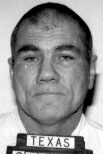
James Paul Collier
Murderer Brian Kevin Rosenfeld
Murderer · USA · 1985
Brian Kevin Rosenfeld Brian Kevin Rosenfeld was sentenced to three concurrent l…
23 victims
Brian Kevin Rosenfeld
Murderer · USA · 1985
Brian Kevin Rosenfeld Brian Kevin Rosenfeld was sentenced to three concurrent l…
23 victims
 Russell Ellwood
Murderer · USA · 1991
Russell Ellwood was a former taxi driver. Authorities suspected him of killing…
20 victims
Russell Ellwood
Murderer · USA · 1991
Russell Ellwood was a former taxi driver. Authorities suspected him of killing…
20 victims
 Robert Martines Perez
Murderer · USA · 1994
Name: Robert Martines Perez · Other name used in proceedings: Robert Martinez P…
15 victims
Robert Martines Perez
Murderer · USA · 1994
Name: Robert Martines Perez · Other name used in proceedings: Robert Martinez P…
15 victims
 Billy Frank Vickers
Murderer · USA · 1993
Billy Frank Vickers Vickers was executed by lethal injection in Texas on Januar…
14 victims
Billy Frank Vickers
Murderer · USA · 1993
Billy Frank Vickers Vickers was executed by lethal injection in Texas on Januar…
14 victims
 Hans Thomas Reiser
Murderer · USA · 2006
Hans Thomas Reiser (born 19 December 1963) was an American computer programmer…
1 victim
Hans Thomas Reiser
Murderer · USA · 2006
Hans Thomas Reiser (born 19 December 1963) was an American computer programmer…
1 victim
 Wolfgang Schmidt
Serial killer · Germany · 1989
Wolfgang "Beate" Schmidt was also known as The Beelitz murderer and The Pink Gi…
6 victims
Wolfgang Schmidt
Serial killer · Germany · 1989
Wolfgang "Beate" Schmidt was also known as The Beelitz murderer and The Pink Gi…
6 victims
 Michael Owsley
Murderer · USA · 1993
Michael Owsley was convicted of first-degree murder and was sentenced to death.…
1 victim
Michael Owsley
Murderer · USA · 1993
Michael Owsley was convicted of first-degree murder and was sentenced to death.…
1 victim
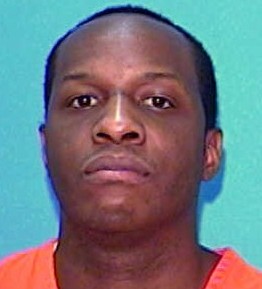 Labrant Dennis
Murderer · USA · 1996
Labrant Dennis was sentenced to death on February 26, 1999. · 04/13/96 — Earl L…
2 victims
Labrant Dennis
Murderer · USA · 1996
Labrant Dennis was sentenced to death on February 26, 1999. · 04/13/96 — Earl L…
2 victims
- Gender
- male
- Country
- USA
- Location
- Wichita County, Texas, USA
- Date of birth
- January 7, 1947
- Age at first offence
- 48
- Characteristics
- revenge
- Victim profile
- Gwendolyn Joy Reed, 51 , and her son, Timmy Reed, 32
- Method of murder
- Shooting (30-30 rifle)
- Date(s) of murder
- March 14, 1995
- Years active
- 1995
- Date of arrest
- 9 days after
- Status
-
Executed
Executed by lethal injection in Texas on December 11, 2002
Case details
James Paul Collier was executed by lethal injection in Texas on December 11, 2002.
Background
Collier planned to kidnap his 13-year-old daughter when he went into the home of his stepfather, Phillip Hoepfner, with a shotgun on March 14, 1995.
The daughter had moved to Oklahoma with her mother and was in Wichita Falls visiting Hoepfner for spring break.
On March 14, 1995, Collier entered a home in Wichita Falls, Texas, and shot and killed Gwendolyn Joy Reed and her adult son, Timmy Reed. Neither of the two victims were related to Collier or involved in a dispute with him, but Collier’s daughter was visiting her former stepfather, who lived in the house with Timmy Reed.
Collier drove to New Mexico where he was apprehended and gave a videotaped confession in which he admitted shooting the victims.
In his confession, Collier stated that he initially went into the home with his rifle because he was angry at his ex-wife and daughter because they refused to have contact with him and because he believed his daughter had been sexually abused by her former stepfather. There was no evidence that the former stepfather abused Collier’s daughter.
Collier described himself as mentally ill and as “child in a man’s body.”
Collier also said that he wanted to be found innocent and decided to defend himself when his court-appointed lawyer told him that the best he could hope for was a life sentence.
Collier insisted on representing himself during his 1996 capital murder trial, and after he was deemed mentally competent, his request was granted.
The offence
On the evening of March 14, 1995, Collier entered Hoepfner’s home armed with a shotgun and fired shots through the glass storm door before entering.
Collier killed Timothy Don Reed, 31, who lived there with Hoepfner, and also killed Reed’s mother, Gwendolyn, 51.
In accounts of the shooting sequence, after the first shot, Tim yelled, “It’s Jimmy!” Collier shot him three times, killing him.
After the murders, Collier fled to New Mexico and was arrested there.
Authorities suspected that Collier had intended to either kidnap or kill his daughter.
Investigation
After the murders, Collier fled to New Mexico where he was apprehended.
Collier gave a videotaped confession, during which he admitted shooting the victims.
Dr. Richard Coons testified that he reviewed the three-and-a-half hour video-taped statement made by Collier the day after the crime and did not find any evidence that Collier’s judgment and insight were impaired by mental illness or that Collier was insane at the time of the offense.
Dr. Coons also stated that, based on a hypothetical case matching all the evidence admitted at both stages of trial, Collier would pose a continuing danger to society.
Arrest
Nine days following the shootings, Collier fled to New Mexico where he was arrested.
Collier was apprehended after he was pulled over for not wearing a seat belt and was taken back to Texas, where he confessed.
Trial
Collier was tried for capital murder and insisted on defending himself.
During trial, Collier varied between representing himself and having a court-appointed defense attorney work his case. The confusion caused by Collier’s decision, coupled with testimony from a Wichita County jailer that Collier had attacked him while waiting for trial, helped seal Collier’s fate.
Collier’s court-appointed attorney John Curry, prosecutors, and the judge unsuccessfully attempted to dissuade him from representing himself.
After Collier was deemed competent to defend himself, Curry said he was left with no choice but to sit and watch along with jurors as Collier questioned witnesses.
In the jury setting, Curry described that Collier’s daughter, Tina, recoiled in the witness chair as he approached her to question her, while jurors watched during Collier’s questioning.
Jurors took 12 minutes to sentence Collier to death.
Sentencing
Following a separate punishment hearing, the trial court sentenced Collier to death.
During the punishment phase, jurors heard evidence about Collier’s prior convictions and other allegations.
Evidence introduced during the punishment phase included:
- two counts of selling narcotics (September and October 1970)
- robbery (July 1971)
- assault (March 1987)
The victim of Collier’s 1970 robbery testified that Collier sneaked up from behind him and hit him in the head with an industrial-size broom, almost knocking him unconscious. The victim also testified that Collier threatened to rape him and threatened to kill him with a shotgun.
The victim of Collier’s 1987 assault testified that he previously worked at a Sonic fast food restaurant and that Collier erupted when he did not find salt in the sack with his hamburger. The victim testified that Collier pulled the 15-year-old’s shirt over his head so he could not swing back, then stomped the teenager in the face several times.
Evidence was also introduced regarding an unadjudicated assault in December 1994 in which Collier struck an individual on the head with a beer bottle and cut his face, inflicting injuries that required approximately 380 stitches.
In January 1995, Collier was arrested for DWI. During an inventory of the vehicle, an officer discovered an illegal sawed-off 12-gauge shotgun.
The State also presented testimony regarding Collier’s physical assault of one jailer and threats toward other jailers while he was locked up in the Wichita County Jail awaiting his capital murder trial.
In accounts describing competency and mental health, a psychologist testified that Collier’s IQ was somewhere in the range of 78 to 91. The threshold for mental retardation was stated as being generally considered 70, and Collier exceeded that threshold according to the neuropsychologist who testified at his trial.
Appeals
Timeline
- 03/14/95 — James Paul Collier murdered Gwendolyn Joy Reed and Timmy Reed.
- 04/19/96 — A jury found Collier guilty of capital murder.
- 04/24/96 — The trial court sentenced Collier to death following a separate punishment hearing.
- 01/10/97 — Collier filed a direct appeal brief raising four points of error.
- 06/19/97 — While his direct appeal was pending, Collier filed a state writ of habeas corpus petition.
- 12/12/97 — On direct appeal, the Court of Criminal Appeals affirmed Collier’s conviction and sentence.
- 01/14/98 — On state habeas, the Court of Criminal Appeals denied relief on all 24 of Collier’s claims.
- 02/11/98 — The Court of Criminal Appeals denied Collier’s petition for rehearing on direct appeal.
- 02/27/98 — The Court of Criminal Appeals issued the mandate.
- 10/13/98 — The United States Supreme Court denied certiorari review off direct appeal.
- 10/01/99 — Collier filed a federal writ of habeas corpus petition raising five claims.
- 12/13/99 — The State filed an answer and moved for summary judgment.
- 05/09/01 — The United States District Court for the Western District of Texas denied habeas relief.
- 05/22/01 — The district court entered final judgment.
- 06/21/01 — Collier filed notice of appeal and an application for certificate of appealability raising eight claims.
- 07/09/01 — The district court denied COA.
- 09/13/01 — Collier filed an application for COA in the United States Court of Appeals for the Fifth Circuit.
- 11/19/01 — The State (through current TDCJ-ID Director Janie Cockrell) filed its opposition to COA.
- 07/25/02 — The Fifth Circuit denied a COA in a published opinion.
- 08/19/02 — Trial court set the execution date for Dec. 11, 2002.
- 10/23/02 — Collier petitioned the United States Supreme Court for certiorari review.
- 12/03/02 — The State (through TDCJ-ID Director Janie Cockrell) filed a brief in opposition.
- 12/09/02 — Collier filed a supplemental stay application and a supplemental certiorari petition.
- 12/11/02 — Collier was executed by lethal injection.
The United States Supreme Court refused to grant Collier a stay of execution.
Justices Ruth Bader Ginsburg and John Paul Stevens dissented.
Outcome
Collier was executed by lethal injection in Texas on December 11, 2002 in Huntsville, Texas.
Collier was pronounced dead at 6:15 p.m.
Aftermath
A final meal was recorded and served with some items matching Collier’s request.
Collier requested “30 jumbo shrimp with cocktail sauce, a baked potato, French fries, a T-bone steak, a chocolate malt, one gallon of vanilla ice cream and three cans of Big Red.”
He was given fried fish, chicken fried steak, baked potato and ice cream.
Collier’s final words were:
“The only thing I want to say is that I appreciate the hospitality you guys have shown me and the respect. And the last meal was really good. That is about it. Thank you guys for being there and giving me a little bit of spiritual guidance and support.”
In one account, Collier spoke while strapped to the gurney and then twitched, began coughing, and let out one loud snore as the drugs took effect.
There were no witnesses for either Collier or his victims’ family in the execution accounts describing witness presence, and reporters, the warden, and the chaplain were mentioned.
Other details
The prosecutor named in the Texas Attorney General advisory was Greg Abbott.
A Texas Attorney General Media Advisory stated that James Paul Collier was scheduled to be executed after 6 p.m. on Wednesday, Dec. 11, 2002.
The capital murder case was described as the capital murder of Gwendolyn Joy Reed and her adult son, Timmy Reed, during the same criminal transaction in Wichita Falls, Texas on March 14, 1995.
The Wichita County District Attorney named was Barry Macha.
A court-appointed attorney John Curry was described as unsuccessfully attempting to dissuade Collier from representing himself at trial and later recalling that jurors and witnesses witnessed the approach to Collier’s daughter during questioning.
Other described personal details included Collier dropping out of school after the seventh grade and being characterized as a carpenter.
One account stated Collier had been sentenced to die after a jury found him guilty and that the U.S. Supreme Court refused to block his execution in relation to a ruling in June.
Another account included a quote attributed to Curry:
“He is one of the more difficult individuals I have ever dealt with largely because he is so stubborn,” defense attorney John Curry said. “He wanted what he wanted and wouldn't listen to anything else.”
Another account included a quote attributed to Collier from death row:
“I didn't know nothing about law, except I watched `Perry Mason' with the kids. That was my whole schooling as far as courtroom tactics.”
Another account included a quote attributed to Collier about his reputation and disorders:
“Back when I was young, I got into a lot of trouble because I had all those disorders,” he said. “Most of my trouble was caused by other people, not something I did.”
Another account included a quote attributed to Collier about the “The DA” characterization:
“The DA made it look like I was some kind of notorious criminal, but most of that stuff wasn't nothing but minor stuff.”
An additional quote attributed to Curry included:
“It was horrible,” Curry recalled. “He couldn't have done anything more to get himself on death row than he did, short of threatening the judge and the jury.”
One account included a quote attributed to Collier regarding his choice to defend himself:
“I decided to defend myself when my lawyer told him that the best he could hope for was a life sentence.”
A quote attributed to Collier in another account described his final meal as really good:
“The last meal was really good. That's about it.”
Another quote attributed to a prosecutor, Barry Macha, stated:
“James Paul Collier certainly is an example of where the death penalty is appropriate given the horrific facts in this case and his background,” he said. “He is a violent person and has no regard for other people and their rights.”
One account described that Collier had previously served time for robbery and that he received a 5-year sentence for the robbery conviction and served 2½ years from October 1971 to March 1974.
A restraining order in 1987 was described as taken out by Collier’s mother.

Spotted an error, or have more information about this case?