Cornel Cooks
Murderer Ervil LeBaron
Murderer · USA · 1972
Ervil Morrell LeBaron (1925 to August 16, 1981) was the leader of a polygamous…
35 victims
Ervil LeBaron
Murderer · USA · 1972
Ervil Morrell LeBaron (1925 to August 16, 1981) was the leader of a polygamous…
35 victims
 Brian Kevin Rosenfeld
Murderer · USA · 1985
Brian Kevin Rosenfeld Brian Kevin Rosenfeld was sentenced to three concurrent l…
23 victims
Brian Kevin Rosenfeld
Murderer · USA · 1985
Brian Kevin Rosenfeld Brian Kevin Rosenfeld was sentenced to three concurrent l…
23 victims
 Marvin Gray
Murderer · USA · 1975
Marvin Gray was convicted killer who claimed responsibility for 23 slayings and…
23 victims
Marvin Gray
Murderer · USA · 1975
Marvin Gray was convicted killer who claimed responsibility for 23 slayings and…
23 victims
 Yahweh ben Yahweh
Murderer · USA · 1980
Yahweh ben Yahweh was born and legally named Hulon Mitchell Jr. (October 27, 19…
23 victims
Yahweh ben Yahweh
Murderer · USA · 1980
Yahweh ben Yahweh was born and legally named Hulon Mitchell Jr. (October 27, 19…
23 victims
 Russell Ellwood
Murderer · USA · 1991
Russell Ellwood was a former taxi driver. Authorities suspected him of killing…
20 victims
Russell Ellwood
Murderer · USA · 1991
Russell Ellwood was a former taxi driver. Authorities suspected him of killing…
20 victims
 Michelle Knotek
Murderer · USA · 1994
Michelle Knotek was a woman from Raymond, Washington. She was convicted in 2004…
2 victims
Michelle Knotek
Murderer · USA · 1994
Michelle Knotek was a woman from Raymond, Washington. She was convicted in 2004…
2 victims
 Melvin Trotter
Murderer · USA · 1986
Melvin Trotter was born 12/29/60. The case was in the Twelfth Judicial Circuit,…
1 victim
Melvin Trotter
Murderer · USA · 1986
Melvin Trotter was born 12/29/60. The case was in the Twelfth Judicial Circuit,…
1 victim
 Jessie King
Murderer · United Kingdom · 1887
Jessie King was executed in Edinburgh on March 11, 1889, and she was described…
2 victims
Jessie King
Murderer · United Kingdom · 1887
Jessie King was executed in Edinburgh on March 11, 1889, and she was described…
2 victims
 Matthew Steven Johnson
Serial killer · USA · 2000
Matthew Steven Johnson was arrested in Hartford on charges that he killed two w…
3 victims
Matthew Steven Johnson
Serial killer · USA · 2000
Matthew Steven Johnson was arrested in Hartford on charges that he killed two w…
3 victims
 Michael Eugene Sharp
Murderer · USA · 1982
Michael Eugene Sharp (#740), a Texas death row inmate. Brenda Kay Broadway (32)…
2 victims
Michael Eugene Sharp
Murderer · USA · 1982
Michael Eugene Sharp (#740), a Texas death row inmate. Brenda Kay Broadway (32)…
2 victims
- Gender
- male
- Country
- USA
- Location
- Comanche County, Oklahoma, USA
- Date of birth
- 1956
- Age at first offence
- 26
- Characteristics
- rape, robbery
- Victim profile
- Jennie Elva Ridling ( 87-year-old disabled woman)
- Method of murder
- Suffocation
- Date(s) of murder
- October 28, 1982
- Years active
- 1982
- Date of arrest
- Same day
- Status
-
Executed
Executed by lethal injection in Oklahoma on December 2, 1999
Case overview
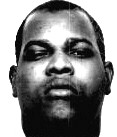
Cornel Cooks was convicted in Oklahoma of the murder of his disabled, eighty-seven-year-old neighbor, Jennie Ridling. Ridling suffocated to death after a piece of gauze-like material had been tightly wrapped around her head. The evidence indicated Ridling was raped, and her home was ransacked and burglarized. Cooks was sentenced to death and was executed by lethal injection in Oklahoma on December 2, 1999.
Cooks was tried together with a co-defendant, Rodney Madson Masters, a/k/a William Wallace Troxell. Both were convicted. Masters was also convicted, but jurors recommended a punishment of life in prison.
People
- Cornel Cooks — defendant; convicted of Murder in the First Degree; sentenced to death; executed by lethal injection on December 2, 1999.
- Rodney Madson Masters (a/k/a William Wallace Troxell) — co-defendant; convicted; jurors recommended life in prison.
- Jennie Ridling (also referred to as Jennie Elva Ridling) — victim; disabled eighty-seven-year-old neighbor; suffocated to death after gauze-like material was wrapped around her head; evidence indicated she was raped; her home was ransacked and burglarized.
- Patricia Smith — Ridling’s granddaughter; she said she thought little of the crime when she met Cooks as the man who mowed her grandmother’s lawn; she later said she would witness the execution with her two daughters.
- Eleta Douglas — Ridling’s daughter; Ridling lived in a trailer next door to Douglas.
- Stephanie Anderson — Patricia Smith’s daughter.
- Margaret Wolfe — Patricia Smith’s daughter.
- Mike Wolfe — Margaret Wolfe’s husband.
- Stephen Louis Hilliary — attorney for appellant (at appeal).
- Michael C. Turpen — Attorney General (for appellee).
- Thomas L. Spencer — Asst. Attorney General (for appellee).
- William M. Roberts — District Judge (trial).
- PARKS — Presiding Judge in the appellate opinion.
- BRETT — J., concurring (in appellate opinion).
- BUSSEY — J., concurring in results (in appellate opinion).
- Belcher — officer who advised Cooks regarding communication limitations after Cooks requested an attorney; detective Belcher later obtained Miranda waivers and took statements.
- Officer Belcher / Detective Belcher — referenced in the appellate and habeas material regarding Miranda warnings and statements.
- Rodney Madson Masters — also testified in the trial referenced in the habeas background.
- Dr. Robert Dix — state medical examiner in the federal appellate discussion.
- Roberts — referenced as the District Court judge in the appellate narrative (William M. Roberts, District Judge).
Timeline
- October 28, 1982 (about 8 p.m.) — A neighbor discovered Ridling’s body shortly after 8 p.m. and called police; Ridling was a disabled eighty-seven-year-old woman whose home had been ransacked.
- October 28, 1982 (beginning at approximately 8:30 p.m.) — Lawton police investigated the crime scene and collected evidence.
- October 29, 1982 (approximately 5:15 a.m.) — Cooks arrived at his residence and was arrested; he was given Miranda warnings and taken to the police station for questioning.
- October 29, 1982 — Police attempted questioning later that same day; Cooks refused to answer questions and requested a lawyer.
- October 30, 1982 (approximately 5:00 p.m.) — Officer Belcher was summoned to the county jail by Cooks; Cooks was read Miranda rights again, signed a rights waiver form, and gave statements later introduced at trial.
- November 1, 1982 — Cooks made additional statements after detectives questioned him regarding differences between his and Masters’ initial statements.
- March 1983 — Cooks and Masters were tried together in Oklahoma state court for the murder of Ridling.
- March 1983 — The jury found Cooks guilty of Murder in the First Degree and recommended a sentence of death.
- April 26, 1985 — Rehearing was denied in the Oklahoma Court of Criminal Appeals material: "April 26, 1985 Rehearing Denied May 29, 1985."
- December 2, 1999 — Cooks was executed by lethal injection in Oklahoma.
The offence
Jennie Ridling lived in a mobile home next door to her daughter in Lawton, Oklahoma. Her lifeless body was discovered by a neighbor on October 28, 1982. Police determined the mobile home had been ransacked.
Evidence revealed that Ridling was raped and beaten about the head. Ridling suffocated to death due to a tightly wrapped piece of gauze-like cloth around her head. According to the medical examiner, Ridling suffered nearly two hours before she died.
The evidence also indicated that Ridling’s home was burglarized and ransacked, and that several items were stolen. Police recovered items belonging to Ridling, including her checkbook.
Witness testimony during the trial described that Cooks and Masters were seen returning to Cooks’ house holding a pillowcase about 9 p.m. on the night of the murder. The medical evidence and photographs showed how material was wrapped around Ridling’s head and mouth.
Investigation
Beginning at approximately 8:30 p.m. on October 28, 1982, Lawton police investigated the crime scene and collected evidence. Evidence revealed that one of the perpetrators apparently injured himself, as there was blood on and near the suspected point of entry.
After gathering information and evidence at the crime scene, Lawton police detectives began questioning neighbors in the surrounding area. Based on information received through the investigation, two detectives went to Cooks’ residence, a few houses down the street.
As the detectives approached Cooks’ house, one detective looked in a trash can in Cooks’ front yard and found a bloody sock, which was confiscated for evidence.
Officers then obtained a search waiver for the house from Cooks’ common-law wife. A later described consent to search was obtained from Cooks’ common-law wife for the automobile Cooks had driven just prior to his arrest.
Officers later recovered items identified as the victim’s, including a trunk item identified as Jennie Ridling’s checkbook.
Investigators also recovered a bloody sock in a trash bin in front of Cooks’ house.
Arrest
After police collected evidence and began questioning neighbors, officers went to Cooks’ residence. At 5:15 a.m. on October 29, 1982, Cooks arrived at the residence, was arrested, given Miranda warnings, and taken to the police station for questioning.
Cooks denied knowledge of the burglary and the homicide. After Cooks requested an attorney, Officer Belcher advised him that the officer could not speak with him further unless Cooks requested officers to do so.
At approximately 5:00 p.m. on October 30, 1982, Belcher was summoned to the county jail by Cooks. Cooks was read his Miranda rights again, signed a rights waiver form, and gave statements later introduced at trial.
Trial
Cooks was tried by a jury along with co-defendant Rodney Madson Masters, a/k/a William Wallace Troxell, before the Honorable William M. Roberts, District Judge.
The jury found Cooks guilty of Murder in the First Degree and recommended a sentence of death. The trial court entered judgment and sentence in accord with the jury verdict.
Charges and sentencing (as described in the federal appellate background)
In March 1983, Cooks and Masters were tried together in Oklahoma state court on an information alleging:
- murder with malice aforethought,
- felony murder while in the commission of first degree rape,
- felony murder while in the commission of first degree burglary.
After the sentencing stage, the jury found three aggravating circumstances as to Cooks:
- he previously was convicted of a felony involving the use or threat of violence;
- Ridling’s murder was especially heinous, atrocious or cruel;
- he represented a continuing threat to society.
Based on these aggravators, the jury sentenced Cooks to death. Masters was sentenced to life imprisonment.
Evidence and contested evidentiary issues on direct appeal
Cooks challenged the admission of the bloody sock, arguing it was improperly seized by police in violation of his rights under the U.S. Const. amend. IV and the Okla. Const. art. 2, § 30 [2-30]. The appellate court determined curbside trash was abandoned property and that the appellant had no reasonable expectation of privacy.
Cooks also challenged the legality of his arrest and argued confessions should have been suppressed as fruits of the purported illegal arrest. The appellate court described that the arrest was based on mere suspicion and did not meet the burden of establishing probable cause. The appellate court then determined that the confessions were purged of the taint and were properly admitted.
Cooks alleged the trial court failed to grant a separate trial from his co-defendant. The appellate court determined denial of severance was proper because confessions were edited to remove references of one co-defendant from the other, and because Masters took the stand and was available for cross-examination.
Cooks challenged photographs as gruesome and prejudicial. The appellate court found the photographs were properly admitted, including State’s Exhibits No.’s 2, 3, 5 and 6, described as black and white photos showing the body position and location and the manner in which material was wrapped around the victim’s head and mouth.
Cooks argued that the medical examiner’s autopsy report was inadmissible. The appellate court stated the report was hearsay and cumulative, but concluded admission did not constitute reversible error because it did not contradict testimony and there was no evidence it prejudiced the jury.
Cooks also raised an issue about a jury instruction regarding evidence of mitigation introduced in the second stage. The appellate court held the instruction was proper and described that the trial court could have left out the word "minimum", but no error occurred.
The appellate court addressed allegations that the district attorney inflamed the passions and prejudice of the jury by referring to the victim’s thoughts and feelings at the time of the attack. The appellate court described that an objection was made and sustained and the jury was admonished.
The appellate court reviewed factors required when the death sentence is imposed and held the sentence was not imposed under the influence of passion, prejudice, or any other arbitrary factor.
Sentencing
Cooks received a death sentence after the sentencing stage. The jury found three aggravating circumstances:
- prior conviction of a felony involving the use or threat of violence,
- probability that Cooks would be a continuing threat to society.
The appellate court held the sentence was not imposed under the influence of passion, prejudice, or any other arbitrary factor. The appellate court also held it was not excessive or disproportionate compared to similar cases, considering the defendant and his crime. The appellate court concluded the judgment and sentence should be affirmed.
Appeals
Oklahoma Court of Criminal Appeals
Cooks’ conviction and sentence were affirmed. The opinion was issued by the Oklahoma Court of Criminal Appeals with rehearing denied on May 29, 1985, in the material provided.
Federal habeas proceedings and Tenth Circuit decision
Cooks appealed the denial of habeas corpus relief seeking to overturn his capital murder conviction and death sentence. The federal appellate decision described the issues raised:
- involuntary post-arrest statements and violation of the right to counsel,
- constitutionality and sufficiency of evidence for the “continuing threat” and “heinous, atrocious, or cruel” aggravating circumstances,
- jury instructions concerning mitigating circumstances,
- ineffective assistance of counsel during guilt and sentencing stages and on direct appeal.
The federal appellate court denied habeas relief on the ground that waiver and post-arrest statements were voluntary, knowing and intelligent. The federal appellate court rejected arguments that the “continuing threat” aggravator was unconstitutional and that the “heinous, atrocious, or cruel” aggravator was unconstitutional, concluding the record supported conscious physical suffering.
Jury instruction quotations (federal habeas decision)
Jury Instruction No. 55 advised the jury:
If you unanimously find that one or more of the aggravating circumstances existed beyond a reasonable doubt, unless you also unanimously find that any such aggravating circumstance or circumstances out weigh [sic] the finding of one or more mitigating circumstances, the death penalty shall not be imposed.
Jury Instruction No. 52 (as described):
Should you unanimously find that one or more aggravating circumstances existed beyond a reasonable doubt, you would be authorized to consider imposing a sentence of death. If you do not unanimously find beyond a reasonable doubt that one or more of the aggravating circumstances existed, you are prohibited from considering the penalty of death. In that event, the sentence must be imprisonment for life.
Jury Instruction No. 53 (as described):
Mitigating circumstances are those which, in fairness and mercy, may be considered as extenuating or reducing the degree of moral culpability or blame. The determination of what are mitigating circumstances is for you as jurors to resolve under the facts and circumstances of this case.
Jury Instruction No. 54 advised the jury (as described):
Evidence has been offered as to the following minimum mitigating circumstances: 1. The defendant has no significant history of prior criminal activity; 2. The age of the defendant at the time of the crime. Whether these circumstances existed, and whether these circumstances are mitigating, must be decided by you.
Jury Instruction No. 51 (as shown in the federal appellate decision footnote):
As used in these instructions, the term "heninous" [sic] means extremely wicked or shockingly evil; "atrocious" means outrageously wicked and vile; "cruel" means pitiless, or designed to inflict a high degree of pain, utter indifference to, or enjoyment of, the sufferings of others. The phrase "especially heinous, atrocious, or cruel" is directed to those crimes where the death of the victim was preceded by torture of the victim or serious physical abuse.
Effectiveness of counsel (federal habeas decision)
The federal appellate decision discussed ineffective assistance of counsel. It held counsel was ineffective during the sentencing stage of trial based on deficient performance but then determined that the prejudice standard was not met, concluding there was no reasonable probability that the sentencing outcome would have been different.
Outcome
Cooks was executed by lethal injection in Oklahoma on December 2, 1999.
At the execution, Cooks was described as being pronounced dead at 12:18 a.m. at the Oklahoma State Penitentiary.
Cooks was reported to have received a letter from the Ridling family in his final hours Wednesday. The letter read:
We can only hope that you have made peace with your God,
and it continued:
Jennie "will be waiting on your arrival in Heaven, because she has also forgiven you."
In his final statement in the death chamber, Cooks said:
It means a lot to me to get a letter from the victim's relatives to say I've been forgiven," he said in his final statement.
He also said:
A lot of people didn't expect a person like me to change and that's the part they don't understand.
He urged:
"Keep peace with your soul, strive to be happy and keep God in your life."
The family statement read:
We would like Mr. Cooks' family to know that they have been in our thoughts and prayers and will continue to be," the family statement read. "We can only hope that this will bring some kind of closure to us all."
Other details
- Cooks was 43 at the time of execution and had spent 16 years on death row for Ridling’s death in 1982.
- Cooks was 26 at the time of the murder.
- The state Pardon and Parole Board rejected Cooks’ request for clemency.
- Patricia Smith said she would be there to watch the execution and described waiting for justice.
- The material described the incident as burglary at Cooks’ Lawton home, with Ridling’s home ransacked and burglarized.
- The material described that investigators recovered Ridling’s checkbook and a bloody sock.
- The material described that Cooks had been previously convicted of first-degree burglary and robbery by force.
- The federal habeas decision referenced that Cooks did not receive his court-appointed lawyer, Mr. Hilliary, until November 12, 1982.
Spotted an error, or have more information about this case?