
Eddie Albert Crawford
Murderer Brian Kevin Rosenfeld
Murderer · USA · 1985
Brian Kevin Rosenfeld Brian Kevin Rosenfeld was sentenced to three concurrent l…
23 victims
Brian Kevin Rosenfeld
Murderer · USA · 1985
Brian Kevin Rosenfeld Brian Kevin Rosenfeld was sentenced to three concurrent l…
23 victims
 Marvin Gray
Murderer · USA · 1975
Marvin Gray was convicted killer who claimed responsibility for 23 slayings and…
23 victims
Marvin Gray
Murderer · USA · 1975
Marvin Gray was convicted killer who claimed responsibility for 23 slayings and…
23 victims
 Yahweh ben Yahweh
Murderer · USA · 1980
Yahweh ben Yahweh was born and legally named Hulon Mitchell Jr. (October 27, 19…
23 victims
Yahweh ben Yahweh
Murderer · USA · 1980
Yahweh ben Yahweh was born and legally named Hulon Mitchell Jr. (October 27, 19…
23 victims
 Russell Ellwood
Murderer · USA · 1991
Russell Ellwood was a former taxi driver. Authorities suspected him of killing…
20 victims
Russell Ellwood
Murderer · USA · 1991
Russell Ellwood was a former taxi driver. Authorities suspected him of killing…
20 victims
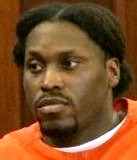 Mark Aaron Brown
Murderer · USA · 1994
Mark Aaron Brown (also referred to as Mark A. Brown) was born on November 13, 1…
2 victims
Mark Aaron Brown
Murderer · USA · 1994
Mark Aaron Brown (also referred to as Mark A. Brown) was born on November 13, 1…
2 victims
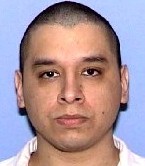 Joseph Christopher Garcia
Murderer · USA · 2000
Joseph Christopher Garcia (TDCJ Number 999441) was convicted of capital murder…
2 victims
Joseph Christopher Garcia
Murderer · USA · 2000
Joseph Christopher Garcia (TDCJ Number 999441) was convicted of capital murder…
2 victims
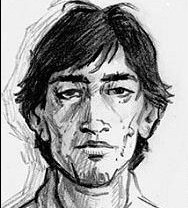 Erno Soto
Serial killer? · USA · 1972
Erno Soto was found incompetent for trial and was committed to a mental institu…
4 victims
Erno Soto
Serial killer? · USA · 1972
Erno Soto was found incompetent for trial and was committed to a mental institu…
4 victims
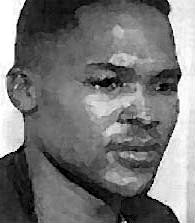 Velaphi Ndlangamandla
Serial killer · South Africa · 1998
Velaphi Ndlangamandla, known as the “saloon killer”, was convicted in connectio…
19 victims
Velaphi Ndlangamandla
Serial killer · South Africa · 1998
Velaphi Ndlangamandla, known as the “saloon killer”, was convicted in connectio…
19 victims
 Diane Borchardt
Murderer · USA · 1994
Court: Court of Appeals of Wisconsin, District IV; State of Wisconsin v. Diane…
1 victim
Diane Borchardt
Murderer · USA · 1994
Court: Court of Appeals of Wisconsin, District IV; State of Wisconsin v. Diane…
1 victim
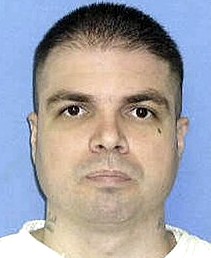 Yosvanis Valle
Murderer · USA · 1999
Yosvanis Valle was born on 09/07/1975. He was a Hispanic male and was from Hava…
4 victims
Yosvanis Valle
Murderer · USA · 1999
Yosvanis Valle was born on 09/07/1975. He was a Hispanic male and was from Hava…
4 victims
- Gender
- male
- Country
- USA
- Location
- Spalding County, Georgia, USA
- Date of birth
- February 9, 1947
- Age at first offence
- 36
- Characteristics
- rape, rape?, drug addict
- Victim profile
- Leslie Michelle English (his 29-month-old niece)
- Method of murder
- Strangulation
- Date(s) of murder
- September 24, 1983
- Years active
- 1983
- Date of arrest
- 3 days after
- Status
-
Executed
Executed by lethal injection on July 19, 2004
Case record: Eddie Albert Crawford
Other details
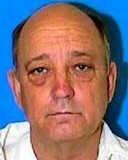
Eddie Albert Crawford was a white male, born 02/09/1947, with hair color brown, eye color blue, height 5'11", weight 160. He was identified as GDC ID: 0000140628. The case number was 166668. The county was Spalding County. The county of execution was Georgia, and the execution location was Georgia Diagnostic and Classification Prison in Jackson.
Background
The victim was Leslie Michelle English, age 29 months. The victim resided with her mother, Wanda English, and the victim’s mother’s parents.
Crawford was the estranged husband of Wanda English’s sister. Wanda English was the victim’s mother. The victim was cared for at the residence of Mrs. English’s parents, including by Mrs. English’s father, Raymond Fuller.
Crawford was intoxicated at the time of the encounter that began the events leading to the victim’s disappearance.
The offence
On Saturday, September 24, 1983, at approximately 11:00 p.m., Mrs. English readied Leslie for bed. Crawford arrived at the victim’s residence and asked Mrs. English to accompany him to a liquor store. Mrs. English agreed. Crawford was intoxicated, and en route from the liquor store made an unsuccessful attempt to purchase marijuana. The two returned to the residence where Crawford asked Mrs. English to spend the night with him. When she refused, Crawford left.
Later that same night, Mrs. English encountered Crawford at the house of another of her sisters. During this visit, Crawford kicked an ashtray off a table which struck Mrs. English. As Mrs. English picked up the ashtray’s contents, Crawford “grabbed her and pushed her.” Mrs. English yelled that she would not allow him to treat her like that, then threw the ashtray at him. As Mrs. English left her sister’s home, Crawford swore and called to her, “I'll fix you.”
During this time, the victim was in the care of Mrs. Mr. Fuller testified that before he went to bed at 3:00 a.m., he observed the victim sleeping and pulled the bedclothes about her. Mr. Fuller testified he returned to his own bed and fell asleep. He stated that “sometime later” he was awakened by Crawford walking through the house with a lighted cigarette lighter. Mr. Fuller saw Crawford walking through the victim’s bedroom in the direction of the bathroom. Mr. Fuller again fell asleep and did not wake up until 5:00 a.m., when Wanda English returned home and discovered the victim missing.
A neighbor, Charles Durham, testified that between 3:45 a.m. and 4:00 a.m., he observed Crawford drive up to the Fuller house and exit his car, leaving the car headlights on and the motor running. Mr. Durham testified that “about five minutes later” he noticed the defendant’s car drive away. When Wanda English could not locate the victim upon her return home at 5:00 a.m., she initiated a search throughout the neighborhood. She observed Crawford in his car, parked with the motor running, in front of a neighboring house, and asked if he had seen the victim. Crawford replied that he had not.
Later, when the victim’s grandfather asked Crawford if he knew where the victim could be found, Crawford replied “Randy [the victim's father] done it.”
The victim’s body, clothed only in a pajama top, was discovered in a wooded area on September 26, 1983. An autopsy revealed the victim died as a result of asphyxiation. The victim had bruises and cuts about the left side of her face. There was a tear in the victim’s vaginal opening. Based on the size and shape of the tear, the pathologist opined that it had been made by “an object more consistent with a penis than other objects.” The pathologist stated his opinion that death occurred at approximately 4:30 a.m. on September 25, 1983.
Forensic evidence indicated that several head and pubic hairs consistent with those of the defendant were found on the victim’s body, and carpet fibers found on the victim’s body were consistent with the fibers of the carpet in Crawford’s car.
Investigation
In the days following the abduction, Crawford gave three inconsistent accounts of his activities. While mostly claiming to have “blacked out,” Crawford eventually stated that he remembered driving his car with the victim in his lap and trying to wake up the victim, “but she would not talk to him.” Crawford stated he stopped his car and walked “on pavement” with the victim in his arms, then got back into his car without the victim, but did not remember anything that had occurred in the interim.
During one interview on September 27, 1983, Crawford stated that he could remember speaking to the victim’s grandfather before the victim’s disappearance, but he remembered nothing more of what took place at the Fuller residence. He also told police he stopped his car and walked “on pavement” with the victim in his arms. Crawford stated he believed the victim was “mad” because she would not respond to him.
During the trial, evidence was also described involving fabric and blood-related materials. Carpet fibers found on the victim’s body were consistent with the fibers of the carpet in Crawford’s car. Blood evidence was described as type O blood shared by the victim and Crawford, and as blood found on sheet and pillowcase found beside the road; blood on Crawford’s shirt was described but not conclusively typed.
The police recovered a tee-shirt worn by Crawford on the night of the murder, found stuffed behind a dresser in the house in which Crawford slept on the night of the murder, and it was described as having blood on it.
In addition, bedding and other items were described as recovered near the edge of the road not far from the victim’s body, including a pillow case, mattress pad, and bed sheet. Crawford’s wife identified these items as coming from their trailer. This bedding was described as having hairs consistent with both Crawford and the victim, as well as fibers consistent with the carpet in Crawford’s car. Type O blood was described as found on the bed sheet.
A pillow case, mattress pad, and bed sheet were also described as being recovered on the edge of the road not far from the victim’s body, identified by Crawford’s wife as coming from their trailer.
Trial
Crawford was indicted by the Spalding County Grand Jury for the murder of Leslie Michelle English during the February Term, 1984.
Crawford was tried on February 27 through March 8, 1984. A jury found him guilty as charged in the indictment on March 7, 1984 in the Superior Court of Spalding County, Georgia.
On March 8, 1984, Crawford was sentenced to death for the murder.
During the sentencing phase of that trial, the jury found as a statutory aggravating circumstance that the murder was committed during the commission of the felony of child molestation.
Sentencing
First direct appeal proceeding
The Supreme Court of Georgia reversed Crawford’s conviction and sentence on May 31, 1985 in Crawford v. State, 254 Ga. 435, 330 S.E.2d 567 (1985). The court found that “kidnapping with bodily injury,” and not mere “kidnapping,” was a statutory aggravating circumstance.
Interlocutory appeal
The Supreme Court of Georgia denied Crawford’s interlocutory appeal of the trial court’s denial of Crawford’s plea of former jeopardy in Crawford v. State, 256 Ga. 57, 344 S.E.2d 215 (1986).
The United States Supreme Court denied Crawford’s petition for certiorari in Crawford v. Georgia, 478 U.S. 989 (1986).
Second trial
Crawford was reindicted on October 9, 1985 for murder and felony murder in the Superior Court of Spalding County.
Crawford was retried and convicted of felony murder on February 5, 1987. He was sentenced to death on February 6, 1987.
Second direct appeal proceeding
The Supreme Court of Georgia affirmed Crawford’s conviction and sentence on November 19, 1987 in Crawford v. State, 257 Ga. 681, 362 S.E.2d 201 (1987). Crawford’s motion for reconsideration was denied on December 16, 1987.
The United States Supreme Court denied Crawford’s petition for writ of certiorari on February 21, 1989 in Crawford v. Georgia, 489 U.S. 1040 (1989). Crawford’s motion for rehearing was denied on April 24, 1989 in Crawford v. Georgia, 490 U.S. 1042 (1989).
State habeas corpus petition
Crawford, represented by Michael Mears and Elizabeth J. Vila, filed a petition for a writ of habeas corpus in the Superior Court of Butts County, Georgia, on August 20, 1990.
After an evidentiary hearing conducted on July 31, 1992, the state habeas court denied Crawford state habeas corpus relief on May 21, 1993. Crawford’s application for a certificate of probable cause filed in the Supreme Court of Georgia was denied on November 24, 1993. Crawford’s motion for reconsideration was denied on or about December 7, 1993.
The United States Supreme Court denied Crawford’s petition for a writ of certiorari on April 24, 1995 in Crawford v. Zant, 514 U.S. 1082 (1995). On June 12, 1995, Crawford’s petition for rehearing was denied in Crawford v. Zant, 515 U.S. 1137 (1995).
Federal habeas corpus petition
Crawford filed a petition for a writ of habeas corpus in the United States District Court for the Northern District of Georgia, Newnan Division, on April 23, 1997.
An evidentiary hearing was conducted on March 31, 1999. The district court dismissed various claims raised by Crawford in preliminary orders of May 6, 1999 and May 19, 1999.
After substantive briefs were filed, the federal habeas corpus court entered its initial order denying relief on February 22, 2000, and this order was amended on March 2, 2000. The federal district court denied a motion to alter or amend judgment on December 7, 2000.
Crawford filed an application for a certificate of probable cause to appeal on or about January 8, 2001. On April 2, 2001, the United States District Court granted a Certificate of Appealability with respect to his ineffective assistance of counsel claim.
On or around April 25, 2001, Crawford filed a motion to expand the Certificate of Appealability. The United States Court of Appeals for the Eleventh Circuit granted this motion in part on May 25, 2001. Oral argument was held on June 10, 2002.
On November 12, 2002, the Eleventh Circuit issued an opinion denying relief in Crawford v. Head, 311 F.3d 1288 (11th Cir. 2002). Crawford filed a petition for panel rehearing on January 17, 2003, which was denied on February 11, 2003.
Crawford filed a petition for writ of certiorari in the United States Supreme Court on August 11, 2003. The United States Supreme Court denied certiorari on October 14, 2003. Crawford filed a petition for rehearing in the United States Supreme Court on November 10, 2003, which was denied on December 8, 2003.
Extraordinary motion for new trial and post-conviction DNA testing
Crawford filed an Extraordinary Motion for New Trial and for Post-Conviction DNA Testing in the Superior Court of Spalding County on 10/15/03.
The Superior Court of Spalding County denied his motion for DNA testing on 11/21/03. Crawford filed a petition for rehearing in the Superior Court of Spalding County, denied on 12/2/03.
The Superior Court of Spalding County entered an execution order setting Crawford’s execution for 12/10/03.
Crawford filed a Notice of Appeal regarding the denial of his extraordinary motion for new trial and for post-conviction DNA testing, Motion for Stay of Execution, and a Brief in Support in the Georgia Supreme Court on 12/5/03. The Georgia Supreme Court entered an order staying Crawford’s execution and granting his application to appeal on 12/10/03.
An oral argument was held in the Georgia Supreme Court on 3/8/04.
On 6/7/04, the Georgia Supreme Court affirmed the trial court’s denial of Crawford’s motion for further DNA testing in Crawford v. State, No. S04A0589 (Sup. Ct. Ga. June 7, 2004). The Georgia Supreme Court also lifted its previously entered stay of execution.
Crawford filed a Motion for Reconsideration, denied on June 28, 2004.
Timeline
- 11:00 p.m., September 24, 1983 — Crawford arrived at the victim’s residence and asked Mrs. English to accompany him to a liquor store; Crawford was intoxicated; he made an unsuccessful attempt to purchase marijuana en route.
- Saturday, September 24, 1983 (later) — The encounter ended when Mrs. English refused; Crawford later encountered Mrs. English at another sister’s house; Crawford kicked an ashtray off a table, struck Mrs. English; Crawford “grabbed her and pushed her”; Mrs. English threw the ashtray at him; Crawford called, “I'll fix you.”
- 3:00 a.m., September 25, 1983 — Raymond Fuller went to bed and observed the victim sleeping.
- sometime later (after 3:00 a.m.) — Fuller was awakened by Crawford walking through the house with a lighted cigarette lighter.
- 3:45 a.m. to 4:00 a.m., September 25, 1983 — Neighbor Charles Durham observed Crawford drive up to the Fuller home and leave the headlights and motor running; Durham noticed the car drive away “about five minutes later.”
- 5:00 a.m., September 25, 1983 — Wanda English returned home and discovered the victim missing.
- September 27, 1983 — Crawford was interviewed by law enforcement officers.
- September 26, 1983 — The victim’s body was discovered in a wooded area; an autopsy was performed and asphyxiation was found as the cause of death.
- May 31, 1985 — The Supreme Court of Georgia reversed Crawford’s conviction and sentence.
- October 9, 1985 — Crawford was reindicted for murder and felony murder.
- February 5, 1987 — Crawford was convicted of felony murder.
- February 6, 1987 — Crawford was sentenced to death.
- November 19, 1987 — The Supreme Court of Georgia affirmed Crawford’s conviction and sentence.
- December 16, 1987 — The Supreme Court of Georgia denied Crawford’s motion for reconsideration.
- February 21, 1989 — The United States Supreme Court denied Crawford’s petition for certiorari.
- April 24, 1989 — The United States Supreme Court denied Crawford’s motion for rehearing.
- August 20, 1990 — Crawford filed a state habeas corpus petition.
- July 31, 1992 — The evidentiary hearing was conducted in state habeas proceedings.
- May 21, 1993 — The state habeas court denied relief.
- November 24, 1993 — The Supreme Court of Georgia denied an application for a certificate of probable cause.
- on or about December 7, 1993 — The Supreme Court of Georgia denied a motion for reconsideration.
- April 24, 1995 — The United States Supreme Court denied certiorari in Crawford v. Zant.
- June 12, 1995 — The petition for rehearing was denied in Crawford v. Zant.
- April 23, 1997 — Crawford filed a federal habeas corpus petition.
- March 31, 1999 — An evidentiary hearing was conducted in federal habeas proceedings.
- February 22, 2000 — The federal habeas court entered its initial order denying relief.
- March 2, 2000 — The initial order was amended.
- December 7, 2000 — The federal district court denied a motion to alter or amend judgment.
- April 2, 2001 — The district court granted a Certificate of Appealability.
- May 25, 2001 — The Eleventh Circuit granted a motion to expand the Certificate of Appealability in part.
- June 10, 2002 — Oral argument was held in the Eleventh Circuit.
- November 12, 2002 — The Eleventh Circuit issued its opinion denying relief.
- February 11, 2003 — Panel rehearing was denied.
- August 11, 2003 — Crawford filed a petition for writ of certiorari in the United States Supreme Court.
- October 14, 2003 — The United States Supreme Court denied certiorari.
- December 8, 2003 — The United States Supreme Court denied rehearing.
- 10/15/03 — Crawford filed an Extraordinary Motion for New Trial and for Post-Conviction DNA Testing.
- 11/21/03 — The Superior Court of Spalding County denied the motion for DNA testing.
- 12/2/03 — The Superior Court of Spalding County denied a petition for rehearing.
- 12/5/03 — Crawford filed a Notice of Appeal regarding the denial and sought a stay and other relief in the Georgia Supreme Court.
- 12/10/03 — The Georgia Supreme Court stayed execution and granted an application to appeal.
- 3/8/04 — Oral argument was held in the Georgia Supreme Court.
- 6/7/04 — The Georgia Supreme Court affirmed denial of further DNA testing and lifted a stay of execution.
- June 28, 2004 — The motion for reconsideration was denied.
- July 19, 2004 — Crawford was executed by lethal injection.
Appeals
The case proceeded through direct appeal, interlocutory appeal, state habeas, federal habeas, extraordinary motion for new trial and post-conviction DNA testing, and related applications and appeals. Key citations included:
- Crawford v. State, 254 Ga. 435, 330 S.E.2d 567 (1985)
- Crawford v. State, 256 Ga. 57, 344 S.E.2d 215 (1986)
- Crawford v. Georgia, 478 U.S. 989 (1986)
- Crawford v. State, 257 Ga. 681, 362 S.E.2d 201 (1987)
- Crawford v. Georgia, 489 U.S. 1040 (1989)
- Crawford v. Georgia, 490 U.S. 1042 (1989)
- Crawford v. Zant, 514 U.S. 1082 (1995)
- Crawford v. Zant, 515 U.S. 1137 (1995)
- Crawford v. Head, 311 F.3d 1288 (11th Cir. 2002)
Outcome
Crawford was executed by lethal injection on July 19, 2004.
He was pronounced dead at 7:49 p.m. after a lethal dose of drugs through his veins.
Aftermath
During the execution, family and friends were on the prison grounds and some cheered as officers removed the body.
Crawford’s final words were: “There hasn't been a time in the last 21 years I wouldn't have laid down my life for little Leslie. I don't remember anything. If this will give them peace it was well worth it.”
Crawford was served a last meal of a standard institutional tray of barbecue pork, black-eyed peas, a vegetable medley, cole slaw, a roll, peach cobbler and a grape drink. He did not eat any of it.
Spotted an error, or have more information about this case?