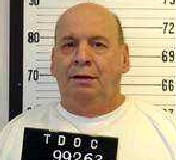
Jerry Ray Davidson
Murderer Brian Kevin Rosenfeld
Murderer · USA · 1985
Brian Kevin Rosenfeld Brian Kevin Rosenfeld was sentenced to three concurrent l…
23 victims
Brian Kevin Rosenfeld
Murderer · USA · 1985
Brian Kevin Rosenfeld Brian Kevin Rosenfeld was sentenced to three concurrent l…
23 victims
 Russell Ellwood
Murderer · USA · 1991
Russell Ellwood was a former taxi driver. Authorities suspected him of killing…
20 victims
Russell Ellwood
Murderer · USA · 1991
Russell Ellwood was a former taxi driver. Authorities suspected him of killing…
20 victims
 Robert Martines Perez
Murderer · USA · 1994
Name: Robert Martines Perez · Other name used in proceedings: Robert Martinez P…
15 victims
Robert Martines Perez
Murderer · USA · 1994
Name: Robert Martines Perez · Other name used in proceedings: Robert Martinez P…
15 victims
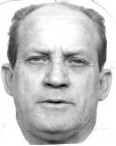 Billy Frank Vickers
Murderer · USA · 1993
Billy Frank Vickers Vickers was executed by lethal injection in Texas on Januar…
14 victims
Billy Frank Vickers
Murderer · USA · 1993
Billy Frank Vickers Vickers was executed by lethal injection in Texas on Januar…
14 victims
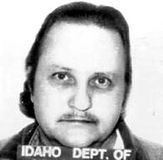 James Edward Wood
Murderer · USA · 1993
James Edward Wood was sentenced to death in Idaho on January 14, 1994. He died…
1 victim
James Edward Wood
Murderer · USA · 1993
James Edward Wood was sentenced to death in Idaho on January 14, 1994. He died…
1 victim
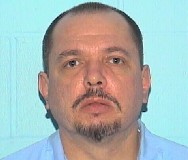 Timothy Buss
Murderer · USA · 1981
Timothy Buss was indicted in connection with the August 7, 1995, disappearance…
2 victims
Timothy Buss
Murderer · USA · 1981
Timothy Buss was indicted in connection with the August 7, 1995, disappearance…
2 victims
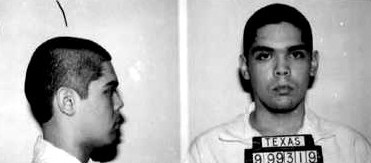 Richard Vasquez
Murderer · USA · 1998
Richard Vasquez was a Texas death row inmate. He stated: "Not Giving Up" My nam…
1 victim
Richard Vasquez
Murderer · USA · 1998
Richard Vasquez was a Texas death row inmate. He stated: "Not Giving Up" My nam…
1 victim
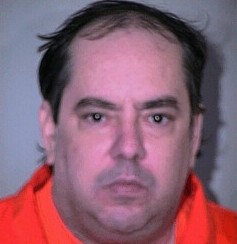 Frank Silva Roque
Murderer · USA · 2001
Frank Silva Roque was born July 8, 1959. He was a Boeing aircraft mechanic at a…
1 victim
Frank Silva Roque
Murderer · USA · 2001
Frank Silva Roque was born July 8, 1959. He was a Boeing aircraft mechanic at a…
1 victim
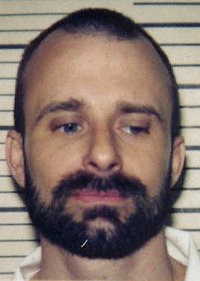 Eric Randall Nance
Murderer · USA · 1993
Eric Randall Nance was a white male who was born on 01/09/60. He was convicted…
1 victim
Eric Randall Nance
Murderer · USA · 1993
Eric Randall Nance was a white male who was born on 01/09/60. He was convicted…
1 victim
- Gender
- male
- Country
- USA
- Location
- Dickson County, Tennessee, USA
- Date of birth
- June 12, 1943
- Age at first offence
- 52
- Characteristics
- mutilation, rape
- Victim profile
- Virginia Jackson, 43
- Method of murder
- A cause of death could not be determined from Jackson's remains
- Date(s) of murder
- September 26, 1995
- Years active
- 1995
- Date of arrest
- October 19, 1995
- Status
-
Sentenced to death
Sentenced to death on September 3, 1997
Case overview
Jerry Ray Davidson was convicted of premeditated murder and aggravated kidnapping relating to the 1995 slaying of Virginia Jackson, 43. The Supreme Court of Tennessee affirmed the judgment of the Court of Criminal Appeals and upheld Davidson’s death sentence for the premeditated murder.
Timeline
- 8:00 to 9:00 p.m., September 26, 1995 — Virginia Jackson and her dog arrived in a taxi cab at Bronco’s Bar in Dickson, Tennessee, and Davidson was sitting quietly by himself drinking beer.
- Around 11:30 p.m., September 26, 1995 — Jackson was last seen alive around 11:30 p.m., carrying her purse and pillow as she got into Davidson’s red pickup truck with her dog.
- September 30, 1995 — Jackson’s brother-in-law observed a pile of clothing along a farm road leading to her house.
- October 1, 1995 — Jackson’s family filed a missing person report with law enforcement officials.
- October 2, 1995 — Davidson’s mother informed the Dickson police that he was missing.
- October 4 to October 6, 1995 — Melinda Jones saw Davidson driving a red truck very slowly down Old Yellow Creek Road in Dickson County and later observed the same truck traveling in the opposite direction at a high rate of speed.
- October 4, 1995 — Davidson made a withdrawal from an automatic teller at a bank in Erin, Tennessee.
- October 8, 1995 — Davidson withdrew the missing person report after Davidson telephoned his mother.
- October 9, 1995 — Davidson reappeared at Bronco’s Bar in Dickson.
- October 12, 1995 — Davidson came into the Lakeview Tavern in Cumberland City and ordered a beer.
- October 18, 1995 — Investigator Eads executed a search warrant at Davidson’s residence.
- October 18 and 19, 1995 — Law enforcement officers found items belonging to Jackson along the farm road.
- October 19, 1995 — Two deer hunters found Jackson’s decomposing, nude body; Davidson was arrested at Robert’s Creek Bar near Cuba Landing in Humphreys County.
- October 20, 2003 — Janice M. Holder, J., delivered the opinion of the court.
- March 3, 2004 — Davidson’s sentence of death was to be carried out unless otherwise ordered by the court or proper authority.
- September 3, 1997 — Davidson’s death sentence was imposed.
- January 7, 2002 — The Court of Criminal Appeals filed its opinion affirming the convictions and sentence.
- May 15, 2001 — Session indicated for direct appeal from the Criminal Court for Dickson County (No. CR2232).
Background
Davidson was convicted in the 1995 slaying of Virginia Jackson, 43. Her nude body was found in Dickson County in a wooded area off an old logging road along the Houston/Dickson County line. The Supreme Court opinion noted that the case was automatically docketed in the Supreme Court pursuant to Tennessee Code Annotated section 39-13-206(a)(1).
The offence
Crimes of conviction
At trial, the jury convicted Davidson of:
- First degree premeditated murder
- Aggravated kidnapping
The jury sentenced him:
- To death for the premeditated murder.
- To a consecutive sentence of twenty years for the aggravated kidnapping.
Victim and last known events
Virginia Jackson arrived with her dog at Bronco’s Bar in Dickson, Tennessee. Jackson was carrying:
- a large purse,
- a white bed pillow,
- multicolored hair clips, and she was wearing multicolored hair clips when she arrived.
Jackson spent several hours at the bar drinking two beers and talking with bartender Carol Owens and other patrons. Evidence indicated Jackson and Davidson sat next to each other at one point but did not converse, and there was no evidence they were acquainted.
By closing time, only Jackson, Davidson, and Owens remained in the bar. Owens tried to call a cab for Jackson, but the cab company was closed for the night. Jackson accepted a ride home from Davidson and was last seen alive around 11:30 p.m., carrying her purse and pillow and entering Davidson’s red pickup truck with her dog.
Investigation and discovery of evidence
Missing person report
Jackson’s family became worried when they did not hear from her for several days. On October 1, 1995, her family filed a missing person report with law enforcement officials.
Clothing and roadside items
On September 30, 1995, Jackson’s brother-in-law observed a pile of clothing along a farm road leading to her house but did not connect it to Jackson’s disappearance. On October 18, he reported the clothing to law enforcement authorities.
On October 18 and 19, 1995, law enforcement officers found items belonging to Jackson along the farm road:
- hair clips,
- a cell phone,
- panties,
- a pillow,
- a sweatshirt,
- a sock.
Location and condition of the body
On October 19, 1995, two deer hunters found Jackson’s decomposing, nude body. The body was:
- partially buried in a shallow grave several miles from her house,
- in a wooded area off an old logging road along the Houston/Dickson County line.
The court recorded descriptions from Dr. Murray Marks, the forensic anthropologist who disinterred the body, and Dr. Charles Harlan, the forensic pathologist who performed the autopsy.
Dr. Marks stated:
- the body was found lying chest down,
- the head was missing, although it appeared a space had originally been dug for it in the grave,
- part of the torso and left arm were exposed,
- the left hand was missing,
- there was evidence that animals had gnawed on the left arm, the neck, and the shoulder area.
Dr. Marks concluded that Jackson had been dead for four to six weeks based on changes in color and texture, and stated it was possible Jackson’s neck had been cut and her head removed after death by either animal or human activity.
Dr. Harlan observed:
- the skin at the front and back of the neck had been cut,
- the trachea exhibited a clean, sharp cut,
- the hyoid bone had also been cut,
- there was clear disarticulation of the cervical vertebral column,
- the torso, including the breast bone, had been cleanly cut open with some type of sharp instrument; the incision ran almost the entire length of the torso from the sternum to the navel and exposed internal organs,
- several superficial cuts had been made in the soft tissue next to the large incision.
Dr. Harlan opined that both the major incision and the lesser cuts were inflicted after death. Dr. Harlan opined that a human being, not an animal, had removed the head after death.
Toxicology revealed:
- alcohol and Prozac in the body, although the quantity was not determined.
Dr. Harlan could not determine a cause of death from the remains but expressed a belief that the death was a result of homicide and that she could have died from wounds to her neck or head.
Evidence linking Davidson to the killing
Circumstantial evidence related to Davidson’s employment and movements
The Supreme Court described circumstantial evidence including:
- Davidson was a janitor in a hospital department where surgical instruments were cleaned, and he did not return to work as scheduled after September 26, 1995; he did not contact anyone at work about his absence, and he was eventually fired.
- He did not return to his residence at his mother’s home for almost three weeks after Jackson’s disappearance.
- On October 2, 1995, Davidson’s mother informed the Dickson police that he was missing.
- Mrs. Davidson withdrew the missing person report on October 8, 1995 after Davidson telephoned her.
- Davidson later returned to his mother’s house, spending the night once and retrieving a camper top for his pickup truck a second time.
- Evidence placed him in the area where the body was found in the days after Jackson’s disappearance.
Witness observations: Old Yellow Creek Road and the passenger seat
Between October 4 and 6, 1995, Melinda Jones testified she saw Davidson:
- driving a red truck very slowly down Old Yellow Creek Road in Dickson County,
- with an object in the passenger seat tightly wrapped in a white sheet, about as high as Davidson’s shoulder. She saw the white object fall over onto Davidson and he pushed it away.
Jones also testified that later that evening she observed:
- the same truck traveling in the opposite direction at a high rate of speed.
Jones further testified she remembered seeing the same truck going down the road a few days to a week earlier, shortly after Jackson disappeared. She described that earlier time as the truck going very slowly and she noticed “there was something that wasn't right about the passenger's seat.”
Market sightings; dirt-covered appearance
Between October 2 and 6, 1995, around 8 to 9 a.m., Davidson came into Kim’s One Stop Market not far from Jones’s home. A witness said Davidson:
- was wearing work pants,
- was covered with dirt to his waist, and appeared “like he'd been digging in like a garden or something.”
Jones stated Davidson sat in the store drinking coffee for about an hour before driving away in a red pickup truck with a camper top. A week later he returned to the market to purchase a soft drink.
Purchases and bank withdrawal
The State’s proof described Davidson making purchases:
- on September 29 and 30, 1995 at a grocery store and at a Wal-Mart in Waverly, Tennessee.
The State’s proof also described:
- on October 4, 1995, around the time Jones saw Davidson driving his truck down Old Yellow Creek Road, Davidson made a withdrawal from an automatic teller at a bank in Erin, Tennessee, in Houston County.
These transactions were described as placing Davidson in the vicinity where Jackson’s body was found shortly after her disappearance.
Reappearance at Bronco’s Bar and statements to Owens and Eads
On October 9, 1995, Davidson reappeared at Bronco’s Bar in Dickson. When Owens asked him where he had taken Jackson on September 26, 1995, Davidson told her he had dropped Jackson off at a Kroger grocery store.
Later that same day, Timothy Eads of the Dickson County Sheriff’s Department spoke with Owens and then spoke with Davidson. After Owens identified Davidson as the man who had taken Jackson home, Eads questioned Davidson about Jackson for several minutes. Davidson told Eads that he left Jackson at the Kroger parking lot around midnight. Davidson was described as nervous and uncomfortable during the conversation and left the bar soon after.
When Eads tried to contact Davidson again, Davidson could not be located.
Search warrant and seized items
On October 18, 1995, Eads executed a search warrant at Davidson’s residence. Eads seized an expended 20-gauge shotgun shell later determined to have been fired from a shotgun found in Davidson’s truck.
Lakeview Tavern events and witness testimony
On October 12, 1995, Davidson came into the Lakeview Tavern in Cumberland City and ordered a beer. Darla Harvey testified that:
- his pants and shoes were covered with dirt,
- he sat for over an hour staring at Harvey while sipping his beer. Harvey became disturbed and went outside to examine Davidson’s truck. She observed that the bed of the truck was covered with a camper top spray painted red everywhere but the back window. Inside the camper, she saw a dirty sleeping bag, a dirty shovel, a chain, and two Rubbermaid containers. She said the truck was “very messy,” as if Davidson had been living in it.
Harvey said she informed bar patrons she was afraid of Davidson. Davidson left at the patrons’ request.
Arrest and interrogation
Arrest
On October 19, 1995, Davidson was arrested at Robert’s Creek Bar near Cuba Landing in Humphreys County.
Investigator Ted Tarpley initially spoke with Davidson. Davidson denied giving Jackson a ride on September 26. After Officer Eads joined the interrogation, Davidson changed his story and stated he left Jackson at the Kroger parking lot before driving to Nashville. Davidson claimed he stayed in Nashville until 3 or 4 a.m., returned home, and then left the next morning for East Tennessee.
Eads and Tarpley did not inform Davidson that Jackson’s body had been found.
Statements attributed to Davidson during interrogation
When asked to hypothesize about what might have happened to Jackson, Davidson responded: “Maybe somebody got her and chained her to a tree.”
Davidson also told Eads and Tarpley that they might find Jackson with her head and hands missing to keep anyone from identifying the body.
After Davidson was informed the body had been found, he was asked what he had done with the head. He replied: “I haven't told you that I killed her yet.”
Davidson later said he might have something to say but could not say it yet.
Searches and physical evidence
Items found on Davidson and in the truck
At the time of arrest, officers found on Davidson’s person:
- a .25 caliber automatic pistol,
- a chrome knuckle knife with the blade open,
- a pair of handcuffs,
- a box of .25 caliber bullets,
- a live 20-gauge shell.
The pistol was described as loaded and ready to fire.
At the time of arrest, Davidson’s truck did not have a camper top. The truck was described as appearing driven through mud and vegetation.
Officers found in the truck:
- an Ozark Trails tent,
- two shotguns,
- a knife,
- handcuff keys,
- clothing,
- flashlights,
- cans of red spray paint,
- Marlboro cigarettes.
Items found at the campsite or grave site
Officers found numerous items at the campsite or grave site that belonged to either Davidson or Jackson, including:
- a box for an Ozark Trails tent,
- shells fired from the shotgun found in Davidson’s truck,
- a knife,
- handcuffs matching the keys found in Davidson’s truck,
- packages and fragments of Marlboro cigarettes,
- a tool box resembling one previously seen on Davidson’s truck,
- cans of red spray paint,
- clothing and flashlights similar to those in Davidson’s truck,
- two receipts reflecting a withdrawal from Davidson’s bank account on October 4, 1995, at an automatic teller in Erin, Tennessee.
Personal items belonging to Jackson found at the campsite included:
- her sandals,
- billfold,
- a hair clip,
- a brush,
- a prescription bottle,
- a cigarette case.
Passenger seat and DNA evidence
The bottom of the passenger seat in Davidson’s truck had been cut out. A chain and padlock found around the passenger seat were described as arranged so they could be used to restrain a passenger.
Blood on the passenger seat and headrest tested positive for human blood. DNA testing indicated the blood samples from the truck did not match Davidson’s DNA; they were consistent with Jackson’s DNA.
A LabCorp, Inc. report described the probability that only one in 265,000 people would be expected to have DNA matching Jackson’s.
Defense evidence related to injuries and forensic procedures
The defense presented evidence to counter the prosecution’s circumstantial evidence, including:
- testimony that two tires on Jackson’s truck had been punctured by a knife about two days before she disappeared,
- defense pathologist testimony criticizing the manner in which the State’s forensic pathologist performed the autopsy and preserved the body,
- defense pathologist criticism that the quantity of alcohol and Prozac in Jackson’s body should have been determined.
The defense introduced Jackson’s medical records showing hospitalizations between 1978 and 1995 for depression and drug and alcohol abuse, including:
- a report that she had once overdosed on Soma and had been pronounced dead,
- a bottle labeled for a prescription for thirty pills of Prozac dispensed on September 25, 1995, containing only five tablets when found at Jackson’s home after her disappearance.
To counter the inference that Davidson could have used a surgical instrument from his workplace to cut Jackson’s body, the defense presented testimony that no surgical instruments had been reported missing from his place of employment.
A defense DNA expert testified that she was unable to corroborate the findings of the State’s experts. She challenged the opinion that the DNA test ruled out Davidson as the source of the blood found on the passenger seat of his truck. She admitted she made no independent examination or analysis and only reviewed LabCorp, Inc.’s findings.
Trial and verdict
At the conclusion of the evidence, the jury convicted Davidson of:
- aggravated kidnapping.
Sentencing
Prior convictions introduced by the State
During the sentencing phase, the State presented proof that Davidson had been convicted:
- in 1971 for assault and battery with the intent to commit rape,
- in 1976 for assault and battery with the intent to ravish and to have unlawful carnal knowledge of a female over 12 years of age,
- in 1983 for felonious crime against nature and for felonious sexual battery.
Aggravating circumstances found by the jury
The jury found the State had proven beyond a reasonable doubt the following statutory aggravating circumstances:
- The defendant was previously convicted of one (1) or more felonies, other than the present charge, whose statutory elements involve the use of violence to the person.
- The murder was knowingly committed by the defendant while in the commission of a kidnapping.
- The defendant knowingly mutilated the body of the victim after death.
The opinion referenced Tennessee Code Annotated section 39-13-204(i)(2), (7), (13) (1991 & Supp.1995).
The jury also found that the aggravating circumstances outweighed any mitigating circumstances beyond a reasonable doubt.
Mitigation testimony
The defense presented testimony from:
- Davidson’s mother,
- several of his co-workers,
- his minister.
Davidson’s mother testified that:
- as a child he lived with his grandparents,
- he had not completed school because he was always in trouble with the law,
- he was quiet, had few friends, and had no contact with his father throughout his life,
- at some indefinite time in the past, he spent one to two years at Central State Hospital for mental problems.
She described how badly Davidson took his younger brother’s death in Vietnam and how he helped her at home.
Co-workers testified that:
- he was a good worker,
- a good friend,
- a nice, considerate man who would help anyone,
- they found his involvement in Jackson’s murder inconsistent with his behavior around them.
Joe Ingle, a minister, testified that Davidson was:
- quiet and passive,
- interested in the Bible’s prophetic books,
- open to learning new things.
Ingle opined that Davidson would not be a threat in prison and would participate in work or educational programs.
Appeals
Issues raised on appeal to the Supreme Court of Tennessee
The Supreme Court designated the following issues for oral argument:
- Whether the trial court committed reversible error in denying the defendant’s motions for change of venue and for additional peremptory challenges.
- Whether the trial court committed reversible error in refusing to strike the venire.
- Whether the evidence was sufficient to sustain the defendant’s convictions.
- Whether the trial court committed reversible error by admitting the testimony of Darla Harvey.
- Whether the sentencing verdict form was incomplete and erroneous.
- All issues mandated by Tennessee Code Annotated section 39-13-206(c)(1).
The Supreme Court stated it found no merit to Davidson’s arguments and affirmed the Court of Criminal Appeals.
Court of Criminal Appeals issues and holdings (appendix)
The Court of Criminal Appeals stated Davidson raised issues including:
- venue and jury composition,
- sufficiency of the evidence,
- testimony of Darla Harvey,
- instruction on unanimity of verdict,
- jury’s verdict,
- discretion of prosecutor in seeking death penalty,
- discrimination in imposition of the death penalty,
- proportionality review.
The Court of Criminal Appeals affirmed the convictions and the death sentence. The appendix included analysis that the appellant argued misleading and coercive jury instruction on unanimity for life sentence and that issue was waived due to failure to object; it also included repeated holdings that such instructions did not offend constitutional standards.
The appendix further included the issue of prosecutor discretion and discrimination arguments being repeatedly rejected by the supreme court.
Dissenting opinions
The Supreme Court’s opinion included dissenting opinions by E. Riley Anderson, J., joined in part by Adolpho A. Birchs, Jr., J., who also filed a dissenting opinion.
Dissent on sufficiency of evidence for premeditation
The dissenters stated that the evidence was insufficient to support premeditated first degree murder beyond a reasonable doubt and that:
- there was no evidence of planning, prior relationship, cause or manner of death, or other evidence from which a rational trier of fact could infer premeditation,
- it was conjecture to infer events as premeditated without evidence establishing when, where, or how the victim was killed,
- they would hold that the State’s evidence was not sufficient.
Dissent on admission of Darla Harvey testimony
The dissent stated the trial court committed reversible error in admitting Darla Harvey’s testimony that Davidson made her afraid and nervous by staring at her, describing it as irrelevant, unfairly prejudicial, and an improper lay opinion under Tennessee Rules of Evidence 401, 403, and 701.
The dissent described the Court of Criminal Appeals finding error in the admission of her feelings testimony but harmlessness based on other witnesses conveying similar stories.
The dissent also recorded defense objections and discussed the prosecution’s emphasis in closing argument, including:
- “You all remember Darla Harvey․ You recall what she said ․ [the defendant was] staring at her, blatantly I believe her words were. It made her feel uncomfortable ․ because Jerry Davidson was sitting there staring at her ․ Well Darla Harvey at that time knew something was up because she sat there and said I knew he had opened up a new pack of cigarettes and I knew that he didn't need any new pack of cigarettes. And she goes to the end of that bar and she reaches up underneath there and she gets that gun and she flips it off safety and she is ready for Jerry Davidson ․ And she got that gun and what did she say to you all? She sat there and said, “if he'd come just a little bit further, I'd have shot him.” (Emphasis added).”
Dissent on comparative proportionality review
The dissenting opinion by Birchs also dissented from the majority’s holding that comparative proportionality review was adequate, describing concerns about Rule 12 reports and the integrity of the proportionality pool.
The dissent referenced:
- Tennessee Rule of the Supreme Court 12 requiring reports in first degree murder cases including those resolved by guilty plea,
- alleged omissions of certain cases from Rule 12 reports and database compilation issues,
- a discussion of Rule 12 report omissions and delays,
- mention of examples including State v. Antonio Dewayne Carpenter and other named cases and omissions,
- a quotation that “hundreds of cases included in the database ․ are missing important details about the crime, defendant, and victim,” attributed in the dissent to “Godsey, 60 S.W.3d at 796 (quoting John Shiffman, Missing Files Raise Doubts About Death Sentences, The Tennessean (Nashville), July 22, 2001, at A1).”
Outcome
The Supreme Court of Tennessee affirmed the judgment of the Court of Criminal Appeals. The death sentence was affirmed.
The Supreme Court stated that it affirmed with respect to issues raised but not addressed in the opinion.
The Supreme Court also stated that Davidson’s sentence of death shall be carried out on the 3rd day of March, 2004, unless otherwise ordered by the court or proper authority. Costs of the appeal were taxed to the State of Tennessee due to Davidson being indigent.
Other details
Jury selection process and venue arguments addressed by the Supreme Court
The Supreme Court recounted that Davidson filed a pre-trial motion for change of venue in April 1997, with a full evidentiary hearing. Davidson presented articles from:
- The Tennessean,
- the Nashville Banner,
- the Dickson County Herald, from October 1995 to June 1996, and a videotaped newscast from a Nashville television station aired in January 1997.
Davidson argued media coverage reported details of the crime and his prior criminal behavior, including convictions for sexual offenses, and connected the case and Jackson’s name to proposed legislation for monitoring convicted sex offenders. Davidson also argued coverage involved Jackson’s “prominent family,” including founders of a local hospital, a probate judge, and a state representative.
The State argued Davidson failed to establish grounds for change of venue and presented testimony from a criminal investigator and a court clerk who conducted “informal” surveys in Dickson and Cheatham Counties. The Supreme Court recounted that these witnesses testified most people interviewed formed no opinion and most did not recognize Davidson’s name.
The trial court’s order was described as finding:
- no evidence that sensationalization had occurred,
- no evidence of threats, demonstrations, or other hostility,
- no affidavits or other evidence showing the publicity affected or infected the community, and it found the evidence insufficient to show venue should be changed.
The Supreme Court concluded the trial court did not abuse its discretion and described jury selection from August 4 to August 19, 1997, involving over two hundred potential jurors, removal of nearly half of the venire by excusing for cause, and specific voir dire responses by Joy Anderson and Myra Sensing. It stated Davidson did not challenge either juror for cause on the basis described, and it quoted legal standards for juror exposure and bias.
Venire selection method described
The Supreme Court stated the venire was randomly selected by computer from a list of every licensed driver over eighteen years of age in Dickson County, testified by Sue Zwingle, the Criminal and Circuit Court Clerk for Dickson County. Zwingle did not determine population spread among districts but testified the method was in accordance with training and experience.
Darla Harvey testimony quotation elements recorded by dissent and opinion
The Supreme Court opinion described testimony including descriptions of what Harvey thought and did, and it included multiple verbatim phrases in quotes such as:
- “very messy,”
- “there was something that wasn't right,”
- “Good, I got me a nut.”
The dissent recorded verbatim portions of the prosecutor’s closing argument quoted above.
Supreme Court procedural disposition
The Supreme Court stated it found no merit to Davidson’s arguments, affirmed convictions and sentences, and incorporated portions of the Court of Criminal Appeals opinion into an appendix.
Costs and indigency
The Supreme Court stated that Davidson was indigent and taxed the costs of the appeal to the State of Tennessee.
Spotted an error, or have more information about this case?