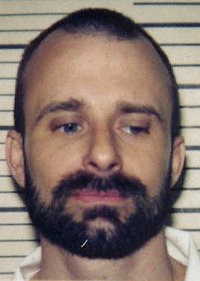
Eric Randall Nance
Murderer Brian Kevin Rosenfeld
Murderer · USA · 1985
Brian Kevin Rosenfeld Brian Kevin Rosenfeld was sentenced to three concurrent l…
23 victims
Brian Kevin Rosenfeld
Murderer · USA · 1985
Brian Kevin Rosenfeld Brian Kevin Rosenfeld was sentenced to three concurrent l…
23 victims
 Russell Ellwood
Murderer · USA · 1991
Russell Ellwood was a former taxi driver. Authorities suspected him of killing…
20 victims
Russell Ellwood
Murderer · USA · 1991
Russell Ellwood was a former taxi driver. Authorities suspected him of killing…
20 victims
 Robert Martines Perez
Murderer · USA · 1994
Name: Robert Martines Perez · Other name used in proceedings: Robert Martinez P…
15 victims
Robert Martines Perez
Murderer · USA · 1994
Name: Robert Martines Perez · Other name used in proceedings: Robert Martinez P…
15 victims
 Billy Frank Vickers
Murderer · USA · 1993
Billy Frank Vickers Vickers was executed by lethal injection in Texas on Januar…
14 victims
Billy Frank Vickers
Murderer · USA · 1993
Billy Frank Vickers Vickers was executed by lethal injection in Texas on Januar…
14 victims
 Shawna Nelson
Murderer · USA · 2007
Shawna Nelson was found guilty of first-degree murder in the slaying of Heather…
1 victim
Shawna Nelson
Murderer · USA · 2007
Shawna Nelson was found guilty of first-degree murder in the slaying of Heather…
1 victim
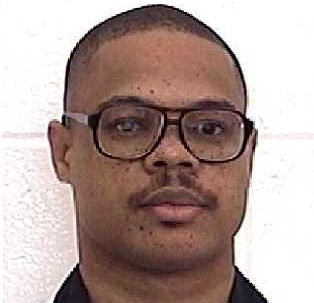 Kenneth Fults
Murderer · USA · 1996
Kenneth E. Fults was sentenced to death in Spalding County for killing a neighb…
1 victim
Kenneth Fults
Murderer · USA · 1996
Kenneth E. Fults was sentenced to death in Spalding County for killing a neighb…
1 victim
 Audrey Hilley
Murderer · USA · 1975
Audrey Marie Hilley (June 4, 1933 - February 26, 1987) was an American murderer…
1 victim
Audrey Hilley
Murderer · USA · 1975
Audrey Marie Hilley (June 4, 1933 - February 26, 1987) was an American murderer…
1 victim
 David Kevin Hocker
Murderer · USA · 1998
March 21, 1998 — David Kevin Hocker stabbed and beat his boss, Jerry Wayne Robi…
1 victim
David Kevin Hocker
Murderer · USA · 1998
March 21, 1998 — David Kevin Hocker stabbed and beat his boss, Jerry Wayne Robi…
1 victim
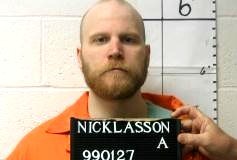 Allen Nicklasson
Murderer · USA · 1994
Allen Nicklasson · late August 1994 — Dennis Skillicorn, Allen Nicklasson, and…
3 victims
Allen Nicklasson
Murderer · USA · 1994
Allen Nicklasson · late August 1994 — Dennis Skillicorn, Allen Nicklasson, and…
3 victims
- Gender
- male
- Country
- USA
- Location
- Hot Spring County, Arkansas, USA
- Date of birth
- January 9, 1960
- Age at first offence
- 33
- Characteristics
- rape, kidnapping
- Victim profile
- Julie Heath, 18 (cheerleader)
- Method of murder
- Stabbing in the throat with a box cutter
- Date(s) of murder
- October 11, 1993
- Years active
- 1993
- Date of arrest
- 9 days after
- Status
-
Executed
Executed by lethal injection in Arkansas on November 29, 2005
Case record: Eric Randall Nance
Background
Eric Randall Nance was a white male who was born on 01/09/60. He was convicted in Hot Spring County and sentenced to death by lethal injection after a jury trial.
Nance was convicted of murdering Julie Heath, 18, a Malvern cheerleader. Julie Heath’s car was discovered along U.S. 270, and her body was later found on rural property. Julie Heath’s mother, Nancy Heath, committed suicide a year after Julie Heath’s death.
The offence
Julie Heath left her home in Malvern, Arkansas, on October 11, 1993, to visit her boyfriend in Hot Springs, Arkansas. Her car broke down on the way, and Nance was returning to Malvern from Hot Springs in his pickup at about this time. The vehicle was reported abandoned on Highway 270, west of Malvern near Interstate 30.
On October 18, 1993, Julie Heath’s body was discovered on rural property just south of Highway 171 approximately 7.5 miles from the location where her vehicle was found. A hunter found the body, and authorities said she had been dead about a week. Medical evidence showed trauma to the skull and neck region, and the defects to her clothing were consistent with a cutting wound. Her throat was slashed with a box cutter.
Nance’s defence theory was that he accidentally killed Julie Heath. At trial, Nance’s brother and sister testified that Nance later stated that:
- he gave the victim a ride into Malvern because her automobile had broken down on the road;
- his work knife slid out of his pocket;
- the victim asked him to put the knife away;
- as he moved to put the knife in the glove compartment, the victim turned sideways in the seat and started kicking him;
- he put his hand up to keep her from kicking and hitting him; and
- the knife fatally lodged in her throat.
In the guilt phase, the jury found Nance guilty of capital felony murder with attempted rape as the underlying felony. The jury also found that Nance killed Julie Heath to cover up criminal behavior and found that two statutory aggravating circumstances existed beyond a reasonable doubt, that no mitigating circumstances existed, that the aggravating circumstances outweighed any mitigating circumstances beyond a reasonable doubt, and that “the aggravating circumstances justify beyond a reasonable doubt the sentence of death.” The judge sentenced Nance to death following the jury’s recommendation.
Investigation
Medical evidence included testimony from Dr. Frank Peretti. Dr. Peretti testified that it was likely that there was trauma to the skull and neck region of the victim’s body, based on the accelerated skeletonization and evidence of insect activity in that area compared with the relatively intact remainder of the body. Although the autopsy failed to reveal the cause or manner of death, Dr. Peretti could not rule out death by knife wound and testified that examination of the victim’s shirt showed defects consistent with a cutting wound.
At trial, criminalist Donald E. Smith testified that blood, head and pubic hairs recovered from Nance’s vehicle belonged to the victim, and that hairs recovered from the victim’s clothing belonged to Nance. Forensic serologist Kermit Channell testified that he could neither confirm nor deny that sexual intercourse had occurred, and that the exposure of the victim’s body to the weather could account for lack of some evidence. Forensic scientist Richard Guererri testified that DNA analysis of the victim’s muscle tissue was consistent with blood recovered from Nance’s truck seat and from the victim’s shirt pad.
Forensic evidence and clothing details included testimony that the victim’s brassiere was pulled up around the neck and shoulder area, her socks and panties were inside out, her pants were partially zipped, and her shirt was inside out.
A search of Nance’s pickup revealed red pubic hairs in the cab. Julie Heath had red hair, and an expert testified that these hairs were microscopically similar to some taken from Julie Heath’s body.
Arrest
Nance was arrested two days after Julie Heath’s body was found.
Trial
Charges and underlying felonies
Nance was charged by information, as amended, with capital murder by premeditated and deliberated purpose, Ark. Code Ann. § 5-10-101(a)(4) (Repl.1993), or, in the alternative, with capital murder by felony murder, Ark. Code Ann. § 5-10-101(a)(1) (Repl.1993). The underlying felonies charged were rape, attempted rape, kidnapping, and attempted kidnapping. The sole underlying felony with respect to which the jury was instructed, however, was attempted rape.
Evidence and witness testimony
In addition to the scientific evidence, two workers at a convenience store near Highway 270 and Interstate 30 testified that Nance entered the store at approximately 12:30 a.m. on October 12, 1993, appeared to be hot and was wearing bib overalls with dark stains on the front that appeared fresh, and wore no shirt, shoes or socks.
Testimony included that Nance’s girlfriend, Christy Jones, stated that Nance left her house in Hot Springs at approximately 9:30 p.m. on October 11, 1993, wearing overalls and a tee shirt.
Sheriff’s Officer Kirk McClenahan testified that the victim’s body was discovered with the shirt turned inside out with one shoulder pad on the outside.
Nance’s brother and sister testified about Nance’s post-incident statements describing an accidental killing.
Jury findings and sentencing
The jury returned a verdict of guilty of capital felony murder. In the sentencing phase, the State presented as evidence six prior felony convictions stemming from Nance’s rape and beating of two Oklahoma girls in 1982. Nance had been released from his twenty-year sentence for those convictions five months before he killed Julie Heath.
Julie Heath’s mother testified about the impact of her daughter’s death, including the following statement:
"Mr. Nance took my only daughter. I believe that he deserves the death penalty. He has ruined my family's life. I have been under constant doctor's care since her death. I've had to see a psychologist once a week. I'm on numerous medications. My life will never be the same again. This has affected all of my family. It's been very hard on my husband and my son. We basically do not know how we can live without her."
The State argued that Nance killed Julie Heath to avoid arrest. Nance produced mitigating evidence including his confession to police, which was not offered by the State in the guilt phase of the trial, and testimony from his brother, sister, mother, employer, and minister.
The judge, following the jury’s recommendation, sentenced Nance to death.
Appeals
Nance appealed his conviction and sentence to the Arkansas Supreme Court. The Arkansas Supreme Court affirmed the trial court’s judgment.
In one appeal, Nance argued issues including notice and appeal timing. The Supreme Court ruled on the validity of notice of appeal filed before entry of an order denying a new trial, and later on acceptance of an untimely notice of appeal as timely appeal of an amended judgment. The Arkansas Supreme Court held there was no error and affirmed.
In a subsequent Rule 37 postconviction appeal, Nance sought postconviction relief alleging ineffective assistance of counsel among other claims. The Circuit Court denied relief without a hearing, and the Arkansas Supreme Court affirmed, holding that a hearing was not required, conclusory allegations were insufficient to make out ineffective assistance claims, and an equal protection claim was waived.
Nance then sought federal habeas relief. A federal district court denied relief, and the United States Court of Appeals for the Eighth Circuit affirmed. The Eighth Circuit held that evidence of attempted rape was constitutionally sufficient to sustain the conviction of felony murder, and that Nance did not show actual innocence to excuse procedural default for claims based on evidence not newly discovered. It also held the state court did not unreasonably apply federal law in rejecting certain ineffective assistance claims and that deference was owed to the state court’s determination that counsel’s failure to object to victim-impact evidence was a matter of trial strategy.
Nance also sought additional relief in federal proceedings. In one appeal described as “State Habeas,” the Arkansas Supreme Court denied petitioner’s request for reinvestment of jurisdiction to consider a petition for writ of error coram nobis, holding that petitioner did not show good cause to reinvest jurisdiction to consider the contention that he could not be sentenced to death because he was mentally retarded.
Additionally, Nance filed a petition for certiorari with the United States Supreme Court seeking review of the Arkansas Supreme Court decision, and the United States Supreme Court denied certiorari.
Outcome
Nance was executed by lethal injection in Arkansas on November 29, 2005.
Aftermath
Execution procedure and last statement
Nance remained silent when asked by Department of Correction Director Larry Norris if he wished to make a final statement. Witnesses said his eyes remained closed. Nance did not respond when asked if he wanted to make a final statement.
A lethal injection was administered at 9:24 p.m. and a coroner pronounced Nance dead six minutes later. The coroner pronounced Nance dead at 9:30 p.m. Witnesses said Nance offered no last words before the lethal injection and lay still on the gurney while receiving the lethal injection, with only a slight quivering lip.
After Nance was pronounced dead, spiritual adviser Robert Rankin said:
"And may God help and have mercy on the families."
Medical personnel were scheduled to conduct a postmortem review late Monday before releasing Nance’s body to his family.
Delays and clemency
The execution was originally scheduled for 8 p.m. and was delayed. U.S. Supreme Court Justice Clarence Thomas temporarily delayed the execution to review last-minute appeals. After the Supreme Court denied all four appeals, the execution proceeded.
Gov. Mike Huckabee denied Nance’s appeal for clemency earlier in the day. A parole board recommended against clemency for Nance, voting six-to-one to recommend that Governor Huckabee turn down Nance’s clemency request.
Protesters gathered outside the Governor’s Mansion in Little Rock and sang “Amazing Grace,” and candlelight vigils were held by opponents of the death penalty.
Family and statements from relatives
Julie Heath’s family members witnessed the execution. Afterward, Belinda Crites and Johnie Hood gave remarks about closure and their views on Nance.
Johnie Hood said:
"This was not easy for us. We do feel for his mother and family,"
and also said:
"I just pray that Julie rests in peace now. He couldn't even say he was sorry. What he went through tonight was painless compared to what he put Julie through."
Belinda Crites said:
"He couldn't even say he was sorry to someone for what he had done."
and:
"This is not easy for any of us and we do feel for his mother, his family,"
and also:
"What he went through tonight was painless compared to what he put Julie through."
Other quoted remarks included:
"We want to make sure the devil dies. He's gone now so I hope they can rest in peace,"
and:
"He is not mentally retarded, that is just a way he thinks he can get out of something.”
Final meal
Nance’s final meal consisted of a bacon cheeseburger, french fries, ice cream and Coke. In another account, Nance received two bacon cheeseburgers, French fries, two pints of chocolate chip cookie dough ice cream and two cans of Coca-Cola as his requested last meal.

Spotted an error, or have more information about this case?