
Timothy Buss
Murderer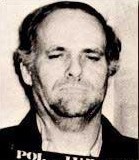 Ervil LeBaron
Murderer · USA · 1972
Ervil Morrell LeBaron (1925 to August 16, 1981) was the leader of a polygamous…
35 victims
Ervil LeBaron
Murderer · USA · 1972
Ervil Morrell LeBaron (1925 to August 16, 1981) was the leader of a polygamous…
35 victims
 Brian Kevin Rosenfeld
Murderer · USA · 1985
Brian Kevin Rosenfeld Brian Kevin Rosenfeld was sentenced to three concurrent l…
23 victims
Brian Kevin Rosenfeld
Murderer · USA · 1985
Brian Kevin Rosenfeld Brian Kevin Rosenfeld was sentenced to three concurrent l…
23 victims
 Marvin Gray
Murderer · USA · 1975
Marvin Gray was convicted killer who claimed responsibility for 23 slayings and…
23 victims
Marvin Gray
Murderer · USA · 1975
Marvin Gray was convicted killer who claimed responsibility for 23 slayings and…
23 victims
 Yahweh ben Yahweh
Murderer · USA · 1980
Yahweh ben Yahweh was born and legally named Hulon Mitchell Jr. (October 27, 19…
23 victims
Yahweh ben Yahweh
Murderer · USA · 1980
Yahweh ben Yahweh was born and legally named Hulon Mitchell Jr. (October 27, 19…
23 victims
 Russell Ellwood
Murderer · USA · 1991
Russell Ellwood was a former taxi driver. Authorities suspected him of killing…
20 victims
Russell Ellwood
Murderer · USA · 1991
Russell Ellwood was a former taxi driver. Authorities suspected him of killing…
20 victims
 Christian Brando
Homicide · USA · 1990
Christian Brando pled guilty to manslaughter. Christian Brando (May 11, 1958 –…
1 victim
Christian Brando
Homicide · USA · 1990
Christian Brando pled guilty to manslaughter. Christian Brando (May 11, 1958 –…
1 victim
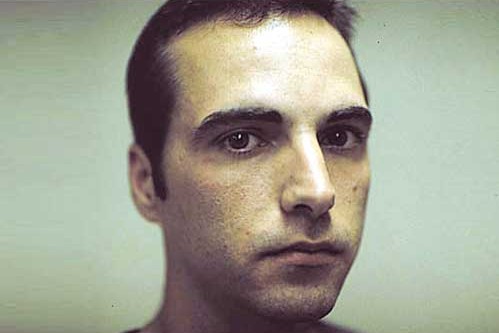 Jeremy Sheets
Murderer? · USA · 1992
Jeremy Sheets was sentenced to death on September 26, 1997. His conviction was…
1 victim
Jeremy Sheets
Murderer? · USA · 1992
Jeremy Sheets was sentenced to death on September 26, 1997. His conviction was…
1 victim
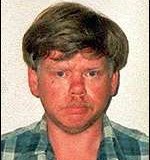 Russell Eugene Weston
Homicide · USA · 1998
Russell Eugene Weston Jr. was born December 28, 1956 and used the nickname “Rus…
2 victims
Russell Eugene Weston
Homicide · USA · 1998
Russell Eugene Weston Jr. was born December 28, 1956 and used the nickname “Rus…
2 victims
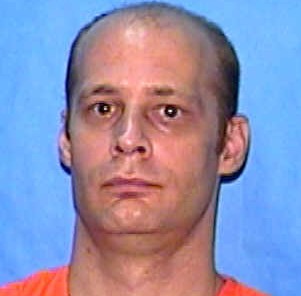 John Christopher Marquard
Murderer · USA · 1991
John Christopher Marquard was sentenced to death on February 5, 1993. The Flori…
1 victim
John Christopher Marquard
Murderer · USA · 1991
John Christopher Marquard was sentenced to death on February 5, 1993. The Flori…
1 victim
 Peter Dupas
Serial killer · Australia · 1997
Peter Norris Dupas was an Australian serial killer known for violence against w…
6 victims
Peter Dupas
Serial killer · Australia · 1997
Peter Norris Dupas was an Australian serial killer known for violence against w…
6 victims
- Gender
- male
- Country
- USA
- Location
- Kankakee County, Ill inois, USA
- Date of birth
- October 4, 1967
- Age at first offence
- 14
- Characteristics
- rape, sexual mutilation, kidnapping
- Victim profile
- Tara Sue Huffman, 5 / Christopher Meyer, 9
- Method of murder
- St abbing with knife
- Date(s) of murder
- 1981 / 1995
- Years active
- 1981–1995
- Date of arrest
- —
- Status
-
Life imprisonment
Sentenced to death in 1996; commuted to life in prison
Case record: Timothy Buss
Other details
Timothy Buss was indicted in connection with the August 7, 1995, disappearance and murder of Christopher Meyer.
Buss was also linked to an earlier murder for which he had been sentenced to 25 years in prison in 1981 and paroled in 1993.
Tara Sue Huffman’s murder in Bradley, Illinois in 1981 involved sexual abuse and murder.
While in prison, Buss bragged about Tara's murder.
Buss claimed that the murder of Christopher Meyer was committed by another man who looked like him and drove the same kind of car; hair and DNA testing on the blood found in the trunk of Buss's car and on a pair of boots he tried to get rid of proved different.
Christopher Meyer lived in Walla Walla, Wash., with his father Jim Meyer, but spent summer months with his mother, Mika Moulton.
Christopher's death helped win passage of a law requiring community notification about sex offenders living in the area.
At Buss’s trial for Christopher’s murder, Tara’s brother attended.
The jury found Buss guilty in 4 hours and sentenced him to death in less than three hours.
The Illinois Supreme Court rejected Buss’s appeal in April of this year.
The opinion filed April 15, 1999 was People v. Buss (Ill. S.Ct.), Docket No. 81911-Agenda 2-November 1998, in The People of the State of Illinois v. Timothy D. Buss, Appellant.
Justice McMorrow delivered the opinion of the court.
Buss was represented in the appeal as “defendant, Timothy D. Buss” and “appellant.” The state was “the People of the State of Illinois” and “appellee.”
The parties stipulated that Buss was 28 years old at the time of trial.
Timeline
- August 7, 1995 — Christopher Meyer disappeared after being given permission to go to the Aroma Park boat launch on the Kankakee River; investigators later found evidence including Christopher’s clothing and bicycle in areas around the Kankakee River.
- August 8, 1995 — Searchers dragged the river and found one of Christopher’s shoes floating near the Aroma Park boat launch.
- August 8, 1995 — Searchers found the bicycle Christopher was last seen riding; it was recovered across the river from the boat launch in a wooded area east of the railroad trestle on Birchwood Drive.
- August 9, 1995 — Christopher’s other shoe was found floating in the Kankakee River near the Kankakee Country Club, downstream from the Aroma Park boat launch.
- August 10, 1995 — Henry viewed 20 to 25 cars and selected defendant’s car; defendant was arrested on August 10, 1995; forensic processing occurred after consent to search his car.
- August 10, 1995 — Boots were placed in the B and P Motel dumpster and later placed in a plastic bag; police received the boots.
- August 12, 1995 — Pieces of Christopher’s clothing were found in the area around the gravel parking lot for Hunting Area 10 in the Kankakee State Park.
- August 15, 1995 — Christopher’s body was found in Will County in a shallow grave under a sheet of plywood in a clearing at the end of a path leading from the parking area of Hunting Area 7.
- April 15, 1999 — The Illinois Supreme Court opinion in People v. Buss (Ill. S.Ct.) was filed.
- 1993 — Buss was paroled after serving 12 years of a 25 year sentence for the murder of Tara Sue Huffman.
- 1996 — Buss was sentenced to death.
- After being released on parole from the 1981 murder of a five-year-old girl — Buss murdered another child, Christopher Meyer, 9.
Background
Mika Moulton, Christopher Meyer’s mother, testified that in August 1995 she and her children lived in Aroma Park, Illinois.
During the afternoon of August 7, 1995, Moulton gave 10½-year-old Christopher permission to go to the Aroma Park boat launch on the Kankakee River and instructed him to return home at 5 p.m. that day.
Christopher did not return home that evening.
Moulton looked for Christopher without success and notified police, who began a search for him.
Tara Sue Huffman was sexually abused and murdered in Bradley, Illinois in 1981.
After serving 12 years of a 25 year sentence for Tara's murder, Buss was paroled in 1993.
The offence
The body found on August 15, 1995 was identified as Christopher.
Forensic evidence established that Christopher died from multiple stab wounds prior to sunset on August 7.
The body was unclothed and showed signs of decomposition.
Dr. Larry Blum performed the autopsy.
Blum found a contusion to Christopher’s jaw and 52 stab wounds and cuts, primarily to the chest, abdomen, and back.
Blum opined that the stab and slash wounds were made by a sharp, single-edged knife relatively long and narrow, which could have been a filet knife.
There was evidence that this type of knife had been used to cut Christopher’s genital area; Christopher’s external genitalia were missing.
Blum testified that none of Christopher’s wounds, including one stab wound to his heart and 12 to his lungs, was sufficient to cause immediate death.
The cause of death was multiple stab wounds.
Buss kidnapped Christopher, sexually mutilated him, and stabbed him over 50 times, then buried him in a shallow grave in a state park 20 miles away.
The shallow grave was in Will County at Hunting Area 7 in the Kankakee State Park.
Neal Haskell, a forensic entomologist, explained that insects are attracted to human remains sometimes within seconds of death and lay their eggs in the remains.
Based on the stage of insect development and environmental conditions, Haskell concluded that the time of death was most likely sometime before sunset on August 7.
Investigation
Searches after Christopher’s disappearance found Christopher’s clothing and bicycle in areas around the Kankakee River.
On August 8, searchers found one of Christopher’s shoes floating near the Aroma Park boat launch.
On August 8, searchers found the bicycle Christopher was last seen riding; it was recovered across the river from the boat launch in a wooded area east of the railroad trestle on Birchwood Drive.
On August 9, Christopher’s other shoe was found floating near the Kankakee Country Club downstream from the Aroma Park boat launch.
On August 12, searchers found pieces of Christopher’s clothing near the gravel parking lot for Hunting Area 10 in the Kankakee State Park; a piece of Christopher’s T-shirt was on the ground and a pair of Ninja Turtle underwear was hanging in a nearby bush.
Police learned that several individuals had seen Christopher and a man resembling Buss at the boat launch during the afternoon of August 7.
Jacob Mailloux testified that he went to the boat launch with his friend Paul Buckner during the afternoon of August 7 and saw Christopher talking to a man with dark hair and a mustache wearing a turquoise tank top and blue jean cut-off shorts.
Mailloux testified that during a conversation the man said he had been raised in Aroma Park, had family in the area, and had just returned from Florida, and that he talked about salt water fishing in Florida.
Mailloux noticed the man’s tackle box contained a filet knife and lures too big to be used by fishermen in the Aroma Park area.
Mailloux was unable to make a positive identification of Buss in court or at the lineup he viewed but testified that Buss was similar to the man he saw.
Edward Meier testified that around 4 p.m. on August 7, 1995 he was at the boat launch with friends Dustin and Darren Posing and saw Christopher walk out of the woods on a path leading from the fishing area adjacent to the boat launch.
Meier testified that Christopher walked to a car, spoke to someone, jogged to the boat ramp to wash mud from his shoes in the river, retrieved his bike from a nearby tree, and refused Darren’s suggestion to ride the bike into the river.
Meier testified that Christopher said he had to be home by 4:30 p.m.
Meier testified that the car slowly circled the parking lot and then drove out of the lot toward Harry’s Bait Shop, and Christopher quickly rode out of the parking lot after the car.
On August 10, Meier selected Buss’s car from 25 or 30 cars in the parking lot of the Kankakee County sheriff’s department and identified it as the car he saw at the boat launch on August 7.
Darren Posing’s testimony was essentially the same as Meier’s, except that Darren did not see Christopher talking to anyone at the boat launch.
Posing testified that he did see a gray or dark blue car in the boat launch parking lot that appeared to be a 1984 Oldsmobile.
Beth Waselewski testified that she was at the Aroma Park boat launch with her boyfriend, Jason Forbes, on August 7, 1995.
Waselewski saw Christopher pushing his bike and following a man in his late thirties or early forties who wore a dark sleeveless shirt, had a mustache, had dark hair, and was smoking a cigarette.
Waselewski testified that Christopher and the man were walking out of the woods on the path leading from the bayou.
Waselewski saw a dark gray four-door car in the parking lot but was unable to tell the Kankakee County sheriff’s department whether the car she saw was among the cars later viewed.
Waselewski testified that it was “very possible” that Buss was the man and that it was “possible” that Buss’s car was the one she saw at the boat launch.
Other individuals testified they saw Buss or Buss’s car in the Aroma Park area around August 7.
Charles Henry testified that he lived east of the trestle on Birchwood Drive and that across the road there was a park between the road and the river.
Henry testified that on August 7, 1995 he was driving home from work when he saw a car in the parking area of the park with a man standing behind it by the open trunk.
Henry testified that he had a side view of the man, made eye contact, and the man had dark, wavy hair and wore blue jeans and a gray T-shirt.
Henry testified that he did not notice facial hair but did see a filet knife in a leather case protruding from the man’s back pocket.
Henry testified that as a fisherman it was common to have this type of leather case and filet knife described as “thin, single-edged, flexible knife.”
Henry testified that he reported his observations to police on August 9.
Henry testified that on August 10 he viewed a group of 20 to 25 cars and selected defendant’s car which he stated looked like the car he saw on August 7.
Henry testified that on August 11 he identified Buss in a lineup and made a courtroom identification of Buss.
Bobbye Fancher testified that at 12:45 a.m. on August 7, 1995 she was driving to work on Route 113 when she saw an older model silver-blue Spectrum turn in front of her from a dirt road just west of Hunting Area 7 in the Kankakee State Park.
Fancher testified that at about 9:25 p.m. on August 8 she saw the same car turn onto Route 113 at the same location, did not turn on its headlights for one-half to one mile, and the driver had a mustache.
Fancher testified that she contacted police and after viewing a group of 23 to 35 cars at the police station she identified Buss’s car as the one she saw on August 7 and 8.
Fancher testified that she had worked with Buss’s father at one time but was unaware that Buss had been arrested when she contacted police.
David Buss testified that he and Fancher had had disagreements at work but that they had last worked together 15 to 20 years ago.
The Illinois Secretary of State records testified that Buss owned a 1986 four-door Chevy Spectrum around the time of Christopher’s murder.
In June 1995, Buss obtained Illinois license plates for this car and title was transferred from Florida to Illinois.
Candace Adkins testified that in August 1995 she lived in the same apartment building as Buss and that he had moved there from Florida in May that year.
Adkins testified that on August 6 her sister returned a hammer borrowed from Buss and it was clean when returned.
Adkins testified that around 1 p.m. on August 7 she saw Buss’s car at the apartment building but it was gone when she looked for it around 4, 5, or 6 p.m.
Adkins testified that on August 9 Buss asked if she knew where he was on Monday (August 7) and told her that he was a suspect in Christopher’s disappearance.
Adkins testified that she noticed three scratches on Buss’s forearm when she saw him on August 9.
Laura Adkins testified that she lived with her sister in August 1995, had seen Buss that summer with a filet knife in a case on his belt, and on August 8 she saw him sitting in his car for long periods of time in a daze and that he had not acted this way in the past.
Kankakee police department and Kankakee County sheriff’s department members testified concerning attempts to speak to Buss.
On August 9, police visited the home of David and Terry Buss, Buss’s father and stepmother; Terry refused to speak without an attorney.
That afternoon, David Buss told police that Buss was living in Joliet with his brother.
When police visited Buss’s Joliet address that afternoon, no one was home.
Buss was not at his place of employment.
Police placed Buss’s apartment under surveillance and observed Buss return home that evening.
Around 9 p.m., police saw Buss’s car parked in front of his apartment building but shortly thereafter realized Buss’s car had disappeared.
Attempts to locate the car that night were unsuccessful.
Wanda Poole testified she was familiar with Buss’s car and around 8:40 or 9 p.m. on August 9 was in her garage when she saw Buss’s car traveling down the alley behind her home at 35 to 40 miles per hour.
Poole testified that although it was dark the car’s headlights were off.
Theresa Billingsley testified she worked as a desk manager at the B and P Motel in Braidwood on the night of August 9.
She testified that a man checked into the motel at about 10 p.m. under the name of Jim Benson driving a blue-gray older model four-door Spectrum with fishing rods in the back window, and assigned a smoking room.
Billingsley testified she contacted police because she believed the man resembled a composite sketch from a flier distributed about Christopher’s disappearance.
Police placed Buss under surveillance at the motel.
Marsha Pressler testified she worked as a desk clerk at the B and P Motel during the day on August 10.
Pressler testified that around 8:25 a.m. Buss checked out of the motel.
Pressler testified that after Buss left the office she saw him place a pair of boots in the motel dumpster.
Pressler asked another guest to retrieve the boots from the dumpster and place them in a plastic bag.
Pressler testified she gave the bag to Braidwood police officer Keith Kemp, who testified that the boots were “water soaked” but in good condition when he received them.
Deputy Sheriff Brady Bertrand testified he was assigned to watch Buss at the motel and observed Buss place a pair of boots in the motel dumpster and drive away in a light blue or gray Chevy Spectrum.
Bertrand followed Buss to the Wilmington Dam.
William Treadman testified he was at the Wilmington Dam around 9 a.m. on August 10 and that Buss approached him and asked whether Treadman had seen him fishing at the Dam before, and Treadman responded that he had not.
David Buss testified that after police came to his house on August 9 he contacted Buss and advised him to spend the night at a motel around the Wilmington Dam, speak to people at the Dam in the morning to “verify his whereabouts” on August 7, and turn himself in to police.
Bertrand and Buss arrived at the Dam on August 10, and four other officers joined.
Lieutenant Gary Mitchell, Detective Rich Sims, and Lieutenant Larry Osenga approached Buss.
Mitchell identified himself and told Buss they wanted to speak to him.
Buss appeared nervous, walked in circles, and did not make eye contact.
Sims attempted to take a picture and Buss turned his face away and put his hands up to shield his face.
At the request of the officers, Buss drove his car to the sheriff’s department.
Two officers accompanied Buss to the sheriff’s department in their own cars.
Buss parked his car in the parking lot of the sheriff’s department.
Police had a towing company bring other similar cars to the parking lot and asked potential witnesses if they recognized any of the cars.
After consulting with his attorney, Buss consented in writing to the search of his car.
Buss was arrested on August 10, 1995.
Police evidence processing involved processing Buss’s car after his consent to the search.
Randy Hartman testified that he helped process Buss’s car after consent, vacuumed the car, and placed collected debris in sealed bags.
Hartman testified that on the floor of the back seat he found a bucket and hammer with mud caked on the claw, there were fishing poles in the back window, and a tackle box in the trunk.
Hartman testified that there was no filet knife in the tackle box, but it contained various lures, sinkers, and a salt water fishing hook.
Hartman testified that there was blood on the carpet of the trunk, and blood on items in the trunk including a lug wrench, dent puller, and bottle.
Police also searched Buss’s apartment and room at the B and P Motel.
A motel receipt with the name of Jim Benson was found in the motel dumpster.
No filet knife was found in the apartment or at the motel.
Ralph Meyer testified that he analyzed hairs recovered from Buss’s car and from the T-shirt fragment found in Hunting Area 10, and obtained hair samples from Christopher’s body and from Buss.
Meyer testified that two hairs from the front passenger area of Buss’s car matched Christopher’s hair characteristics, and that a hair found on the T-shirt fragment also matched Christopher’s hair.
Kenneth Knight testified he analyzed soil recovered from the claw of the hammer found in Buss’s car and soil from the grave site and found them consistent with each other.
Robert Hunton testified he compared a partial footprint found at the grave site to boots defendant discarded at the B and P Motel and found the pattern and size of the right boot matched the footprint.
Gail Kienast testified she analyzed items recovered by police and determined there was human blood on the dent puller found in the trunk of Buss’s car.
Kienast testified that carpet from the trunk had a stain of human blood that soaked through.
Kienast testified that there was human blood on a box found at the grave site and that there was also blood on the boots placed in the motel dumpster but the test to determine whether the blood was human was not positive.
William Frank testified that he analyzed DNA extracted from an inhaler prescribed for Christopher, carpet from the trunk of Buss’s car, a piece of Christopher’s right femur, and from a bloodstained box found at the grave site.
Frank testified he used two methods of DNA analysis: PCR and RFLP, and that two different profiles are obtained when both methods are used.
Frank testified that PCR profiles from the inhaler, carpet, and femur, and box were the same, and calculated the DNA profile could be found in one out of 19,000 Caucasian individuals.
Frank testified that for RFLP he compared DNA in blood samples from Christopher’s parents and defendant to DNA in blood found on the box and carpet, and used DNA from Christopher’s parents to determine whether blood belonged to Christopher because the amount extracted from Christopher’s inhaler and femur was insufficient.
Frank testified that blood on the box and carpet came from a child of Mika Moulton and James Meyer, Sr., Christopher’s father.
Frank testified he calculated that the chance of two Caucasian parents producing a child with the same RFLP DNA profile as the DNA found on carpet and box was one out of 3.8 million.
Frank testified that he estimated frequency of DNA with both the PCR and RFLP profiles in the population, determining a person with such DNA would occur in the Caucasian population only 1 out of 419 million times.
Arrest
Buss was arrested on August 10, 1995 after he consented in writing to the search of his car following police efforts and after he drove to the sheriff’s department at officers’ request.
Trial
At Buss’s 1996 trial, Mika Moulton testified about Christopher being given permission to go to the boat launch and returning instructions and later the search after Christopher did not return.
Jacob Mailloux, Edward Meier, Darren Posing, Beth Waselewski, Charles Henry, Bobbye Fancher, and multiple other witnesses testified about seeing Buss or vehicles resembling Buss’s in the Aroma Park area and near Hunting Areas.
The defense presented witnesses to show eyewitness identifications were unreliable and also attempted to show Buss was elsewhere.
Buss sought to undermine identifications by presenting witnesses who thought they may have seen Buss and Christopher together but who were unable to identify Buss at lineups.
Thomas Dellibac testified that on August 7 around 5:30 p.m. he saw a boy and a man fishing on the Kankakee River 50 to 100 yards downriver from the Aroma Park boat launch, the boy resembled Christopher and the man looked similar to Buss, and Dellibac could not positively identify anyone in the lineup police showed him.
Steven Jones testified that around 4:30 p.m. on August 7, 1995 he saw a man and a blond-haired boy in a car leaving a playground on the Kankakee River in Aroma Park and that the car traveled at a high rate of speed and there was a 20-inch bicycle in the trunk.
Jones testified he first tentatively selected Buss from a lineup he saw in October 1995 but was unable to positively identify the driver of the car.
To show Buss was not the only man who recently arrived from Florida around the time of Christopher’s murder, the defense presented Michael Ingalls, who testified that around noon on August 8 he had a conversation with a man in Harry’s Bait Shop in Aroma Park, the man said he had driven to Illinois from Florida, and the man was in his late thirties to mid-forties, with black hair and a mustache, driving a white compact car.
In rebuttal to Fancher’s testimony about the evening of August 8, Buss presented witnesses including his father and aunt.
Buss’s father and aunt testified that he was at his sister’s wedding and reception on August 5 from 2 to 10:30 p.m.
Defendant’s grandmother, Alice Buss, testified that defendant was with her in Kankakee from 6 p.m. to 10 p.m. on the evening rebutting Fancher.
Defendant also presented testimony about discrepancies in a witness’s sightings.
Kankakee County Deputy Sheriff Marcia Dillon testified that while she was working at the search command center on August 8 at 6 a.m. she saw a man resembling the composite sketch police distributed and the man drove into the command center parking lot in a blue-gray early eighties model Buick, Chevy, or Oldsmobile.
Dillon could not positively identify Buss as the driver and testified that Buss’s car was not the car she saw that morning.
Cindy Berglund testified that around 1 p.m. on August 8 she was at a pond a half hour from Kankakee with her 13-year-old son, David Berglund, and that a man driving a silver-blue Chevy exited his car and began talking to her son.
After seeing Buss’s picture in the newspaper, Berglund believed the man was Buss and contacted police.
David Berglund testified that the man talked to him about fishing.
Both Berglunds testified that if the man they saw was not Buss, he was Buss’s twin.
They were unable to identify the car they saw from the group of cars police showed them.
Michelle Cash testified that her children did not awaken Buss until 10 a.m. on August 8 and that between 10:30 a.m. and 2 p.m. on August 8 Buss was with her running errands.
Francis Wood testified that she was at a lake near Wilmington with her grandchildren at about 7:30 or 8:30 p.m. on August 5, 1995 when a man approached her grandson and spoke about fishing.
She testified he drove an eighties model dark-gray automobile with a dent on the driver’s side, and she contacted police after seeing Buss’s picture on television, testifying she believed the man was Buss.
Sentencing
Buss’s death sentence was stayed pending direct review by the court.
A jury found Buss guilty of all charges.
Following a jury determination that Buss was eligible for the death penalty, the jury found there were no mitigating factors sufficient to preclude the imposition of the death penalty.
The circuit court sentenced Buss to death for first degree murder.
The circuit court also imposed sentences of 30 years’ imprisonment for aggravated kidnaping and 5 years’ imprisonment for aggravated unlawful restraint.
Charged counts
Buss was indicted on six counts of first degree murder, three counts of aggravated kidnaping, and one count of aggravated unlawful restraint.
The circuit court entered judgment on counts I (intentional first degree murder), VIII (aggravated kidnaping), and X (aggravated unlawful restraint).
Aggravating factors
The jury found eligibility for the death penalty based on the following statutory aggravating factors:
- Buss had been convicted of murdering two or more individuals.
- The murder occurred in the course of a felony.
- The murder victim was under the age of 12 and his death resulted from exceptional brutal or heinous behavior indicative of wanton cruelty.
Appeals
Buss argued on appeal that the court must grant him a new trial and capital sentencing hearing because of errors relating to voir dire, denial of his pretrial motion to quash arrest and suppress evidence, errors at trial, and errors at both stages of the sentencing hearing.
The Illinois Supreme Court affirmed Buss’s convictions and death sentence.
The court’s opinion was filed April 15, 1999.
Outcome
The jury found Buss guilty of all charges related to Christopher Meyer and found Buss eligible for the death penalty based on the statutory aggravating factors.
The jury found that there were no mitigating factors sufficient to preclude the imposition of the death penalty.
The circuit court sentenced Buss to death for the first degree murder conviction and imposed additional sentences of 30 years’ imprisonment for aggravated kidnaping and five years’ imprisonment for aggravated unlawful restraint.
Buss’s death sentence was stayed pending direct review and the Illinois Supreme Court affirmed the convictions and death sentence.
Buss was sentenced to death in 1996 and later had the death sentence commuted to life in prison.
Spotted an error, or have more information about this case?