
Clara Schwartz
Murderer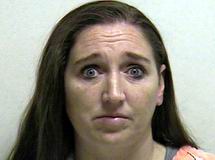 Megan Huntsman
Murderer · USA · 1996
Megan Huntsman was 40 at sentencing. She was a mother of three children who wer…
6 victims
Megan Huntsman
Murderer · USA · 1996
Megan Huntsman was 40 at sentencing. She was a mother of three children who wer…
6 victims
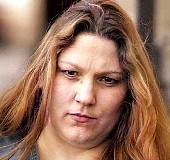 Angela Johnson
Murderer · USA · 1993
Angela Jane Johnson was convicted in federal court of aiding and abetting the m…
5 victims
Angela Johnson
Murderer · USA · 1993
Angela Jane Johnson was convicted in federal court of aiding and abetting the m…
5 victims
 Michele Kalina
Murderer · USA · 1996
Michele Kalina pleaded guilty to murder for one of five infants she initially w…
5 victims
Michele Kalina
Murderer · USA · 1996
Michele Kalina pleaded guilty to murder for one of five infants she initially w…
5 victims
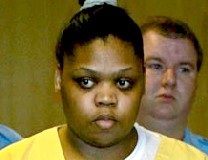 Tiffany Hall
Murderer · USA · 2006
Tiffany Hall was 24 when she was charged in September 2006. She later entered a…
5 victims
Tiffany Hall
Murderer · USA · 2006
Tiffany Hall was 24 when she was charged in September 2006. She later entered a…
5 victims
 Banita Jacks
Murderer · USA · 2007
Banita Jacks was a Washington, DC resident convicted of murdering her four daug…
4 victims
Banita Jacks
Murderer · USA · 2007
Banita Jacks was a Washington, DC resident convicted of murdering her four daug…
4 victims
 Holly Grigsby
Murderer · USA · 2011
Holly Grigsby was sentenced to life in prison without parole on July 15, 2014.…
4 victims
Holly Grigsby
Murderer · USA · 2011
Holly Grigsby was sentenced to life in prison without parole on July 15, 2014.…
4 victims
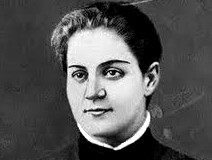 Jane Toppan
Serial killer · USA · 1887
Jane Toppan (1880-1901) was a nurse from Boston, Massachusetts. Another record…
31 victims
Jane Toppan
Serial killer · USA · 1887
Jane Toppan (1880-1901) was a nurse from Boston, Massachusetts. Another record…
31 victims
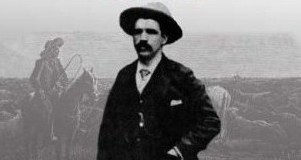 Jackson Lee Davis
Murderer · USA · 1896
Jackson Lee Davis, also known as Diamondfield Jack, was an inmate. · June 4, 18…
2 victims
Jackson Lee Davis
Murderer · USA · 1896
Jackson Lee Davis, also known as Diamondfield Jack, was an inmate. · June 4, 18…
2 victims
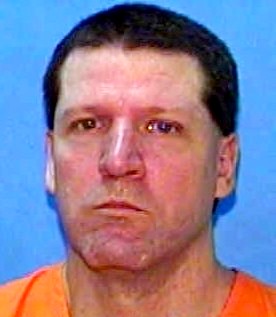 Daniel Lee Doyle
Murderer · USA · 1981
Daniel Lee Doyle was sentenced to death on May 13, 1982. He was convicted of fi…
1 victim
Daniel Lee Doyle
Murderer · USA · 1981
Daniel Lee Doyle was sentenced to death on May 13, 1982. He was convicted of fi…
1 victim
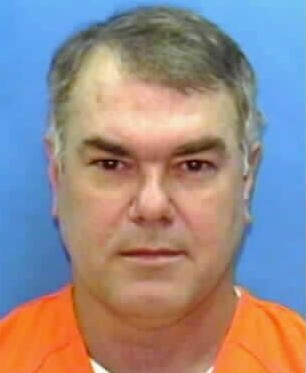 Thomas Dewey Pope
Murderer · USA · 1981
Thomas Dewey Pope (DOB: 01/29/49) was prosecuted in the Seventeenth Judicial Ci…
3 victims
Thomas Dewey Pope
Murderer · USA · 1981
Thomas Dewey Pope (DOB: 01/29/49) was prosecuted in the Seventeenth Judicial Ci…
3 victims
 James Lee Beathard
Murderer · USA · 1984
Name: James Lee Beathard Case role: Capital murder defendant; accomplice to Gen…
3 victims
James Lee Beathard
Murderer · USA · 1984
Name: James Lee Beathard Case role: Capital murder defendant; accomplice to Gen…
3 victims
- Gender
- female
- Country
- USA
- Location
- Leesburg, Loudoun County, Virginia , USA
- Date of birth
- 1981
- Age at first offence
- 20
- Characteristics
- parricide
- Victim profile
- Robert M. Schwartz, 57 (her father)
- Method of murder
- Stabbing with a 2-foot-long sword
- Date(s) of murder
- December 8, 2001
- Years active
- 2001
- Date of arrest
- February 2, 2002
- Status
-
Imprisoned
Sentenced to serve 48 years in prison on February 10, 2003
Case details
Clara Schwartz was convicted of first-degree murder and sentenced to serve 48 years in prison on February 10, 2003.
Background
The murder of Robert Schwartz occurred on December 8, 2001 in Leesburg, Virginia.
Robert Schwartz was a nationally renowned scientist in the field of biometrics and DNA research and a founding member of the Virginia Biotechnology Association. He was the father of three children: Catherine Michele, Jesse, and Clara Jane Schwartz.
The offence
On December 8, 2001, Robert Schwartz was stabbed to death with a sword at his Leesburg, Virginia farmhouse. His body was discovered two days later.
Clara Jane Schwartz, his 20 year-old daughter, orchestrated the murder as part of a fantasy role-playing game.
In the trial, prosecutors portrayed Clara Schwartz as a manipulative young woman who used her role-playing game, Underworld, to convince friends to kill her father. The prosecutors argued that "Clara Schwartz wanted her father dead; she had hated her father for a long time", and that after failing to enlist her friend Patrick House to kill her father, Clara became desperate to have her father murdered.
Clara Schwartz’s defense argued that Robert Schwartz’s killer, Kyle Hulbert, had taken Clara’s directives to kill her father out of the context of their role-playing game. Her attorney persisted that "Clara Jane Schwartz never intended for any person to kill her father."
During the trial, Patrick House testified for the prosecution. He testified that Clara spoke increasingly about killing her father, and that she researched herbal poisons because she wanted his death to appear natural. House also testified that she spoke about how much money she stood to inherit if he died and her concerns that he would cut her out of his will. He stated that she became increasingly frustrated because he was not carrying out her wish, and said how Clara later found a willing participant in Kyle Hulbert.
Investigation and arrests
Three days after the murder, then-19 year-old Katherine Inglis made statements to the police implicating Schwartz's daughter Clara in his murder.
Inglis claimed that Clara Schwartz discussed the planning and murder of her father with her, 21 year-old Michael Pfohl, and 18 year-old Kyle Hulbert. Inglis stated that the motive for the murder was that Robert Schwartz had hit Clara and she believed that he tried to poison her.
Clara Schwartz was charged with the crime on February 2, 2002.
Clara Schwartz was formally indicted for the murder, as well as conspiracy to commit murder and solicitation of murder charges, on March 31, 2002. Inglis, Pfohl, and Hulbert were all previously indicted for Robert Schwartz's murder.
During the proceedings described in the appellate record, after Schwartz’s arrest on February 1, 2002, she was held continuously in custody. After initially saying she thought Hulbert was only “venting” or “kidding” when he said he was going to kill her father, she told Investigator Greg Locke, “I want to go straight. In my heart of hearts, I knew that [Hulbert] was going there to kill [my father].”
"I want to go straight. In my heart of hearts, I knew that [Hulbert] was going there to kill [my father]."
During the trial-court proceedings recounted in the appellate record, a neighbor discovered Robert Schwartz’s body on December 10, 2001. Loudoun County Investigator Greg Locke traveled to James Madison University to inform appellant of her father’s death and appellant provided information about friends including Hulbert, House, Pfohl, and Inglis. Hulbert was arrested the following day.
Arrest and custody
Clara Schwartz remained free until February 2002. She was arrested on February 1, 2002 for the murder of her father and held continuously in custody thereafter.
After being taken to jail, she told her cellmate that the plan was for Hulbert to kill her father “because if anything came up he would take the blame because he had mental issues.”
"because if anything came up he would take the blame because he had mental issues."
Charges and indictment
Clara Schwartz faced multiple charges arising from the murder.
In the appellate record, a juvenile and domestic relations district court found probable cause and certified appellant’s murder charge to the circuit court for consideration by a grand jury on March 21, 2002.
On March 29, 2002, a grand jury returned a four-count indictment charging appellant with murder, conspiracy to commit a felony, and two counts of solicitation to commit a felony.
Count one alleged that on or about the 8th day of December, 2001, in the County of Loudoun, appellant did feloniously, willfully and deliberately, and with premeditation, kill and murder her father “in violation of [Code § ] 18.2-32.”
Count two alleged that during the period from on or about November 2001 to on or about December 2001, appellant did feloniously and unlawfully conspire, confederate or combine with “Kyle Hulbert, et. al [sic]” to commit a felony within this Commonwealth “in violation of [Code § ] 18.2-22.”
Count three alleged that during the period of November 2001, appellant did feloniously and unlawfully command, entreat, or otherwise attempt to persuade another person to commit a felony “in violation of [Code § ] 18.2-29.”
Count four alleged that during the period from on or about June 2001 to on or about November 2001, appellant did feloniously and unlawfully command, entreat, or otherwise attempt to persuade another person to commit a felony “in violation of [Code § ] 18.2-29.”
The appellate record also described the trial court’s grant of a bill of particulars and amendment of count two after a motion seeking more particularity as to the persons referenced by “et. al [sic].” Count two was subsequently amended to reflect that the conspiracy was with Hulbert alone.
Trial
Clara Schwartz was the first of the four co-defendants to go on trial in October 2002.
During the trial, prosecutors argued that Clara Schwartz became desperate after failing to enlist Patrick House.
The appellate record described that appellant’s trial commenced on October 7, 2002 after a continuance was granted due to Investigator Locke’s surgery and recovery needs.
During trial proceedings described in the appellate record, the trial court refused appellant’s instruction on manslaughter and instructed the jury that the defendant was charged with first-degree murder. The instructions required the Commonwealth to prove beyond a reasonable doubt that:
- That Kyle Hulbert killed Dr. Robert Schwartz; and
- That the killing was malicious; and
- That the killing was willful, deliberate and premeditated; and
- That the defendant acted as an accessory before the fact or conspired with Kyle Hulbert in the commission of the killing of Dr. Robert Schwartz as those terms are defined in other instructions by the Court.
The appellate record further described instructions on conspiracy requiring the Commonwealth to prove beyond a reasonable doubt that the defendant entered into an agreement with Kyle Hulbert, that the agreement was to commit murder, and that both the defendant and Kyle Hulbert intended to commit murder.
In addition to first-degree murder and conspiracy to commit murder, the jury found Clara Schwartz guilty of two counts of solicitation to commit murder.
After the presentation of evidence, the jury recommended a total sentence of 48 years, including 30 years for the murder, eight years for the conspiracy, and five years for each of the solicitations.
Sentencing
On October 16, 2002, the jury convicted Clara Schwartz of first-degree murder.
On February 10, 2003, she was sentenced to serve 48 years in prison.
In the sentencing proceedings described in the media account and quoted passages in the record, the judge said before imposing the sentence:
"Clara Jane Schwartz, a former college student obsessed by vampires, assassins and magic, was sentenced yesterday to 48 years in prison for persuading a friend to kill her father, a respected Loudoun County scientist."
Loudoun Circuit Judge Thomas D. Horne said before imposing the sentence:
"set in motion a series of events that led to the terrible death"
He also said:
"We are responsible for our actions,"
"We don't shift blame to others."
When asked if Clara Schwartz had anything to tell the court, she replied:
"Nothing that hasn't already been said."
In another account, defense and sentencing particulars included that she was required to serve every day under Virginia’s truth-in-sentencing scheme.
Appeals
Clara Schwartz made unsuccessful attempts to appeal her conviction.
Her conviction was most recently affirmed by the Fourth District of the United States Court of Appeals on March 9, 2010.
An additional appellate decision described in the appellate record was “Schwartz v. Commonwealth of Virginia” with Record No. 0577-03-4, present before FRANK and CLEMENTS, JJ., and WILLIS, S.J., and decided on April 19, 2005. The appellate opinion described the conviction and the appellant’s contentions, which included:
- That the trial court erred in finding her statutory right to a speedy trial was not violated.
- That the trial court erred in submitting the charges of murder and conspiracy to commit murder to the jury although essential elements were not alleged with particularity in the indictment.
- That the trial court erred in concluding that the double jeopardy doctrine did not bar her conviction for both murder and conspiracy to commit murder.
- That the trial court erred in determining that Wharton’s Rule did not bar her conviction for both murder and conspiracy to commit murder.
- That the trial court erred in excluding the testimony of Dr. Michael L. Deem regarding the mental health of Kyle Hulbert and quashing appellant’s subpoena duces tecum seeking certain of Dr. Deem’s interview notes and Loudoun County Mental Health Center’s treatment notes.
The appellate court affirmed the trial court’s judgment and appellant’s convictions.
Other defendants and related sentences
For their roles in the murder:
- Kyle Hulbert was sentenced to life in prison.
- Michael Pfohl was sentenced to 20 years.
- Katherine Inglis served a 1-year sentence for conspiracy to commit murder.
In the media account descriptions, Hulbert pleaded guilty to first-degree murder in March 2003 and received a life-without-parole sentence, and Pfohl pleaded to second-degree murder and got 18 years.
Aftermath and incarceration status
Clara Schwartz was housed at the Fluvanna Correctional Center for Women near Troy, Virginia.
Her tentative release date was November 2, 2043.
Media coverage
In 2012, the murder of Robert Schwartz was profiled on the Oxygen Network's Snapped and Investigation Discovery's Fatal Encounters.
Verbatim quotations included
"Clara Schwartz wanted her father dead; she had hated her father for a long time"
"Clara Jane Schwartz never intended for any person to kill her father."
"Thanks, guys, for killing my dad."
"That’s what the document said."
"Nothing I wouldn't give to take that act back,"

Spotted an error, or have more information about this case?