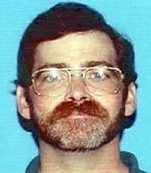
Sean Gillis
Serial killer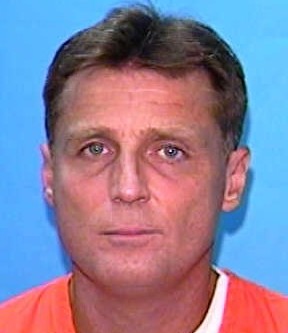 Glen Edward Rogers
Serial killer · USA · 1993
Glen Edward Rogers was a spree killer whose cross-country rampage in 1994-95 le…
70 victims
Glen Edward Rogers
Serial killer · USA · 1993
Glen Edward Rogers was a spree killer whose cross-country rampage in 1994-95 le…
70 victims
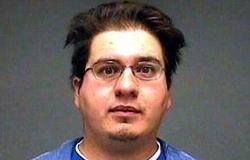 Efren Saldivar
Serial killer · USA · 1989
Efren Saldivar (born 30 September 1969) was an American serial killer who murde…
50 victims
Efren Saldivar
Serial killer · USA · 1989
Efren Saldivar (born 30 September 1969) was an American serial killer who murde…
50 victims
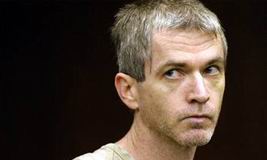 Charles Cullen
Serial killer · USA · 1984
Charles Cullen (born February 22, 1960) was a former nurse and the most prolifi…
45 victims
Charles Cullen
Serial killer · USA · 1984
Charles Cullen (born February 22, 1960) was a former nurse and the most prolifi…
45 victims
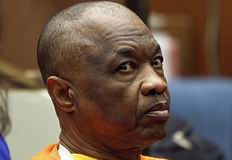 Lonnie Franklin
Serial killer · USA · 1985
Lonnie Franklin was convicted as the “Grim Sleeper” serial killer, a nickname u…
25 victims
Lonnie Franklin
Serial killer · USA · 1985
Lonnie Franklin was convicted as the “Grim Sleeper” serial killer, a nickname u…
25 victims
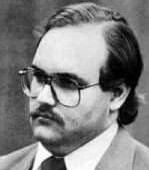 Richard Angelo
Serial killer · USA · 1987
Richard Angelo was 26 years old when he went to work at Good Samaritan Hospital…
25 victims
Richard Angelo
Serial killer · USA · 1987
Richard Angelo was 26 years old when he went to work at Good Samaritan Hospital…
25 victims
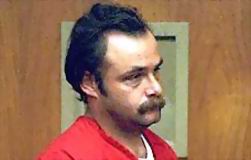 Wesley Shermantine
Serial killer · USA · 1984
Wesley Shermantine Wesley Shermantine was sentenced to death in California on M…
24 victims
Wesley Shermantine
Serial killer · USA · 1984
Wesley Shermantine Wesley Shermantine was sentenced to death in California on M…
24 victims
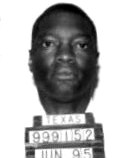 Calvin Eugene King
Murderer · USA · 1994
Calvin Eugene King · Feb. 25, 1994 — Calvin King and Leonard Johnson, Danyell W…
1 victim
Calvin Eugene King
Murderer · USA · 1994
Calvin Eugene King · Feb. 25, 1994 — Calvin King and Leonard Johnson, Danyell W…
1 victim
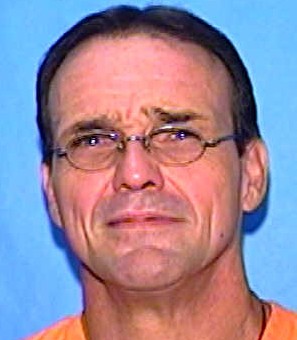 Michael Gordon Reynolds
Murderer · USA · 1998
Michael Gordon Reynolds had a prior dispute with Danny Ray Privett over a trail…
3 victims
Michael Gordon Reynolds
Murderer · USA · 1998
Michael Gordon Reynolds had a prior dispute with Danny Ray Privett over a trail…
3 victims
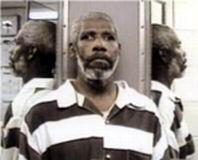 William Henry Furman
Murderer · USA · 1967
William Henry Furman William Henry Furman was sentenced to death on September 2…
1 victim
William Henry Furman
Murderer · USA · 1967
William Henry Furman William Henry Furman was sentenced to death on September 2…
1 victim
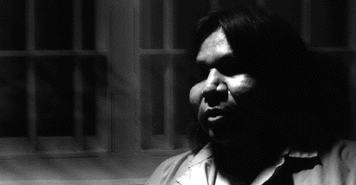 Vern Kills On Top
Murderer · USA · 1987
Vern Kills On Top was born in 1961. He was single and had no children. He was a…
1 victim
Vern Kills On Top
Murderer · USA · 1987
Vern Kills On Top was born in 1961. He was single and had no children. He was a…
1 victim
 Jeffrey Demond Williams
Murderer · USA · 1999
Jeffrey Demond Williams was born on 12/16/1975. Williams was received into cust…
1 victim
Jeffrey Demond Williams
Murderer · USA · 1999
Jeffrey Demond Williams was born on 12/16/1975. Williams was received into cust…
1 victim
- Gender
- male
- Country
- USA
- Location
- Baton Rouge, Louisiana, USA
- Date of birth
- 1963
- Age at first offence
- 31
- Characteristics
- rape, mutilation, convicted rapist
- Victim profile
- Women aged between 30 and 82 years
- Method of murder
- Strangulation - St abbing with knife
- Date(s) of murder
- 1994 - 2004
- Years active
- 1994–2004
- Date of arrest
- April 29, 2004
- Status
-
Life imprisonment
Sentenced to life in prison on August 2007 victims
Case record: Sean Gillis
Background
Sean Vincent Gillis was convicted of killing eight Louisiana women. At trial stage coverage, he was described as now 45-years-old. He was booked into East Baton Rouge Parish Prison on April 29, 2004.
Gillis had a long criminal history dating back to 1980, when he was charged with criminal trespass. His pre-murder rap sheet contained traffic citations, a DUI, a possession of marijuana charge, and contempt of court charges.
Gillis lived in a small, ranch-style house on Burgin Avenue. The house belonged to his mother, where they lived from the time Gillis was a teenager. His mother later moved to Atlanta and left the house with Gillis and his girlfriend. Neighbors avoided him, and one neighbor said that Gillis gave him "the willies". He was caught peeping into a bedroom window of a neighbor's house and was seen on occasions lying out on his front lawn barking at the moon while yelling curses at his mother.
Gillis was linked to multiple murders by DNA evidence and by tire-track evidence. Investigators theorized that one dump-site choice might have been symbolic in nature.
The offence
Gillis was linked to the murders of:
- Ann Bryan, 82
- Joyce Williams, 36
- Katherine Hall, 30
- Hardee Schmidt, 52
- Lillian Robinson, 52
- Marilyn Nevils, 38
- Johnnie Mae Williams (described as a divorced mother of three children; age described as 45-year-old in coverage)
- Donna Bennett Johnston (age described as 43-year-old in coverage)
Gillis’s method of operation was described as varied. While he nearly always mutilated victims’ bodies and frequently took body parts as trophies, he sometimes chose to strangle victims, and more often chose to stab them to death. Coverage described him as beating, raping, strangling, and stabbing victims, and then mutilating their bodies with knives.
Coverage described Gillis raping and mutilating Katherine Hall after placing a plastic cable tie around her neck and choking her, after which he stabbed her in the throat and in her left eye. Coverage described a squirrel hunter finding her nude body face down on a road in a rural area of East Baton Rouge Parish in front of a Dead End road sign.
Coverage described Gillis murdering Hardee Schmidt after running her down with his car, knocking her into a ditch, placing a heavy-duty cable around her neck, choking her, then taking her to a nearby park where he raped and murdered her. Coverage described her body being mutilated with a knife, loaded into the trunk overnight, driven home, and then the following day taken to St. James Parish and dumped into a bayou next to the highway. A bicyclist found the body the next day.
Coverage described Gillis severing one of Joyce Williams’ legs. In the West Baton Rouge Parish case, authorities claimed Gillis confessed to picking up Williams in Scotlandville, driving her across the Mississippi River, and strangling her in a sugarcane field near Port Allen. Authorities stated Gillis dismembered Williams’ body and discarded it in Iberville Parish where it was found in January 2000. The state also described Williams as having been reported missing in November 1999. Her dismembered, skeletal remains were found on January 22, 2000 near Saint Gabriel.
Coverage described Gillis killing Lillian Robinson, and an angler finding her naked body a month later. Coverage described Gillis killing Marilyn Nevils in late October 2000, with her decomposing body discovered on Halloween. Coverage described police allegations that Gillis abducted and killed Nevils in Lafayette and then carried her body to Baton Rouge, where the slain woman was dumped on the Mississippi River levee.
Coverage described Gillis as murdering Johnnie Mae Williams, a divorced mother of three children, drug addict, and prostitute, and stated that Gillis and Williams had been friends and had known each other for at least 10 years. Coverage described him driving her to a secluded area where he beat, raped, and strangled her, then mutilated her body with a knife, and posed and photographed her.
Coverage described Gillis picking up Donna Bennett Johnston, described as a prostitute, after she was drunk, then driving her to a location near his home. Coverage described Gillis looping a cable around her neck and strangling her, then taking off all of Johnston’s clothes and placing her body on the ground where he slashed both of her breasts and cut off her left nipple. Coverage further described him cutting a tattoo from Johnston’s right thigh, and removing her left arm at the elbow, and reportedly taking the arm with him and later using the hand attached to it to masturbate. Coverage described Johnston’s murder as being without doubt the most gruesome and sordid of his kills.
Investigation
FBI agents interviewed Gillis in May 2004. Coverage described Gillis explaining how he plotted his murders and played games with police during a video-taped interview. Coverage described him telling agents he was playing a game of chess with them as they investigated each and every crime scene, stating: "I was the chess master, then. You're not going to beat me. My basic interest would be, 'Okay, did they find it? Where did they fine it? What was the condition of the body?'"
Coverage described Gillis explaining that he used charm and money to lure victims into his vehicle, stating: "The hookers loved me. I treated them like women, like ladies." Coverage also described him saying there wasn’t a plan or a timetable for when or where he would murder his next victim, stating: he said it depended on when opportunity would arise. Coverage also described him stating: "You're not gonna dump a body if it's gonna leave tracks. It's preferable to dump before it rains. It washes evidence off victim... and the evidence around the crime scene."
Coverage stated that DNA left at a scene linked Gillis to multiple murders. Coverage stated that investigators matched a unique tire track found at the location where Johnston’s body was dumped to Gillis’s white Chevrolet Cavalier. In April 2004, investigators matched a unique tire track found at the location where Gillis had dumped Johnston’s body to Gillis’s white Chevrolet Cavalier.
After the police arrested Gillis at his home with the aid of a SWAT team, detectives matched a DNA profile from a swab taken from Gillis to evidence recovered from several of his victims. Detectives executed a search warrant at Gillis’s house and seized:
- seven saws
- a hacksaw
- several knives
- a machete
- plastic zip ties
- external hard drives
- 4 computers
- a computer scanner
- photographs of Johnnie Mae Williams' dead body
- a 14-inch Bayonet
- a wooden club
- six Playboy pocket playmate books
- newspaper clippings about Derrick Lee's final victim, Carrie Lynn Yoder
Coverage stated that one of Gillis’s computers contained files named "Best of Snuff", "Beheadings and Hangings", and "Manson Murders". Coverage stated that another file was about Russian necrophilia. Several books, both fiction and nonfiction, about serial killers were also seized from his home.
Coverage described that in addition to the confessions made to law enforcement officers in Baton Rouge in May 2004, authorities sought to use information from other murder cases as evidence during trial proceedings.
Arrest
Coverage described a SWAT team arresting Gillis about 1:20 a.m. in his home at 545 Burgin Avenue in Baton Rouge.
Trial
Gillis entered a guilty plea in the West Baton Rouge Parish case.
Guilty plea and sentencing for Joyce Williams
Gillis pleaded guilty to second-degree murder for the murder of Joyce Williams. Coverage described that the guilty plea came Monday afternoon, and that he would face a mandatory life sentence in the Williams case. Coverage further described that his guilty plea to a charge of second-degree murder came Monday afternoon and resulted in a mandatory life sentence.
An appellate court ruled that the guilty plea given in West Baton Rouge Parish should stand, and ruled that the guilty plea should not be amended to remove a condition or returned for trial. Coverage described prosecutors in West Baton Rouge wanting an appellate court either to amend the plea to take away an objectionable condition attached to the plea deal or return the case to a Port Allen court for trial.
Coverage stated that Gillis pleaded guilty on condition that he still be allowed to appeal a ruling by Free that would have allowed his confession to be played to jurors at trial. Coverage described that Gillis told state District Judge Robin Free during an August sentencing hearing: "I strangled Joyce Williams and she died"
Coverage described defense arguments that Free had authority to accept the plea with the condition and that it was a matter of judicial efficiency. Coverage also described that Gillis maintained that during his questioning he twice asked to speak with a lawyer, but those requests were ignored and questioning continued.
Coverage also stated that Gillis’s appeal had not yet been ruled on at the time of the appellate-court discussion, and if Gillis were to win, he would be allowed to withdraw his guilty plea and the case would be sent back to Free’s court for trial. Coverage described prosecutors arguing that questioning continued only because Gillis continued to provide information to investigators.
Evidence issues and trial scheduling
A state judge ruled that a former Baton Rouge newspaper reporter who conducted a prison interview with Gillis would be required to testify during the suspected serial killer's first-degree murder trial. Coverage described the reporter as Josh Noel, then a reporter with the Chicago Tribune, and stated that Noel conducted the interview during which Gillis confessed to killing eight women, including Donna Bennett Johnston.
Coverage described that prosecutor Prem Burns said the confessions made to Noel and letters Gillis reportedly wrote to a friend of one of the victims were more important in light of possible problems with confessions Gillis made to authorities. Coverage stated that Burns said having Noel testify would eliminate doubt about whether testimony was coming from a witness who might be trying to sway jurors.
Coverage described Judge Robyn Free ruling on the admissibility of Gillis’s earlier confession to eight murders, stating that Free said Gillis did request a lawyer when he was first questioned but added that Gillis initiated the conversation that led to the confessions.
Coverage described that West Baton Rouge Parish judge Robyn Free set a trial date for Oct. 16 in the death of Joyce Williams. Defense attorneys felt the trial date would come too early.
Coverage described a hearing to decide what evidence the prosecution could use during Gillis’s October trial, and that the defense said it did not have enough information to prepare.
Coverage described a Lafayette trial being postponed a second time. Coverage stated that Gillis faced six murder charges in the Baton Rouge area and one in Lafayette. The second-degree murder trial was set to begin Tuesday in the 2000 killing of 38-year-old Marilyn J. Nevils. Coverage stated that the request to delay the trial was granted by a judge, and prosecutors did not oppose the request, stating they did not plan to move forward in the Lafayette case until charges in Baton Rouge were resolved.
Coverage described Gillis as scheduled to stand trial June 9 on a count of first-degree murder in another of the killings he confessed to committing. Coverage stated that in that trial Gillis was accused of killing 43-year-old Donna Bennett Johnston, with Johnston’s mutilated body found on Feb. 27, 2004, near a creek a short distance from Ben Hur Road in Baton Rouge. Coverage stated that prosecutors were seeking the death penalty.
Coverage described that a delay might occur for the trial start in Baton Rouge and that, after six weeks of jury selection, the trial was slated to begin on Monday, July 21, 2008, as reported in coverage. Coverage also described that the prosecution indicated it would seek the death penalty against Gillis.
A quote attributed to Gillis after his arrest was included in coverage describing why he waited so long before killing again: he told a reporter that he waited so long before killing his next victim because he was "happy."
Prosecutorial statements and juror voting on death penalty
Coverage quoted prosecutor Prem Burns and included her statements regarding the case and the tape:
- Burns stated: "I am like, 'Damn it. It's first degree. He stole from her... serial killers take souvenirs.'"
- Burns stated: "I believe had we been able to play the tape for the jury, I think they would have come to the conclusion that death was the only sentence for this calculating, cunning killer whom I analogize to a Ted Bundy." Coverage described that the state could not enter the tape into evidence because Gillis asked for an attorney during his interview with agents, making it inadmissible during the trial. Coverage also described that Prem Burns believed the tape would have been the final nail for the jury.
Coverage described that WAFB News learned that Prem Burns was not close in getting a death penalty judgment. Coverage described interviews with jurors, including the jury foreman, stating that when the first vote was taken, four jurors voted no on the death penalty, including two who said they absolutely would not vote for death for any reason and two who had admitted they were "wavering". Coverage stated that those who favored death called the final vote immensely disappointing.
Sentencing
In the West Baton Rouge Parish case for Joyce Williams, Gillis received a mandatory sentence of life in prison after pleading guilty to second-degree murder.
Coverage described that Gillis was sentenced to life in prison in connection with the West Baton Rouge Parish plea, and that authorities claimed he confessed to killing Joyce Williams and dismembering her body.
Appeals
An appellate court ruled that the guilty plea given in West Baton Rouge Parish should stand. Coverage described prosecutors in West Baton Rouge wanting an appellate court to either amend the plea to take away an objectionable condition attached to the plea deal or return the case to a Port Allen court for trial, and stated the ruling occurred on Wednesday.
Coverage stated that Gillis’s appeal of the ruling allowing his confession to be played had not yet been ruled on at the time discussed. Coverage also described that if Gillis won his appeal, he would be allowed to withdraw his guilty plea and the case would be sent back to Free’s court for trial.
Other details
Coverage described that Gillis shared with agents how he used a combination of charm and money to lure victims and how he played a chess game with detectives as they investigated crime scenes.
Coverage described that Gillis had confessed to killing and mutilating eight women, seven of whom were officially charged with murdering. Coverage stated that the murder of Lillian Robinson remained under investigation even though it appeared Gillis killed her.
Coverage stated that Gillis was accused in addition to first-degree murder of ritualistic acts allegedly mutilating victims’ bodies after death. Coverage stated that Gillis was charged with three counts of first-degree murder and three counts of ritualistic acts. Coverage also stated that, following Gillis’s arrest, detectives said he confessed to other unsolved local murders, and that he was then charged with first degree murder, aggravated kidnapping and stalking of 52-year-old Hardee Moseley Schmidt, and first degree murder of 81-year-old Ann Bryan.
Coverage described that Gillis’s letters were delivered to authorities after arrest. Coverage stated that Purpera died of complications from AIDS in August 2005, but not before she turned over Gillis’s letters to authorities.
Coverage included a quote Gillis wrote to Johnston’s friend, Tammie Purpera, after his arrest: "Your friend died quickly," he wrote to Johnston's friend, Tammie Purpera, after his arrest. "She was so far gone that night that I really do not think she even knew what was happening to her. She was so drunk it only took about a minute and a half to succumb to unconsciousness and then death. Honestly, her last words were, 'I can't breathe.'"
Coverage included a quote attributed to Gillis in the Williams case outside the procedural discussion: "no comment" when asked by WAFB reporter Caroline Moses how he felt about his plea.
Coverage described that WAFB News learned details about Gillis’s investigation and trial timeline, including jury selection and confessions, and that it was believed unlikely he would be tried on the others.
Timeline
- March 21, 1994 — Police believed Gillis did not commit his first murder until this date, when he broke into the small retirement home apartment of 82-year-old Ann Bryan.
- January 22, 2000 — Announced in coverage as the date when Ann Bryan’s case remained unsolved until 10 years later; later text also included discovery dates for other victims (see other entries).
- November 12, 1999 — Joyce Williams was killed.
- January 22, 2000 — Dismembered, skeletal remains of Joyce Williams were found in a wooded area near Saint Gabriel.
- January 2000 — Lillian Robinson was killed.
- late October 2000 — Marilyn Nevils was killed.
- Halloween (after late October 2000) — Marilyn Nevils’s decomposing body was discovered.
- May 30, 1999 — Gillis seized the opportunity to abduct and murder Hardee Schmidt at approximately 6:30 a.m.
- May 1999 (toward early part) — Coverage described Gillis seeing Hardee Schmidt out for an early morning jog and returning to her neighborhood frequently for the next three weeks.
- early January 1999 — Coverage described Katherine Hall climbing into Gillis’s car on a chilly night.
- September 2001 — Coverage described that someone other than Gillis murdered Gina Wilson Green.
- February 27, 2004 — Johnston’s mutilated body was found near a creek a short distance from Ben Hur Road in Baton Rouge.
- April 2004 — Investigators matched a unique tire track found at the location where Gillis had dumped Johnston’s body to Gillis’s white Chevrolet Cavalier.
- April 29, 2004 — Gillis was booked into East Baton Rouge Parish Prison.
- May (no exact day given), 2004 — FBI agents interviewed Gillis; coverage also described Gillis’s statements to law enforcement officers in Baton Rouge in May 2004.
- May 2003 (coverage context) — Coverage described Derrick Todd Lee’s arrest in May 2003.
- May 26, 2006 — A state judge said Josh Noel would be required to testify during Gillis’s first-degree murder trial.
- June 21, 2006 — Gillis returned to court in West Baton Rouge Parish for preparation ahead of an October trial.
- June 2, 2006 — Coverage described that the Lafayette trial was postponed a second time, and also that Judge Robyn Free ruled Gillis’s earlier confession to eight murders would be admissible and set a trial date for Oct. 16.
- July 21, 2008 — Coverage described the Baton Rouge trial start date.
- August 1, 2008 — Coverage described the date on which details about Gillis’s video-taped interview with FBI agents were obtained.
- August 21, 2007 — Coverage described Gillis pleading guilty to second-degree murder for the murder of Joyce Williams.
- March 29, 2008 — Coverage described that an appellate court ruled that the guilty plea should stand.
- October 16 (year not specified in the provided text) — Coverage stated a trial date was set for Oct.
- June 9 (year not specified in the provided text) — Coverage stated Gillis was scheduled to stand trial June 9 on a count of first-degree murder in another killing.

Spotted an error, or have more information about this case?