
Keli Lane
Murderer Kathleen Folbigg
Murderer · Australia · 1989
Kathleen Megan Folbigg (née Donovan) was an Australian child killer. She was co…
4 victims
Kathleen Folbigg
Murderer · Australia · 1989
Kathleen Megan Folbigg (née Donovan) was an Australian child killer. She was co…
4 victims
 Anu Singh
Murderer · Australia · 1997
Anu Singh (born 3 September 1972) was an Australian of Indian descent who kille…
1 victim
Anu Singh
Murderer · Australia · 1997
Anu Singh (born 3 September 1972) was an Australian of Indian descent who kille…
1 victim
 Gunn-Britt Ashfield
Murderer · Australia · 1993
Gunn-Britt Ashfield was the mother of six-year-old John Ashfield. In 2011 she w…
1 victim
Gunn-Britt Ashfield
Murderer · Australia · 1993
Gunn-Britt Ashfield was the mother of six-year-old John Ashfield. In 2011 she w…
1 victim
 Katherine Knight
Murderer · Australia · 2000
Katherine Mary Knight (born 24 October 1955) was the first Australian woman to…
1 victim
Katherine Knight
Murderer · Australia · 2000
Katherine Mary Knight (born 24 October 1955) was the first Australian woman to…
1 victim
 Storm Brooke
Murderer · Australia · 1990
Storm Brooke was an Australian prisoner who stabbed fellow prisoner Debbie Dick…
1 victim
Storm Brooke
Murderer · Australia · 1990
Storm Brooke was an Australian prisoner who stabbed fellow prisoner Debbie Dick…
1 victim
 Tracey Wigginton
Murderer · Australia · 1989
Tracey Wigginton (born 1965) was an Australian murderer who achieved notoriety…
1 victim
Tracey Wigginton
Murderer · Australia · 1989
Tracey Wigginton (born 1965) was an Australian murderer who achieved notoriety…
1 victim
 Kimberly Anderson
Homicide · USA · 2001
Kimberly Anderson was acquitted in criminal trial on October 17, 2002. In a civ…
1 victim
Kimberly Anderson
Homicide · USA · 2001
Kimberly Anderson was acquitted in criminal trial on October 17, 2002. In a civ…
1 victim
 Kim de Gelder
Murderer · Belgium · 2009
Kim de Gelder was a Belgian aged 20 from Sinaai. He was described as a silent b…
4 victims
Kim de Gelder
Murderer · Belgium · 2009
Kim de Gelder was a Belgian aged 20 from Sinaai. He was described as a silent b…
4 victims
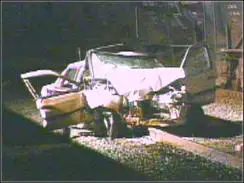 Carlos Diaz-Santiago
Mass murderer · USA · 2000
Carlos Angel Diaz Santiago, also referred to as Carlos Angel Diaz, was convicte…
4 victims
Carlos Diaz-Santiago
Mass murderer · USA · 2000
Carlos Angel Diaz Santiago, also referred to as Carlos Angel Diaz, was convicte…
4 victims
 Shayd Robinson
Murderer · New Zealand · 2012
Shayd Robinson was convicted of murder for stabbing Aaron Hadfield during an al…
1 victim
Shayd Robinson
Murderer · New Zealand · 2012
Shayd Robinson was convicted of murder for stabbing Aaron Hadfield during an al…
1 victim
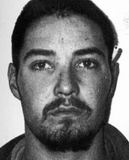 Lindsay Beckett
Murderer · Australia · 1997
Lindsay Hoani Beckett (born 27 March 1974) was convicted of the murders of scho…
2 victims
Lindsay Beckett
Murderer · Australia · 1997
Lindsay Hoani Beckett (born 27 March 1974) was convicted of the murders of scho…
2 victims
 Leszec Pekalski
Homicide · Poland · 1984
1984–1992 — Leszek Pękalski was believed to have killed at least 17 people. · 1…
17 victims
Leszec Pekalski
Homicide · Poland · 1984
1984–1992 — Leszek Pękalski was believed to have killed at least 17 people. · 1…
17 victims
- Gender
- female
- Country
- Australia
- Location
- Sydney, New South Wales, Australia
- Date of birth
- March 21, 1975
- Age at first offence
- 21
- Characteristics
- infanticide
- Victim profile
- H er newborn baby Tegan Lee Lane
- Method of murder
- ???
- Date(s) of murder
- September 14, 1996
- Years active
- 1996
- Date of arrest
- November 17, 2009
- Status
-
Imprisoned
Sentenced to 18 years jail with a non-parole period of 13 years and five months on April 15, 2011; eligible for parole on 12 May 2023
Case overview
Keli Lane (born 21 March 1975) was a former Australian water polo player. She was convicted of the 1996 murder of her newborn baby Tegan, and three counts of lying under oath. Lane served an 18 year prison sentence and was eligible for parole on 12 May 2023, after serving a period of 13 years and five months in custody.
Timeline
- 12 September 1996 — Keli Lane, aged 21, gave birth to Tegan Lee Lane at Auburn Hospital.
- 14 September 1996 — Lane and her partner attended a friend's wedding; there was no sign of the baby.
- Two days after giving birth (date tied to birth timing but not separately dated) — Lane and Gillies attended a friend's wedding and there was no sign of the baby after giving birth.
- October 1999 — Lane was confronted with allegations about earlier pregnancies and children; she initially denied earlier children and later claimed the middle child (Tegan) lived with a family in Perth.
- Late 1999 — Police began investigations after a Department of Community Services social worker alerted local police.
- February 2001 — Lane was interviewed by police.
- May 2003 — Lane was interviewed by police again.
- 2005 — Manly police referred the matter to the New South Wales Coroner.
- June 2005 to February 2006 — A coronial inquest into the disappearance of Tegan Lee Lane took place.
- 17 November 2009 — The Director of Public Prosecutions charged Lane with the murder of Tegan Lee Lane.
- 9 August 2010 — The trial in the Supreme Court began before Justice Anthony Whealy.
- 13 December 2010 — The jury found Lane guilty of lying under oath in relation to documents dealing with her adopting out two other babies; the jury then found Lane guilty of murder of Tegan Lee Lane.
- 11 March 2011 — Sentence procedures commenced in the Supreme Court before Justice Whealy.
- 15 April 2011 — Lane was sentenced to 18 years jail with a non-parole period of 13 years and five months; she was eligible for parole on 12 May 2023.
- 18 April 2011 — Lane’s lawyers lodged an appeal against her conviction.
- 12 May 2023 — Lane became eligible for parole.
Background
Keli Lane was the daughter of well known surfer, rugby player and retired police inspector Robert Lane and his wife, Sandra. She was educated at Mackellar Girls High School in Manly. Lane enrolled in an arts degree at the University of Newcastle and then studied at the Australian College of Physical Education while working part-time at Ravenswood School for Girls as a physical education teacher.
Between 1994 and 1998, Lane was in a relationship with rugby league player Duncan Gillies.
At national and international level, Lane was an elite water polo player. She was a member of the silver-medal winning Australian Junior Women’s team at the 1995 World Championships in Quebec, Canada. Lane’s ambition was to represent Australia in water polo at the 2000 Sydney Olympic Games.
The offence
On 12 September 1996, Lane, aged 21, gave birth to Tegan Lee Lane at Auburn Hospital.
The Crown alleged that Lane fell pregnant five times over seven years during the 1990s, terminating the first two pregnancies and placing two babies up for adoption, and allegedly murdering her baby, Tegan, on 14 September 1996. The jury heard that Lane concealed her pregnancies from her family and friends to protect her personal image and reputation.
During trial, the Crown presented evidence that Lane was prepared to abandon her children at birth to increase her chances of representing Australia in water polo at the Sydney 2000 Olympic Games. Evidence was also presented that Lane believed children would interfere with her educational plans, her social life, and the regard in which she was held by parents and friends. The Crown alleged that friends’ wedding on 14 September may have been a crucial factor, with Lane seeking a permanent solution to a potential problem to hide evidence of the pregnancy and birth from family and friends.
Lane was convicted by the jury of murder of Tegan Lee Lane, and of three counts of lying under oath in relation to documents dealing with her adopting out two other babies.
Investigation
Department of Community Services investigations
Prior to finding a permanent home for a child born in 1999, the Department of Community Services (DOCS) made investigations that led to finding that the child born in 1999 was in fact not Lane’s first child and that she had given birth to Tegan Lane in 1996 at Auburn Hospital.
Further investigations resulted in findings that Lane had given birth on two prior occasions, on both occasions during her four-year relationship with Gillies. Gillies claimed he was completely unaware of Lane’s pregnancies.
When confronted with allegations in October 1999, Lane initially denied the existence of the two earlier children. Several days later, she claimed that the middle child (Tegan) lived with a family in Perth. Concerned about the situation, the DOCS social worker alerted local police, who began investigations in late 1999.
Initial police investigations
After some initial tardiness, in February 2001 Lane, by then having given birth to a fourth child, was interviewed by police. During the police interview, Lane claimed that she had given the child (Tegan) to the baby’s father, a man called Andrew Morris, with whom she claimed to have had a brief affair.
Lane was interviewed by police again in May 2003. On that occasion, Lane claimed the man’s name was Andrew Norris and that she handed over the baby in the Auburn Hospital carpark.
During police interviews, Lane claimed that she was forced to hide her pregnancies because of her fear of the reaction of her parents and friends. It was reported that during the police interviews Lane said several times she felt alone when she became pregnant and "I had no other choice."
Manly police referred the matter to the New South Wales Coroner in 2005.
Coronial inquest
A coronial inquest into the disappearance of Tegan Lee Lane began in June 2005 and ran until February 2006. The inquest was presided over by John Abernethy QC. The inquest heard that police had undertaken an extensive search for the child, including attempting to match DNA samples.
The inquest resulted in the Coroner declaring that he was "... comfortably satisfied that Tegan Lane is in fact deceased..." and that he was disturbed that baby Tegan had met with foul play, although he also stated that there still existed a possibility that she was alive somewhere.
The Coroner recommended that the brief of evidence and transcript of the coronial inquiry be forwarded to the New South Wales Homicide Squad for assessment and if necessary further investigation.
Subsequent police investigations
From 2006, police investigations focused on locating Andrew Morris (or Andrew Norris), the man Lane claimed was the father of Tegan.
Police looked at birth registrations, official name changes, electoral rolls, recipients of Centrelink payments or other government payments for children, immigration records, police records, drivers licences and vehicle registration records, electricity connection records, Sydney’s White Pages, and Australian Taxation Office records. Police were unable to locate a man of that name(s) matching the profile.
Police also sought to locate Tegan Lane by searching the records of over 9,000 primary schools in Australia; the search process lasted two years. Two girls named Tegan Lane were found in Queensland and another possibility was picked up on a Torres Strait island. Finally, police excluded all possible leads.
The investigators assessed that they had no conclusive evidence nor any physical evidence pointing to baby Tegan’s death, and decided not to charge Lane. They referred the matter to the Director of Public Prosecutions (DPP), Nicholas Cowdery.
Prosecution charging decision
On 17 November 2009, the DPP charged Lane with the murder of Tegan Lee Lane.
Arrest and legal proceedings
Lane pleaded not guilty and the matter went to trial by jury.
At trial, the matter was heard in the Supreme Court, presided over by Justice Anthony Whealy. Mark Tedeschi, QC prosecuted, and Keith Chapple, SC defended Lane under instruction from Legal Aid. The trial began on 9 August 2010.
Clashes over points of evidence occurred between the Crown and the presiding Judge at various stages during the trial. The Crown took one matter to the Court of Criminal Appeal.
Trial
Charges and allegations presented to the jury
The Crown alleged that Lane fell pregnant five times over seven years during the 1990s: it alleged terminating the first two pregnancies, placing two babies up for adoption, and allegedly murdering Tegan on 14 September 1996.
The defence relied on the lack of evidence about how or where Tegan might have been killed. The Defence claimed that even if Lane had killed Tegan, the Crown could not prove she had done so deliberately or with the intention to kill. In the absence of evidence, Chapple called on Justice Whealy to direct the jury to find Lane not guilty of murder. After hearing from the Crown Prosecution about similar cases involving circumstantial evidence (namely Kerry Whelan and Dorothy Davis) and considering the matter for a day, Justice Whealy rejected the defence application.
Chapple announced that Lane would not be giving evidence and that there would be no defence witnesses at all.
Jury direction on reasonable doubt
In directing the jury, Justice Whealy asked them to consider "not whether the accused is guilty, but whether the Crown has satisfied you beyond reasonable doubt that she is guilty".
Trial evidence themes
The evidence heard at trial was similar to that presented at the inquest four years earlier, with the major differences including the police searches that occurred in between and the discovery that Lane had left Auburn Hospital not at 2 pm on the day Tegan disappeared, but several hours earlier.
The Crown sought to present motive for murder as Lane being prepared to abandon her children at birth to increase her chances of representing Australia in water polo at the Sydney 2000 Olympic Games. The Crown also alleged Lane believed children would interfere with her educational plans, social life, and her regard among parents and friends. The Crown alleged friends’ wedding on 14 September was a factor in Lane seeking a permanent solution to hide evidence of the pregnancy and birth from family and friends.
At various stages during the trial, clashes over points of evidence occurred between the Crown and the presiding Judge. The jury was informed of the Crown argument that Lane’s lies were indicative of guilt, and Justice Whealy had instructed the jury that Lane’s lies did not equate to guilt, whereas the Crown claimed otherwise.
"But he's got nothing," Cummins said, "so how can something come out if he's got nothing?"
Lane replied, "Because that's, he wants to, he wants to find out what he doesn't have."
Later in the conversation:
"The worst thing that can happen is, the hardest thing you'll ever do is telling [people about giving Tegan away]. And once you've told them, it'll be all right."
To which Keli responded, "But, it's going to keep going on, that's the thing. If I knew that by telling them, that would end it, that would be great, but it's not."
Justice Whealy refused the Crown’s argument that the conversation was evidence of consciousness of guilt and said it might just mean Lane suspected it would be a long investigation.
Appeals issue during trial
At the heart of the Crown’s appeal was that Lane’s lies—those concerning Andrew Morris, Andrew Norris, and the story that she gave Tegan to a "Perth couple"—were indicative of Lane’s guilt. Justice Whealy instructed the jury that Lane’s lies did not equate to guilt, whereas the Crown claimed otherwise. The Crown won its case in the Appeal Court and, in summing up, Crown Prosecutor Tedeschi suggested to the jury that the three lies were evidence of consciousness of guilt.
Verdicts
The summing up lasted for over a week, with Tedeschi taking two and a half days and Chapple taking four days.
After deliberating for a week, on 13 December 2010 the jury found Lane guilty of lying under oath in relation to documents dealing with her adopting out two other babies. The jury was not able to come to a unanimous verdict on the murder charge. Under advice from Justice Whealy, the jury was given the option of returning a majority 11 to one verdict. Later on the same day, the jury found Lane guilty of murder of Tegan Lee Lane.
Lane was refused bail.
The verdicts resulted in Lane sobbing and collapsing in the dock of the Supreme Court. She screamed out, "Oh, no!" and fell to the floor. A paramedic was called to attend to her. Lane’s mother sobbed in the public gallery and some jurors had tears.
Sentencing
Sentence procedures commenced on 11 March 2011 in the Supreme Court before Justice Whealy. The Crown called for the court to pay particular regard to general deterrence.
It was reported that psychiatrist Michael Diamond, who appeared before the hearing on behalf of the Crown, found no evidence of a psychiatric disorder and that Lane’s decisions appeared to be based on "problem solving".
On 15 April 2011, Lane was sentenced to 18 years jail with a non-parole period of 13 years and five months. She became eligible for parole on 12 May 2023.
Justice Whealy delivered his sentence to Lane in front of video cameras. The reporting stated that Lane showed no reaction as the sentence was handed down. Justice Whealy agreed with the Crown description of Lane as a "golden girl" and said she had murdered Tegan "in a situation of desperation". He told the courtroom, "From her perception, there was simply no way out," and concluded that Lane was fully rehabilitated and presented no danger to the community.
Justice Whealy said the two aggravating features of the murder were the age of the victim and that it had been an abuse of a position of trust. He said, "The life that has been taken is a baby, completely defenceless," and "The present case may properly be seen, in every sense, as a tragedy involving mother and daughter."
Justice Whealy noted that Lane could not tell her own mother of the secret birth of her three children. He said:
"Secondly, it is a tragedy between mother and daughter in the sense that the offender disposed of her second child Tegan, and in so doing, tore asunder the natural relationship between mother and daughter. "That fact has, and will, continue to haunt her throughout her life."
Appeals
Lane’s lawyers lodged an appeal against her conviction on 18 April 2011.
Aftermath
On 18 April 2011, claims were aired in the media that a taxi driver saw Lane dump the baby in bushland en route to Manly. Lane’s lawyer Chris Murphy said the taxi driver collected Lane from Auburn Hospital and stopped on River Road at Lane’s request. Murphy claimed that the driver believed Lane left the baby in bushland and returned to the taxi, and that the taxi driver then returned to the site where the baby was allegedly left and found a woman there. Murphy claimed that the driver said the woman stated she would attend to the needs of the baby and the driver then left the scene. Police were investigating the claims made by the driver.
Extensive searches had uncovered no trace of Tegan since Lane left Auburn Hospital with the girl on September 14, 1996, two days after the birth, and went to a wedding in Manly a few hours later.

Spotted an error, or have more information about this case?