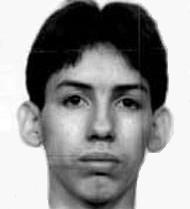
Mauro Barraza
Homicide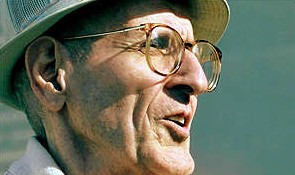 Jack Kevorkian
Homicide · USA · 1990
Jack Kevorkian (born May 26, 1928) was a controversial American pathologist. He…
130 victims
Jack Kevorkian
Homicide · USA · 1990
Jack Kevorkian (born May 26, 1928) was a controversial American pathologist. He…
130 victims
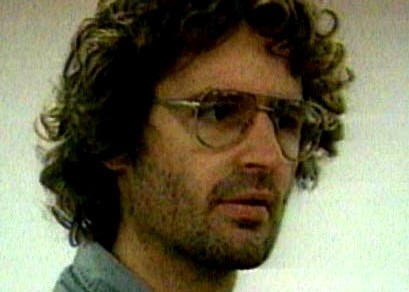 David Koresh
Homicide · USA · 1993
David Koresh (born Vernon Wayne Howell; August 17, 1959 – April 19, 1993) led t…
79 victims
David Koresh
Homicide · USA · 1993
David Koresh (born Vernon Wayne Howell; August 17, 1959 – April 19, 1993) led t…
79 victims
 Todd Hall
Homicide · USA · 1996
Todd Hall was described by neighbors as "mentally slow" and was said to have su…
9 victims
Todd Hall
Homicide · USA · 1996
Todd Hall was described by neighbors as "mentally slow" and was said to have su…
9 victims
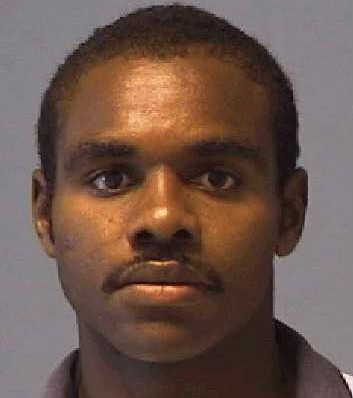 Clinton Bankston
Homicide · USA · 1987
15 August 1987 — Ann Morris (63), her sister Sally Nicholson (59), and Sally’s…
5 victims
Clinton Bankston
Homicide · USA · 1987
15 August 1987 — Ann Morris (63), her sister Sally Nicholson (59), and Sally’s…
5 victims
 Joshua Jenkins
Homicide · USA · 1996
Joshua Jenkins was a 15-year-old American killer who killed five members of his…
5 victims
Joshua Jenkins
Homicide · USA · 1996
Joshua Jenkins was a 15-year-old American killer who killed five members of his…
5 victims
 Charles Daniel Tuttle
Murderer · USA · 1995
Charles Daniel Tuttle was 35 years old. He was described as a former constructi…
1 victim
Charles Daniel Tuttle
Murderer · USA · 1995
Charles Daniel Tuttle was 35 years old. He was described as a former constructi…
1 victim
 Dale Leo Bishop
Murderer · USA · 1998
Dale Leo Bishop was a death row inmate in Mississippi. He was convicted in 2000…
1 victim
Dale Leo Bishop
Murderer · USA · 1998
Dale Leo Bishop was a death row inmate in Mississippi. He was convicted in 2000…
1 victim
 Mohammed Hadjetlaché
Murderer · Sweden · 1918
Mohammed Beck Hadjetlaché (20 May 1868, he also sometimes stated 1870 or 1872,…
3 victims
Mohammed Hadjetlaché
Murderer · Sweden · 1918
Mohammed Beck Hadjetlaché (20 May 1868, he also sometimes stated 1870 or 1872,…
3 victims
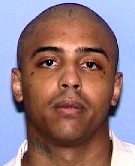 Nelson Gongora
Murderer · USA · 2001
Nelson Gongora Nelson Gongora was sentenced to death on June 4, 2003. · April 7…
1 victim
Nelson Gongora
Murderer · USA · 2001
Nelson Gongora Nelson Gongora was sentenced to death on June 4, 2003. · April 7…
1 victim
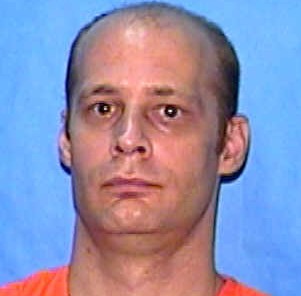 John Christopher Marquard
Murderer · USA · 1991
John Christopher Marquard was sentenced to death on February 5, 1993. The Flori…
1 victim
John Christopher Marquard
Murderer · USA · 1991
John Christopher Marquard was sentenced to death on February 5, 1993. The Flori…
1 victim
- Gender
- male
- Country
- USA
- Location
- Tarrant County, Texas, USA
- Date of birth
- May 5, 1972
- Age at first offence
- 17
- Characteristics
- rape, robbery, juvenile
- Victim profile
- Vilorie Nelson, 73
- Method of murder
- Died from a crushing blunt injury to the chest caused by her assailant jumping in the air and landing on Nelson with his knees
- Date(s) of murder
- June 14, 1989
- Years active
- 1989
- Date of arrest
- —
- Status
-
Life imprisonment
Sentenced to death on April 30, 1991; commuted to life in prison on June 22, 2005
Case record
Background
Mauro Barraza murdered and sexually assaulted Vilorie Nelson in her home during a burglary in Haltom City in June 1989.
A police fingerprint expert found Barraza’s fingerprints on a bedroom window screen.
Forensic evidence revealed that, as Nelson lay dying, Barraza sexually assaulted her.
The offence
On the evening of June 14, 1989, Joy Nelson, the victim’s daughter, returned home at approximately 6:45 and discovered her mother’s body on the floor of her bedroom covered with a bedspread. The house was in disarray, with drawers pulled open, furniture turned over, and her mother’s mattress askew. Joy Nelson found a pair of garden shears in the dining room and a pair of scissors in the backyard. She also became aware that property was missing, including jewelry and a carton of cigarettes.
An autopsy determined that wounds to Vilorie Nelson’s head indicated that her assailant had struck her at least twice with garden shears, possibly knocking her unconscious. These injuries were not fatal, and Nelson ultimately died from a crushing blunt injury to the chest caused by her assailant jumping in the air and landing on Nelson with his knees.
On the day of the murder, four of Nelson’s neighbors saw Barraza walk down Nelson’s street and jump a fence into Nelson’s backyard.
Barraza gave a statement to police describing his version of the murder. He stated that he and another man knocked on Nelson’s door and no one answered. After knocking on other doors and walking up and down the street, Barraza went behind a neighbor’s house and climbed over the fence into Nelson’s backyard. He removed the screen from a window, opened the window, and entered the house. Inside, he heard the television on and saw Vilorie Nelson sitting in front of it. He picked up some shears and walked into the living room, where he struck the victim once on the right side of the head. After she fell over, he hit her again. He then removed her underwear and threw a tablecloth over her. He claimed that he then started jumping on her chest with his knees. He also admitted searching the house and finding the victim’s jewelry, a carton of cigarettes, and some other items, which he took.
In the broader case overview, Barraza violently attacked and sexually assaulted Vilorie Nelson, described as 73-year-old, in her home during the course of a burglary. The dead body was found when Joy Nelson arrived home from work later that day. The overview also described the manner of death as Barraza murdering her by jumping on her chest and purposefully landing on her with his knees several times, crushing her heart and major blood vessels.
Barraza claimed that he was intoxicated at the time of the offence and that he was high on crack and cocaine.
Investigation
The investigation of Nelson’s murder led to the arrest and indictment of Barraza on the charge of capital murder.
A police fingerprint expert testified that he found Barraza’s fingerprints on a bedroom window screen.
A DNA specialist and a forensic biologist testified that forensic evidence revealed that, as Nelson lay dying, Barraza sexually assaulted her.
Arrest
Barraza was arrested in connection with the investigation of Nelson’s murder.
Trial
Sept. 21, 1989 — A Tarrant County grand jury indicted Barraza for the capital murder of Vilorie Nelson while in the course of committing burglary of the habitation.
Apr. 5, 1991 — A jury found Barraza guilty of capital murder.
Apr. 8, 1991 — Following a separate punishment hearing, the court assessed a sentence of death.
The defence was insanity. Barraza presented expert testimony that he suffered from a drug psychosis, a severe mental disease that prevented him from forming the requisite intent to kill. On cross-examination, this same expert testified that Barraza suffered from an organic brain disorder as a result of his long-term addiction to drugs and alcohol. In the conclusion to his direct testimony, the expert testified that when Barraza is on a certain “collection of drugs” he could be expected to be violent, but that most of his life he had not shown violent behaviour.
Based on this evidence, the trial court allowed defensive charges on the issues of insanity and temporary insanity. The state countered with two experts who testified that Barraza had no mental disease or defect and understood that what he had done was wrong, and that they contended he was faking.
Mauro Morris Barraza was convicted of capital murder and sentenced to death by lethal injection by a jury in Tarrant County.
Sentencing
Apr.
Appeals
Oct. 4, 1994 — The Texas Court of Criminal Appeals affirmed Barraza’s conviction and sentence.
Nov. 9, 1994 — The Court of Criminal Appeals declined to rehear the case.
May 1, 1995 — The U.S. Supreme Court denied Barraza’s first petition for writ of certiorari.
Oct. 4, 1999 — The U.S. Supreme Court denied Barraza’s second petition for writ of certiorari.
Dec. 11, 2002 — Barraza requested permission to appeal from the 5th U.S. Circuit Court of Appeals.
May 1, 2003 — The Fifth Circuit denied permission to appeal in a published opinion.
July 29, 2003 — Barraza filed a third petition for writ of certiorari in the U.S. Supreme Court.
Oct. 14, 2003 — The U.S. Supreme Court denied the petition.
June 16, 2004 — Barraza filed a subsequent application for writ of habeas corpus in the Court of Criminal Appeals; the application was pending.
Habeas and related proceedings
June 29, 1995 — Barraza filed a state habeas petition, and the execution date was lifted to allow the state habeas to proceed.
Jan. 30, 1996 — The trial court held an evidentiary hearing on the motion and heard the testimony of Barraza’s expert, Dr. J. Douglas Crowder, a forensic psychiatrist and professor at Southwestern Medical School. Dr. Crowder expressed the opinion that the testing done by Drs. Coons, Peek, and Parker, who all testified at trial, was inadequate and that more testing would be necessary to rule out the possibility of organic brain damage.
The trial court asked that Barraza be examined by a competent expert appointed by the court. In a hearing held on May 6, 1996, Dr. Melissa Renee Ferguson, the court-appointed expert, testified that Barraza understood the death penalty, was competent to be executed, and had no significant deficits which would indicate the need to go further. The court refused to fund more testing, finding no objective reason for more testing. These findings were adopted by the Texas Court of Criminal Appeals.
In parallel, a similar request for funding to the United States District Court followed, supported by an affidavit of Dr. Crowder, essentially stating that he adhered to his view that further testing was needed despite Dr. Ferguson’s testimony. The federal district court found no objective reason for more testing and refused the requested funding.
June 1, 1999 — Barraza filed a petition for writ of habeas corpus in the United States District Court for the Northern District of Texas, Fort Worth Division.
July 31, 2002 — The federal district court denied Barraza’s petition for habeas relief.
Sept. 6, 2002 — The federal district court denied permission to appeal.
Dec. 9, 1998 — Based on the recommendation of the trial court, the Texas Court of Criminal Appeals denied Barraza’s application for writ of habeas corpus.
May 1, 1995 — Barraza’s first petition for writ of certiorari was denied by the U.S. Supreme Court.
June 29, 1995 — Barraza filed an application for writ of habeas corpus in the trial court.
May 6, 1996 — Dr. Melissa Renee Ferguson testified in the hearing held after the trial court asked for an appointed expert examination.
Oct. 4, 1994 — The U.S.
Supreme Court.
Oct. 14, 2003 — The U.S.
Augmented procedural history also included: May 1, 2003 — the Fifth Circuit denied permission to appeal in a published opinion.
Timeline
- **Sept.
- **Apr.
- **Apr.
- **Oct.
- **Nov.
- May 1, 1995 — The U.S.
- Dec. 9, 1998 — The Texas Court of Criminal Appeals denied Barraza’s application for writ of habeas corpus.
- Oct. 4, 1999 — The U.S.
- **Sept.
- **Dec. Circuit Court of Appeals.
- Supreme Court.
- Oct. 14, 2003 — The U.S.
- June 22, 2005 — Gov. Rick Perry commuted the death sentence to life in prison.
Outcome
Gov. Rick Perry commuted the death sentences of 28 convicted killers on June 22, 2005, in response to a U.S. Supreme Court ruling in March that the Constitution forbids executing anyone for a crime committed before the age of 18. The commuted inmates included Robert Aaron Acuna, Steven Brian Alvarado, Randy Arroyo, Mark Sam Arthur, Johnnie Bernal, Edward Brian Capetillo, Raymond Levi Cobb, John Curtis Dewberry, Justin Wiley Dickens, Tony Tyrone Dixon, Derek Jermaine Guillen, Jimmy Jackson, Eddie C. Johnson, Anzel Keon Jones, Leo Little, Michael Lopez, Jose Ignacio Monterrubio, Efrain Perez, Whitney Lee Reeves, Jorge Alfredo Salinas, Christopher Julian Solomon, Oswaldo Regalado Soriano, Robert Springsteen IV, Son Vu Khai Tran, Raul Omar Villarreal, Bruce Williams, Nanon McKewn Williams and Geno Capoletti Wilson.
One other capital murderer who was 17 at the time of his crime, Mauro Morris Barraza, was already given a reformed sentence by the Texas Court of Criminal Appeals.
Mauro Morris Barraza was scheduled for execution in June 2004, with an Austin information statement indicating he was scheduled to be executed after 6 p.m. on Tuesday, June 29, 2004.
Aftermath
Barraza had his execution date lifted to allow state habeas to proceed after filing a state habeas petition on June 29, 1995.
Barraza’s subsequent application for writ of habeas corpus in the Court of Criminal Appeals was pending as of June 16, 2004.
Prior criminal history
On May 20, 1988, Barraza burglarized Carson Row’s house, stealing jewelry, money, cassette tapes, and cigarette lighters.
In the spring of 1989, Barraza broke into a vacant house in Haltom City, but did not steal anything because there was nothing to take.
Also in 1989, Barraza burglarized Cowtown Racing.
Barraza also claimed that he burglarized a house in Granbury, Texas.
On March 23, 1991, after returning to the Tarrant County Jail from a court hearing in his capital murder case, Barraza swore at a correctional officer and repeatedly slammed a phone receiver into the wall.
A stay of execution had been granted by the U.S. Supreme Court pending a decision in Simmons.

Spotted an error, or have more information about this case?