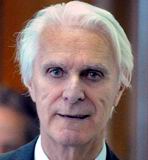
Jacques Delisle
Murderer James Roszko
Murderer · Canada · 2005
James Roszko was a Canadian man operating a hydroponic marijuana grow-op in Roc…
4 victims
James Roszko
Murderer · Canada · 2005
James Roszko was a Canadian man operating a hydroponic marijuana grow-op in Roc…
4 victims
 Derek Jensen
Murderer · Canada · 2011
Derek Jensen was the ex-boyfriend of Tabitha Stepple. Jensen had encountered St…
3 victims
Derek Jensen
Murderer · Canada · 2011
Derek Jensen was the ex-boyfriend of Tabitha Stepple. Jensen had encountered St…
3 victims
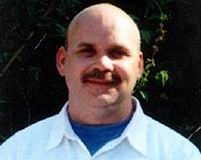 Douglas Donald Moore
Murderer · Canada · 2003
Douglas Donald Moore died of an apparent suicide in a cell at the Maplehurst De…
3 victims
Douglas Donald Moore
Murderer · Canada · 2003
Douglas Donald Moore died of an apparent suicide in a cell at the Maplehurst De…
3 victims
 Jeremy Steinke
Murderer · Canada · 2006
Jeremy Allan Steinke was sentenced to three life sentences on December 15, 2008…
3 victims
Jeremy Steinke
Murderer · Canada · 2006
Jeremy Allan Steinke was sentenced to three life sentences on December 15, 2008…
3 victims
 Shawn Lamb
Murderer · Canada · 2011
Shawn Cameron Lamb was 54 at sentencing. He was described as a chronic drug add…
3 victims
Shawn Lamb
Murderer · Canada · 2011
Shawn Cameron Lamb was 54 at sentencing. He was described as a chronic drug add…
3 victims
 Travis Baumgartner
Murderer · Canada · 2012
Sentenced to life in prison with no chance of parole for 40 years on September…
3 victims
Travis Baumgartner
Murderer · Canada · 2012
Sentenced to life in prison with no chance of parole for 40 years on September…
3 victims
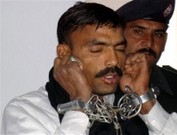 Nazir Ahmad
Mass murderer · Pakistan · 2005
Nazir Ahmad, a 40-year-old Pakistani man, killed his three daughters and his st…
4 victims
Nazir Ahmad
Mass murderer · Pakistan · 2005
Nazir Ahmad, a 40-year-old Pakistani man, killed his three daughters and his st…
4 victims
 Keith Smith
Murderer · USA · 1991
Keith Smith was prosecuted in the case styled State of Missouri v. Keith A. Smi…
2 victims
Keith Smith
Murderer · USA · 1991
Keith Smith was prosecuted in the case styled State of Missouri v. Keith A. Smi…
2 victims
 Seiji Katagiri
Mass murderer · Japan · 1982
Seiji Katagiri (片桐 清二 Katagiri Seiji) served as Captain of Japan Airlines Fligh…
24 victims
Seiji Katagiri
Mass murderer · Japan · 1982
Seiji Katagiri (片桐 清二 Katagiri Seiji) served as Captain of Japan Airlines Fligh…
24 victims
 William Hare
Serial killer · United Kingdom · 1827
William Hare and Brendan “Dynes” Burke committed serial murders in Edinburgh, S…
17 victims
William Hare
Serial killer · United Kingdom · 1827
William Hare and Brendan “Dynes” Burke committed serial murders in Edinburgh, S…
17 victims
 Johnny Ray Anderson
Murderer · USA · 1981
Johnny Ray Anderson attempted to collect insurance money. He shot and killed hi…
1 victim
Johnny Ray Anderson
Murderer · USA · 1981
Johnny Ray Anderson attempted to collect insurance money. He shot and killed hi…
1 victim
- Gender
- male
- Country
- Canada
- Location
- Quebec City, Quebec, Canada
- Date of birth
- 1935
- Age at first offence
- 74
- Characteristics
- parricide
- Victim profile
- Marie-Nicole Rainville, 71 (his wife)
- Method of murder
- Shooting ( .22-calibre pistol)
- Date(s) of murder
- November 12, 2009
- Years active
- 2009
- Date of arrest
- June 15, 2010
- Status
-
Life imprisonment
Sentenced to life in prison without possibility of parole for 25 years on June 14, 2012
Overview
Jacques Delisle (born 1935, Montreal, Canada) was a Canadian judge who sat on the Quebec Superior Court from 1985 to 1992 and on the Quebec Court of Appeal from 1992 until his retirement in 2009. In June 2010, Delisle was arrested and charged with murder in connection with the November 2009 death of his wife, Marie-Nicole Rainville. Delisle was described as the first judge in Canadian history to be charged with murder and the first Canadian judge to ever stand trial for murder.
Timeline
- June 14, 2012 — Delisle was found guilty of first-degree murder and sentenced to life in prison without possibility of parole for 25 years.
- June 15, 2010 — Delisle was charged in the Quebec City courthouse with the first-degree murder of his wife.
- June 2010 — Delisle was arrested and charged with murder in connection with the November 2009 death of his wife, Marie-Nicole Rainville.
- May 2012 — Delisle’s trial began.
- 2011 — Delisle’s trial was scheduled to begin but was delayed after one of the prosecutors withdrew.
- May 8, 2012 — Delisle pleaded not guilty; he said, “I didn’t kill Nicole,” and “I’ve been destroyed but that doesn’t mean I’m guilty.”
- April 2007 — Rainville suffered a stroke leaving one side of her body paralyzed.
- 1992 — Delisle was appointed to the Quebec Court of Appeal.
- 1985 — Delisle sat on the Quebec Superior Court.
- 1983 — Delisle named to Quebec Superior Court; Johanne Plamondon started working for him as a legal secretary when he was named to Quebec Superior Court.
- 1960 — Rainville married Delisle.
- Nov. 12, 2009 — Rainville was found dead in the couple’s condominium; Delisle called 911.
- 2009 — Delisle stepped down from the bench in the spring of 2009 after associates began to suspect the killing was done out of compassion.
The offence
On Nov. 12, 2009, Marie-Nicole Rainville was found dead in the couple’s condominium. Delisle called 911 and told police he had found his wife with a revolver next to her body, and he said she had committed suicide. Rainville died of a bullet to the head. During the trial, the Crown argued Delisle killed his wife because he wanted to avoid a costly divorce and wanted to move in with his former secretary, with whom he had been having an affair.
Investigation
On Nov. 12, 2009, Quebec City police received a call about a woman who had just taken her life and officers came upon the body of Marie-Nicole Rainville dead of a gunshot wound to the temple. Police originally accepted the suicide theory until they probed further, and the investigation later led to first-degree murder charges.
An autopsy report provided additional information about Rainville’s death. Quebec police Const. Sandra Dion stated:
"The events go back to Nov. 12, 2009 (when), around 10:22 in the morning, the Quebec City police service received a call about a woman who had just taken her life," Dion said.
A black smudge on Rainville’s left hand from gunshot residue became a key area of contention. The Crown said it occurred as she tried to defend herself from the fatal bullet, and the defence insisted it came from her awkward grip on the gun as she took her life.
Arrest and charges
In June 2010, Delisle was arrested and charged with first-degree murder. The charge concerned the November 2009 death of his wife, Marie-Nicole Rainville. Delisle also faced a separate charge of possessing a loaded, unregistered firearm and was said to be charged with possessing a loaded, unregistered firearm for which he would face a separate trial.
At a June 2010 bail hearing, Superior Court Justice Claude Gagnon stressed that he had “no memory of any social event I might have attended with him and I don’t know any member of his family.”
Delisle was described as being detained until his next court appearance.
Trial
Delisle’s trial began in May 2012. It had been scheduled to begin in 2011 but was delayed after one of the prosecutors withdrew. The trial involved a month-long proceeding and a jury deliberated for just under three days to reach its decision. At the close of proceedings, eight male and four female jurors were selected to decide Delisle’s fate.
Delisle pleaded not guilty. In March 2011, Delisle told a court hearing:
“I didn’t kill Nicole,” Mr. Delisle told a court hearing in March 2011.
“I’ve been destroyed but that doesn’t mean I’m guilty.”
The Crown prosecutor argued the outcome proved “nobody is above the law, regardless of title, regardless of profession, regardless of someone’s place in society.” Delisle’s lawyer, Jacques Larochelle, argued procedural errors led to the guilty verdict. Larochelle also argued the trial judge gave improper instructions to the jury by not giving enough importance to ballistic evidence that the defence used to push its suicide defence.
Johanne Plamondon, Delisle’s former secretary, testified that she was ready to move in with Delisle a few days before he was arrested for Rainville’s murder in 2010. Plamondon started working for Delisle as a legal secretary in 1983 when he was named to Quebec Superior Court and followed him when he was appointed to the Quebec Court of Appeal in 1992. Plamondon testified that while she and the judge were friends at first, their feelings evolved in the months before Rainville’s stroke in April 2007.
Marie-Josee Tremblay, who cared for Rainville in the hospital, said she found her combative and sometimes sad and tired but never depressed.
Sentencing
On June 14, 2012, Delisle was found guilty of first-degree murder for killing his wife. The first-degree murder verdict meant he received life in prison with no possibility of parole for a quarter-century. The voice of the presiding judge, Claude C. Gagnon, trembled as he explained the sentence.
After hearing the verdict, Delisle buried his face in his hands. He slammed his fist into a table and said, “For God’s sake, no.” Family members made pained screams.
Appeals
In 2013, Delisle’s appeal was dismissed. The Quebec Court of Appeal announced it had dismissed an appeal by Jacques Delisle. The appeals court ruled that the former magistrate failed to show the verdict was unreasonable. It stated:
“the guilty verdict for murder is one that a jury acting judicially could reasonably render”
and that “there was sufficient evidence to justify a conviction.”
Regarding the decision to convict on a first-degree murder charge rather than a lesser charge, the appeals court ruled that given Delisle was planning a life with his mistress, the verdict was one a jury could reasonably render.
Delisle’s lawyer Jacques Larochelle argued the trial judge gave improper instructions by not giving enough importance to the ballistic evidence; the appeals court did not retain the argument.
The Crown prosecutor said the outcome proved “nobody is above the law, regardless of title, regardless of profession, regardless of someone’s place in society.” Michel Fortin, one of the prosecutors, told The Canadian Press:
“We are very satisfied,” Michel Fortin, one of the prosecutors in the case, told The Canadian Press. ”It confirms what we felt since the beginning.”
Outcome
Delisle was convicted of first-degree murder for killing his wife, Marie-Nicole Rainville. His conviction was not overturned; the Quebec Court of Appeal dismissed his appeal.
Aftermath
Delisle retired from the bench in 2009, having served as an appeals court justice since 1992. It was said he was still behind bars while awaiting a ruling on the appeal and that he had failed to secure bail last July. The appeals court dismissal meant the conviction stood.
Other details
Rainville had been paralyzed on one side by a stroke in 2007 and was recovering from a fractured hip suffered a few months before her death. She had been handicapped and required constant care. In 2009, she suffered a devastating stroke that left one side of her body paralyzed and required her to use a wheelchair. A subsequent hip fracture aggravated her condition, and she was in hospital until two weeks before her death.
Rainville’s sister, Pauline, said Marie-Nicole expressed suicidal thoughts to her in correspondence in the months after her stroke. Pauline Rainville also said her sister feared being a burden on her family after her broken hip due to limited mobility and that she had wanted to go into a nursing home instead of returning to her condo. Pauline Rainville also said she did not approve of the care provided by Delisle and did not think she was ready to be discharged after her hip therapy because she was weak and thin. Pauline Rainville said she had limited contact with her sister because she did not like being around Delisle, whom she found aloof.
It was said Delisle’s wife required constant care and that Rainville’s physical challenges included loss of the ability to speak foreign languages, play bridge and do puzzles due to brain damage.
Delisle’s son was described as removing his jacket and beginning to unbuckle his belt in the public gallery and being ordered to calm down by courthouse constables. He pleaded for the chance to hug his father and was denied. Delisle was escorted from the courtroom as a convict.
Crown counsel Steve Magnan said:
“The mother is dead, and then the father is in jail for the rest of his life,” said Crown lawyer Steve Magnan. “So I do understand the reaction that they had.”
Delisle was said to have obtained his law degree at the age of 22 from Laval University and to have been a senior partner by the close of the 1960s. One of Delisle’s high-profile cases was that of Micheline Vaillancourt, who was convicted of murder in 1995 for shooting her abusive husband while he slept. Delisle was among the panel of judges that overturned her sentence on appeal, stating the woman had good reason to believe her husband would kill her and saw murder as the only way out. Micheline Vaillancourt said:
“He is certainly not an evil man,” Ms. Vaillancourt told Quebec media soon after Mr. Delisle’s arrest. “He is not just a judge, he is a human being. He understood my suffering, and now he is the one suffering.”
Jacques Delisle was described as being in his late 70s around the time of the appeal announcement and as 77 years old at sentencing.
People
- Jacques Delisle — accused; retired judge.
- Marie-Nicole Rainville — wife of Jacques Delisle; victim.
- Johanne Plamondon — former secretary to Jacques Delisle; witness.
- Pauline Rainville — sister of Marie-Nicole Rainville; witness.
- Marie-Josee Tremblay — caregiver for Rainville in hospital; witness.
- Claude C. Gagnon — presiding judge at sentencing; referenced in a bail hearing.
- Michel Fortin — prosecutor; commented on the appeal dismissal.
- Steve Magnan — Crown lawyer; commented on family reaction.
- Jacques Larochelle — Delisle’s lawyer; argued procedural errors and instructions to the jury.
- Const. Sandra Dion — Quebec police constable; described receiving the call and the initial classification of the death.
- Martine Berube — spokesperson for the Quebec Bureau of Criminal and Penal Prosecution; commented on rarity of the case.
- Jean-Pierre Rancourt — criminologist; commented on community reaction.
- Tristan Hopper and Marianne White — identified as authors of a National Post piece mentioned in the case narrative.
- Nelson Wyatt — identified as having files in the case narrative.
- Pierre Saint-Arnaud — identified as having files in the case narrative.
Spotted an error, or have more information about this case?