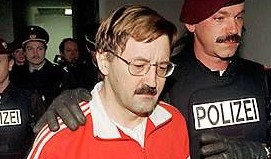
Franz Fuchs
Mass murderer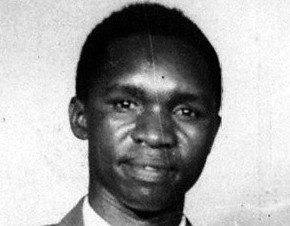 Joseph Kibweteere
Mass murderer · Uganda · 2000
Joseph Kibweteere led a breakaway sect known as the Movement for the Restoratio…
1000 victims
Joseph Kibweteere
Mass murderer · Uganda · 2000
Joseph Kibweteere led a breakaway sect known as the Movement for the Restoratio…
1000 victims
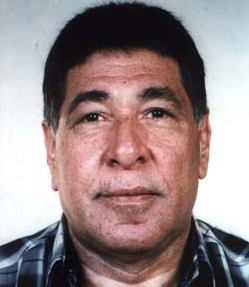 Gameel Al-Batouti
Mass murderer · USA · 1999
Gameel Al-Batouti (also rendered “Gamil ElBatouty” or “El Batouty” in U.S. offi…
216 victims
Gameel Al-Batouti
Mass murderer · USA · 1999
Gameel Al-Batouti (also rendered “Gamil ElBatouty” or “El Batouty” in U.S. offi…
216 victims
 Kim Dae-Han
Mass murderer · South Korea · 2003
Name: Kim Dae-Han · Age: 56 · Occupation/background: He was an unemployed forme…
198 victims
Kim Dae-Han
Mass murderer · South Korea · 2003
Name: Kim Dae-Han · Age: 56 · Occupation/background: He was an unemployed forme…
198 victims
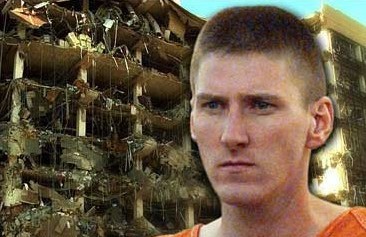 Timothy McVeigh
Mass murderer · USA · 1995
Timothy James McVeigh (April 23, 1968 – June 11, 2001) was a United States Army…
168 victims
Timothy McVeigh
Mass murderer · USA · 1995
Timothy James McVeigh (April 23, 1968 – June 11, 2001) was a United States Army…
168 victims
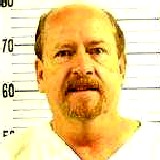 James Dellinger
Murderer · USA · 1992
James A. Dellinger was convicted in the 1992 shooting death of Tommy Griffin. G…
1 victim
James Dellinger
Murderer · USA · 1992
James A. Dellinger was convicted in the 1992 shooting death of Tommy Griffin. G…
1 victim
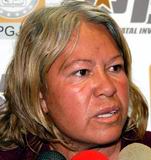 Silvia Meraz
Serial killer · Mexico · 2009
Silvia Meraz Moreno (born 1968) was a Mexican serial killer who was active from…
3 victims
Silvia Meraz
Serial killer · Mexico · 2009
Silvia Meraz Moreno (born 1968) was a Mexican serial killer who was active from…
3 victims
 Anthony Barbaro
Homicide · USA · 1974
December 30, 1974 — Anthony F. Barbaro left his house with his mother's car, we…
3 victims
Anthony Barbaro
Homicide · USA · 1974
December 30, 1974 — Anthony F. Barbaro left his house with his mother's car, we…
3 victims
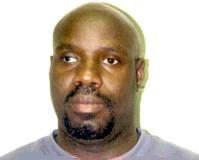 Matthew Steven Johnson
Serial killer · USA · 2000
Matthew Steven Johnson was arrested in Hartford on charges that he killed two w…
3 victims
Matthew Steven Johnson
Serial killer · USA · 2000
Matthew Steven Johnson was arrested in Hartford on charges that he killed two w…
3 victims
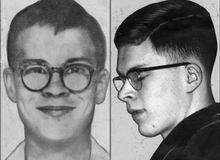 David Michael Krueger
Homicide · Canada · 1956
Peter Woodcock (birth name) was a Canadian serial killer and child rapist. · Da…
4 victims
David Michael Krueger
Homicide · Canada · 1956
Peter Woodcock (birth name) was a Canadian serial killer and child rapist. · Da…
4 victims
- Gender
- male
- Country
- Austria
- Location
- Oberwart, Burgenland, Austria
- Date of birth
- December 12, 1949
- Age at first offence
- 46
- Characteristics
- —
- Victim profile
- Four Gypsies, or Roma
- Method of murder
- Improvised explosive device which was attached to a sign that read "Roma zurück nach Indien" ("Roma back to India.")
- Date(s) of murder
- February 4, 1995
- Years active
- 1995
- Date of arrest
- October 1, 1997
- Status
-
Life imprisonment
Sentenced to life in prison on March 10, 1999; found hanged with the cable of his electric razor in his prison cell in Graz on February 26, 2000
Background
Franz Fuchs was an unemployed engineer and an Austrian terrorist known as the Austrian Unabomber. He was described by court psychiatrists as intelligent but a fanatic bent on violence.
Fuchs was xenophobic and associated his attacks with the "Bajuvarian Liberation Army." His designated targets were people he either considered to be foreigners, or organisations and individuals "friendly to foreigners."
His four-year racist bombing spree began in 1993. It targeted mostly ethnic groups or people who supported their rights as refugees. Most of his attacks were attributed to a mysterious right-wing group calling itself the Bajuvarian Liberation Army.
Allegedly, the terrorist group wanted to reunite German-speaking peoples in Bavaria, the Alps and along the river Danube within borders that existed between the sixth and 12th centuries.
His defense team argued that he had accomplices. Prosecutors insisted Fuchs acted on his own.
Fuchs repeatedly disrupted the court with nationalistic, anti-foreigner tirades and was absent from most of the trial. He made it into the courtroom for a final statement. He yelled: "Long live the Bajuvarian Liberation Army" and "Long live the ethnic German group."
Fuchs claimed responsibility for his attacks in a letter to the foreign minister of Slovenia in September 1994, in the name of the "Salzburger Eidgenossenschaft - Bajuwarische Befreiungsarmee" (Bajuvarian Liberation Army). In a number of subsequent letters, he tried to give the impression of a larger organisation with different units. However, from the second wave of mailbombs in October 1994, not a single one went off.
The offence
Franz Fuchs killed four people and injured 15, some of them seriously, between 1993 and 1997, using three improvised explosive devices (IEDs) and five waves of 25 mailbombs in total.
He was convicted on four counts of murder on 10 March 1999. The murder convictions related to a series of letter and pipe bomb attacks that left four people dead.
He was also found guilty of more than a dozen cases of causing grievous bodily harm with bombs.
Fuchs was charged with planting a pipe bomb that killed four Gypsies, or Roma, on February 4, 1995, at Oberwart in the eastern province of Burgenland, and 28 other bomb attacks that injured a dozen people.
One named victim was the former Vienna Mayor Helmut Zilk, who lost his left hand in one explosion.
Fuchs used mailbombs and IEDs as part of multiple waves of attacks.
Mailbomb and IED incidents
In December 1993, Fuchs started his first wave of mailbombs. Early victims were:
- the priest August Janisch (because of his help for refugees),
- Silvana Meixner (ORF journalist for minorities), and
- the Mayor of Vienna, Helmut Zilk, who lost a large part of his left hand in the explosion.
Other mailbombs were discovered and neutralized and were targeted at Helmut Schüller (humanitarian organisation Caritas), the Green politicians Madeleine Petrovic and Terezija Stoisits, Wolfgang Gombocz and Minister Johanna Dohnal.
While attempting to disarm an improvised explosive device found at a bilingual school in Carinthia, police officer Theo Kelz lost both his hands on August 24, 1994. Kelz subsequently became the first Austrian to receive a hand transplant, and made an impressive recovery.
The Oberwart attack occurred on February 5, 1995, when four Roma were killed with an improvised explosive device attached to a sign that read "Roma zurück nach Indien" ("Roma back to India.")
Between June 1995 and December 1995, Fuchs sent three more waves of mailbombs.
- Wave number three was targeted at TV host Arabella Kiesbauer, Dietrich Szameit (vice-mayor of Lübeck) and a dating agency. Kiesbauer and Szameit did not open their letters themselves and were not hurt.
- Wave number four was targeted at two medics and a refugee aid worker, Maria Loley. One medic from Syria and Maria Loley were injured; the other mailbomb, targeted at a South Korean medic, was discovered and neutralized.
- Two mailbombs of wave number five detonated early in mailboxes; the remaining two were discovered and neutralized. This was the last incident before Fuchs was arrested.
Investigation
Police attributed a series of attacks to the Bajuvarian Liberation Army. Authorities disputed whether the group existed and did not treat it as a real organisation in the meaning of the term.
A thorough search of the two rooms in Fuchs' parents' house where he had lived revealed more IEDs but no traces of the equipment needed to produce and handle the unstable explosives (including mercury fulminate and nitroglycerol) contained in his IEDs.
Most of Fuchs' "confession letters" exhibited an aptitude at verbal expression for which he was not known. Some referred to internal affairs in police procedures that were not accessible to the general public.
Even after sentencing, doubts remained whether Fuchs had committed his actions without any support or tacit knowledge from sympathizers.
Arrest
Fuchs was arrested after police were alerted by two women who telephoned to say they thought they were being stalked.
On October 1, 1997 near his residence in Gralla, he followed two women in a car whom he believed were observing him.
When police attempted to question him on what they believed was a routine case of stalking, he produced another IED which he had kept in his car, and detonated it in his hands in front of the policemen. His suicide attempt failed. He lost both hands and also injured a nearby police officer.
Fuchs was arrested without giving further resistance.
A search of his home in Gralla, 130 miles south of Vienna, produced five pipe bombs and a booby-trapped device similar to one that killed the four gypsies in 1995.
Authorities stated that Fuchs had set off an explosion in his car to kill himself when he realized he was getting arrested. The blast ripped through his car, tore off his hands and injured two police officers.
Trial
After the trial, many in Austria felt it had fallen short of making all attempts to uncover deep details.
Fuchs had repeatedly forced his removal from court proceedings through unruly behavior during the trial.
He was convicted on four counts of murder on 10 March 1999, for a series of letter and pipe bomb attacks that left four people dead.
Fuchs was sentenced to life in prison on March 10, 1999.
Sentencing
Franz Fuchs was sentenced to life in prison on March 10, 1999.
Outcome
On February 26, 2000, Fuchs was found hanged with the cable of his electric razor in his prison cell in Graz. The prison physician stated suicide.
Unresolved questions remained concerning both the extent of any support for his attacks and the circumstances of his death:
- The Bajuvarian Liberation Army was determined to never have existed as a terrorist organization in the meaning of the term, but doubts remained about whether Fuchs acted without support or tacit knowledge.
- How a man without hands, who consistently refused having his advanced prostethic arms fitted to him, and who was under almost constant video surveillance, could accomplish the manipulations required to convert an electric cable into a noose sufficiently robust for successful self-hanging was never properly explained.
- No prisoner was supposed to be in possession of anything (including belts and even shoestrings) that could serve this purpose, and most certainly not an electric cable.
Other details
Franz Fuchs was born on December 12, 1949 in Gralla, Styria, and died on February 26, 2000 in Graz.
At sentencing, it was expected he would serve his life sentence in a prison for the mentally dusturbed.
A number of his characterizations contrasted his mailbomb campaigns and personality features, which were described by criminal psychologists as a highly intelligent but socially inept loner.
Although some comparisons were made between his mailbomb campaigns and Theodore Kaczynski, his motives were stated to be entirely different.
Wikipedia.org home last updates contact
Spotted an error, or have more information about this case?