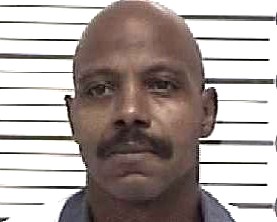
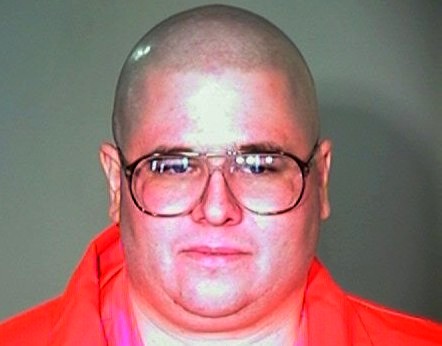
Wilbur Dobbs
Murderer Ervil LeBaron
Murderer · USA · 1972
Ervil Morrell LeBaron (1925 to August 16, 1981) was the leader of a polygamous…
35 victims
Ervil LeBaron
Murderer · USA · 1972
Ervil Morrell LeBaron (1925 to August 16, 1981) was the leader of a polygamous…
35 victims
 Marvin Gray
Murderer · USA · 1975
Marvin Gray was convicted killer who claimed responsibility for 23 slayings and…
23 victims
Marvin Gray
Murderer · USA · 1975
Marvin Gray was convicted killer who claimed responsibility for 23 slayings and…
23 victims
 Yahweh ben Yahweh
Murderer · USA · 1980
Yahweh ben Yahweh was born and legally named Hulon Mitchell Jr. (October 27, 19…
23 victims
Yahweh ben Yahweh
Murderer · USA · 1980
Yahweh ben Yahweh was born and legally named Hulon Mitchell Jr. (October 27, 19…
23 victims
 Charles Manson
Murderer · USA · 1969
Charles Milles Manson (born November 12, 1934) was an American criminal and mus…
9 victims
Charles Manson
Murderer · USA · 1969
Charles Milles Manson (born November 12, 1934) was an American criminal and mus…
9 victims
 Raymond Rowsey
Murderer · USA · 1992
Name: Raymond Rowsey · Sex: Male · Race: White · Date of birth: 04/11/1971 · DO…
1 victim
Raymond Rowsey
Murderer · USA · 1992
Name: Raymond Rowsey · Sex: Male · Race: White · Date of birth: 04/11/1971 · DO…
1 victim
 Charles Lee Duffy
Murderer · USA · 1997
Charles Lee Duffy was a serial killer who was described as an admitted serial k…
3 victims
Charles Lee Duffy
Murderer · USA · 1997
Charles Lee Duffy was a serial killer who was described as an admitted serial k…
3 victims
 Václav Mrázek
Serial killer · Czechoslovakia · 1951
Václav Mrázek (October 22, 1925 - December 30, 1957) was a Czech serial killer…
7 victims
Václav Mrázek
Serial killer · Czechoslovakia · 1951
Václav Mrázek (October 22, 1925 - December 30, 1957) was a Czech serial killer…
7 victims
 Vladislav Volkovich
Serial killer · Ukraine · 1991
The Nighttime Killers (Ночной Серийник) were responsible for a string of brutal…
16 victims
Vladislav Volkovich
Serial killer · Ukraine · 1991
The Nighttime Killers (Ночной Серийник) were responsible for a string of brutal…
16 victims
- Gender
- male
- Country
- USA
- Location
- Walker County, Georgia, USA
- Date of birth
- 1949
- Age at first offence
- 24
- Characteristics
- robbery, armed robbery
- Victim profile
- Roy L. Sizemore, 50 (grocery store owner)
- Method of murder
- Shooting (shotgun)
- Date(s) of murder
- December 14, 1973
- Years active
- 1973
- Date of arrest
- —
- Status
-
Life imprisonment
Commuted to life in prison
Case record: Wilbur Wiley Dobbs
Timeline
- December 14, 1973 — Wilbur Wiley Dobbs, with Walter Lee Harris and Charles Burke, robbed a grocery store and gas station owned by Roy L. Sizemore, during which Roy L. Sizemore was shot and died; the route salesman William Austin was shot but survived, and a female customer, Grace Foster, was struck and injured.
- May 8, 1974 — A Walker County grand jury indicted Wilbur Wiley Dobbs for one count of murder, two counts of armed robbery, and two counts of aggravated assault.
- May 20, 1974 — A trial began in Walker Superior Court; a jury convicted the appellant on all counts.
- May 1974 — Wilbur Wiley Dobbs was sentenced to death in Walker County for the murder of Roy L. Sizemore.
- February 24, 1976 — The appellate court decided the case (DOBBS v. THE STATE).
- March 11, 1976 — Rehearing was denied.
Background
Wilbur Wiley Dobbs, 48, was sentenced to death in Walker County in May 1974 for the shotgun slaying of Roy L. Sizemore, 50.
The grocery store owner was killed Dec. 14, 1973, when Dobbs and two others robbed the store. A salesman visiting the store was also shot but survived. A female customer suffered a skull fracture after she was hit with a gun butt.
Dobbs’ co-defendants were sentenced to life in prison.
In May, a federal judge ordered a new sentencing hearing for Dobbs, ruling his trial attorney was ineffective.
The offence
Early on the morning of December 14, 1973, Dobbs asked Walter Lee Harris and Charles Burke if they wanted to commit a robbery. Dobbs said he needed money so the three of them drove in Dobbs' 1967 blue Chevrolet to a grocery store and gas station owned by Roy L. Sizemore.
They looked around the store and left, but thereafter returned to the store in different coats. Dobbs told Harris to go inside the store and ask Mr. Sizemore for a gas call. While Burke stayed in front of the gas station, Dobbs took his sawed-off shotgun and went around to the back of the store.
Roy L. Sizemore went outside to show Burke where the gas can was, and when he did Dobbs darted inside the store.
Sixty-two-year-old Grace Foster was in the store shopping for groceries and Dobbs pointed the shotgun at her. When Mr. Sizemore re-entered the store, Dobbs covered him with the shotgun while Harris searched Mr. Sizemore and took his wallet.
Mr. Sizemore told the robbers that he had heart trouble and they could have anything they wanted but begged them not to shoot him or hurt Mrs. Foster. Dobbs shoved Mr. Sizemore to the back of the room, made him lie down, and hit him two times on the back of the head with the butt of the shotgun.
When Mrs. Foster tried to run to Mr. Sizemore's side, Dobbs pointed the shotgun at her, threatened to shoot her, and told her to keep her mouth shut. Although Mrs. Foster begged Dobbs to spare Mr. Sizemore, Dobbs turned to Mr. Sizemore, who was lying helpless on the floor, and fired a shotgun blast into his stomach. This wound caused Mr. Sizemore's death.
William Austin, a route salesman for Mayfield Dairy Farms, entered the store to make a delivery and Dobbs also fired his shotgun at him.
While Harris was taking the money from Mr. Sizemore's cash register, Dobbs hit Mrs. Foster in the back of the head with the butt of his shotgun and knocked her unconscious.
Dobbs, or one of his companions, then placed his foot on Mrs. Foster's hand and tore her pocketbook out of her grasp. Mrs. Foster had a skull fracture above the eye, a brain concussion, cuts on her forehead and scalp, bruises, and scratches as a result of this beating. Her eyelids were swollen, both of her eyes were black, and ten stitches were required to close one of her cuts.
After Dobbs and his companions left the store with $210 taken by them, Mr. Austin went to Mr. Sizemore and tried to find a pulse but Mr. Sizemore was dead at that time from the shotgun blast.
Investigation
Appellant was charged with one count of murder, two counts of armed robbery and two counts of aggravated assault.
Arrest
Dobbs was charged on December 14, 1973.
Trial
Dobbs was indicted on May 8, 1974, for the offenses. He was convicted by a jury on all counts in a trial that began on May 20, 1974.
Dobbs received the death sentence for the offense of murder, ten years imprisonment for each count of aggravated assault, and life imprisonment for each count of armed robbery.
Continuance
Dobbs contended the trial judge erred in refusing to grant his defense counsel's motion for a continuance to a later date.
During January, or the early part of February, Dobbs' counsel at trial talked to him about representing him. Dobbs indicated he wanted to employ this counsel to represent him.
About the same time, another attorney contacted Dobbs' trial defense counsel and informed him that he had been appointed by the court to represent Dobbs but was inexperienced in criminal cases, and asked Dobbs' counsel at trial either to assist him or try the case himself. The court was informed and agreed that Dobbs' counsel at trial should proceed either as employed counsel or as appointed counsel.
On February 26, Dobbs wrote his counsel about his case and how he intended to pay for his defense.
Defense counsel represented Dobbs at the preliminary hearing and had an opportunity to familiarize himself with the prosecution evidence. Dobbs had not furnished counsel with the names of any witnesses. The witnesses he finally named were subpoenaed for him if they were within the state. Dobbs was permitted to make telephone calls to contact witnesses in Tennessee. However, Dobbs elected not to use, at trial, the witnesses he subpoenaed.
The appellate court found no abuse of discretion by the trial judge in refusing to grant a continuance under the facts of this case. The court cited Smith v. State, 235 Ga. 620 (221 SE2d 41) (1975).
Change of venue
Dobbs asserted as error the overruling of his motion for change of venue made immediately prior to his trial.
The basis for the motion was Dobbs' contention that extensive prejudicial pre-trial publicity concerning the crime in local newspapers and on television would prevent him from getting a fair trial in Walker County.
The only evidence introduced in support of the motion was an article appearing on the front page of the Chattanooga Times on Wednesday, December 19, 1973, five months prior to the trial. The article reported that three suspects in the slaying of a groceryman were apprehended. Dobbs, who was named in the article, was identified as the trigger man. The article related that a lie detector test indicated that Dobbs was not telling the truth about the crime.
Dobbs testified regarding an incident that occurred while he was in jail awaiting trial when a state trooper entered the jail, asked for Dobbs and then threatened to kill him.
Defense counsel also asserted at the hearing that matters relating to the crime were covered extensively on television, but defense counsel did not describe the substance of the television programs and did not provide the date or duration of any television broadcast concerning the crime.
At voir dire, the court determined that some prospective jurors had received information regarding the crime from newspaper or television reports. They did not have any significant recollection of the crime and their knowledge was confined to the fact that a grocery store owner was reported to have been killed in a robbery. They stated they had no opinion about the case and that they could be fair and impartial jurors.
Defense counsel did not move to strike any prospective juror for cause on the ground that they had prejudged Dobbs.
Juror selection and Witherspoon standards
Dobbs also asserted as error that "On voir dire, the trial judge erroneously and systematically excluded all prospective jurors generally opposed to capital punishment or who expressed conscientious or religious scruples against its infliction."
The appellate court reviewed the standards for jury selection applicable in death cases as set forth in Witherspoon v. Illinois, 391 U. S. 510 (88 SC 1770, 20 LE2d 776), as amplified in Boulden v. Holman, 394 U. S. 478 (89 SC 1138, 22 LE2d 433), and Maxwell v. Bishop, 398 U. S. 262 (90 SC 1578, 26 LE2d 221).
The appellate court quoted: "a sentence of death cannot be carried out if the jury that imposed or recommended it was chosen by excluding veniremen for cause simply because they voiced general objections to the death penalty or expressed conscientious or religious scruples against its infliction." (Witherspoon, supra, p. 522.)
The appellate court quoted: "Such a venireman cannot be excluded unless he makes it unmistakably clear that he would vote against the death penalty regardless of what transpires at trial, or that his attitude on the death penalty would prevent him from impartially passing on the issue of guilt, or that he could not subordinate his personal feelings on the death penalty to his oath as a juror to obey the law of the state as charged by the trial court." (Owens v. State, 233 Ga. 869, 871 (214 SE2d 173) (1975).)
The appellate court cited Ross v. State, 233 Ga. 361 (211 SE2d 356) (1974); Simmons v. State, 226 Ga. 110 (12) (172 SE2d 680) (1970); and Miller v. State, 224 Ga. 627 (8) (163 SE2d 730) (1968).
The appellate court said a review of the voir dire transcript showed that four prospective jurors were excused for cause based on scruples against imposition of the death penalty. In each case the juror stated she was unalterably opposed to capital punishment under all circumstances. The appellate court found no violation of the Witherspoon standards for jury selection under the facts of the case.
Motion for mistrial
Dobbs enumerated as error the overruling of defense counsel's motion for a mistrial.
The motion was based on testimony Dobbs contended had the effect of implicating him in another robbery and unlawfully placed Dobbs' character in issue at the trial.
The motion was based on the following colloquy during cross examination by defense counsel:
"Q. Now how long ago did Dobbs have a red car?
A. About a week before-about a week or two weeks before we robbed Mr. Sizemore.
Q. Well, did the red car have anything to do with this holdup?
A. No, sir, but it had something to do with Mr. Lomenick's holdup."
The trial judge overruled the motion for mistrial but offered to instruct the jury to disregard the testimony and remove it from their minds.
Defense counsel then stated:
"Well, I agree that up to this point be probably airways not connected the defendant with any other crime, but he's right on the borderline of it and I suggest that the witness be instructed as to the seriousness of his testimony in that regard. I don't even insist that the jury be instructed to disregard the testimony because I think probably it was stopped before they got into it far enough, but I do think it's very important this witness be instructed that he is not to testify concerning any other crimes whatsoever."
The trial judge instructed the witness pursuant to counsel's request and the trial proceeded without any similar occurrence.
The appellate court agreed that the witness did not connect Dobbs with any other crime and that no harm resulted from this isolated instance. The appellate court concluded the trial court did not err in overruling the motion for mistrial.
Constitutionality of the death penalty statute
Dobbs contended the trial court erred in overruling defense counsel's constitutional objection to the Georgia death penalty statute.
The appellate court cited Coley v. State, 231 Ga. 829 (204 SE2d 612) (1974), in which the Georgia Supreme Court upheld the constitutionality of the Georgia Death Penalty Statute (Ga. L. 1973, pp. 159-172), and said similar attacks had been rejected in subsequent cases including Moore v. State, 233 Ga. 861 (213 SE2d 829) (1975); Ross v. State, 233 Ga. 361 (211 SE2d 356) (1974); Floyd v. State, 233 Ga. 280, 284 (210 SE2d 810) (1974); McCorquodale v. State, 233 Ga. 369 (11) (211 SE2d 577 (1974); Hooks v. State, 233 Ga. 149 (3) (210 SE2d 668) (1974); and House v. State, 232 Ga. 140 (205 SE2d 217) (1974).
The appellate court stated it was not persuaded its prior decisions on the constitutionality of the Georgia statute should be reconsidered absent a contrary determination by the U.S. Supreme Court in Gregg v. State, 233 Ga. 117 (210 SE2d 659) (1974), now under review before that court.
Sentencing
Sentence review
In its sentence review, the appellate court said it considered the aggravating circumstances found by the jury and the evidence concerning the crime introduced in court.
The appellate court said it reviewed the sentence as required by Ga. L. 1973, p. 159 et seq. (Code Ann. 27-2537 (c) (1-3)), as it did in Coley v. State, 231 Ga. 829, supra, and each subsequent case involving the death penalty under this statute.
The appellate court concluded that the sentence of death imposed was not imposed under the influence of passion, prejudice, or any other arbitrary factor.
The evidence supported the jury's finding of a statutory aggravating circumstance: that the offense of murder was committed while the offender was engaged in another capital felony (armed robbery). The appellate court cited Code Ann. 27-2534.1 (b) (2).
Appeals
The appellate court considered each of the enumerations of error asserted by Dobbs and found them to be without merit.
The appellate court noted that although Dobbs' conviction of the armed robbery of the murder victim had not been enumerated as error, the case stood on a different footing than the companion case of Burke v. State, 234 Ga. 512 (216 SE2d 812) (1975).
The appellate court said that in the present case Dobbs was indicted for malice murder and the evidence showed guilt beyond a reasonable doubt of both malice murder and armed robbery, so the convictions appealed from in the case had to be affirmed.
The case was described as a companion case to Burke v. State, and the appellate decision was issued as DOBBS v. THE STATE. 30453. (236 Ga. 427) (224 SE2d 3) (1976) with INGRAM, Justice.
It noted that the trial was in Walker Superior Court before Judge Coker.
The appellate hearing included: ARGUED JANUARY 20, 1976; DECIDED FEBRUARY 24, 1976; REHEARING DENIED MARCH 11, 1976.
Outcome
Convictions were affirmed.
Dobbs’ death sentence was later commuted to life in prison.
Aftermath
The co-defendants of Dobbs were sentenced to life in prison.
Other details
Parties and counsel
Earl B. Self, District Attorney; John B. Wood, Assistant District Attorney; Arthur K. Bolton, Attorney General; Harrison Kohler, Staff Assistant Attorney General, appeared for appellee.
Melvin Robinson appeared for appellant.
Similar cases considered by the court
The appellate court listed Similar Cases Considered by the Court: Lingo v. State, 226 Ga. 496 (175 SE2d 657) (1970); Johnson v. State, 226 Ga. 511 (175 SE2d 840) (1970); Pass v. State, 227 Ga. 730 (182 SE2d 779) (1971); Watson v. State, 229 Ga. 787 (194 SE2d 407) (1972); Callahan v. State, 229 Ga. 737 (194 SE2d 431) (1972); Kramer v. State, 230 Ga. 855 (199 SE2d 805) (1973); Hunter v. State, 231 Ga. 494 (202 SE2d 441) (1973); House v. State, 232 Ga. 140 (205 SE2d 217) (1974); Gregg v. State, 233 Ga. 117 (210 SE2d 659) (1974); Ross v. State, 233 Ga. 361 (211 SE2d 356) (1974); Moore v. State, 233 Ga. 861 (213 SE2d 829) (1975); Floyd v. State, 233 Ga. 280 (210 SE2d 810) (1975); Mitchell v. State, 234 Ga. 160 (214 SE2d 900) (1975); Jarrell v. State, 234 Ga. 410 (216 SE2d 258) (1975); Berryhill v. State, 235 Ga. 549 (221 SE2d 185) (1975).
Spotted an error, or have more information about this case?