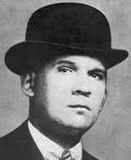
Harry Dobkin
Murderer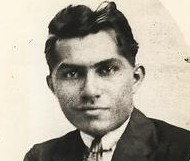 Buck Ruxton
Murderer · United Kingdom · 1935
Buck Ruxton (21 March 1899, Bombay – 12 May 1936, Manchester) was also known as…
2 victims
Buck Ruxton
Murderer · United Kingdom · 1935
Buck Ruxton (21 March 1899, Bombay – 12 May 1936, Manchester) was also known as…
2 victims
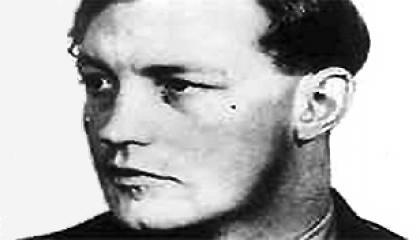 Neville Heath
Murderer · United Kingdom · 1946
Neville George Clevely Heath (1917–46) was born in Essex, England, and later li…
2 victims
Neville Heath
Murderer · United Kingdom · 1946
Neville George Clevely Heath (1917–46) was born in Essex, England, and later li…
2 victims
 Michael John Davies
Homicide · United Kingdom · 1953
Michael John Davies was a twenty-year-old labourer from Turret Grove, Clapham.…
1 victim
Michael John Davies
Homicide · United Kingdom · 1953
Michael John Davies was a twenty-year-old labourer from Turret Grove, Clapham.…
1 victim
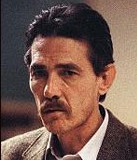 Jack Henry Abbott
Murderer · USA · 1965
Name: Jack Henry Abbott · Dates: January 21, 1944–February 10, 2002 · Known rol…
2 victims
Jack Henry Abbott
Murderer · USA · 1965
Name: Jack Henry Abbott · Dates: January 21, 1944–February 10, 2002 · Known rol…
2 victims
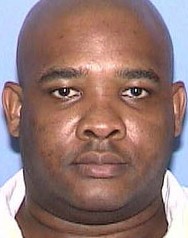 Shannon Charles Thomas
Murderer · USA · 1993
Shannon Charles Thomas was executed by lethal injection in Texas on November 16…
3 victims
Shannon Charles Thomas
Murderer · USA · 1993
Shannon Charles Thomas was executed by lethal injection in Texas on November 16…
3 victims
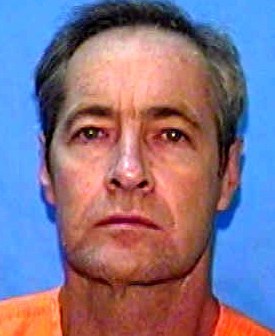 William K. Taylor
Murderer · USA · 2001
Name: William K. Taylor · Date of birth: 09/08/58 · DC#: 111640 · Thirteenth Ju…
1 victim
William K. Taylor
Murderer · USA · 2001
Name: William K. Taylor · Date of birth: 09/08/58 · DC#: 111640 · Thirteenth Ju…
1 victim
 Anzel Keon Jones
Homicide · USA · 1995
Anzel Keon Jones was a 17-year-old at the time of his arrest for the May 1995 m…
1 victim
Anzel Keon Jones
Homicide · USA · 1995
Anzel Keon Jones was a 17-year-old at the time of his arrest for the May 1995 m…
1 victim
- Gender
- male
- Country
- United Kingdom
- Location
- London, England, United Kingdom
- Date of birth
- 1901
- Age at first offence
- 40
- Characteristics
- parricide, dismemberment, murder for hire
- Victim profile
- His estranged wife Rachel Dobkin
- Method of murder
- Strangulation
- Date(s) of murder
- April 11, 1941
- Years active
- 1941
- Date of arrest
- August 26, 1942
- Status
-
Executed
Executed by hanging at Wandsworth Prison on January 7, 1943
Timeline
- January 7, 1943 — Harry Dobkin was hanged behind the walls of Wandsworth Prison.
- November 17, 1942 — The trial of Harry Dobkin opened at the Old Bailey.
- August 26, 1942 — Dobkin was interviewed for the first time by Chief Inspector Hatton and escorted to the church cellar, where he vehemently denied any involvement in his wife's death; he was then arrested for her murder.
- May 1942 — The body was discovered beneath Vauxhall Baptist Chapel, and a pathologist was called in.
- April 16, 1941 — Dobkin was not interviewed about the disappearance until April 16.
- April 14, 1941 — A small fire broke out in the ruined cellar of the Baptist Church.
- April 11, 1941 — Dobkin and his wife had met in a café in Kingsland Road, Shoreditch.
- March 1941 — Luftwaffe raids had targeted the area around the chapel between that time and March 1941.
- October 15, 1940 — The church had been bombed, with more than a hundred people killed.
- July 17, 1942 — A workman demolishing the badly bomb-damaged Vauxhall Baptist Chapel in Vauxhall Road, Kennington prised up a stone slab and found beneath it a mummified body.
- Good Friday, April 11, 1941 — Dobkin and his wife left a café at 6.30.
Background
Harry Dobkin was born in London in 1901. After leaving school he worked in the cloth trade. Dobkin married Rachel Dubinski in 1920. Within three days they had separated, and nine months later a baby boy was born. In 1923 Rachel Dobkin applied for maintenance and obtained a maintenance order obliging her husband to pay for the upkeep of their child.
Dobkin served several periods in prison as a result of her complaints about his non-payment of maintenance. He had been imprisoned several times for defaulting. He had a variety of different jobs including that of a tailor, ship's steward and cook. Over the years Rachel Dobkin had unsuccessfully summonsed him four times for assault. Dobkin later hinted that she was blackmailing him over some undisclosed indiscretion at work.
During the Second World War, Dobkin found work as a fire-watcher to a firm of solicitors in London, and he worked at the firm of solicitors next door to the Baptist Chapel at 302 Vauxhall Road.
The offence
In April 1941 Dobkin murdered his wife. He buried her under the ruin of Vauxhall Baptist Chapel, hoping she would be discovered as an air raid victim. The body was not discovered until May 1942, and it became clear that the person had not died recently.
When the bones were examined, the skull had become detached. Simpson realized that the head had already been cut from the body. The limbs had been severed at the elbows and knees. Flesh had been removed from the face. The lower jaw was missing. The bones were partially burnt. There had been an attempt to disguise the identity of the corpse, and the body had been coated in builders' lime.
Dr. Keith Simpson argued that the broken bone in the throat suggested that Rachel Dobkin had been strangled. Simpson detected a blood clot in the throat and voice box, strongly indicating death due to strangulation.
Investigation
During the Blitz, Dobkin realized that so many people were killed in air raids that it was impossible for the police to investigate every death, because victims were buried quickly and very few post mortems were carried out.
On July 17, 1942 a workman helping to demolish the badly bomb-damaged Vauxhall Baptist Chapel in Vauxhall Road, Kennington found a mummified body beneath a stone slab. The immediate assumption was that the remains were either of an air raid victim or had come from the old burial ground underneath the church, which had ceased to be used some fifty years before.
When the chapel had been bombed on October 15, 1940, more than a hundred people had been killed in the conflagration. The area around the chapel had been the target of a number of Luftwaffe raids between that time and March 1941. It was not the first body the workers had come upon while demolishing the chapel.
Police were called and arrived as Detective Inspectors Hatton and Keeling. The bones were removed to Southwark Mortuary for examination by pathologist Dr Keith Simpson. Simpson immediately suspected foul play. Dr Simpson obtained permission of the coroner to take the remains back to his laboratory at Guy's Hospital for a more detailed inspection.
In attempting to raise the bones Simpson noticed a yellowish deposit in the earth, analysed as slaked lime. The slaked lime had been used to suppress the smell of putrefaction, and it had also prevented maggots from destroying the body.
Examination involved assessing the throat and voice box for indications of strangulation. The bones found in the crypt were identified as the mortal remains of Mrs Rachel Dobkin.
Time of death was estimated at between twelve and fifteen months prior to discovery. The body was that of a woman aged between forty and fifty with dark greying hair, five feet one inch tall, and who had suffered from a fibroid tumour.
Investigators checked lists of missing persons and noted that fifteen months previously Mrs Rachel Dobkin, estranged wife of Harry Dobkin, had disappeared. An interview with her sister confirmed that she was about the right age, with dark greying hair, about five feet one inch tall, and with a fibroid tumour. The sister gave the police the name of Mrs Dobkin's dentist, Barnett Kopkin of Stoke Newington. Barnett Kopkin kept meticulous records and was able to describe residual roots and fillings, matching the upper jaw of the skull.
Miss Mary Newman, the head of the Photography Department at Guy's, superimposed a photograph of the skull on to a photograph of Rachel Dobkin. The technique had been used six years earlier in the Buck Ruxton case. The fit was described as “uncanny.”
Arrest
Dobkin was interviewed about his wife's disappearance. Because of the priorities of war, Dobkin was not interviewed about the disappearance until April 16, 1941. Dobkin was then interviewed twice more about the disappearance, with a description and photograph circulated by the police but no further action taken.
On August 26, 1942 Dobkin was interviewed for the first time by Chief Inspector Hatton and escorted to the church cellar, where he vehemently denied any involvement in his wife's death. He was then arrested for her murder.
Trial
The trial of Harry Dobkin opened at the Old Bailey on November 17, 1942. Mr Justice Wrottesley presided, and Mr L.A. Byrne prosecuted. Dobkin's counsel, Mr F.H. Lawton, spent most of his efforts trying vainly to challenge the identification evidence. The prisoner's appearance in the witness box left the jury unimpressed, and the jury took only twenty minutes to arrive at a verdict of guilty.
Sentencing
Before his execution, Dobkin confessed to his wife's murder, claiming that she was always pestering him for money and he wanted to be rid of her for good.
On January 7, 1943, Harry Dobkin was hanged behind the walls of Wandsworth Prison.
Outcome
Harry Dobkin was convicted of murder and executed by hanging at Wandsworth Prison on January 7, 1943.
Aftermath
This case raised the issue of how many people had been murdered during the war and had been successfully buried in the rubble of bombed out buildings.
Spotted an error, or have more information about this case?