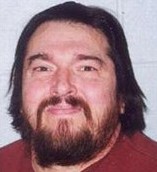
Daniel Dougherty
Murderer Brian Kevin Rosenfeld
Murderer · USA · 1985
Brian Kevin Rosenfeld Brian Kevin Rosenfeld was sentenced to three concurrent l…
23 victims
Brian Kevin Rosenfeld
Murderer · USA · 1985
Brian Kevin Rosenfeld Brian Kevin Rosenfeld was sentenced to three concurrent l…
23 victims
 Marvin Gray
Murderer · USA · 1975
Marvin Gray was convicted killer who claimed responsibility for 23 slayings and…
23 victims
Marvin Gray
Murderer · USA · 1975
Marvin Gray was convicted killer who claimed responsibility for 23 slayings and…
23 victims
 Yahweh ben Yahweh
Murderer · USA · 1980
Yahweh ben Yahweh was born and legally named Hulon Mitchell Jr. (October 27, 19…
23 victims
Yahweh ben Yahweh
Murderer · USA · 1980
Yahweh ben Yahweh was born and legally named Hulon Mitchell Jr. (October 27, 19…
23 victims
 Russell Ellwood
Murderer · USA · 1991
Russell Ellwood was a former taxi driver. Authorities suspected him of killing…
20 victims
Russell Ellwood
Murderer · USA · 1991
Russell Ellwood was a former taxi driver. Authorities suspected him of killing…
20 victims
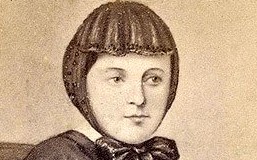 Constance Kent
Homicide · United Kingdom · 1860
Constance Kent was named Constance Emily Kent and was born 6 February 1844. She…
1 victim
Constance Kent
Homicide · United Kingdom · 1860
Constance Kent was named Constance Emily Kent and was born 6 February 1844. She…
1 victim
 Stephanie Lazarus
Murderer · USA · 1986
Stephanie Lazarus was a former Los Angeles police detective who was convicted o…
1 victim
Stephanie Lazarus
Murderer · USA · 1986
Stephanie Lazarus was a former Los Angeles police detective who was convicted o…
1 victim
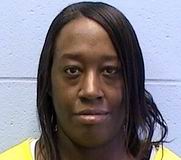 LaTosha Cunningham
Murderer · USA · 2011
LaTosha Cunningham was an Illinois woman from Belleville who was convicted of t…
1 victim
LaTosha Cunningham
Murderer · USA · 2011
LaTosha Cunningham was an Illinois woman from Belleville who was convicted of t…
1 victim
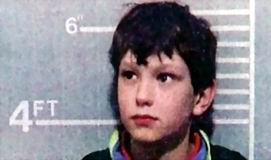 Jon Venables
Homicide · United Kingdom · 1993
Jon Venables was born 13 August 1982. He was a 10-year-old boy when he abducted…
1 victim
Jon Venables
Homicide · United Kingdom · 1993
Jon Venables was born 13 August 1982. He was a 10-year-old boy when he abducted…
1 victim
- Gender
- male
- Country
- USA
- Location
- North Philadelphia, Pennsylvania, USA
- Date of birth
- 1960
- Age at first offence
- 25
- Characteristics
- arson, parricide
- Victim profile
- His two sons, John, 3, and Danny, 4
- Method of murder
- S moke inhalation and carbon monoxide poisoning
- Date(s) of murder
- August 24, 1985
- Years active
- 1985
- Date of arrest
- April 14, 1999
- Status
-
Sentenced to death
Sentenced to death on October 6, 2000
Name
Daniel Dougherty
Background
Daniel Dougherty lived with a girlfriend at the time of the fire that killed his two sons. Dougherty had an estranged wife, and he also later married another woman. Dougherty had a drinking problem and was supposed to attend an Alcoholics Anonymous meeting the night of the fire, but his girlfriend found him at a bar.
Dougherty’s girlfriend tracked him down at the bar around 11:30 pm and told him to go home to watch his own kids. Dougherty’s girlfriend went home and packed her clothes and left Dougherty’s boys with a teenage babysitter.
Dougherty’s estranged wife was afraid that Dougherty would try to “come on” to her, and she refused to stay. Dougherty’s wife later left the house, promising to return in the morning for scheduled visitation with the children.
Dougherty’s first ex-wife, the mother of John and Daniel, called him a “nasty drunk” and said he beat her up, but that he never touched his kids. Dougherty’s second wife later told police that Dougherty had confessed to her several times during their marriage that he started the fire that killed his two sons. Dougherty’s family said a later deceased ex-wife involved in a custody dispute admitted that she made up his confession.
The offence
Daniel Dougherty’s two sons—John, 3, and Daniel, 4—died in a fire at their home in 1985. Police found the bodies of Dougherty’s sons in an upstairs rear bedroom. The boys died from smoke inhalation and carbon monoxide poisoning, and they may have been burned by the fire while they were still alive.
Investigators determined the fire was deliberately set after investigators found three separate points of origin: a loveseat, a couch and the dining room table.
Dougherty denied setting the blaze. When asked how the fire started, he speculated that it was caused by a faulty electrical outlet near the front window, with a stereo and fan plugged into the outlet.
At trial, prosecutors and an arson investigator treated the fire as an intentional arson based on ignition points and fire patterns.
Dougherty’s version of events changed at trial. In a police interview about an hour after the fires, Dougherty told the detective he was asleep for 15 minutes before awakening when he heard flames and saw the curtains on the front window on fire. Dougherty told the detective he had not called the fire department and instead ran out of the house. He said he unsuccessfully tried to put out the fire with a neighbor’s garden hose, then tried to climb a ladder to get to his children. He said the flames prevented him from reaching his kids.
At trial, Dougherty said he re-entered the burning house twice, once making it back into the living room, which he said was engulfed in flames, and then later entering the burning dining room through another door.
Investigation
A fire department was called around 4 a.m., and it found the rowhome fully engulfed in flames.
Police found Dougherty on the front patio wearing only a pair of jeans. When they asked him his name, he replied:
“My name is mud. I should die for what I did.”
Police found lifeless bodies of Dougherty’s sons, 4-year-old Daniel and 3-year-old John, in an upstairs rear bedroom.
In a police interview about an hour after the fires, Dougherty said he was asleep for 15 minutes before awakening when he heard flames and saw the curtains on the front window on fire. Dougherty conceded he had not called the fire department but instead immediately ran out of the house. He told the detective he unsuccessfully tried to put out the fire with a neighbor’s garden hose, then tried to climb a ladder to get to his children. He told the detective that the flames prevented him from reaching his kids.
When asked by police how the fire started, Dougherty speculated it was caused by a faulty electrical outlet. He denied setting the blaze.
Even though Dougherty’s comment appeared to be a confession, charges were not filed.
During the police interview, the detective described Dougherty’s demeanor. On cross-examination, Dougherty’s lawyer asked the detective to describe his client’s demeanor during the interview. The response was:
“He wasn’t as upset as someone who lost their child would be.”
At trial, an arson investigator testified that Dougherty’s claim to have been on the sofa when he noticed that the curtains were ablaze was not credible because, based upon the ignition points and the fire patterns, the sofa would have been fully consumed in flames before the curtains caught on fire. The investigator testified that a person on the sofa at the time the curtains initially ignited would have been severely burned or killed. The investigator testified that the person who started the fire would have been the only person likely to have time to escape without injury.
The investigator testified that Dougherty did not suffer any burns nor show any signs of exposure to smoke or fire.
Dougherty’s claim in the later account that he was on the sofa was challenged by the investigator’s testimony.
Arrest
Approximately 15 years after the 1985 fire, police arrested Daniel Dougherty on April 14, 1999 for a charge of arson and two murder charges. His arrest followed information provided by his second ex-wife, who had been involved in a bitter custody dispute, who told police that he confessed to starting the fire.
Trial
At trial, prosecutors presented two jailhouse informants who testified that Dougherty tearfully told them he committed the crime to get revenge on his estranged wife.
A woman who was married to Dougherty after the murders told police that, several times during the course of her marriage, Dougherty confessed to her that he started the fire that killed his two sons.
Dougherty’s defence position included denying setting the blaze and offering a different account of how the fire started and his actions.
At trial, prosecutors said the arson investigator’s opinion was valid and that there was ample evidence that Dougherty intentionally had killed his children.
Prosecutors also argued that an arson investigator’s testimony was scientifically up to date in 1985. In court papers, prosecutors argued that experts’ conclusions indicated the cause of the fire was undetermined, not that the fire could not have been arson, and that their testimony would not have changed the outcome of the trial.
The jury found Dougherty guilty after less than three hours of deliberation.
Sentencing
Daniel Dougherty was formally sentenced to two death sentences on October 6, 2000. The jury deliberated for only four hours.
Appeals
The Pennsylvania Supreme Court affirmed Dougherty’s death sentences in an opinion dated October 20, 2004. The Court denied reargument on December 9, 2004.
On May 7, 2005, Dougherty filed a petition for a writ of certiorari in the United States Supreme Court. Certiorari was denied on October 3, 2005.
Outcome
Daniel Dougherty received two death sentences and remained on death row. He was an inmate of the State Correctional Institution at Greene. His case included legal challenges related to arson investigation methods and testimony.
Experts questioned arson convictions, including Dougherty’s case, and described concerns about fire-investigation methodology.
Other details
Letters, statements, and quoted remarks
Dougherty made a comment to police when asked his name:
Dougherty made a statement in a later telephone interview from Pennsylvania’s death row:
“I didn’t set any fire. I’m an innocent man on death row and I have a child out there who needs my help,”
Dougherty described his situation as “railroaded” in the same telephone interview:
“I was railroaded and here I am on death row while my son is out there parentless,”
“Everything that I had is gone.”
Dougherty left a long statement describing what he said occurred around the fire, arrest, and trial, including:
“On August 24, 1985, I lost two boys to a house fire. I was told the fire was suspicious. I was taken in for questioning and released. Years passed by, and the woman that I lived with (at the time this happened) says the man that she thought could have done this to my boys is dead, (he took his own life). Time passes on and I married once more, and Stephen is born, and the marriage breaks down. In 1998, my ex-wife calls the police and says that I told her that I used gasoline to start the fire, (but lab test say, there was no accelerate present). The Fire Marshal changed his story to fit hers. On the day of my arrest my ex-wife calls and leaves a message on my sisters answering machine stating: "I know he didn't do this I still love him". This tape disappears after it was given to the Court Appointed Attorney. Then when I find paperwork that proves what was said in the phone call that led to my arrest is a lie, my ex-wife is not used. The Fire Marshal changes his story again and two lying jail house informants are used. The truth does not come out at trial. The Attorney I had, at trial made deals with D.A., I did not know about this. Now I sit on Death-Row for a crime I did not do or may have not even have happened!!! Daniel Dougherty, right, was convicted of setting a fire that killed his two sons, John and Danny.”
The arson investigator testified about Dougherty’s claim and fire behavior. An expert quoted as a defence expert said:
“He was so far off base it's unbelievable that no one challenged his expertise or methodology,”
The same defence expert warned about outdated techniques:
“Anyone paying attention for the last 20 years would have known that what he was saying was totally off the wall.”
A defence expert hired by Dougherty’s lawyers, Alfred Pisani, said:
“Fire investigation traditionally was more of an art than a science. You learned the art and some experience from people who came before you,”
“If you saw a pool-shaped burn pattern on the floor, that meant gasoline might have been used. Now we know it's not true.”
Dougherty’s first ex-wife, Kathy Dipple, made remarks about the fire:
“It was a freak accident in my eyes,”
“We had our ups and downs but he never hurt his kids.”
The article quoted prosecutors’ court-paper argument that outdated naming did not minimize accurate observations:
“Those opinions [of Dougherty's experts] are nothing more than Monday morning quarterbacking and would not have affected the outcome of defendant's trial,”
“While the science of fire investigation may have evolved since 1985 and created new terminology by 2000 -- 15 years after Lt. Quinn's investigation of the fire at 929 ½ Carver St. -- the behavior of fire has not changed one iota since its discovery,”
“The fact that defendant's hired experts assign a new 'scientific' name to the phenomenon of fire behavior does not mean that Lt. Quinn's failure to use that name in any way minimizes the import of his accurate observations and descriptions of the fire defendant set,”
Names, roles, and individuals referenced
John Quinn was described as an assistant fire marshal who concluded the fire was arson and identified three nearly simultaneous ignition points. John Lentini was described as a nationally known fire investigator and a defence expert in Dougherty’s motion to vacate his conviction. Alfred Pisani was described as an arson expert hired by Dougherty’s lawyers. Kathy Dipple was described as the mother of the dead boys and as agreeing with the verdict and sentence. James Doyle was described as the director of the Center for Modern Forensic Practice at John Jay College of Criminal Justice. Steve Carman was described as a senior special agent at the Bureau of Alcohol, Tobacco, Firearms and Explosives. John DeHaan was described as a former arson investigator with the California Department of Justice. Cameron Todd Willingham was referenced in connection with a separate arson case and execution in 2004. Cameron Todd Willingham’s case included that a 2006 study sponsored by the Innocence Project concluded that a 1991 fire was not intentionally set, and that the fire investigator’s trial testimony was based on false premises. Lt. Quinn was referenced in prosecutors’ court-paper argument. Daniel J. Dougherty EK-7623 Deathrow-usa.us was included as part of Dougherty’s statement presentation.
Timeline dates explicitly stated
- August 24, 1985 — Fire engulfed Dougherty’s North Philadelphia row house and killed John (3) and Danny (4).
- April 14, 1999 — Police arrested Daniel Dougherty for arson and two murder charges.
- October 6, 2000 — Daniel Dougherty was sentenced to death; two death sentences were imposed.
- October 20, 2004 — The Pennsylvania Supreme Court affirmed Dougherty’s death sentences.
- December 9, 2004 — The Court denied reargument.
- May 7, 2005 — Dougherty filed a petition for a writ of certiorari in the United States Supreme Court.
- October 3, 2005 — Certiorari was denied.
Timeline
Spotted an error, or have more information about this case?