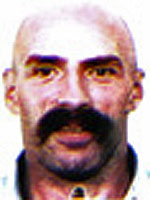
Billy Ray Hamilton
Murderer Ervil LeBaron
Murderer · USA · 1972
Ervil Morrell LeBaron (1925 to August 16, 1981) was the leader of a polygamous…
35 victims
Ervil LeBaron
Murderer · USA · 1972
Ervil Morrell LeBaron (1925 to August 16, 1981) was the leader of a polygamous…
35 victims
 Brian Kevin Rosenfeld
Murderer · USA · 1985
Brian Kevin Rosenfeld Brian Kevin Rosenfeld was sentenced to three concurrent l…
23 victims
Brian Kevin Rosenfeld
Murderer · USA · 1985
Brian Kevin Rosenfeld Brian Kevin Rosenfeld was sentenced to three concurrent l…
23 victims
 Marvin Gray
Murderer · USA · 1975
Marvin Gray was convicted killer who claimed responsibility for 23 slayings and…
23 victims
Marvin Gray
Murderer · USA · 1975
Marvin Gray was convicted killer who claimed responsibility for 23 slayings and…
23 victims
 Yahweh ben Yahweh
Murderer · USA · 1980
Yahweh ben Yahweh was born and legally named Hulon Mitchell Jr. (October 27, 19…
23 victims
Yahweh ben Yahweh
Murderer · USA · 1980
Yahweh ben Yahweh was born and legally named Hulon Mitchell Jr. (October 27, 19…
23 victims
 Francisco Das Chagas
Serial killer · Brasil · 1989
Francisco das Chagas was a bicycle mechanic in Brazil. He confessed to killing…
42 victims
Francisco Das Chagas
Serial killer · Brasil · 1989
Francisco das Chagas was a bicycle mechanic in Brazil. He confessed to killing…
42 victims
 Kenneth Albert Brock
Murderer · USA · 1974
Kenneth Albert Brock was executed by lethal injection in Texas on June 19, 1986…
1 victim
Kenneth Albert Brock
Murderer · USA · 1974
Kenneth Albert Brock was executed by lethal injection in Texas on June 19, 1986…
1 victim
 James Karis
Murderer · USA · 1981
James Karis (full name: James Leslie Karis Jr.) was convicted in connection wit…
1 victim
James Karis
Murderer · USA · 1981
James Karis (full name: James Leslie Karis Jr.) was convicted in connection wit…
1 victim
 Martin Joseph Puccio
Murderer · USA · 1993
Martin Joseph Puccio, Jr. was usually called Marty and was born March 21, 1973.…
1 victim
Martin Joseph Puccio
Murderer · USA · 1993
Martin Joseph Puccio, Jr. was usually called Marty and was born March 21, 1973.…
1 victim
- Gender
- male
- Country
- USA
- Location
- Fresno, California, USA
- Date of birth
- 1950
- Age at first offence
- 30
- Characteristics
- murder for hire
- Victim profile
- Douglas Scott White, 18; Bryon William Schletewitz, and Josephine Linda Rocha, 17
- Method of murder
- Shooting (sawed-off shotgun)
- Date(s) of murder
- September 5, 1980
- Years active
- 1980
- Date of arrest
- 5 days after
- Status
-
Died in custody
Sentenced to death on March 2, 1981; died in prison on October 22, 2007
Case record: Billy Ray Hamilton
Background
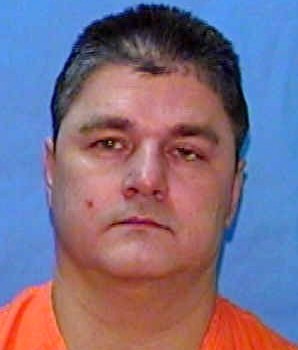
Billy Ray Hamilton died on October 22, 2007. He was convicted of murder in three counts and sentenced to death under California’s 1978 death penalty law.
Clarence Ray Allen was involved in a plan associated with the murders. Hamilton met Allen in Folsom Prison in 1979. During Hamilton’s time in Folsom Prison, Allen referred to Hamilton as his "good dog". At the time of Allen’s trial, Allen claimed he had only met Hamilton three or four times.
After Hamilton was paroled from Folsom Prison, Kenneth Allen supplied Hamilton with $100. Kenneth Allen was described as one of Allen’s sons.
Hamilton had a girlfriend, Connie Barbo.
The offence
Hamilton and Connie Barbo murdered eight witnesses to a crime committed by Allen in 1974. The case record tied the murders committed by Hamilton and Barbo to the Fran’s Market shootings in Fresno, California.
Fran’s Market shootings
Hamilton went to Fran’s Market in Fresno, California where one of the witnesses worked: Bryon Schletewitz. On September 5, 1980, Hamilton murdered Schletewitz and fellow employees Josephine Rocha, 17, and Douglas White, 18. The shootings were described as being carried out with a sawed-off shotgun. Hamilton also wounded two other people: Joe Rios and Jack Abbott.
Hamilton shot Schletewitz at near point-blank range in the forehead. He murdered Rocha and White after forcing them to lay on the ground within the store. Jack Abbott was shot when he came to investigate the shotgun blasts. Abbott returned fire and wounded Hamilton, who escaped from the scene.
Investigation
Investigators connected the murders to Allen. Hamilton carried a list with the names and addresses of the witnesses who testified against Allen at the Kitts trial, including the name of Schletewitz.
Five days after the events at Fran’s Market, Hamilton was arrested shortly after robbing a liquor store in Modesto, California.
A Cadillac registered to Kenneth Allen was parked near the liquor store. It bore Hamilton’s fingerprints and was stained with blood matching Hamilton’s type but not Allen’s.
Several days after the Fran’s Market events, Rios selected Hamilton’s picture from a photographic lineup and was confident of his identification because he had seen Hamilton and Barbo on two successive evenings and had recognized them.
The investigation described evidence from Hamilton’s arrest and a seized document:
- Police found a piece of paper referred to as the "hit list".
- The "hit list" bore Hamilton’s handwriting, including the names of Kenneth and Kathy Allen, the names of Bryon Schletewitz and his father Ray, and the name and address of Fran’s Market.
At Fran’s Market, the front door of Fran’s Market was stained with blood later found to match Hamilton’s type.
At around 10 p.m., Kenneth Allen sold Barbo’s car, a Mercury Comet, to a friend. Bloodstains matching Hamilton’s blood type but not Allen’s were later found inside the Comet.
Arrest
Hamilton was arrested in Modesto, California, on September 10, 1980, following a robbery at a liquor store. The case record stated that his pants and shoe showed small holes and his foot contained five foreign objects the size of No. 6 shotgun pellets. The case record also stated he had a several-day-old laceration of the skin between his right thumb and forefinger described as a type of injury frequently caused by the recoil of a sawed-off shotgun.
Trial
Hamilton was tried in Contra Costa County, California. The jury convicted him of three counts of murder, one count of attempted robbery, and two counts of assault with a deadly weapon.
Verdicts and special circumstances
For each murder count, three special circumstances were found true:
- felony murder-robbery (id., § 190.2, subd. (a)(17)(i))
- multiple murder predicated on the killing of one of the two other victims (id., § 190.2, subd. (a)(3))
- multiple murder predicated on the killing of the other (ibid.)
The jury returned a unanimous verdict of death.
Sentencing
Hamilton was sentenced to death by the Contra Costa County Superior Court on March 2, 1981.
Hamilton was received onto California’s death row at San Quentin State Prison on October 19, 1981.
Appeals
Hamilton’s case included an automatic appeal from a judgment of death.
People v. Hamilton (1988) 46 C3d 123
The automatic appeal was decided in People v. Hamilton (1988) 46 C3d 123.
Guilt issues
The court addressed and rejected issues raised by the defendant, including:
- jury-selection issues concerning "death qualification"
- a challenge to the admission of the "hit list"
- a motion to recuse the entire Fresno District Attorney’s office from prosecuting
- a claim that testimony by Callaway should have been stricken as the product of prosecutorial intimidation
- a challenge to the felony-murder rule
The opinion concluded the judgment must be affirmed as to guilt and also concluded the special circumstances must be upheld in this case.
Special circumstance issues
The court addressed failures to instruct and the structure of multiple-murder special-circumstance allegations:
- The court found the trial court did not err by failing to instruct on intent to kill because there was no evidence Hamilton was an aider and abetter.
- The court found the felony-murder special-circumstance findings were not required to be vacated for not instructing on premeditation and deliberation.
- For multiple-murder special-circumstances, the court again found no instruction error on intent to kill for the same reason.
- It found it was error to allege six multiple-murder special circumstances instead of one, and concluded five of the six multiple-murder special-circumstance findings must be vacated.
Penalty issues
The opinion addressed penalty-related issues, including:
- issues relating to "other crimes" evidence
- issues relating to instructions under Penal Code section 190.3
- a "factor (k)" instruction and related prosecution argument that the court concluded may have misled jurors about mitigation evidence
- "Brown error" and whether the jury was misled by a former CALJIC No. 8.84.2 instruction
- burden-of-proof issues
- error in directing the jury to consider six multiple-murder special-circumstance findings instead of one, and whether that required reversal
- guilt-phase instruction language possibly carried into penalty phase instructions, including CALJIC No. 1.00
- credibility and other CALJIC instructions (including CALJIC No. 2.20, CALJIC Nos. 2.60 and 2.61)
- the court’s response to questions asked by the jury during deliberations
- cumulative prejudice
- rulings on an application for modification of the verdict of death under Penal Code section 190.4, subdivision (e)
The opinion concluded that the judgment must be affirmed as to penalty, despite concluding that five of six multiple-murder special-circumstance findings must be vacated.
Concurring and dissenting opinion
Broussard, J., concurred in the majority’s affirmance of guilt and, under People v. Anderson, in the finding of special circumstances, and dissented to the imposition of the death penalty.
Other details
Names of victims and other injured individuals
Victims killed in the Fran’s Market shootings were:
- Bryon Schletewitz
- Josephine Rocha, 17
- Douglas White, 18
Persons wounded during the incident were:
- Joe Rios
- Jack Abbott
Modesto liquor store robbery (other crime evidence)
The case record described a Modesto liquor store robbery on September 10, 1980 involving Raymond Pifer, in which Hamilton pulled a knife, demanded money, brandished the knife at a customer blocking the doorway, and was arrested within minutes a block from the store. Both Pifer and the customer identified Hamilton as the robber. The nylon stocking and cap were found between the liquor store and the site of Hamilton’s arrest, and a paper bag containing money was found in Hamilton’s pocket.
Prior and other crimes introduced at penalty phase
During the penalty phase, the prosecution introduced evidence of other crimes committed by Hamilton, including:
- a 1973 escape from a Kentucky jail
- a 1977 robbery
- the September 10, 1980 liquor store robbery in Modesto
The Kentucky jail escape was described as occurring after a note was received by the former chaplain that the television set in one of the cells was out of order. The inmates tied up the chaplain, used him to get past electronic doors, and escaped.
In 1977, Hamilton robbed a man in San Jose, taking some money and a watch. The man was described as elderly and in poor health and suffered numerous facial cuts and bruises. Hamilton told the police he hit the victim in self-defense.
Character and background evidence
Witnesses testified about Hamilton’s upbringing and work history. The case record included testimony from:
- Phyllis G. about abandonment by their parents, time sent to grandparents, and a later letter from the mother
- Nona Curry about Hamilton living at her mother’s house in Kentucky between 1968 and 1971
- Nelson Pettit about friendship with Hamilton and helping him get a job after Hamilton dropped out of school, as well as working together over a four-year period starting in 1969
- Michael Dunham about supervising Hamilton at a Salvation Army rehabilitation center in San Jose in 1977, including that Hamilton was a warehouse and dock worker, drove a truck to collect donations, had a drinking problem and became violent when drunk, and that he was kind when sober
Callaway testimony and recantation
The case record described Shane Callaway:
- Callaway initially claimed he accidentally shot Hamilton in the foot on September 4, 1980 during a debt collection event
- After Callaway left the courtroom, he was arrested on two outstanding misdemeanor warrants
- The court released Callaway on his own recognizance and directed him to the public defender’s office
- Immunity was discussed and agreed upon concerning warrants and possible perjury charges
- Defense counsel moved to preclude Callaway’s expected testimony about anonymous telephone threats to his family, and the court denied the motion while admitting evidence only for Callaway’s state of mind and not defendant’s consciousness of guilt
- Callaway then recanted earlier testimony for the defense, and testified he had been working at a copper mine in Eureka, Utah, until 7 or 8 a.m. on September 4, 1980, and that he could not have reached Fresno on that date
After Callaway’s recantation, the court again denied a motion to strike the evidence of threats on the ground that no connection between the threats and defendant had been established.
Jury question and court response during deliberations
During deliberations, the jury asked what the law required if the jury was undecided on the penalty phase. The court responded:
"The best answer that I can give you is this, you shouldn't concern yourself with the consequences if the jury is unable to reach a verdict on the penalty phase of the case. That is a matter which shouldn't enter into your consideration. You should continue deliberating for as long as you feel it to be productive and I will be glad to help you in any way that I can in your deliberations."
The jury also asked about whether a defense attorney’s statement was true that if the jury did nothing Billy Ray Hamilton would go to prison for life. The court’s response included:
"I will answer your question but first let me ask, did you interpret that or did someone on the jury, Mr. McCauley, interpret that to mean by if we do nothing that if we do not agree upon a verdict -- "
"Mr. McCauley: Yes. "
"The Court: Well -- "
"Mr. McCauley: That's what we -- "
"The Court: I think the problem is that you misinterpreted what [defense counsel] said or meant. And his argument was entirely proper and what he argued was that if the jury did not impose the death penalty in their verdict but instead selected the other alternative, that he would still be imprisoned in a state prison for the rest of his life. He did not argue nor would it be true that he would automatically be sentenced to life imprisonment if the jury did not agree upon a verdict. You see the distinction that I make, Mr. McCauley? "
"The Court: All right. Does that answer the question that the jury had? "
"Mr. McCauley: Yes, it does. One additional item. We expect to reach a decision within fifteen or twenty minutes. "
"The Court: Very well. I am glad you alerted that, alerted us to that. So the jury may now retire and resume their deliberations."
Verdict modification hearing comments
At the verdict-modification hearing, the court’s comments included:
"Well, as the trial Judge, there are many things that I perhaps could and would like to say at this time but I think saying any of them would serve no useful purpose. So I am going to confine myself to those findings that I am required to make under the law. And I am aware of the fact that under 190.4(e) of the Penal Code that I have certain obligations and I have fulfilled them. I have reviewed the evidence, I have considered and will be guided by the aggravating and mitigating circumstances set forth in Section 190.3 and I make as is my responsibility a determination as to whether the jury's finding that the aggravating circumstances outweighed the mitigating circumstances, is or isn't contrary to the law. I have carefully reviewed all of the mitigating and aggravating circumstances set forth in 190.3 and I find that without exception all the aggravating circumstances are applicable and except for those that by their very nature have no application at all to this case, and that there is in fact from this record and what's before me, no mitigating circumstances. I am going to in particular refer to aggravating factors (a), (b) and (h) in my review of the aggravating circumstances. And with reference to (a), these are unprovoked, cold, calculated, premeditated, vicious murders without parallel in my experience. With reference to (h), there is nothing about the capacity of the defendant that would prevent him from appreciating the criminality of his conduct. There is no evidence of diminished capacity or intoxication at the time of this offense. I do not find an unhappy childhood, which certainly was the case, to be any justification or mitigating circumstance. And in summary, I find that there is ample evidence to support the jury's verdict in all particulars. "..." I am not going to belabor this except to say that in my opinion any other decision that I would make would be shirking my responsibility and that whatever my personal feelings may be about the death penalty is not controlling in this case."
Death in prison
Hamilton died of natural causes on October 22, 2007 at a Kern County hospital while on death row at San Quentin State Prison. The case record described the time as 3:18 p.m. Hamilton was described as being 57 years old in connection with his death, and also described as 58 in a related paragraph.
Spotted an error, or have more information about this case?