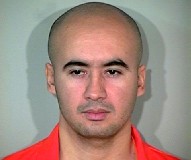
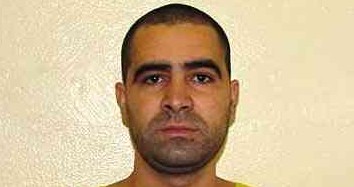
Martin Raul Soto-Fong
Homicide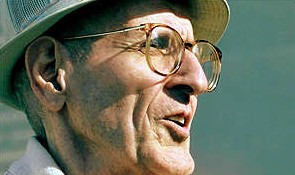 Jack Kevorkian
Homicide · USA · 1990
Jack Kevorkian (born May 26, 1928) was a controversial American pathologist. He…
130 victims
Jack Kevorkian
Homicide · USA · 1990
Jack Kevorkian (born May 26, 1928) was a controversial American pathologist. He…
130 victims
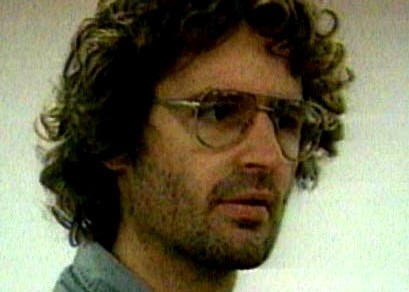 David Koresh
Homicide · USA · 1993
David Koresh (born Vernon Wayne Howell; August 17, 1959 – April 19, 1993) led t…
79 victims
David Koresh
Homicide · USA · 1993
David Koresh (born Vernon Wayne Howell; August 17, 1959 – April 19, 1993) led t…
79 victims
 Todd Hall
Homicide · USA · 1996
Todd Hall was described by neighbors as "mentally slow" and was said to have su…
9 victims
Todd Hall
Homicide · USA · 1996
Todd Hall was described by neighbors as "mentally slow" and was said to have su…
9 victims
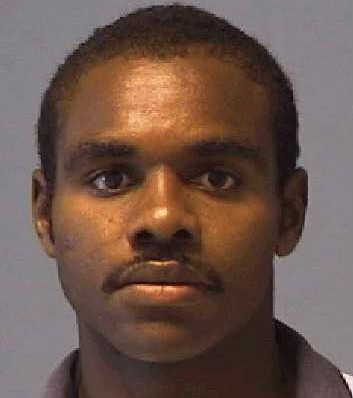 Clinton Bankston
Homicide · USA · 1987
15 August 1987 — Ann Morris (63), her sister Sally Nicholson (59), and Sally’s…
5 victims
Clinton Bankston
Homicide · USA · 1987
15 August 1987 — Ann Morris (63), her sister Sally Nicholson (59), and Sally’s…
5 victims
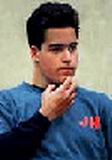 Joshua Jenkins
Homicide · USA · 1996
Joshua Jenkins was a 15-year-old American killer who killed five members of his…
5 victims
Joshua Jenkins
Homicide · USA · 1996
Joshua Jenkins was a 15-year-old American killer who killed five members of his…
5 victims
 Vickie Dawn Jackson
Serial killer · USA · 2000
Vickie Dawn Jackson was a former nurse who received a life sentence after plead…
10 victims
Vickie Dawn Jackson
Serial killer · USA · 2000
Vickie Dawn Jackson was a former nurse who received a life sentence after plead…
10 victims
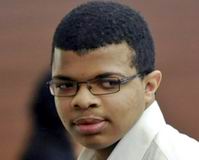 Justin Robinson
Homicide · USA · 2012
Justin Robinson was a 15-year-old from Clayton when he killed 12-year-old Autum…
1 victim
Justin Robinson
Homicide · USA · 2012
Justin Robinson was a 15-year-old from Clayton when he killed 12-year-old Autum…
1 victim
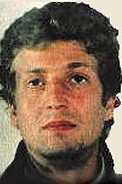 Gaspare Zinnanti
Homicide · Italy · 1997
Gaspare Zinnanti was a man of thirty-four years of palermitane origins who was…
3 victims
Gaspare Zinnanti
Homicide · Italy · 1997
Gaspare Zinnanti was a man of thirty-four years of palermitane origins who was…
3 victims
 Maria Manning
Murderer · United Kingdom · 1849
Maria Manning was also identified as Marie Manning and Marie de Roux. Maria Man…
1 victim
Maria Manning
Murderer · United Kingdom · 1849
Maria Manning was also identified as Marie Manning and Marie de Roux. Maria Man…
1 victim
- Gender
- male
- Country
- USA
- Location
- Pima County, Arizona, USA
- Date of birth
- October 6, 1974
- Age at first offence
- 18
- Characteristics
- robbery, juvenile (17)
- Victim profile
- Store manager Fred Gee, 45; his uncle, Huang Ze Wan, 77; and clerk Raymond Arriola, 32
- Method of murder
- Shooting
- Date(s) of murder
- June 24, 1992
- Years active
- 1992
- Date of arrest
- —
- Status
-
Sentenced to death
Sentenced to death on February 3, 1994
Case record: Martin Raul Soto-Fong
Background
Martin Raul Soto-Fong was sentenced to death on February 3, 1994.
The offence
Soto-Fong and his two accomplices, Andre Minnitt and Christoper McCrimmon, decided to rob the El Grande Market, where Soto-Fong had previously worked, and kill anyone who was present to eliminate potential witnesses.
On June 24, 1992, they drove to the market in a distinctive car. Inside the market, Soto-Fong gathered two bags of produce, approached the cash register counter where the owner waited, and produced a .25 caliber autoloading pistol. He took all the money he could find, about $300, and then began shooting the three persons in the market: Fred Gee, Ray Arriola, and Zewan Hong.
Minnitt ran into the store and joined Soto-Fong in shooting the victims to death. McCrimmon stood at the doorway to the market, armed with a handgun. All of the victims were shot in the head, execution-style.
Neighbors heard the shots and saw the distinctive car leave the market.
The police later discovered the car, and the car and fingerprints at the market tied Soto-Fong and his accomplices to the murders.
Trial
Presiding Judge: Robert Buchanan Prosecutor: Ken Peasley
Start of Trial: October 13, 1993 Verdict: October 27, 1993
Soto-Fong was convicted for his part in the El Grande Market slayings and sent to death row in 1993.
Sentencing
Sentencing: February 3, 1994
Aggravating Circumstances:
- Pecuniary gain
- Especially cruel, heinous or depraved (cruelty for two of the victims; heinous and depraved for all three victims)
- Multiple homicides
Mitigating Circumstances:
- Age
- Lack of extensive or violent criminal history
- Gainfully employed
- Supportive family
Appeals
Soto-Fong’s case reached published opinions: State v. Soto-Fong, 187 Ariz. 186, 928 P.2d 610 (1996).
The U.S. Supreme Court banned the death penalty for juveniles, and Soto-Fong—who was four months shy of 18 when the slayings took place—was granted a new sentencing hearing.
With the death penalty off the table, Pima County Superior Court Judge Clark Munger decided whether Soto-Fong’s life sentences should run concurrently or consecutively. The sentences ran consecutively, meaning he would have to serve 25 years on each sentence before becoming eligible for parole.
Soto-Fong took the opportunity to apologize to the victims’ families, but again proclaimed his innocence and disdain for the former prosecutor and detective who handled his case. He said:
"I can't say I totally understand how the legal system works, but I remain hopeful the high court will review my case" and overturn the convictions, Soto-Fong said.
Richard Gee, Fred Gee’s younger brother, said:
"They prevailed because he's off death row," Gee said. "If his family wants to see him, all they've got to do is go to prison and kiss and hug him on visitor's day. If I want to go see my family, I've got to go to the graveyard and hug their gravestones."
Soto-Fong’s repeated attempts to have his convictions overturned have failed.
The Arizona Supreme Court disbarred Ken Peasley in May 2004 after the State Bar filed a complaint claiming Peasley elicited false testimony from Joseph Godoy, a former Tucson police detective, during 1993 and 1997 trials involving the case.
The Arizona Supreme Court found that Peasley allowed Godoy to falsely testify that Christopher McCrimmon, Andre Lamont Minnitt and Soto-Fong weren’t suspects before a key witness interview, but police actually had investigated them earlier.
Peasley said he made honest mistakes during the trial because of overwork and health issues.
Minnitt’s conviction was overturned, and McCrimmon was eventually acquitted. In Minnitt’s case, the justices wrote an opinion stating Peasley “engaged in extreme misconduct” that was “grossly improper and highly prejudicial” to Minnitt and the criminal-justice system.
Outcome
Soto-Fong was convicted for his part in the El Grande Market slayings and sentenced to death on February 3, 1994.
After the U.S. Supreme Court’s decision regarding the death penalty for juveniles, Soto-Fong received new sentencing, and his life sentences were run consecutively.
Aftermath
Authorities said Soto-Fong’s fingerprints were found on one of two food stamps lying next to Gee’s body and two plastic bags lying on a countertop.
Ken Peasley and Joseph Godoy, who retired from the Tucson Police Department after being indicted on perjury charges, worked for defense attorney Brick Storts. The perjury charges against Godoy were later dismissed.
People
- Martin Raul Soto-Fong (defendant; former market employee)
- Andre Minnitt (accomplice)
- Christoper McCrimmon (accomplice)
- Fred Gee (victim)
- Ray Arriola (victim)
- Zewan Hong (victim)
- Huang Zee Wan (Gee’s uncle; mentioned in published reporting of the murders)
- Robert Buchanan (presiding judge)
- Ken Peasley (prosecutor)
- Clark Munger (Pima County Superior Court judge)
- Richard Gee (Fred Gee’s younger brother)
- Joseph Godoy (former Tucson police detective)
- Brick Storts (defense attorney)
Spotted an error, or have more information about this case?