
Scott Allen Hain
Homicide Jack Kevorkian
Homicide · USA · 1990
Jack Kevorkian (born May 26, 1928) was a controversial American pathologist. He…
130 victims
Jack Kevorkian
Homicide · USA · 1990
Jack Kevorkian (born May 26, 1928) was a controversial American pathologist. He…
130 victims
 David Koresh
Homicide · USA · 1993
David Koresh (born Vernon Wayne Howell; August 17, 1959 – April 19, 1993) led t…
79 victims
David Koresh
Homicide · USA · 1993
David Koresh (born Vernon Wayne Howell; August 17, 1959 – April 19, 1993) led t…
79 victims
 Todd Hall
Homicide · USA · 1996
Todd Hall was described by neighbors as "mentally slow" and was said to have su…
9 victims
Todd Hall
Homicide · USA · 1996
Todd Hall was described by neighbors as "mentally slow" and was said to have su…
9 victims
 Clinton Bankston
Homicide · USA · 1987
15 August 1987 — Ann Morris (63), her sister Sally Nicholson (59), and Sally’s…
5 victims
Clinton Bankston
Homicide · USA · 1987
15 August 1987 — Ann Morris (63), her sister Sally Nicholson (59), and Sally’s…
5 victims
 Joshua Jenkins
Homicide · USA · 1996
Joshua Jenkins was a 15-year-old American killer who killed five members of his…
5 victims
Joshua Jenkins
Homicide · USA · 1996
Joshua Jenkins was a 15-year-old American killer who killed five members of his…
5 victims
 William Harry Meece
Murderer · USA · 1993
William Harry Meece was a Lexington man who was convicted of killing three peop…
3 victims
William Harry Meece
Murderer · USA · 1993
William Harry Meece was a Lexington man who was convicted of killing three peop…
3 victims
 Ralph Lynch
Murderer · USA · 1998
Ralph Lynch was convicted in Ohio for the kidnapping, rape, and murder of 6-yea…
1 victim
Ralph Lynch
Murderer · USA · 1998
Ralph Lynch was convicted in Ohio for the kidnapping, rape, and murder of 6-yea…
1 victim
 Joseph Christopher
Serial killer · USA · 1980
Joseph Christopher was a 25-year-old Army private when he was arrested at Fort…
12 victims
Joseph Christopher
Serial killer · USA · 1980
Joseph Christopher was a 25-year-old Army private when he was arrested at Fort…
12 victims
 Michael John Davies
Homicide · United Kingdom · 1953
Michael John Davies was a twenty-year-old labourer from Turret Grove, Clapham.…
1 victim
Michael John Davies
Homicide · United Kingdom · 1953
Michael John Davies was a twenty-year-old labourer from Turret Grove, Clapham.…
1 victim
 Remy Lecrenier
Mass murderer · Belgium · 1997
Remy Lecrenier lived with his girlfriend, Vinciane, and her family in the small…
4 victims
Remy Lecrenier
Mass murderer · Belgium · 1997
Remy Lecrenier lived with his girlfriend, Vinciane, and her family in the small…
4 victims
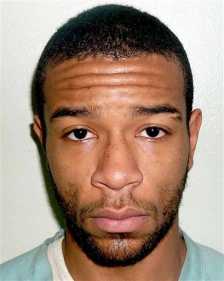 Percy Levar Walton
Murderer · USA · 1996
Percy Levar Walton was a Black male who was 18 years and one month old at the t…
3 victims
Percy Levar Walton
Murderer · USA · 1996
Percy Levar Walton was a Black male who was 18 years and one month old at the t…
3 victims
- Gender
- male
- Country
- USA
- Location
- Tulsa, Oklahoma, USA
- Date of birth
- J une 2, 1970
- Age at first offence
- 17
- Characteristics
- juvenile (17), kidnapping, robbery
- Victim profile
- Michael William Houghton, 27, and Laura Lee Sanders, 22
- Method of murder
- Forced the victims into the trunk of the car and set it on fire
- Date(s) of murder
- October 6, 1987
- Years active
- 1987
- Date of arrest
- 3 days after
- Status
-
Executed
Executed by lethal injection in Oklahoma on April3, 2003
Case record: Scott Allen Hain
Overview
Scott Allen Hain was executed by lethal injection in Oklahoma on April3, 2003. He was convicted in Oklahoma of two counts of first degree murder, and he was sentenced to death. The murders occurred when he was 17 years old.
Scott Allen Hain’s ODOC number was 173580. His birthdate was 06/02/1970. He had no last statement. His final meal was three cheeseburgers, three orders of onion rings, ice cream and a slush drink.
Robert Wayne Lambert was a codefendant in the case. Lambert remained on death row awaiting execution.
Timeline
- Oct. 6, 1987 — Laura Lee Sanders and Michael Houghton were seated in Sanders’ car outside a Tulsa bar when they were approached by Scott Allen Hain and Robert Wayne Lambert. Hain and Lambert forced their way into the car by threatening Houghton with a knife, drove away, robbed Houghton at gunpoint, and when Houghton resisted forced him into the trunk. They later put Sanders in the trunk as well, drove away with Houghton’s car, stopped after driving down a rural roadway, took Sanders’ things, cut the gas line and set the car on fire, and left and later returned to see if the fire was burning well.
- Oct. 9, 1987 (evening) — Hain and Lambert were apprehended in Tulsa.
- Oct. 13, 1987 — Hain was charged by complaint and information in the District Court of Creek County, Oklahoma, with two counts of first degree murder, two counts of kidnapping, two counts of robbery with firearms, one count of arson in the third degree, and two counts of larceny of an automobile.
- May 1988 — The case proceeded to trial; at the conclusion of the first-stage proceedings the jury found Hain guilty as charged; at the conclusion of the second-stage proceedings, after finding all three aggravating factors, the jury sentenced Hain to death on both first degree murder counts.
- May 1988 — Hain was sentenced to death.
- Sept. 22, 1994 — Resentencing proceedings commenced.
- Sept. 26, 1994 — Resentencing proceedings took place, including victim impact testimony.
- 1994 — Following resentencing, Hain was resentenced to death.
- 1996 — The Oklahoma Court of Criminal Appeals affirmed Hain’s death sentences on direct appeal.
- May 1, 1998 — The Oklahoma Court of Criminal Appeals denied post-conviction relief.
- July 30, 1998 — Hain filed a petition for writ of habeas corpus asserting fourteen grounds for relief.
- Dec. 18, 2000 — The district court denied Hain’s habeas petition.
- Jan. 27, 2003 — The U.S. Supreme Court denies Hain’s cert petition.
- Jan. 31, 2003 — The Oklahoma Court of Criminal Appeals set an execution date for April 3, 2003.
- March 26, 2003 — The 10th U.S. Circuit Court of Appeals ruled 2-1 in Hain’s collateral appeal that death row inmates were not entitled to federally appointed and funded lawyers represent them in state clemency proceedings.
- March 31, 2003 — The Oklahoma Board of Pardons and Paroles denied Hain’s clemency petition.
- April 1, 2003 — The Oklahoma Pardon and Parole Board denied clemency to Scott Allen Hain.
- April 2, 2003 — The Tenth Circuit entered a stay of execution for Scott Allen Hain.
- April 3, 2003 — The U.S. Supreme Court overturned the stay of execution and allowed Oklahoma to proceed; Hain was executed by lethal injection. Hain was pronounced dead at 8:39 p.m. CST (and also described as pronounced dead at 8:35 p.m. four minutes after lethal injection).
Background and personal circumstances
Hain’s childhood included court-ordered treatment and family circumstances. His mother was under court-ordered treatment for alcoholism at the time of his arrest, and his father was also described as a heavy drinker and as spending little time at home. His father was described as physically abusing Hain using a wooden paddle, and Hain reported sexual abuse by a babysitter when he was about eight.
Hain was held back in school in the first grade and in the fifth grade. He dropped out of school around the age of 13, had a poor school record, and repeated several grades. His juvenile court history included property offences and juvenile detention. He absconded on several occasions. He was involved in burglary and theft with his father.
In July 1987, Hain, now 17, absconded from a juvenile facility for the last time. For most of the next three months he lived on the streets and increasingly resorted to alcohol and drugs, including crack cocaine. During this time he met Robert Lambert, who was four years older, and they became involved in crime to obtain drugs. He had no record of violence up to that time.
At the time of his arrest, his childhood background included allegations that he had been introduced to marijuana by his father when he was nine or 10 years old. He was also reported to have used LSD, PCP, and barbiturates.
The offence
Victims and circumstances
Laura Lee Sanders and Michael Houghton were seated in Sanders’ car outside a Tulsa bar when they were approached by Hain and Lambert. Hain and Lambert were in the parking lot waiting to rob a nearby house when they saw Sanders and Houghton talking in the car.
Kidnapping and robbery
Hain and Lambert forced their way into the car by threatening Houghton with a knife. Hain drove the car away from the bar, then stopped and robbed Houghton at gunpoint. When Houghton resisted the robbery, Hain forced him into the trunk of the car.
A short while later, Hain and Lambert stopped and put Sanders in the trunk as well. The two men went back and drove away Houghton’s car and stopped after driving down a rural roadway. They took Sanders’ belongings, including some clothes.
They cut the gas line to the car and set it on fire by putting lighted newspaper and a blanket under the dripping fuel line. Houghton and Sanders were banging on the trunk and yelling.
Hain and Lambert left the area and later returned to see if the fire was burning well.
Additional details mentioned in court record summaries
The victims were robbed of $565 and were locked in the trunk of a car. They were then burned alive after the car was set on fire.
They later traveled to Wichita, Kansas in Houghton’s truck and, after spending the $565, they returned to Tulsa, where they were apprehended in the evening of Oct. 9, 1987.
Investigation and charges
Hain and Lambert were charged by complaint and information in the District Court of Creek County, Oklahoma, with:
- two counts of first degree murder
- two counts of kidnapping
- two counts of robbery with firearms
- one count of arson in the third degree
- two counts of larceny of an automobile
The State filed a bill of particulars alleging three aggravating factors:
- Hain knowingly created a great risk of death to more than one person.
- The murders were especially heinous, atrocious or cruel.
- There was a probability that Hain would commit criminal acts of violence that would constitute a continuing threat to society.
In connection with the continuing threat aggravator, the prosecution presented evidence outlining three violent crimes committed in the months leading up to the murders, described as:
- the assault and rape of a woman in her rural Kansas home
- the kidnapping and rape of a Wichita woman
- the robbery and attempted murder of a Tulsa couple, including the kidnapping and rape of the woman
At sentencing, the prosecution also presented expert psychiatric testimony indicating that Hain’s personality and psychological make-up made him prone to violence.
The prosecution also presented evidence indicating that Hain had escaped from his jail cell while awaiting resentencing.
Arrest and custody
Hain and Lambert were apprehended on the evening of October 9, 1987 in Tulsa.
Trial and resentencing
First-stage and second-stage proceedings
In May 1988, the jury found Hain guilty as charged. At the conclusion of the second-stage proceedings, after finding the existence of all three aggravating factors alleged by the prosecution, the jury sentenced Hain to death on both first degree murder counts.
The jury also sentenced Hain to:
- ten years on each kidnapping count
- one hundred years on each robbery with firearms count
- twenty years on each larceny of an automobile count
- fifteen years on the third degree arson count
During first-stage proceedings, the trial court proposed instructing the jury on alternative theories of first degree malice aforethought murder and first degree felony murder. Defense counsel objected, and the prosecution argued the court should instruct on any theory of the law applicable to the evidence. The trial court overruled defense counsel’s objections and instructed on both theories.
General verdict forms were used, and it was unclear which theory the jury relied on in finding Hain guilty on the two murder counts.
Direct appeal after initial sentencing
On direct appeal, the Oklahoma Court of Criminal Appeals affirmed Hain’s convictions for murder, kidnapping, larceny of an automobile, and third degree arson. It reversed on double jeopardy grounds the convictions for robbery with firearms. It vacated the death sentences and remanded for new sentencing proceedings due to the trial court’s failure to instruct the jury with respect to the potential punishment alternative of life without parole.
Resentencing
Resentencing proceedings commenced on September 22, 1994. The prosecution alleged the same three aggravating factors as alleged in the original second-stage proceedings.
At the conclusion of resentencing proceedings, the jury found the existence of all three aggravating factors with respect to both murder counts and sentenced Hain to death on both counts again.
Sentencing victim impact testimony and quotations
During the resentencing proceedings, five of the victims’ family members prepared written victim impact statements, which were reviewed and redacted in part by the prosecution and trial court. Over defense counsel’s objection, the prosecution presented each of the five family members and had them read their redacted statements to the jury.
The record included the following verbatim statements:
William Sanders, brother of victim Laura Lee Sanders, testified:
The extremely violent nature of this crime and the total lack of respect for human life have shocked — shocked me. Absolutely everyone is brought up knowing the difference between right and wrong, and murder is wrong. Once a crime of this magnitude has been com — committed, a person must expect to be punished to the fullest — full extent of the law. Life, life without [parole], and death; these are the choices? All I can say for sure is that I know my sister was not given a choice between life or death. It has been seven years since my sister was murdered, and I'm still looking forward to the time when I can remember who she was and not the horrific images portrayed of her during these — during the various court proceedings. The guilt has been established, and I feel strongly that the punishment should reflect the severity of the crime. Vol. I of Resentencing Proceedings (9/26/94) at 211-12.
Carol Lee Sanders, mother of Laura Lee Sanders, testified:
It is very difficult for me to find words to express the horror, anger and disbelief that we felt and still feel, knowing that Laura Lee was put in the trunk of a car and burned alive while the ones who lit the fire listened to their screams for help, and yet only made sure that the car was burning good before they left. Add to that the fact that Laura Lee and Mike had done nothing to deserve this and had no idea who the people were that took it upon themselves to murder them. It is hard for us to imagine that anyone could have that much hate and meanness in them. These things make it even more difficult for us to accept her death. In the past seven years, we have been trying to deal with not only the loss of Laura Lee, but also with the heinous manner in which she was murdered. We know how very scared she must have been from the time she was kidnapped and put in the trunk of her car. It hurts every time I think of the horror that she must have felt during her last minutes on this earth with the smell of gasoline, followed by the smoke, and then the heat of the flames, and having no way to escape. Every time I see a picture of a burning car on television or in a movie, it feels like someone has just kicked me in the stomach. Several months ago, I had to have both of our dogs put to sleep. As I held them while the doctor gave them a shot, I saw them die very peacefully in my arms. I couldn't help but think of Laura Lee and Mike again and wish that they had been able to die that peacefully. * * * In order for true justice to be done in this case, I feel that Scott Hain should also be sentenced to death. Somebody with his mind-set should not be allowed to get off with anything less than the death penalty. There is absolutely no reason why anyone else should ever be subjected to his heinous acts of violence and to go through the pain and suffering that our families have had to endure for the past seven years. Id. at 214-17.
Tena Houghton, Michael Houghton’s wife, testified:
I cannot watch a t.v. show or a movie with a fire scene in it, without closing my eyes or turning away, because these scenes bring back the pictures in my mind of Michael's body kicking and struggling and searching for a way out of that trunk. The heat, the fear, the pain that Michael suffered, I can't even begin to comprehend. The mental pictures of this man that I loved so deeply being burnt alive to the point of being unrecognizable are almost unbearable. Id. at 220.
The record also included:
Scott Hain was fully aware that he was taking the life of two young and beautiful people, so aware, in fact, that he went back to the burning car, not to stop this horrible thing but to make sure it was going to do the job and make sure that Michael and Laura Lee would die. He heard Michael and Laura Lee screaming with pain and terror, saw the car burning, but still did nothing to stop the horrible set of events which he had set into motion. Id. at 223.
Delma Houghton, Michael Houghton’s mother, testified:
"I've tried holding a lighted match to my finger, but I jerked it away. I tried touching the electric element in my stove, but I couldn't. I wanted to hurt myself and take away some of Mike's pain." Id. at 226.
She further testified:
I never had a chance to say goodbye to Mike. His body was so charred, he had to be buried in a plastic bag. His beautiful hair was burned off, his nimble fingers were burned off. The medical examiner says his sparkly and gentle eyes were like hardboiled eggs, and he tried until he could try no more to beat the trunk open. Id. at 228.
She continued:
I do want justice for all of us who loved him, but mostly for Michael and Laura Lee, who are not here to speak for themselves. I believe Scott Allen Hain should be sentenced to death. He did not know Mike or Laura Lee, nor did he care who they were. He wanted to kill someone. We had to have our 10 year old Golden Retriever put to sleep. I held her while the lethal injection was administered. She quivered a little and went gently to sleep. All I could think of was that I wished Mike and Laura Lee could have met death so gently. Until the death penalty is carried out, there is always the chance he could be released. I believe if you take a life, your life should be taken unless it is self-defense or to save the life of another. The only true justice would be to have Mike and Laura Lee returned to us. We know that cannot be. I feel our families have been serving a death sentence for almost seven years. Mike and Laura Lee received the death penalty without a trial, with no appeals, with no mercy and for no reason; they had committed no crime. Id. at 229.
Ashley Houghton, Michael Houghton’s father, testified in part:
All that I, Michael and his family want is justice. I believe that the death sentence is deserved. The brutal way Michael was murdered, the brutal way the murder was carried out and the suffering that Michael and Laura Lee went through in the trunk of the car shows the total disregard for — for life that Scott Hain has. He deserves the death penalty. Id. at 234.
Statements and rulings on victim impact testimony
Hain challenged the admission of this testimony. The Oklahoma Court of Criminal Appeals concluded that two portions of challenged testimony should not have been admitted, but were harmless. It held one portion involving a recommended sentence opinion by William Sanders was in accordance with statutory provisions. It found Delma Houghton’s comment was not relevant to the manner in which the crime was perpetrated and not relevant to the financial, emotional, psychological, or physical impact on survivors.
The Oklahoma Court of Criminal Appeals concluded that the sentence of death was factually substantiated and appropriate, and that any improper victim impact evidence admitted was harmless beyond a reasonable doubt.
A later federal appellate discussion also described the Eighth Amendment implications of victim impact testimony and addressed harmless error, concluding the OCCA’s harmless error conclusion was reasonable.
Continuing threat and Fifth Amendment dispute during resentencing
Hain contested that the trial court compelled him to answer questions from the prosecutor regarding unadjudicated crimes in the State of Kansas.
The record described the following Kansas allegations used to support the continuing threat aggravator:
- July 10, 1987 abduction, rape and sodomy of Wichita resident Mary Hofford
- September 5, 1987 assault and rape by instrumentation of Goddard resident Phyllis Comstock
The record described the trial court’s response as granting immunity from prosecution for the unadjudicated offenses if Hain needed to respond, and Hain testified during the defense case-in-chief.
On cross-examination, the prosecution asked Hain if he had committed a rape and burglary against Ms. Comstock. Hain denied committing the offenses.
Defense counsel objected after Hain’s response on grounds the evidence was an unadjudicated offense and that Hain was being forced to give up his Fifth Amendment right to silence. The trial court overruled and directed Hain to answer questions or be held in contempt. The record stated that when asked about the rape and sodomy committed against Ms. Hofford, Hain denied commission of those offenses.
The Oklahoma Court of Criminal Appeals agreed the trial court erred in granting immunity for Kansas offenses, but concluded that the error was harmless beyond a reasonable doubt because the jury’s consideration of the continuing threat aggravator was not significantly impacted by Hain’s denial and had more information regardless.
Direct appeal and post-conviction proceedings
The Oklahoma Court of Criminal Appeals and other courts addressed issues across multiple stages.
Key citations listed with outcomes included:
- Hain v. State, 852 P.2d 744 (Okla. Crim. App. 1993) (Direct Appeal - Reversed)
- Hain v. State, 919 P.2d 1130 (Okla. Crim. App. 1996) (Direct Appeal)
- Hain v. State, 962 P.2d 649 (Okla. Crim. App. 1998) (PCR)
The district court authorized counsel to add an additional claim after Hain filed his petition for writ of habeas corpus on July 30, 1998. The district court denied Hain’s habeas petition on December 18, 2000.
In federal proceedings, the Tenth Circuit affirmed the denial of Hain’s federal habeas petition in an opinion dated February 20, 2002 (Hain v. Gibson), and the Supreme Court denied Hain’s cert petition on January 27, 2003.
The Oklahoma Court of Criminal Appeals rejected Hain’s second application for post-conviction relief on April 1, 2003.
Clemency proceedings and related statements
Hain sought clemency. The Oklahoma Board of Pardons and Paroles denied his clemency petition. At the board clemency proceedings, Hain apologized to the families of Michael Houghton and Laura Lee Sanders and attempted to shift blame for the murders onto codefendant Robert Lambert.
Hain made the following statement before the clemency board:
"I come before you as a man, no longer the child sentenced to death by 12 strangers for being an unwitting accomplice to an individual who put his will upon me," Hain said.
"However, even as the man I have become I find myself once again before strangers who hold the final power of the only things left to me in the world - my life and death."
Assistant Attorney General Robert Whittaker commented that Hain’s attorneys said Hain was a follower and Lambert was primarily responsible, while Lambert’s attorneys said Hain was the leader because Lambert was slightly retarded.
Creek County District Attorney Max Cook stated:
"These victims weren't involved with their killers. These victims were bright young people who had great plans for their futures and their punishment for being good kids was to be put in the trunk of a car that was then turned into an oven."
A family member’s response to Hain’s apologies was also quoted:
"I don't know that he has heart to care," she said.
"I think we're all looking forward to getting him out of our lives."
Supreme Court and appeals around the execution date
In federal proceedings shortly before execution, the Tenth Circuit and then the U.S. Supreme Court addressed stays and the availability of counsel for state clemency.
- The Tenth Circuit entered a stay of execution for Hain on April 2, 2003.
- The U.S. Supreme Court overturned the stay on April 3, 2003, allowing Oklahoma to proceed with the execution.
The Oklahoma Pardon and Parole Board had rejected clemency for Hain on March 31, 2003. The vote for clemency had been described as unanimous in one report.
Final moments and execution
Hain was executed by lethal injection on April3, 2003 in Oklahoma. He was pronounced dead at 8:39 p.m. CST, and another description stated he was pronounced dead at 8:35 p.m., four minutes after prison officials injected him with a lethal cocktail of poisons to stop his heart and breathing.
Hain had no last statement.
Outcome
Hain remained on death row until his execution in Oklahoma on April3, 2003.
Other details
Final meal
Hain’s final meal was three cheeseburgers, three orders of onion rings, ice cream and a slush drink.
People mentioned in relation to other clemency scheduled executions
The Oklahoma Pardon and Parole Board also denied clemency to Don Wilson Hawkins Jr. in a vote described as 4-0 and separately described as 5-to-0. The record also included information about Hawkins and a related victim, Linda Ann Thompson, and details including that Hawkins was not tried for certain crimes and that a co-defendant, Dale Shelton, was sentenced to life without parole for his part in the crime.
Additional legal and procedural context described in appeal proceedings
The federal appellate discussion described the following:
- The Tenth Circuit held that Hain’s due process rights were not violated by instructing the jury on alternative theories of first degree malice aforethought murder and first degree felony murder.
- The Tenth Circuit held that improper victim impact testimony required harmless error analysis and concluded the OCCA’s harmless error conclusion was reasonable.
- The Tenth Circuit affirmed that the trial court’s erroneous grant of immunity for unadjudicated Kansas offenses was harmless beyond a reasonable doubt.
- The Tenth Circuit rejected an argument that the International Covenant on Civil and Political Rights barred his death sentence for crimes committed when he was 17.
Lodging of charges and statute references
Hain’s post-conviction proceeding included reference to Oklahoma statutory citations:
- first degree murder: 21 O.S.1981, § 701.7
- kidnapping: 21 O.S.1981, § 741
- robbery with a firearm: 21 O.S.1981, § 801
- third degree arson: 21 O.S.1981, § 1403
- larceny of an automobile: 21 O.S.1981, § 1720 Case No. CRF-87-240 in the District Court of Creek County, Oklahoma.
Victim impact and harmless error described in federal appeal discussion
The federal appellate discussion included quotations describing the constitutional analysis of victim impact evidence (including reference to Booth v. Maryland and Payne v. Tennessee) and described why harmless error was found.
Death row execution scheduling and stay procedural steps
Multiple descriptions covered scheduling and stay procedural steps:
- Hain’s scheduled execution on April 3, 2003 and the timing of stays and overturning of the stay were described.
- The U.S. Supreme Court’s action on April 3, 2003 overturned the stay and allowed Oklahoma to move ahead.

Spotted an error, or have more information about this case?