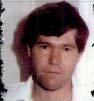
Jon Scott Dunkle
Serial killer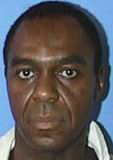 Carl Eugene Watts
Serial killer · USA · 1974
Carl Eugene Watts (born November 7, 1953; died September 21, 2007), also known…
100 victims
Carl Eugene Watts
Serial killer · USA · 1974
Carl Eugene Watts (born November 7, 1953; died September 21, 2007), also known…
100 victims
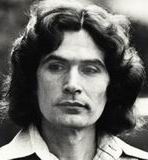 Rodney Alcala
Serial killer · USA · 1977
Rodney James Alcala (born August 23, 1943) was also known as Rodrigo Jacques Al…
100 victims
Rodney Alcala
Serial killer · USA · 1977
Rodney James Alcala (born August 23, 1943) was also known as Rodrigo Jacques Al…
100 victims
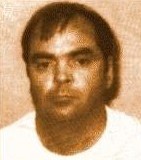 Donald Leroy Evans
Serial killer · USA · 1975
Donald Leroy Evans (born July 5, 1957) was an American serial killer who murder…
60 victims
Donald Leroy Evans
Serial killer · USA · 1975
Donald Leroy Evans (born July 5, 1957) was an American serial killer who murder…
60 victims
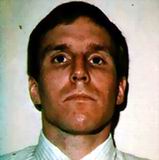 Michael Swango
Serial killer · USA · 1981
Michael Swango (Joseph Michael Swango) was a physician and American serial kill…
60 victims
Michael Swango
Serial killer · USA · 1981
Michael Swango (Joseph Michael Swango) was a physician and American serial kill…
60 victims
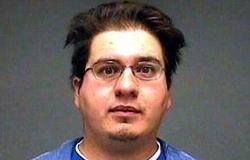 Efren Saldivar
Serial killer · USA · 1989
Efren Saldivar (born 30 September 1969) was an American serial killer who murde…
50 victims
Efren Saldivar
Serial killer · USA · 1989
Efren Saldivar (born 30 September 1969) was an American serial killer who murde…
50 victims
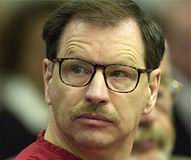 Gary Ridgway
Serial killer · USA · 1982
Gary Leon Ridgway Ridgway was born 18-February-1949 in Salt Lake City, UT. He w…
49 victims
Gary Ridgway
Serial killer · USA · 1982
Gary Leon Ridgway Ridgway was born 18-February-1949 in Salt Lake City, UT. He w…
49 victims
 Florence Bravo
Murderer? · United Kingdom · 1876
Florence Bravo was a Victorian heiress and young widow at 26. She met and marri…
1 victim
Florence Bravo
Murderer? · United Kingdom · 1876
Florence Bravo was a Victorian heiress and young widow at 26. She met and marri…
1 victim
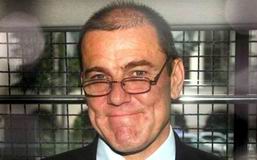 Michael McCrea
Murderer · Singapore · 2002
Michael McCrea was sentenced to 24 years imprisonment on June 29, 2006. · 2 Jan…
2 victims
Michael McCrea
Murderer · Singapore · 2002
Michael McCrea was sentenced to 24 years imprisonment on June 29, 2006. · 2 Jan…
2 victims
 Marie-Thérèse Kouao
Murderer · United Kingdom · 2000
Marie-Thérèse Kouao Victoria Climbié was born on 2 November 1991 in a small Afr…
1 victim
Marie-Thérèse Kouao
Murderer · United Kingdom · 2000
Marie-Thérèse Kouao Victoria Climbié was born on 2 November 1991 in a small Afr…
1 victim
 Lucien Carr
Homicide · USA · 1944
Lucien Carr (March 1, 1925 – January 28, 2005) was a key figure in the Beat gen…
1 victim
Lucien Carr
Homicide · USA · 1944
Lucien Carr (March 1, 1925 – January 28, 2005) was a key figure in the Beat gen…
1 victim
 Vladislav Volkovich
Serial killer · Ukraine · 1991
The Nighttime Killers (Ночной Серийник) were responsible for a string of brutal…
16 victims
Vladislav Volkovich
Serial killer · Ukraine · 1991
The Nighttime Killers (Ночной Серийник) were responsible for a string of brutal…
16 victims
 Kenneth Bartley
Homicide · USA · 2005
Defendant: Kenneth Bartley Jr., 15-year-old student (also referred to as Kennet…
1 victim
Kenneth Bartley
Homicide · USA · 2005
Defendant: Kenneth Bartley Jr., 15-year-old student (also referred to as Kennet…
1 victim
- Gender
- male
- Country
- USA
- Location
- San Mateo/ Sacramento Counties, California, USA
- Date of birth
- 1961
- Age at first offence
- 20
- Characteristics
- mentally ill, thrill killer, homosexual rapist, pedophile
- Victim profile
- John Davies, 15 / Lance Turner, 12 / Sean Dannehl, 12
- Method of murder
- Stabbing with knife
- Date(s) of murder
- 1981 / 1984 / 1985
- Years active
- 1981–1985
- Date of arrest
- October 3, 1986
- Status
-
Sentenced to death
Sentenced to death on February 7, 1990
Case record: Jon Scott Dunkle
Background
Jon Scott Dunkle was a close friend of the Davies family, who lived in Belmont. He often visited the Davies residence and spent time with 17-year-old Mark Davies and his 15-year-old brother John. He frequently visited the Davies sons’ home, where they would often sit in his car listening to music.
The offence
Disappearance of John Davies
In November 1981, Dunkle was a close friend of the Davies family. On the morning of Sunday, November 8, 1981, James Davies called the police to report his son John missing. James and his wife, Joan, had returned home around 1:30 a.m. and had noticed nothing amiss. Joan found John missing when she opened his bedroom door sometime after 8:30 a.m. John had laid out his church clothes and had left behind all his possessions, including his only pair of shoes. John usually informed his parents of his whereabouts and, according to them, was not the sort of child who would be expected to run away.
James and Joan Davies unsuccessfully made extensive efforts to locate John for several years after he disappeared. Soon after the disappearance, James Davies called Dunkle to come over and help post flyers describing John. Dunkle came over on the Wednesday or Thursday after the Sunday John was reported missing and left with some flyers. He never visited the Davies family again.
Mark Davies testified that before John disappeared, Dunkle would come by the Davies residence in his white Honda automobile. If he came to visit in the evening, he would throw rocks at Mark’s window so Mark could sneak out of the house without his parents’ knowledge. Mark last saw his brother John on Saturday, November 7, about 10:30 p.m., when Mark went to bed. Mark never heard from Dunkle after John’s disappearance.
Murder of Lance Turner
On October 2, 1984, about 7:00 p.m., Belmont resident Margaret Turner called the police to report her 12-year-old son, Lance, missing from soccer practice.
That day, Timothy O’Brien drove his two sons and Lance to soccer practice at the fields behind Ralston Intermediate School. O’Brien began coaching his team and did not see Lance again. Later, when the practice ended, O’Brien asked Lance’s coach, Ray Williamson, where Lance was. Williamson told him Lance was not at practice that day. Several boys reported seeing Lance head toward Waterdog Lake, three-eighths of a mile from the soccer field.
A search followed. William Russell arrived at 6:00 p.m. to pick up his son from soccer practice and, after taking his son home, joined the search for Lance. About 8:20 p.m., Russell shined a flashlight onto bushes in a gully off the path to Waterdog Lake and saw feet sticking out of the bushes. Lance’s body was found under overgrown brush.
Pathologist Peter Benson, M.D., testified Lance died from blood loss due to multiple stab wounds. Two wounds to the heart were each fatal, and two other wounds to the lungs were potentially life threatening. There were numerous defensive wounds to the arms and hands, as well as scratches, scrapes and bruises.
Stephanie Olson, Kendra Durham, and Nicole Guthrie, students at Ralston Intermediate School at the time, testified that about 3:00 p.m. on October 2, they left school, skipping volleyball practice, and went down to Waterdog Lake to smoke cigarettes. A man with dirty blond hair, pimples, and dirty teeth with a retainer approached them and started a conversation. He told them his name was Jon and said he had graduated from Carlmont High School the year before. He was drinking beer from a tall Budweiser can, which he offered to the girls. The girls left after about 20 minutes.
Another Ralston student saw a man with dirty blond hair near Waterdog Lake about 4:00 p.m.
None of these witnesses was asked to identify Dunkle in the courtroom. Olson, Durham and Guthrie gave the police a description of the man that was incorporated into a composite drawing used in the investigation of the Turner homicide.
Murder of John Davies
Dunkle confessed to the murder of John Davies.
In his confession, Dunkle stated that before killing John Davies, he was at Half Moon Bay with three friends, drinking whisky and smoking marijuana. He then drove to the Davies residence, parked a few doors down the street, and entered through an unlocked door. He went to John’s bedroom and invited him to come and drink beer. John agreed and went with Dunkle to Edgewood Park in Redwood City near the Crystal Springs Reservoir. John was wearing a black T-shirt, blue corduroy pants and no socks or shoes. Dunkle parked near a shooting range and, before leaving the car, removed a knife from the glove compartment. At that point, he “committed” himself to killing John. They walked half a mile to two miles down a dirt road.
Dunkle stated he stabbed John in the back, sat on his chest and stabbed him in the throat. When John struggled, Dunkle picked up a large rock and struck him in the head. Dunkle then dragged the body to an opening in the ground, pushed it in and left the scene, later disposing of his bloodstained clothing. He stated that a week after the murder, he returned to the area and observed that the body was bloated and animals were feeding on it. In May 1984, he returned again and observed a skull.
Regarding motive, Dunkle stated that when he drank beer and smoked marijuana he became aggressive. He also noted that John used to cause a computer monitor to flash irritating statements that Dunkle would observe, and this angered him.
He drew a map for investigators illustrating the location of John’s remains. Using a map Dunkle had drawn, Belmont police searched for John Davies’s remains and found items of clothing, bones and a skull.
A forensic pathologist who examined the skull testified it was consistent with that of a young Caucasian male and bore evidence of blunt force trauma that could have been inflicted by a rock. Orthodontist Stan Wolken compared X-rays of his patient, John Davies, with X-rays of the remains, finding similarities between them.
Murder of Sean Dannehl
Around 6:00 p.m. on July 2, 1985, 12-year-old Sean Dannehl went to a friend’s house in Sacramento, riding his bicycle. When he did not return home by 9:00 p.m., his mother called the friend’s house and learned Sean had left around 7:30. His father and mother and her husband searched for him. His body was found six days later at Lower Sunrise Park. A board with a nail in it and a beer can were found at the scene.
An autopsy revealed the cause of death to be two stab wounds to the heart, one penetrating a rib, caused by something thick, pointed and dense, consistent with a marijuana pipe tool. Sean also suffered a perforating wound to the skull consistent with the nail-embedded board. Insect activity in the facial and neck area suggested some type of wound there.
Dunkle was questioned by Sacramento Detective Robert Bell on July 5, 1985. Dunkle said he did not know about the missing boy, but he admitted that on July 2 he was on a bicycle trail at Lower Sunrise Park drinking beer with friends until about 8:30 p.m., when he rode home. He claimed a flat tire prevented him from arriving home before 10:00 p.m. Anton Martinez and Paul Stanley confirmed they were on the bicycle trail with Dunkle that day, drinking beer and smoking marijuana until they parted around sunset.
After Sean’s body was found, Detective Bell contacted Dunkle, who agreed to accompany investigators to the police station. After waiving constitutional rights, Dunkle denied knowing anything about Sean’s murder. Investigators drove Dunkle to his sister’s residence, where he was staying. Dunkle and his sister agreed to a search of the house; no evidence was found. Dunkle later voluntarily returned to the police station to provide hair, blood and saliva samples.
The next day, July 10, 1985, Dunkle showed Detective Bell where on the bicycle trail he had had a flat tire and where he and his friends had met to drink beer. Dunkle also assisted investigators in searching for his missing marijuana pipe tool, accompanying them to several smoke shops and finding one tool he said resembled the one he had lost.
On July 15, 1985, Dunkle telephoned Detective Bell to tell him Paul Stanley’s blood might be found on his (Dunkle’s) bicycle because Stanley had fallen and might have bled on it.
On September 28, 1986, Department of Corrections Sergeant Michael Wiley took Charles Rice’s report of Dunkle’s confessions. On that date, Wiley overheard Dunkle describe to Rice, who was wearing a wireless microphone, the murders of Lance Turner, John Davies and Sean Dannehl. On October 3, 1986, following Dunkle’s agreement to confess to the FBI, FBI Special Agents Frank Hickey and Daniel Payne asked Dunkle about the Dannehl murder, and Charles Rice was also present.
Dunkle stated that on July 2, 1985, he left his home at 11:30 a.m. and rode his bicycle to the American River Park, where he met an acquaintance, Anton. They bought some beer and went to Anton’s house, where another friend met them. The three rode their bicycles back to the park and smoked marijuana and continued to drink beer. Dunkle drank four tall beers and three 12-ounce cans of beer. About 8:30 p.m. they parted, and Dunkle rode his bicycle to a vista point.
He saw Sean Dannehl riding his bicycle towards Sunrise Boulevard, commenting to Agent Hickey, “I knew right then I was going to stop him and kill him.” He chased after Sean, ramming Sean’s bicycle with his own. When Sean fell off his bicycle, Dunkle grabbed his arm and led him to a large tree. Sean cooperated, causing Dunkle to want to humiliate him, over Sean’s pleas that Dunkle not hurt him.
Dunkle forced Sean to take off his clothes and put them in a pile. A two-by-four lay in the area; Dunkle put it over Sean’s eyes as he lay on his back. Dunkle was carrying an electrician’s instrument with a pick, which he thrust into Sean’s chest, near his heart. After Sean protested that Dunkle had promised not to hurt him, Dunkle put a hand over his mouth and stabbed him again, causing the blade of the instrument to separate from the handle.
Dunkle retrieved the blade, screwed it back into the handle and stabbed Sean in the eyes. He then rode his bicycle home, removing the handle from the pick along the way and discarding the pieces separately. At home, Dunkle washed his clothes and buried his bloody socks in a flowerbed near a library three blocks from his house. He signed a written statement incorporating his confession, drew a map of the crime scene, and gave investigators a sketch of his pick tool.
Investigation
Early investigation into John Davies
Belmont Police Detective Jerrold Whaley contacted Dunkle in mid-1982, and Dunkle told him where John Davies liked to hang out. Because the Davies family reported that Dunkle was John’s closest friend, Whaley contacted Dunkle often. By September 1984, police treated the disappearance as a possible kidnapping and contacted the Federal Bureau of Investigation (FBI) for assistance.
Interviews of Dunkle about John Davies and the Turner homicide
On December 4, 1984, Whaley and FBI Agent Robert Deklinski twice interviewed Dunkle at his residence near Sacramento.
In the first interview, Dunkle denied seeing John on Saturday, November 7, 1981, claiming he did not leave his parents’ home that evening. He denied throwing rocks to summon Mark or John and denied sitting in his car listening to music with John.
In the second interview, Whaley and Deklinski probed discrepancies between the Davies family members’ and Dunkle’s accounts. Dunkle was emphatic that he had neither thrown rocks at the boys’ bedroom windows nor listened to music with John in his car. Dunkle also denied that he had ever traveled with John to a hangout he called the “morgue,” evidently the Hassler Hospital grounds.
Interview on December 27, 1984 about the Turner homicide
On December 27, 1984, Belmont Police Detective Sergeant James Goulart interviewed Dunkle concerning the Turner homicide. Dunkle was by then the only suspect in the crime.
Goulart advised Dunkle of his constitutional rights, and Dunkle agreed to speak with Goulart. Dunkle denied having been at Waterdog Lake on October 2, 1984, claiming he had been at home until noon and then had gone to stores in Redwood City to fill out employment applications, returning home by bus at 4:30 p.m. Later police contacts with those businesses turned up no such applications.
Undercover work by Lisa Thomas
In January 1985, Belmont Police Officer Lisa Thomas began working undercover at the Sacramento Carl’s Jr. restaurant where Dunkle was employed in an effort to gather information about the Turner homicide. She encountered Dunkle several days a week, regularly visited him at his sister’s house, where he was residing, and sometimes went to a bar or movie with him.
Dunkle often spoke with Thomas about newspaper reports on the investigations, at one point showing her a collection of clippings. On February 9, 1985, Dunkle told Thomas that the police and the FBI had been in his home for five hours, confronting him, and that he had lied to them. Thomas understood Dunkle maintained innocence, claiming on the day Turner was killed he had gone to Redwood City to fill out job applications. Dunkle seemed impressed with attention from the FBI.
Interaction with the Davies family in 1986
In May 1986, James and Joan Davies met with Dunkle for several hours seeking information about John. Dunkle said he had none. Joan Davies met with him again in July 1986, and he continued to insist he had no information.
Cellmate statement by Charles Rice and map evidence
On September 16, 1986, Charles Rice told Michael Wiley, a law enforcement investigator for the State of California, that Dunkle had admitted to killing John Davies and Lance Turner. During the penalty phase, the jury was informed that Rice was Dunkle’s cellmate at the state prison in San Luis Obispo on that date, when Dunkle was incarcerated on a burglary conviction arising out of an incident discussed in connection with a related appellate contention.
Wiley testified that Rice voluntarily made a statement, asking nothing in return, and insisted on trying to obtain further information from Dunkle because he was appalled by the killings.
On September 22, 1986, Rice gave investigators two maps drawn by Dunkle of the crime scenes.
A week later, Dunkle met with Rice, who was wearing a wireless transmitter, and described the Davies and Turner murders in graphic detail. Dunkle refused to report the crimes to Belmont police because he did not trust them. Rice told Dunkle he had a friend who was an FBI agent and would help Dunkle if he confessed to him. Prison officials arranged for an FBI agent to take the confession.
Confession interview by FBI agents on October 3, 1986
On October 3, 1986, FBI Special Agents Frank Hickey and Daniel Payne interviewed Dunkle at the state prison in San Luis Obispo. Rice was also present. Dunkle was advised of constitutional rights and signed a waiver.
Dunkle described killing John Davies as set out in the confession. He also gave details of the murder of Lance Turner as set out below.
Evidence recovery for the John Davies and Lance Turner murders
Using a map Dunkle drew, Belmont police searched for John Davies’s remains and found items of clothing, bones and a skull. A forensic pathologist testified the skull was consistent with a young Caucasian male and bore evidence of blunt force trauma that could have been inflicted by a rock. Orthodontist Stan Wolken compared X-rays of John Davies with X-rays of the remains and found similarities.
On October 6, 1984, Dunkle led investigators into a field near a Carmichael residence and pointed out shrubbery where he had discarded the knife used to kill Lance Turner. With the help of a metal detector, investigators found a folding Puma brand knife.
Arrest
The text did not include a distinct arrest event separate from the investigations and later proceedings described.
Trial
Prosecution case in aggravation: attempted murders and additional evidence in the penalty phase
During the penalty phase, the prosecution introduced evidence that Dunkle had attempted, in separate incidents, to kill Steve Murphy and Monte Hansen, and had murdered Sean Dannehl.
The prosecution also presented evidence of Dunkle’s threat to kill jail nurse Angela Beck and his burglary of the home of Richard Rennie.
Attempted murder of Steve Murphy
On November 5, 1982, 16-year-old Steve Murphy attended a party at a friend’s house in San Mateo. Leaving the party around 11:30 p.m., he walked another friend home. Steve Murphy walked toward his own residence, 15 to 20 houses away, when he lost consciousness.
Murphy awoke after daylight the next morning near a large dirt area surrounded by trees. He fell unconscious again and next woke up in a hospital, discovering that his spleen and a kidney had been surgically removed. He spent the next three weeks in the hospital with broken ribs and a broken pelvis. His injuries caused him to miss several months of school.
In October 1986, after obtaining a waiver of constitutional rights, San Mateo Police Officer Joseph Farmer spoke with Dunkle about the assault on Murphy. Dunkle admitted he had been drinking alcohol on the beach before driving his car up the hill on 42d Avenue in San Mateo. He saw someone walking on 42d Avenue and made two or three right turns to encounter the person again. He deliberately ran over the person, put him in the back of his car, and drove him to an isolated area in Belmont at the Marburger turnaround. He took the person out of the car and laid him on the roadway. Dunkle referred to the person as “Steve Murphy,” but did not explain how he had learned the victim’s name.
Attempted murder of Monte Hansen
In 1982, Monte Hansen, then 16 years old, often went out drinking with Dunkle. On New Year’s Eve that year, Hansen invited Dunkle to come to his house, as his parents were out. Dunkle arrived shortly before midnight, apparently under the influence of alcohol, and told Hansen he felt dizzy.
Hansen told Dunkle to drink some water and went out into the backyard to smoke a cigarette. There, he turned to observe Dunkle approaching him with a two-by-four-inch board studded with nails in his raised hand. Dunkle struck at Hansen with the board. One blow hit him in the head, but Hansen blocked the rest of the blows with his forearm.
Hansen saw Dunkle smiling as he attacked him. Dunkle then reentered the house and Hansen saw Dunkle put a knife back in a kitchen cabinet. Hansen screamed at Dunkle to get out and told Dunkle he would kill him if he harmed his little brother, who was asleep in a bedroom. Dunkle ran toward his car and Hansen never saw him again.
On February 28, 1985, undercover officer Lisa Thomas told Dunkle a false story about her involvement in a hit-and-run accident. Dunkle then told Thomas how he had run over Steve Murphy and assaulted Monte Hansen; a recording of the conversation was played for the jury.
Murder of Sean Dannehl
The penalty phase also included evidence of Dunkle’s murder of Sean Dannehl, including the confession described in the investigation and offence sections.
Sentencing
Jury verdict and death sentence
A trial judge and prison psychiatrists concluded Dunkle was mentally ill. A jury convicted Dunkle of two counts of first-degree murder on Dec. 6, 1989, and the jury confirmed a death sentence following that conviction. Dunkle was sentenced to death on February 7, 1990.
An extra life sentence was added after Dunkle pleaded guilty to fatally stabbing Dannehl.
Additional sentence for Sean Dannehl
Dunkle pleaded guilty to the 1985 first-degree stabbing murder of 12-year-old Sean Dannehl in Sacramento County and was sentenced to life in prison without the possibility of parole.
Appeals
Supreme Court of California upholding death sentence
The California Supreme Court upheld Dunkle’s death sentence. It affirmed the death sentence in a unanimous 104-page ruling, rejecting all of Dunkle’s legal challenges, including the argument that he should never have been found mentally competent to stand trial in the first place.
The Supreme Court stated there was sufficient expert evidence presented at the time to suggest Dunkle could understand the proceedings.
The Supreme Court’s ruling dealt solely with whether Dunkle’s rights were violated at the 1990 trial in which a San Mateo County jury concluded he deserved to die.
Mental competency findings and guardian appointment
During proceedings before and after trial, Dunkle’s mental competency to assist counsel was addressed.
San Mateo County Superior Court Judge Judith Whitmer Kozloski refused to declare Dunkle incompetent at trial, but later found Dunkle mentally incompetent to assist his defense counsel for post-conviction purposes, and the California Supreme Court appointed a legal guardian for Dunkle.
On the advice of the Superior Court judge, the California Supreme Court appointed a legal guardian. The appointment was unprecedented in California. Conrad Petermann was named as Dunkle’s guardian, and the appointment was intended to allow access to Dunkle’s medical and school records by his defense lawyers without his consent and to make serious legal decisions.
The California Supreme Court appointed the guardian after hearing testimony that Dunkle suffered from schizophrenia with symptoms of agitation, delusional behavior, grandiose ideas, looseness of association and disorganized thinking.
The text included direct statements attributed to Judge Kozloski:
“We think we have the craziest client on the row,”
and also quoted Kozloski at a hearing:
“I have to say that I would like to find Mr. Dunkle competent, because I think what he did is so horrible that he should suffer whatever consequences have been meted out to him ... but I honestly cannot say that I think he is competent.”
Deputy Attorney General Rene Chacon was quoted:
“In California, you can't execute a mentally incompetent person, and the guy cycles back and forth, so I don't know.”
The text stated that the California Department of Corrections had been giving Dunkle antipsychotic medication against his will since 1996.
The text also included statements attributed to Dunkle:
“I wasn't getting along with the computer inside me.”
and:
“the computers, they are getting arrested. The technicians, they are making people smaller. Five inches tall. The CIA is doing it.”
The record also stated that during an earlier competency hearing in 1999, Judge Kozloski stated:
“I see a qualitative difference between his 1989 ability,”
The text stated that the jury found Dunkle mentally competent at the time of trial and that his sanity had been an issue since his arrest in 1986 for the Peninsula murders of 15-year-old John Davies and 12-year-old Lance Turner, and that Dunkle eventually confessed to killing Davies in 1981, Turner in 1984, and a 12-year-old boy in Sacramento in 1985.
It further stated that Dunkle was found mentally incompetent to stand trial in Sacramento in March 1993 and was committed to Atascadero State Hospital, and that a judge later decided he was sane enough to plead guilty while under medication.
Outcome
The record also indicated that his appeals continued despite his mental condition on death row.
Aftermath
Media and ongoing legal process
The text stated that the California Supreme Court’s ruling was only the first stage in Dunkle’s long appellate process likely to continue through state and federal courts.
It also stated that if Dunkle lost his appeals, he might escape execution if his lawyers could show he did not understand that he would be put to death and the reasons for it.
U.S. Supreme Court and state legislative context described in the text
The text stated that the U.S. Supreme Court ruled in 1986 that it was cruel and unusual to execute a prisoner who was insane, and in 2002 it was unconstitutionally cruel to execute murderers deemed retarded, while leaving the definition of retardation to individual states. It stated that last year the state Legislature banned executions of the mentally insane and incompetent but did not set a specific IQ level. It also stated that in other states retardation had been generally defined at 70 or below.
Jailhouse and prosecution statements in the text
The text stated that at trial District Attorney Jim Fox acknowledged that Dunkle was not even at average mental capacity, and that Chief Deputy District Attorney Steve Wagstaffe said “I believe it was borderline retardation,” quoted as recalled.
It also included quoted statements attributed to other individuals about the legal significance of the guardian appointment, including:
“It's the only time we know of that it's happened,”
and:
“I believe that's true in California. I have never seen it, with but one exception in which a federal court granted a 'next friend' motion based on a conclusion that there was some question on the competence of the inmate.”
It also included quotes attributed to John Philipsborn and Dane Gillette:
“There's been a question about whether courts should be concerned about whether someone is competent to assist counsel during the years of appeals and habeas corpus [representation],”
“I don't anticipate a flood of similar grants,”
and:
“That may affect whether the inmate can eventually be executed.”
Other details
Confession about murder method in the Davies case (psychologist/psychiatrist interview)
In October 1986, two occasions in October 1986 for 45 minutes and five hours respectively, Psychiatrist James Missett met with Dunkle at the request of the district attorney’s office. Dr. Missett read Dunkle constitutional rights at the outset of each interview and Dunkle waived them.
Dunkle described having an interest in reading newspaper accounts of killings when he was in elementary school. He stopped in fifth grade because “homicides weren't part of my everyday scene.” In sixth grade, he became aware that he wanted to kill someone after watching a movie in which an older boy was about to kill a younger boy to prevent the younger boy from disclosing a diary containing references to other murders.
He said about the Davies murder:
“I thought to myself[,] you have got someone out in the middle of nowhere, here is your chance to kill someone. You have thought of killing someone before.”
Dunkle told Dr. Missett that he initially stabbed Davies, then pinned Davies down with his knees on his shoulders and, when Davies asked what he planned to do, Dunkle said he was going to kill him. Dunkle told Davies to scream all he wanted before stabbing him in the throat and strangling him with his hands. Dunkle said he stopped to think whether he wanted to go through with it before he picked up a rock and hit Davies three times on the right side of the head.
Confession about Lance Turner murder method in the FBI interview
Dunkle stated that on October 2, 1984, he was moving from Belmont to another part of the state. On that day, he bought a six-pack of beer and went to the park near Waterdog Lake to drink it. After about three hours at the lake, at 2:30 p.m., he went to an area near Ralston School.
He climbed a tree known as the “smokers’ tree” and used his buck-type hunting knife to stab at it. Three junior-high-school-age girls came to the tree looking for a pack of cigarettes and dug up a matchbook with a distinctive inscription. The girls shared Dunkle’s last beer and one of them offered him a marijuana cigarette.
At one point Dunkle saw a boy wearing athletic clothes run down the hill. After the girls left, Dunkle stayed another five minutes. Then as he headed back toward the dock, he saw the boy jogging in the area. Dunkle asked the boy the time. The boy responded that it was 3:50, and turned away. Dunkle stabbed him in the side with his hunting knife.
The boy struggled as Dunkle stabbed him a second time, then went down to the ground and complied with Dunkle’s command to put his leg down. During the struggle, the boy bit Dunkle so severely on the thumb that he later lost the nail. Dunkle stabbed him again in the throat, and yet a fourth time near the heart. The boy appeared dead.
Dunkle moved the body under some low bushes and went home. He later disposed of the knife and sheath in separate places and discarded his shoes out of concern that their prints could be identified. Dunkle correctly described a birthmark on the side of the boy’s neck.
Evidence timeline elements included in the narrative
- Dunkle led investigators on October 6, 1984 to where he discarded the knife used to kill Lance Turner.
- Investigators found a folding Puma brand knife with the help of a metal detector.
- Dunkle’s confessions to FBI agents were made on October 3, 1986.
- Psychiatrist James Missett interviewed Dunkle on two occasions in October 1986.
- On September 28, 1986, Wiley overheard Dunkle describe the murders to Charles Rice, who was wearing a wireless microphone.
- On September 22, 1986, Charles Rice gave investigators maps drawn by Dunkle.
Statements attributed to persons in the text
District Attorney Jim Fox acknowledged Dunkle was not even at average mental capacity; Chief Deputy District Attorney Steve Wagstaffe said: “I believe it was borderline retardation,” he recalled.
Michael B. Dashjian was quoted:
Conrad Petermann was quoted:
Gillette was quoted:
John Philipsborn was quoted:
and:
“And this one-page order signals, at least in California, the court does have concerns for post-conviction competence issues.”
San Francisco Supervising Deputy Attorney General Rene Chacon wrote:
“The role of defense counsel in a capital appeal is different from that of a guardian ad litem,”
and:
“And we think that blurring (or combining) those roles, rather than identifying and securing the services of a surrogate acting on behalf of the client vis-à-vis all matters (including his relationship with counsel) is inadvisable.”
Dane Gillette was quoted:
Attempts by Ron Cross to obtain evidence and letters
In an effort to get Dunkle to confess, undercover narcotics officer Ronald Goesch, posing as “Ron Cross,” left a letter at Dunkle’s house on August 19, 1985. The letter advised that “Cross” lived near the river, the police were pressuring him, and he knew what Dunkle had done and would be communicating again.
Dunkle gave the letter to Detective Bell. Goesch left another letter and called Dunkle four days later, asking to meet. Goesch said he knew about “the board” and “other stuff,” and wanted money or he would go to the police and give evidence, adding that he needed the money to avoid his own arrest. Dunkle did not respond and did not appear at the time Goesch requested.
After investigators questioned Dunkle about the “Ron Cross” information, Dunkle telephoned Detective Bell upset at the course of the investigation. During the conversation, Dunkle asked hypothetically what might happen if he confessed. He also asked hypothetically if he were at the scene, saw the victim screaming and took no action to save him, whether his inaction would get him in trouble.
Steve Murphy and Monte Hansen prior relationships
The record stated that Steve Murphy was assaulted on November 5, 1982, and that Monte Hansen often went out drinking with Dunkle in 1982, including New Year’s Eve when Monte invited Dunkle to his house.
Places mentioned in the case narrative
Belmont, Half Moon Bay, Sacramento, San Luis Obispo, San Mateo, Redwood City, Edgewood Park, Crystal Springs Reservoir, Ralston Intermediate School, Waterdog Lake, Marburger turnaround in Belmont, Carl’s Jr. restaurant in Sacramento, Dunkle’s sister’s house, San Quentin, Atascadero State Hospital, Lower Sunrise Park, American River Park, Sunrise Boulevard, Carmichael residence field, and Peninsula community were mentioned in the case narrative.
Spotted an error, or have more information about this case?