
Nathan Dunlap
Mass murderer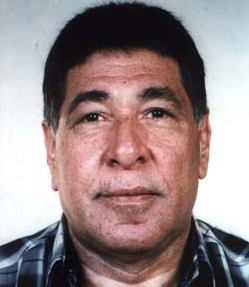 Gameel Al-Batouti
Mass murderer · USA · 1999
Gameel Al-Batouti (also rendered “Gamil ElBatouty” or “El Batouty” in U.S. offi…
216 victims
Gameel Al-Batouti
Mass murderer · USA · 1999
Gameel Al-Batouti (also rendered “Gamil ElBatouty” or “El Batouty” in U.S. offi…
216 victims
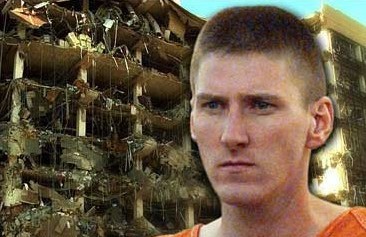 Timothy McVeigh
Mass murderer · USA · 1995
Timothy James McVeigh (April 23, 1968 – June 11, 2001) was a United States Army…
168 victims
Timothy McVeigh
Mass murderer · USA · 1995
Timothy James McVeigh (April 23, 1968 – June 11, 2001) was a United States Army…
168 victims
 Julio Gonzalez
Mass murderer · USA · 1990
Julio Gonzalez was sentenced to 174 twenty-five-year sentences (a total of 4,35…
87 victims
Julio Gonzalez
Mass murderer · USA · 1990
Julio Gonzalez was sentenced to 174 twenty-five-year sentences (a total of 4,35…
87 victims
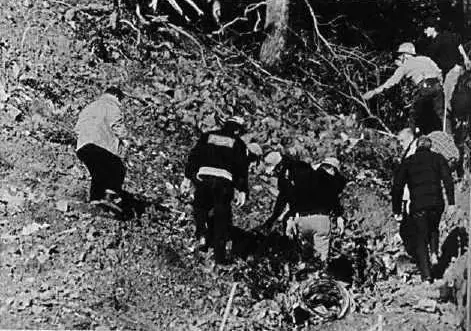 David Burke
Mass murderer · USA · 1987
David Augustus Burke (May 18, 1952–December 7, 1987) was an employee of USAir,…
43 victims
David Burke
Mass murderer · USA · 1987
David Augustus Burke (May 18, 1952–December 7, 1987) was an employee of USAir,…
43 victims
 George Jo Hennard
Mass murderer · USA · 1991
George Jo Hennard carried out a mass killing at a Luby’s Cafeteria in Killeen,…
23 victims
George Jo Hennard
Mass murderer · USA · 1991
George Jo Hennard carried out a mass killing at a Luby’s Cafeteria in Killeen,…
23 victims
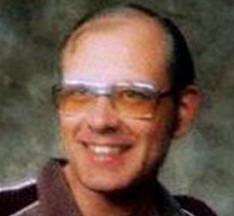 James Huberty
Mass murderer · USA · 1984
James Oliver Huberty was a 41-year-old unemployed security guard. He was born i…
21 victims
James Huberty
Mass murderer · USA · 1984
James Oliver Huberty was a 41-year-old unemployed security guard. He was born i…
21 victims
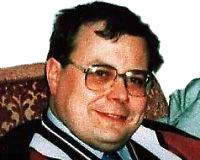 Roger Severs
Murderer · United Kingdom · 1993
Roger Severs was sentenced to two life sentences in prison on December 6, 1994.…
2 victims
Roger Severs
Murderer · United Kingdom · 1993
Roger Severs was sentenced to two life sentences in prison on December 6, 1994.…
2 victims
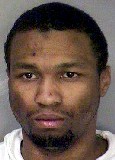 Shannon Johnson
Murderer · USA · 2006
Shannon Johnson (Black male) was executed by lethal injection in Delaware on Ap…
1 victim
Shannon Johnson
Murderer · USA · 2006
Shannon Johnson (Black male) was executed by lethal injection in Delaware on Ap…
1 victim
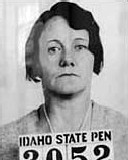 Lydia Trueblood
Murderer · USA · 1915
Lydia Trueblood was born in 1915. She was convicted in Idaho in 1921 and died o…
6 victims
Lydia Trueblood
Murderer · USA · 1915
Lydia Trueblood was born in 1915. She was convicted in Idaho in 1921 and died o…
6 victims
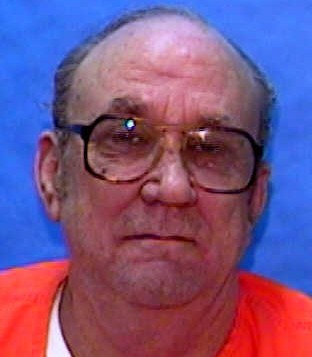 Eddie Lee Sexton
Murderer · USA · 1993
November 2, 1994 — Eddie Lee Sexton was sentenced to death. · 1993 — Eddie Lee…
2 victims
Eddie Lee Sexton
Murderer · USA · 1993
November 2, 1994 — Eddie Lee Sexton was sentenced to death. · 1993 — Eddie Lee…
2 victims
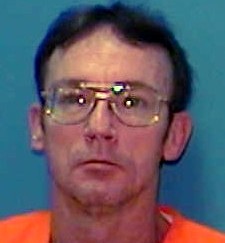 Norman Mearle Grim
Murderer · USA · 1998
Norman Mearle Grim was indicted in First Judicial Circuit, Santa Rosa County, u…
1 victim
Norman Mearle Grim
Murderer · USA · 1998
Norman Mearle Grim was indicted in First Judicial Circuit, Santa Rosa County, u…
1 victim
- Gender
- male
- Country
- USA
- Location
- Aurora, Adams County, Colorado, USA
- Date of birth
- 1974
- Age at first offence
- 19
- Characteristics
- revenge, robbery
- Victim profile
- R estaurant employees Colleen O'Connor, 17; Benjamin Grant, 17; Sylvia Crowell, 19; and night manager Marge Kohlberg, 50
- Method of murder
- Shooting
- Date(s) of murder
- December 14, 1993
- Years active
- 1993
- Date of arrest
- —
- Status
-
Temporary stay of execution granted; sentence of death remained under appellate review while a U.S. district court judge reviewed Nathan Dunlap’s case
Case overview
Nathan Jerard Dunlap was convicted and sentenced to death in 1996 for the murder of four employees at an Aurora Chuck E. Cheese’s restaurant; he was also convicted of attempted murder and other charges arising from a shooting spree at the same restaurant in December 1993. Four of five victims died, and the survivor identified Dunlap as the killer. The Colorado Supreme Court upheld Dunlap’s conviction and death sentence three times.
Timeline
- December 1993 — Dunlap shot five people at a Chuck E. Cheese restaurant in Aurora; four victims died.
- May 1993 — Dunlap began working as a cook at the Chuck E. Cheese and was fired over whether he would work extra hours.
- December 14, 1993 — The shootings occurred at the Chuck E. Cheese.
- May 17, 1996 — Dunlap was sentenced to death.
- February 26, 1996 — A jury convicted Dunlap after deliberating for three-and-a-half hours.
- 1998 — A division of the Colorado Court of Appeals affirmed Dunlap’s conviction on direct appeal (People v. Dunlap, Colo. App. No. 96CA0329).
- 1999 — The Colorado Supreme Court rejected Dunlap’s first appeal.
- 2001 — The Colorado Supreme Court upheld the death sentence.
- 2002 — The Colorado trial court granted Dunlap’s request for a Crim. P. 35(b) hearing; Dunlap began another appeal in 2002 claiming his representation was inadequate.
- 2004 — Dunlap began another appeal claiming his representation was inadequate.
- 2005 — The Colorado Court of Appeals issued its mandate on remand (November 30, 2005).
- May 14, 2007 — The Colorado Supreme Court rejected Dunlap’s claim that his legal defense was ineffective and ordered the trial court to set a date for his execution.
- 2008 — The U.S. Supreme Court refused to hear the case; later in 2008, Dunlap was reported as still on death row.
- Feb 22, 2008 — A temporary stay of execution was granted while Dunlap’s case was reviewed by a U.S. district court judge.
- April 30, 2009 — The Colorado Court of Appeals reversed a sentence in part, remanded with directions to consider and fix restitution, and otherwise affirmed.
Background
Dunlap was convicted in 1996 for a December 1993 shooting rampage at a Chuck E. Cheese restaurant in Aurora that killed four employees. He was described as having planned to “go to Chuck E. Cheese, kill them all and take the money,” and, on the night of the killings, he entered the restaurant, ordered a sandwich, played a video game, and hid in the restroom until closing.
Dunlap was angry after he was fired from the Chuck E. Cheese over whether he would work extra hours. Earlier that summer, Dunlap told a former co-worker that he planned to “get even.” In a later account of the plan, Dunlap stated: “go to Chuck E. Cheese, kill them all and take the money.”
The offence
Dunlap entered the Chuck E. Cheese restaurant just after closing Tuesday night, when employees were cleaning up. He confronted and shot multiple workers during the rampage.
During the shootings:
- Sylvia Crowell, 19, was shot in the head.
- Ben Grant, 17, was shot and seriously wounded, and he died.
- Colleen O’Connor, 17, was shot and died.
- Margaret Kohlberg, 50, was shot in her office and died.
- Bobby Stevens, also referenced as “Bobby Stevens” and “Bobby Stevens,” survived and later identified Dunlap as the murderer; Stevens had been shot in the kitchen and fled to call the police.
Law enforcement evidence included recovery of a small-caliber semi-automatic handgun.
Investigation and arrest
Police tracked Dunlap down at his girlfriend’s apartment. Dunlap was reported to have been at his girlfriend’s apartment and was contacted based on a message from his mom relaying information from the cops. Investigators also questioned him; the police swabbed his hands for gunshot residue and took his clothes into evidence.
About 12 hours after the murders, police returned to Dunlap’s home and cuffed and arrested him. It was reported that, before returning to his home (an apartment shared with his mother), he washed his hands with hydrogen peroxide and jumped in the shower, then stashed some of the money under the freezer.
Trial
Conviction
A jury convicted Dunlap in 1996. The jury deliberated for three-and-a-half hours after being sequestered in a local hotel. Dunlap received four verdicts of death.
At sentencing-related proceedings, the prosecution presented aggravating factors including:
- a prior felony,
- the fact Dunlap committed a robbery during the killing spree,
- and the fact Dunlap lay in wait in the restroom before the shootings.
Dunlap’s defense did not call any witness and did not present a witness on his behalf. Dunlap wanted to testify, but his attorneys advised him against it.
Quotes attributed in the case
- Prosecutor Peters presented the statement about Dunlap deciding “to ‘go to Chuck E.
- Colleen O’Connor’s plea was quoted verbatim: “Don’t shoot,” she cried. “I won’t tell.”
- Colleen O’Connor’s statement and the shooter’s reply were also quoted verbatim: “I have to,” the shooter said as he pulled the trigger again.
- A statement attributed to defense attorney Forrest Lewis during closing argument was quoted verbatim:
“How can anyone be so cold?” “How can anyone be so cruel?” “What road can anyone go down that could take them to the point where they could make the choices that were made at Chuck E. Cheese? I still don't know.... If you choose to kill my client under the facts of this case, I will respect your decision and you will hear not one word of criticism of you from me.”
- A statement attributed to Dunlap during a three-and-a-half-minute monologue was quoted verbatim:
“Kill me right now. I have [had] enough of this motherfucking shit. You can take me to the motherfucking little chair and do what the fuck you want.”
- A statement attributed to Sylvia’s brother was quoted as a confrontation in court that referenced the murders as racially motivated; it was described without the brother’s exact quote.
Sentencing
Dunlap was sentenced to death in 1996 for the murder of four employees. He received death sentences described as “two death sentences for every life he’d taken.”
Separately from the capital sentencing, later appellate proceedings referenced non-capital kidnapping, aggravated robbery, and theft counts:
- thirty-five years for the class two felony of second degree kidnapping,
- twenty years for the class three felony of second degree kidnapping,
- twenty years for aggravated robbery (consecutive terms),
- and a concurrent six-year term for theft.
Appeals
State appeals
The Colorado Supreme Court upheld Dunlap’s death sentence multiple times. It rejected Dunlap’s claim that his legal defense was ineffective and ordered the trial court to set a date for execution.
A Colorado Court of Appeals decision on April 30, 2009 addressed restitution in sentences and remanded for consideration and fixing of restitution.
U.S. Supreme Court
The U.S. Supreme Court refused to hear Dunlap’s case.
Outcome
A stay of execution was granted: a U.S. district court judge granted a temporary stay while Dunlap’s case was reviewed, and that review could take nearly a year.
Aftermath and later proceedings
Defendant’s complaints and legal issues described
Dunlap claimed he did not get a fair trial because his legal team was ineffective. A later federal public defender was described as being involved in federal proceedings after state appeals were exhausted.
Restitution litigation in later Colorado Court of Appeals
In Colorado Court of Appeals case No. 06CA2403, the appellate court held:
- Dunlap’s sentence was illegal to the extent it did not reflect consideration and fixing of restitution.
- The court remanded with directions to the trial court to consider and fix restitution and amend the mittimus accordingly.
- The court rejected Dunlap’s remaining assertions and held that the illegality of his sentence did not affect the finality of his conviction and the denial of relief on collateral review.
The 2009 decision described the procedural history:
- Dunlap was convicted of noted charges based on a November 1993 robbery of a restaurant.
- The trial court sentenced him to consecutive terms for the two kidnapping convictions and aggravated robbery, and a concurrent six-year term for theft.
- Although the presentence report stated $1,400 in restitution was due, the trial court did not mention restitution when imposing sentence.
- A division affirmed conviction on direct appeal (People v. Dunlap, Colo. App. No. 96CA0329, Feb. 5, 1998).
- In 1999, Dunlap filed a pro se Crim. P. 35(c) motion.
- After an amended motion by appointed counsel, the trial court reduced felony classifications and resentenced in 2001 to ten years of imprisonment on those counts.
- Both parties appealed; the division concluded the trial court erred, remanded to reinstate original convictions and sentences, and amend the mittimus accordingly (People v. Dunlap, 124 P.3d 780).
- The Colorado Supreme Court denied certiorari, and the appellate mandate issued on November 30, 2005.
- After remand, Dunlap asserted that the sentence was illegal due to failure to determine restitution; the trial court declined to revisit the issue, holding it lacked authority under the mandate, and reinstated convictions and sentences nunc pro tunc to the original sentencing date without ruling on restitution.
- On appeal from that determination, the Court of Appeals reversed in part and remanded for restitution-related proceedings.
People involved
Defendant
- Nathan Jerard Dunlap, also referred to as Nathan Dunlap in multiple places; age 33 was stated in connection with a temporary stay.
Victims
- Margaret Kohlberg, 50
- Ben Grant, 17
- Colleen O’Connor, 17
- Sylvia Crowell, 19
Surviving witness
- Bobby Stephens, 22 was referenced as surviving and later identifying Dunlap as the murderer (also referenced as “Bobby Stevens” and “Bobby Stevens, 20” in another account).
Other death row inmate referenced
- Edward Montour Jr., 39 was referenced as the only other prisoner on Colorado’s death row at the time of one account.
Other details
Court and parties named in the 2009 restitution appeal decision
- Colorado Court of Appeals No. 06CA2403
- The People of the State of Colorado, Plaintiff-Appellee v. Nathan Jerard Dunlap, Defendant-Appellant
- Arapahoe County District Court No. 95CR605
- Honorable John P. Leopold, Judge
- Division III Opinion by JUDGE CASEBOLT; Loeb and Criswell*, JJ., concur
- Announced: April 30, 2009
- John W. Suthers, Attorney General; Clemmie Parker Engle, Senior Assistant Attorney General, Denver, Colorado, for Plaintiff-Appellee
- Philip A. Cherner, Denver, Colorado; Michael J. Heher, Captain Cook, Hawaii, for Defendant-Appellant
- *Sitting by assignment of the Chief Justice under provisions of Colo. Const. art. VI, § 5(3), and § 24-51-1105, C.R.S. 2008.
Additional names mentioned in connection with the case
- Phillip Cherner was referenced as Dunlap’s attorney in multiple appeal-related accounts.
- Dan Elliott was referenced as an AP writer in connection with a May 14, 2007 appeal account.
- Nate Strauch was referenced as a spokesman for Attorney General John Suthers in connection with the May 14, 2007 ruling account.
- Attorney General John Suthers was referenced in that account.
Mentions of mental-health-related proceedings in narrative accounts
Dunlap was reported to have been diagnosed with bipolar disorder during his time incarcerated, and the narrative included details about behavior during the wait for trial and later competence to stand trial. A psychiatrist named Rebecca Barkhorn was mentioned in the account regarding what she expected to testify to in the penalty phase, and the account stated she was not called and that she later said complete medical information would have changed her evaluation.

Spotted an error, or have more information about this case?