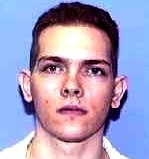
Robert Gene Will
Murderer Russell Ellwood
Murderer · USA · 1991
Russell Ellwood was a former taxi driver. Authorities suspected him of killing…
20 victims
Russell Ellwood
Murderer · USA · 1991
Russell Ellwood was a former taxi driver. Authorities suspected him of killing…
20 victims
 Robert Martines Perez
Murderer · USA · 1994
Name: Robert Martines Perez · Other name used in proceedings: Robert Martinez P…
15 victims
Robert Martines Perez
Murderer · USA · 1994
Name: Robert Martines Perez · Other name used in proceedings: Robert Martinez P…
15 victims
 Billy Frank Vickers
Murderer · USA · 1993
Billy Frank Vickers Vickers was executed by lethal injection in Texas on Januar…
14 victims
Billy Frank Vickers
Murderer · USA · 1993
Billy Frank Vickers Vickers was executed by lethal injection in Texas on Januar…
14 victims
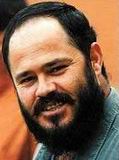 Stewart Wilken
Serial killer · South Africa · 1990
Stewart Wilken was sentenced to seven terms of life imprisonment on February 23…
10 victims
Stewart Wilken
Serial killer · South Africa · 1990
Stewart Wilken was sentenced to seven terms of life imprisonment on February 23…
10 victims
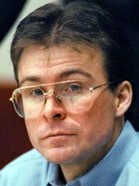 Robert James Acremant
Murderer · USA · 1995
Robert James Acremant was 29 years old when he pleaded guilty last year to aggr…
3 victims
Robert James Acremant
Murderer · USA · 1995
Robert James Acremant was 29 years old when he pleaded guilty last year to aggr…
3 victims
 Dorsie Lee Johnson
Murderer · USA · 1986
Dorsie Lee Johnson, Jr. was convicted in the death of Jack Huddleston, 53, a co…
1 victim
Dorsie Lee Johnson
Murderer · USA · 1986
Dorsie Lee Johnson, Jr. was convicted in the death of Jack Huddleston, 53, a co…
1 victim
 Kelly Gissendaner
Murderer · USA · 1997
Kelly Gissendaner was convicted in 1998 of recruiting her lover to kill her hus…
1 victim
Kelly Gissendaner
Murderer · USA · 1997
Kelly Gissendaner was convicted in 1998 of recruiting her lover to kill her hus…
1 victim
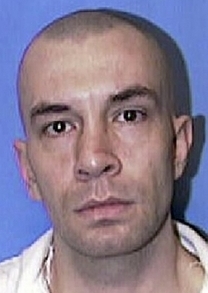 Jonathan Bryant Moore
Murderer · USA · 1995
Jonathan Bryant Moore was convicted of capital murder for shooting San Antonio…
1 victim
Jonathan Bryant Moore
Murderer · USA · 1995
Jonathan Bryant Moore was convicted of capital murder for shooting San Antonio…
1 victim
- Gender
- male
- Country
- USA
- Location
- Harris County, Texas, USA
- Date of birth
- J une 29, 1978
- Age at first offence
- 22
- Characteristics
- rape
- Victim profile
- A male uniformed law-enforcement officer
- Method of murder
- Shooting
- Date(s) of murder
- December 4, 2000
- Years active
- 2000
- Date of arrest
- Same day
- Status
-
Sentenced to death
Sentenced to death on January 28, 2002
Case identification
Robert Gene Will, II (TDCJ Number 999402) was convicted of capital murder and sentenced to death.
Background
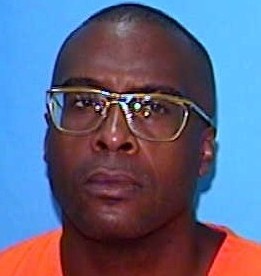
Will was born on 06/29/1978. Will was listed as white and male, with blonde hair. His height was 6 ft 1 in and his weight was 193. His eye color was blue.
Will was described as a laborer from Harris County, Harris, Texas. His prior prison record was none.
Co-defendants were listed as none.
The offence
On 12/04/2000, Will shot and killed a uniformed law-enforcement officer who was attempting to arrest him for burglarizing a car.
The officer’s unfired gun was still in its holster when the officer’s body was found. The officer sustained 10 gunshot wounds: some were in the head, one was in the neck, one was in the right chest near the underarm, and one was on the right wrist. The evidence further indicated that Will fired the fatal shots after incapacitating the officer with at least one nonfatal shot.
During Will’s escape from the scene, he came upon a woman sitting in her car. Will told her to get out, pointed a gun at her, and told her that he had shot a police officer. The woman got out and Will drove away in her car.
Investigation
The police arrested Will later that morning.
Later that afternoon, the police searched the apartment of Will’s girlfriend and found numerous guns and stolen property.
Trial
A jury convicted Will of capital murder.
The trial court sentenced Will to death pursuant to the jury’s answers to the special issues submitted at the punishment phase.
Will raised seventeen points of error in an automatic direct appeal to the Texas Court of Criminal Appeals.
Evidence supporting “future dangerousness”
In point of error five, Will claimed the evidence was legally insufficient to support the jury’s affirmative finding on the “future dangerousness” special issue.
The appellate opinion stated that the evidence showed that early on the morning of December 4, 2000, the 22-year-old Will shot and killed a uniformed law-enforcement officer attempting to arrest him for burglarizing a car, with the officer sustaining 10 gunshot wounds. The slain officer’s unfired gun was still in its holster when the body was found. The opinion also stated that Will fired the fatal shots after incapacitating the officer with at least one nonfatal shot.
The opinion also stated that during Will’s escape, he encountered a woman in her car, told her to get out, pointed a gun at her, told her he had shot a police officer, and then drove away in her car.
The opinion further stated that Will had convictions for evading arrest (a misdemeanor) and unauthorized use of a vehicle (a state jail felony) for which he received community supervision. While on community supervision, Will committed an aggravated robbery for which he was placed on deferred adjudication community supervision. As a condition of community supervision for this aggravated robbery, Will was sent to boot camp for three months, where efforts were made to rehabilitate him. The opinion stated that Will was not a disciplinary problem during the three months at boot camp and that he “complete[d] fully the boot camp experience.”
The opinion stated that Will was still on deferred adjudication community supervision for the aggravated robbery when he murdered the police officer in this case.
The opinion also stated that Will committed three “minor” disciplinary rule violations while incarcerated in the county jail awaiting trial: banging on a door, possession of tobacco, and threatening another inmate.
The opinion stated that Will presented some good character evidence, as well as evidence of his “minimal” involvement in the aggravated robbery offense for which he was on probation when he committed the capital offense. Will presented evidence that a life sentence for this capital offense “stacked” onto the sentence for his aggravated robbery offense would insure that he would spend the rest of his life in prison.
The opinion also described testimony from a criminal-justice professor and a psychiatric expert.
Criminal-justice professor testimony
The opinion stated that a criminal-justice professor testified that murderers and older prisoners are not likely to commit violence in a structured prison environment based on “the internal workings [and policies] of the Texas prison system” and based on “risk assessments or factors that may be considered for determining whether or not someone would commit acts of violence in the future.” The opinion stated that the testimony was also based on “a number of different studies that have looked at what are called actuarial predictions of offending behavior or recidivism and /or offending behavior while in prison.” The opinion stated that on cross-examination, the professor testified that these actuarial studies cannot predict “the specific behavior of a particular person.”
Psychiatric expert testimony
The opinion described testimony from a psychiatric expert who testified that Will’s criminal behavior and inability to make right choices were not his fault because he had an unstable family background described as a “blueprint for developing a criminal.”
The opinion included the following quoted testimony by the psychiatric expert:
Q. We talk often about making the right choices as we become adults and, you know, some people think, despite whatever happened to you when you're younger, you should be able to make good choices as you get older and how does-if it does, I mean, how do these-this type of environment, the environment he grew up in, how does that affect, you know, his ability to make the right choices as he gets older?
A. Well, if he's exposed to these events and these influences that shape his personality at an early age, he does not have the choices that other people have because he doesn't see the world as other people see it and he doesn't see the world as containing the kinds of choices that most of us see.
The opinion stated that on cross-examination, the prosecution pointed out that Will had been evaluated in boot camp as a “limit tester.” The psychiatric expert agreed such a person can be categorized as “manipulative, bright, criminally oriented and greedy.” The opinion stated that the psychiatric expert testified that “[l]eft to his own devices, [appellant] cannot sustain himself in a productive way” because he had no “internal moral compass.”
The opinion stated that the psychiatric expert testified that Will “scored very high in the psychopathic deviate category” describing a person “who is more likely than any other group of people to commit criminal acts” and who is “the least likely to change.”
The opinion included the following quoted exchange:
Q. No. I want to know what it tells you about the defendant, the person.
A. Well, it describes a person who typically does not obey the rules, who has difficulty profiting from past experience, who has difficulty forming long-term attachments and who is more likely than any other group of people to commit criminal acts of-violating the law, in other words.
Q. So, when you evaluate a person and you determine that they're a psychopathic deviate, that they score high in that area, what that's telling you is that is a person who we often call-a person who's unable to conform to society, correct?
A. Right. * * * * * * * * * * * * * * * * * * * * * * Q. And in this case, once again, when we talk about a psychopathetic [sic] deviate, okay, those, as a category, are the kind of people who are the least likely to change. A. Yes, I would say that they're one of the hardest groups to change, yes.
Uniformed officers in the courtroom
In point of error one, Will claimed the trial court erred in allowing an excessive number of uniformed law-enforcement officers in the courtroom close to the jury during trial.
The opinion stated that after jury selection but before trial began, Will informed the trial court of his concerns that the presence of uniformed officers might be of an “intimidating nature” to the jury. The opinion stated that Will did not seek exclusion of officers; instead, he asked the trial court to require any officers attending the trial to wear non-uniform clothes to ensure their presence did not unduly interfere with the jurors’ ability to be fair and impartial. The trial court denied the motion.
The opinion stated that Will renewed this motion twice during the two and one-half week trial. The opinion stated that Will caused the record to reflect 12 uniformed officers sitting closest to the jury after jury selection and before the trial began. The opinion stated that on the third day of trial Will caused the record to reflect what appeared to be 18 uniformed officers in the courtroom. The trial court denied the motion each time. The opinion stated that Will referred to the presence of officers in the courtroom during closing jury arguments.
The opinion included the following quote from counsel’s argument:
No matter how much all of us would like to bring [the slain officer] back, a verdict of death won't do that. Try as we all might to reunite that good father with his best friend, his wife, his confidante, we can't do that. Try as we might to put an 8-year-old daughter and a 20-year-old daughter back with a wonderful father, we won't be able to do that. Unfortunately we can't heal the pain and loss and incomprehensible void that a mother and father feel for the loss of a good man. And try as we might, we look out here, we see all these officers and they're all good officers. Try as we might, they've lost a good friend, a confidante and one of theirs, we can't bring [the slain officer] back.
The opinion stated that Will conceded he could not show actual prejudice or that police uniforms influenced the jury, but argued inherently prejudicial effect by creating an unacceptable risk impermissible factors came into play.
Point of error one was overruled.
September 11 comparisons and jury arguments
In point of error two, Will claimed the trial court should have granted a mistrial in response to prosecutorial argument comparing Will’s offense to the terrorist acts of September 11, 2001. In point of error three, Will claimed his lawyer was ineffective for not objecting to prosecutorial argument calling Will “the embodiment of evil” and comparing him to terrorists.
The opinion stated that the trial court sustained Will’s objection and instructed the jury to disregard prosecution’s jury argument that many people for the first time appreciate the value of the police since the events of 9/11, but denied a motion for mistrial.
The opinion included this verbatim exchange:
(1) [PROSECUTION]: I want to digress a little bit and talk to you about something larger than [appellant] because this is about his guilt and about his punishment, but it has larger ramifications. Every one of us experienced the tragedy of September 11 th and many people for the first time, for the first time appreciated the value of our firefighters and our police- [APPELLANT]: Excuse me, Your Honor. I'm going to object to this as an improper plea for law enforcement. [THE COURT]: Sustained. [APPELLANT]: Ask that the jury be instructed to disregard. [THE COURT]: Jury will disregard. [APPELLANT]: Respectfully move for a mistrial. [THE COURT]: Denied.
The opinion then stated that the prosecution made the following argument to which Will did not object:
[PROSECUTION]: Well, it doesn't go to that, Mr. Cunningham, because it goes to the fact that what really we learned from September 11 th is that evil exists in this world. If we didn't know it before, we know it now. And we know the embodiment of evil came out and has manifested itself in [appellant].
The opinion stated that Will’s failure to complain at trial forfeited any appellate claim that the argument was improper, and that the record was insufficient to support an ineffective assistance claim on direct appeal.
The opinion stated that it did not agree with Will’s characterization that the argument invited the jury to use Will as a scapegoat or suggested he was tied to events of 9/11. The opinion stated the arguments emphasized the value of police officers and suggested that killing a police officer in the lawful discharge of his duties by senselessly shooting him numerous times is “the embodiment of evil,” and that this was proper summation and a reasonable deduction from evidence.
Point of errors two and three were overruled.
Punishment hearing argument about deterrence and impact on “people that [appellant] runs with”
In point of error four, Will claimed ineffective assistance for not objecting to a specific prosecution jury argument at the punishment hearing. The opinion included the argument as follows:
The defense tells you, you know, this is just about [appellant] and he can serve out his life in prison. But think about something. Let's think about the effect that your sentence is going to have on the people that [appellant] runs with, the Rosarios, the Greenlees, these other folks. How tempting is it to them to take a gun with them if they think they might be confronted by the police? There are people who will argue to you that the death penalty is not a deterrent, but you know when you really think about it in one way, the death penalty is the reason we erect lighthouses on rocky, dangerous coasts. Yeah, you're going to hear about the shipwrecks. You're going to hear about the Robert Gene Wills. You're not going to hear about the people who heeded the searchlight and made it to harbor safely. The - there's no deterrent effect. You can't predict a negative event. Here, the record is insufficient to support a conclusion that appellant's lawyer was ineffective for not objecting to this argument.
Point of error four was overruled.
Claims about defining “society” and jury instructions for future dangerousness
In point of error six, Will claimed the failure to define “society” in the future-dangerousness special issue resulted in a sentence of death in violation of his Eighth and Fourteenth Amendment rights. Point of error six was overruled.
In point of error seven, Will claimed the trial court erred in refusing a requested instruction about the burden of proof for extraneous offenses in answering special issues. The opinion addressed Texas law and discussed Ring and Apprendi in relation to burden of proof on aggravating circumstances for death eligibility. Point of error seven was overruled.
In point of error eight, Will claimed the future-dangerousness special issue was unconstitutionally applied because it was not susceptible to proof beyond a reasonable doubt and the jury could not apply the reasonable doubt rule in the context of the punishment question.
The opinion included discussion of juror considerations and escape. The opinion included quoted testimony and objections during cross-examination and redirect:
The opinion included a cross-examination question and responses:
Q. So, your studies began after that?
A. These data were collected after that time frame, yes.
Q. I guess before the escape of the Texas 7?
A. That's correct. The professor testified on redirect examination about changes that have taken place in the prison system in response to the escape of the Texas 7. Q. What changes have taken place?
A. The prison system has increased its security and its concern around escapes, which was what the Texas 7 was about, and if I can-the institutional misconduct of the Texas 7 is included in the data that we're talking about. What they did when they escaped is not. The data we looked at doesn't look at what happens when somebody gets out. So, the conduct of those people while they were incarcerated does fall within the range of the data we have. The Texas 7 were again mentioned during the prosecution's recross-examination of the professor.
Q. [PROSECUTION]: Dr. Longmire, I guess, based on your testimony, you would have been able to tell, I guess the public, the jury that the Texas 7 wouldn't have done what they did when they got out, based on your tables? [APPELLANT]: I object, Your Honor. I never asked him to predict as to this individual or any other inmate. [THE COURT]: Sustained.
Q. [PROSECUTION]: Well, Dr. Longmire, you just stated that you included in this institutional study- [APPELLANT]: I renew my objection, Your Honor. [THE COURT]: Let her finish her question.
Q. [PROSECUTION]: -in this institutional study all the behavior of the Texas 7, correct? A. To the extent that any of them were incarcerated for murder, yes.
Q. [PROSECUTION]: All right. [APPELLANT]: Well, I - hold on, hold on. I'm going to object because they weren't in even for murder, Your Honor. Not all - she's categorizing seven people. If she wants to go through them individually and ask him what applied to his study, this would be different; but they weren't all in for that offense. One was a sexual assault. [THE COURT]: All right. Counsel, why don't you finish asking your question. Let her finish asking her question and then I'll rule. [APPELLANT]: Okay.
Q. [PROSECUTION]: Dr. Longmire, you're the one who just brought up the fact that members of the Texas 7 were included in this study, correct? A. Those who were convicted of murder would have been included in this study, yes.
Q. [PROSECUTION]: I'm assuming based on your familiarity - [APPELLANT]: I'm going to use her objection to relevancy because we haven't been able to go into what the studies show. [THE COURT]: Sustained.
[APPELLANT]: Thank you.
Q. [PROSECUTION]: Well, based on your studies, you were prepared then, I assume, to say that - [APPELLANT]: Object to relevance as to, in their case, Your Honor, how it would apply to this defendant. [THE COURT]: Sustained.
The opinion also included Will’s closing argument statement:
[APPELLANT]: No matter what your verdict is, [appellant] will be punished and punished severely. A life sentence is not a slap on the wrist. No matter what your verdict is here, it ensures that [appellant] will die in prison. It really only decides when he dies and how he dies, whether he dies of natural causes or dies as a result of an execution.
The opinion stated the trial court had no opportunity to remove the basis of the objections raised on appeal because Will did not raise those objections in the trial court, and the claims were procedurally defaulted. The opinion also discussed how the legislative mandate requiring a parole-law jury instruction affected relevance to the future-dangerousness special issue.
Point of error eight was overruled.
Additional constitutional and instruction claims
In point of error nine, Will claimed omission of a burden of proof in the mitigation special issue was unconstitutional in light of Apprendi and Ring. Point of error nine was overruled.
In point of error ten, Will claimed mitigation was unconstitutional because it made meaningful appellate review impossible. Point of error ten was overruled.
In point of error eleven, Will claimed Article 44.251 required appellate review of the jury’s answer to the mitigation special issue. Point of error eleven was overruled.
In point of error twelve, Will claimed the “anti-sympathy” jury instruction at punishment violated the federal constitution. Point of error twelve was overruled.
In point of error thirteen, Will claimed the trial court violated federal constitutional provisions by denying a limiting instruction about proper use of victim impact/character evidence.
The opinion stated the prosecution’s last punishment witness was the victim’s widow, who testified briefly about the impact of his death on the family, covering about 14 pages in the reporter’s record. The opinion stated Will alluded to this evidence during closing jury arguments and the prosecution did not mention it during closing jury arguments.
The opinion stated that at the close of punishment evidence, the trial court overruled objections Will made to the court’s jury charge, including:
- objections that the court failed to instruct the jury that victim character or impact evidence did not meet or relieve the state’s burden to prove the continuing threat issue beyond a reasonable doubt,
- objections that jurors were not to use the victim evidence to make any comparative worth analysis,
- and objections to instructing the jury to disregard victim impact evidence not shown within the knowledge or reasonable expectation of the defendant.
Point of error thirteen was overruled.
In point of error fourteen, Will claimed the trial court erred by denying a request to clarify the scope of the statutory mitigation special issue because it narrowed mitigating evidence to facts reducing moral blameworthiness. Point of error fourteen was overruled.
In point of error fifteen, Will claimed the “12-10 Rule” was unconstitutional. Point of error fifteen was overruled.
In point of error sixteen, Will claimed the trial court erred in denying his request to inform the jury that failure to answer a special issue would result in a life sentence. Point of error sixteen was overruled.
Motion for new trial and juror Martinez testimony
In point of error seventeen, Will claimed the trial court reversibly erred in denying admission of juror Martinez’ testimony on a motion for new trial under Tex.R.Evid. 606(b), which codified the general rule that a juror could not impeach her own verdict.
The opinion stated Will filed a motion for new trial claiming the punishment-phase instructions “misdirected the jury” in various ways, and he attached to the motion the double hearsay investigator’s affidavit discussed in the discussion of point of error eight.
The opinion stated that, according to the investigator, juror Martinez stated four things:
- that she would have sentenced Will to life had there “been no special issues to answer, but just a decision to make: life or death,”
- that in answering the “future dangerousness” special issue, the jurors considered the possibility Will might escape,
- that the jury ultimately rejected various factors as mitigating because “the jurors could not accept them as an excuse for the crime,” and
- that she wished “that the legislature had put the special issues in reverse order, so that the jurors would not have to decide whether to give a life sentence to someone for whom they had just returned a death answer (on the continuing-threat issue).”
The opinion stated that at the new-trial hearing the prosecution objected to admission of the investigator’s affidavit on hearsay grounds and under Rule 606(b), and the trial court sustained the objection based on Rule 606(b).
The opinion stated it did not reach the Rule 606(b) issue because the trial court could have excluded the affidavit on hearsay grounds.
Point of error seventeen was overruled.
Appeals
The Texas Court of Criminal Appeals affirmed the trial court’s judgment.
The opinion was delivered on April 21, 2004.
Outcome
The appellate court affirmed Will’s conviction and the trial court’s sentence of death.
Sentencing
The case record listed the sentencing date as January 28, 2002.
Other details
Additional notes contained in the opinion
The opinion included numbered notes labeled “1.” through “6.” Each note contained specific details:
- The record reflected the trial court excluded on relevancy grounds the following testimony in Will’s bill of exceptions:
Okay. We have Dr. Dennis Longmire on the stand. We were asking him about the Sorenson - and that's S-O-R-E-N-S-O-N - Pilgrim - Pilgram, Pilgram - P-I-L-G-R-A-M - study and this is a study that he's been involved with where they had followed 6,390 individuals incarcerated in the Texas penal system for the offense of murder. I believe they studied them for a ten-year period of time for a collective total of 29,074 and a half years served. That based on their findings as a result of following this class of offender, no guards - I'm sorry. There were no homicides involving guards within the prison system; however, seven homicides did occur. There were 33 aggravated assaults committed by these offenders, which was the equivalent of a half of 1 percent. The total rate of violence of any kind was limited to 2 per hundred inmates. So, 98 out of each 100 inmates serving terms for murder had not committed acts of violence while incarcerated. I think this data shows that if the defendant were to operate within the norm, it would certainly be more likely than not that he would - I should say be more likely that he would not commit criminal acts of violence while in prison.
The opinion note stated that this “actually misstates the inquiry of the ‘future dangerousness’ special issue.” It stated that the issue asked whether there is a “probability” that a defendant will be a future danger.
The opinion note referenced Hall v. State and related procedural history, stating: “See Hall v. State , 67 S.W.3d 870, 874 (Tex.Cr.App.), cert. granted, judgment vacated, and case remanded to this Court for further consideration [in light of Atkins v. Virginia , 122 S.Ct. 2242 (2002)], Hall v. Texas , 123 S.Ct. 70 (2002).”
The opinion note stated: “We do not understand appellant to be complaining on appeal about this ruling.”
The opinion note included the following statement attributed to Will’s lawyer at the hearing on Will’s motion for new trial:
And those ["future dangerousness" and mitigation special] issues came into being at different times. It's not as if the legislature drafted those two issues together. So, it's really probably another case of the defense just making some more bad law, that we fought for years to be able to tell the jury that defendants would be required to serve 40 years-35 and then 40 years and so now we're caught in a paradoxical position, too, just as the State is, that we're asking these people to find-of course we'll always hope they'll do what they did in the Yates case, that they'll find that someone is a not continuing threat but if they do find yes on that, then we're placed in a hard position, too, of saying even though you found that, you still need to find that because of mitigation that this person should live, you know, instead of dying.
- The opinion note quoted Tex. R. Evid. 606(b) as follows:
Rule 606(b) states: Upon an inquiry into the validity of a verdict or indictment, a juror may not testify as to any matter or statement occurring during the jury's deliberations, or to the effect of anything on any juror's mind or emotions or mental processes, as influencing any juror's assent to or dissent from the verdict or indictment. Nor may a juror's affidavit or any statement by a juror concerning any matter about which the juror would be precluded from testifying be admitted in evidence for any of these purposes. However, a juror may testify: (1) whether any outside influence was improperly brought to bear upon any juror; or (2) to rebut a claim that the juror was not qualified to serve.
Spotted an error, or have more information about this case?