
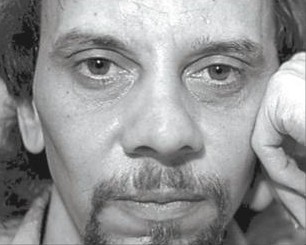
Jeffery Daugherty
Serial killer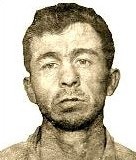 Donald Henry Gaskins
Serial killer · USA · 1969
Donald Henry Gaskins, also known as Donald “Pee Wee” Gaskins, was a serial kill…
200 victims
Donald Henry Gaskins
Serial killer · USA · 1969
Donald Henry Gaskins, also known as Donald “Pee Wee” Gaskins, was a serial kill…
200 victims
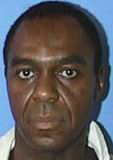 Carl Eugene Watts
Serial killer · USA · 1974
Carl Eugene Watts (born November 7, 1953; died September 21, 2007), also known…
100 victims
Carl Eugene Watts
Serial killer · USA · 1974
Carl Eugene Watts (born November 7, 1953; died September 21, 2007), also known…
100 victims
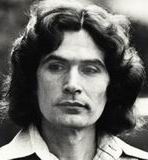 Rodney Alcala
Serial killer · USA · 1977
Rodney James Alcala (born August 23, 1943) was also known as Rodrigo Jacques Al…
100 victims
Rodney Alcala
Serial killer · USA · 1977
Rodney James Alcala (born August 23, 1943) was also known as Rodrigo Jacques Al…
100 victims
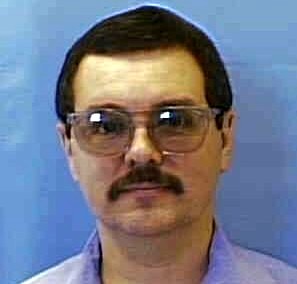 Donald Harvey
Serial killer · USA · 1970
Donald Harvey was known as an American serial killer and a self-professed “Ange…
87 victims
Donald Harvey
Serial killer · USA · 1970
Donald Harvey was known as an American serial killer and a self-professed “Ange…
87 victims
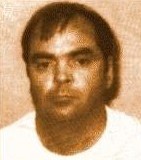 Donald Leroy Evans
Serial killer · USA · 1975
Donald Leroy Evans (born July 5, 1957) was an American serial killer who murder…
60 victims
Donald Leroy Evans
Serial killer · USA · 1975
Donald Leroy Evans (born July 5, 1957) was an American serial killer who murder…
60 victims
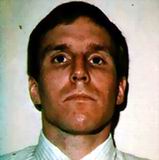 Michael Swango
Serial killer · USA · 1981
Michael Swango (Joseph Michael Swango) was a physician and American serial kill…
60 victims
Michael Swango
Serial killer · USA · 1981
Michael Swango (Joseph Michael Swango) was a physician and American serial kill…
60 victims
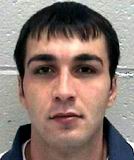 Brandon Rhode
Murderer · USA · 1998
Brandon Rhode was a white male and had been sentenced to death for the murders…
3 victims
Brandon Rhode
Murderer · USA · 1998
Brandon Rhode was a white male and had been sentenced to death for the murders…
3 victims
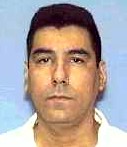 Anibal Canales
Murderer · USA · 1997
Anibal Canales, Jr. was convicted in Texas of capital murder and was sentenced…
1 victim
Anibal Canales
Murderer · USA · 1997
Anibal Canales, Jr. was convicted in Texas of capital murder and was sentenced…
1 victim
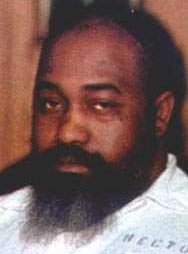 Ricky Ray Rector
Murderer · USA · 1981
Ricky Ray Rector (January 12, 1950 - January 24, 1992) was executed by lethal i…
2 victims
Ricky Ray Rector
Murderer · USA · 1981
Ricky Ray Rector (January 12, 1950 - January 24, 1992) was executed by lethal i…
2 victims
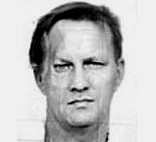 Earl Carl Heiselbetz
Murderer · USA · 1991
Name: Earl Carl Heiselbetz Execution offender identifier: #999014 Age at execut…
2 victims
Earl Carl Heiselbetz
Murderer · USA · 1991
Name: Earl Carl Heiselbetz Execution offender identifier: #999014 Age at execut…
2 victims
 Jason Matthew Joseph
Murderer · USA · 1992
Jason Matthew Joseph was executed by lethal injection in Virginia on October 19…
1 victim
Jason Matthew Joseph
Murderer · USA · 1992
Jason Matthew Joseph was executed by lethal injection in Virginia on October 19…
1 victim
- Gender
- male
- Country
- USA
- Location
- Pennsylvania/Alabama/Florida, USA
- Date of birth
- 1955
- Age at first offence
- 21
- Characteristics
- robbery, kidnapping, rape?, armed robbery
- Victim profile
- Carmen Abrams, 68; Lavonne Sailer, 49; Betty Campbell, 50; Elizabeth Shank, 28; George Karns, 18
- Method of murder
- Shooting - St abbing with knife
- Date(s) of murder
- February -March 1976
- Years active
- 1976
- Date of arrest
- March 18, 1976
- Status
-
Executed
Executed by electrocution in Florida on November 7, 1988
Case record: Jeffery Daugherty
Status
Jeffrey Joseph Daugherty was executed by electrocution in Florida on November 7, 1988.
Name and case identifiers
- Appellant: Jeffrey Joseph Daugherty
- Appellee: State of Florida
Docket and citations (consolidated matters)
- Florida Supreme Court briefs and opinions:
- Docket #67450; 505 So. 2d 1323; April 9, 1987 (opinion; initial brief of appellant; answer brief of appellee; reply brief for appellant)
- Docket #73256; 533 So. 2d 287; November 1, 1988 (Jeffery Joseph Daugherty, Appellant, vs. State of Florida, Appellee)
- United States Supreme Court / habeas-related docket:
- Docket #73257; 533 So. 2d 287; November 1, 1988 (Jeffery Joseph Daugherty, Petitioner, vs. Richard L. Dugger, etc., Respondent)
- (Consolidated case)
Timeline
- January 1976 — Jeffrey Joseph Daugherty traveled from Michigan to Florida with his girlfriend, Bonnie Jean Heath, and his uncle.
- February 19, 1976 — Authorities suspected Daugherty in the slaying of a Demopolis businessman during a robbery.
- Feb 23, 1976 — Carmen Abrams was killed at Flagler Beach, Florida.
- March 1, 1976 — Lavonne Patricia Sailer was killed in Florida after she was picked up hitchhiking near Melbourne.
- March 1, 1976 — Betty Campbell was killed in Volusia County, Florida.
- March 4, 1976 — Daugherty robbed a music store clerk in Altoona, Pennsylvania.
- March 9, 1976 — Carey's Cafe and then Jack's Quick Market were robbed in Altoona, Pennsylvania.
- March 9, 1976 — Elizabeth Shank was shot six times.
- March 11, 1976 — George Karns was shot to death.
- March 12, 1976 — Trooper E.W. Lambert observed a white Thunderbird with unusually large luggage racks near Whorley's Market in Buckingham County, Virginia.
- mid-March 1976 — Daugherty and Heath were captured in Virginia about a week later.
- July 12, 1976 — Daugherty was convicted in Virginia for armed robbery.
- July 14, 1980 — Daugherty was sentenced to life imprisonment in Volusia County, Florida for murder one after pleading guilty.
- July 31, 1980 — Judge Kim Hammond immediately sentenced Daugherty to life imprisonment in Flagler County, Florida, to run concurrently with other life sentences.
- August 5, 1980 — Daugherty gave a formal statement of confession to detectives in Brevard County.
- November 18, 1980 — Daugherty pleaded guilty to the murder of Lavonne Sailer.
- April 27, 1981 — Daugherty was sentenced to death in the electric chair by Circuit Judge William Woodson.
- July 10, 1987 — Bonnie Jean Heath was released from Florida Correctional Institution.
- August 20, 1987 — Daugherty filed his third petition for writ of certiorari seeking review of the latest Florida Supreme Court decision.
- August 24, 1987 — The Governor of Florida signed a death warrant.
- mid-September 1987 — Daugherty unsuccessfully moved the Florida Supreme Court for stay of execution.
- October 13, 1987 — The United States Court of Appeals for the Eleventh Circuit granted an indefinite stay of execution to allow review.
- November 1, 1988 — Docket #73256 and Docket #73257 entries listed in the Florida Supreme Court briefs and opinions.
- November 7, 1988 — The United States Supreme Court denied relief by a vote of five to four; Daugherty was strapped into the chair at Raiford prison and executed.
Background
Jeffrey Joseph Daugherty was a 33-year-old prisoner at the time of execution. In February 1976, at age 21, Daugherty left Michigan with his girlfriend and a favorite uncle, traveling toward Florida.
Daugherty committed a series of murders and armed robberies during a trip that consumed three weeks and included killing four women on the way. He confessed to the four murders after being arrested.
The prisoner described himself in a pre-execution statement:
- “I hope with all my heart I will be the last sacrificial lamb of a system that is not just, and all these people know it is not just,”
The offence
Murder convictions tied to the commission and sentencing
Daugherty was convicted for the March 1, 1976 killing of hitchhiker Lavonne Patricia Sailer in Brevard County, Florida.
He was also convicted of killings of:
- Carmen Abrams (age 68)
- Betty Campbell (age 50)
- Elizabeth Shank (age 28)
- George Karns (age 18)
The case included further mention of “the one in Alabama that he never was tried for,” and an Alabama slaying suspicion tied to a Demopolis businessman during a robbery on Feb. 19, 1976.
Kidnapping/robbery context in sentencing appeal description
In the proceedings described in the United States Court of Appeals, Daugherty:
- pleaded guilty to first-degree murder, robbery, and kidnapping of Sailer
- had a jury empanelled to recommend a sentence for the murder
The state presented evidence concerning the details of the murder and of convictions Daugherty received for other murders, robberies, and assaults committed during the crime spree.
Victim details stated in the record
Lavonne Patricia Sailer
- age 49
- killed: March 1, 1976
- location: Melbourne, Florida
- manner described: shot five times in the back of the head at close range with a 22 caliber pistol; also described as shot five times in a Florida location and “five rounds to the head”
- other details: she was robbed of $12 and clothing; she had a ten dollar bill hidden in her shoe; she was picked up hitchhiking near Melbourne; she was driven to an isolated area/side road and ordered to get out of the automobile
Carmen Abrams
- age 68
- killed: Feb 23, 1976
- location: Flagler Beach, FL
- manner described: one round to the head
- additional detail: her husband was also shot 4 times but survived
Betty Campbell
- age 50
- killed: March 1, 1976
- location: Volusia County, FL
- manner described: stabbed to death
- additional detail: her purse was missing and contained a .25 caliber automatic, credit cards, and an unemployment check; the purse was later recovered along Route 1 north of New Smyrna Beach
Elizabeth Shank
- age 28
- killed: March 9, 1976
- location: Altoona, Pennsylvania
- manner described: shot six times; also described as shot six times with a .25 caliber gun
George Karns
- age 18
- killed: March 11, 1976
- location: Altoona, PA
- manner described: shot 5 times
Investigation
Initial homicide investigation at the Sailer killing location
Captain W.J. “Buzzy” Patterson, Chief of Homicide, and agents Bob Schmader, Jerry Hudepohl, and Billy Wilson arrived at the scene to investigate the reported death.
Patterson chose Schmader to organize and lead the investigation.
Medical Examiner Associate Dr. Nongnooch R. Dunn responded to Patterson’s call and conducted an autopsy. Unofficially, Dr. Dunn told officers that the woman’s death seemed practically certain to have been caused by multiple gunshot wounds to her head, but a positive statement would follow after an autopsy.
Detectives discovered that the woman’s right hand appeared to be holding something “in a death grip.” After photographing and opening the clenched hand, a crumpled piece of paper was found. The paper showed the name Bob Hesterly scribbled out in pencil.
Dr. Claude Godwin (a Titusville, Florida dentist) examined the body and made a complete dental chart and description for the sheriff’s department’s use in identifying the victim.
Postmortem fingerprints were taken.
From procedures, the Brevard Sheriff’s Department established the victim’s identity as Lavonne Patricia Sailer, a native of Tacoma, Washington, age figured to be 49. She had no criminal record of any major or felonious crimes and was picked up for loitering, vagrancy, or hitchhiking offenses.
The investigation identified bullets and fragments:
- five bullets had been fired into the woman
- the bullets destroyed brain tissue and caused traumatic death
- the bullets and fragments were determined to be .22 caliber
Lead development: white Thunderbird
The investigation centered on a white car with a large roof rack described as a Ford Thunderbird. Consensus among persons at the gun shop was that the automobile was a Ford Thunderbird, likely a model from the late or middle ’60s.
Detectives believed the driver was accompanied by another woman and that they needed to “make” that car.
Wayne Porter conducted an intensive study of national BOLOs; an “armed robbery” report from Alma, Michigan involving a couple driving a 1964 white Thunderbird with Michigan license SCY535 was relevant.
Pennsylvania State Police reports included:
- driver: Jeffery Joseph Daugherty
- female traveling companion: Bonnie Jean Heath
- intermittently traveling third person: Raymond Daugherty, Sr.
- a general method of operation selecting small business places where a lone attendant or clerk was on duty, then stealing personal items and killing victims by use of a handgun or knife
Cross-jurisdiction cooperation and evidence development
The investigation described cooperation across multiple state agencies as information exchanges yielding cases against Daugherty and Heath.
Virginia arrest procedure:
- Trooper L.K. Webber seized weapons and retrieved items including a hunting knife and nun-chucks under the driver’s seat
- Trooper Eye retrieved a Colt automatic, serial number OD60612, from the floor console
- the safety had been pushed to off
Pennsylvania State Police later fired the Colt and recovered six rounds (March 19 described in the narrative).
Items in the Thunderbird linked Daugherty and Heath to crimes including:
- a steel guitar identified as taken from Ricche’s Music Store in Altoona
- evidence tied to the robbery at Carey’s Cafe and a second murder at Union 76 service station
Ballistics development:
- bullets from .22 caliber were related to Pennsylvania victims’ .25 caliber slugs and cartridges
Other investigative steps included:
- tracing Betty Campbell’s unemployment check as cashed in Florence, South Carolina by a woman matching Bonnie Jean Heath’s description
- establishing use of Betty Campbell’s credit cards in South Carolina by this woman
- tracing the Colt from manufacturer to initial sale to Michigan and finally to Florida and into possession of Betty Campbell’s husband, who gave the weapon to his wife
Arrest
Daugherty and Bonnie Jean Heath were arrested in Virginia after an armed robbery report led officers to track a white Thunderbird.
They were transported to the Buckingham County Sheriff’s Department and booked and processed:
- man: Jeffery Joseph Daugherty
- woman: Bonnie Jean Heath
After the Virginia arrest, Pennsylvania State Police requested firing samples from the Colt found in the Thunderbird.
Trial
Virginia
Daugherty was tried and convicted in Virginia for armed robbery.
- Sentenced to 19 years in the Virginia State Penitentiary on July 12, 1976.
Pennsylvania
Daugherty was tried and convicted in Pennsylvania for murder one.
- Sentenced to life imprisonment in the Pennsylvania State Penitentiary at Huntingdon on Sept 28, 1978.
- Tried and convicted again for murder one.
- Sentenced to life in the PA State Pen at Huntingdon on Jan 4, 1980.
Florida (pleas)
In Volusia County, Florida:
- Daugherty pleaded guilty for murder one.
- Sentenced to life imprisonment on July 14, 1980.
In Flagler County, Florida:
- Judge Kim Hammond immediately sentenced him to life imprisonment on July 31, 1980 “to run concurrently with the other life sentences he had received.”
Florida (death sentence case: Sailer)
After pleading, Daugherty admitted killing Lavonne Sailer and provided a confession in Brevard County.
He pleaded guilty to the murder of Lavonne Sailer on Tuesday, November 18, 1980.
A sentencing jury recommended death, and the sentencing judge imposed death.
The sentencing occurred before Circuit Judge William Woodson on Monday, April 27, 1981.
Daugherty’s statement before sentencing included:
- “Let God's will be done ,”
The judge read:
- “You, Jeffery Joseph Daugherty, are to be electrocuted until you are dead.”
After receiving the judge’s sentence explanation, Daugherty made statements including:
- “I have something to say about that.”
The state attorney Douglas Cheshire made statements described in the narrative including that he intended to keep Daugherty on Florida’s death row until appellate procedures had run their course, and that Daugherty’s act was a “well rehearsed act.”
Sentencing
Statutory aggravating circumstances found in the appeal proceedings
In support of the death sentence, the trial court found:
- two statutory aggravating circumstances and no statutory or nonstatutory mitigating circumstances
- as aggravating circumstances:
- Sailer's murder “was committed for pecuniary gain”
- Daugherty “was previously convicted of another capital felony or of a felony involving the use or threat of violence to the person.”
The Florida statutory references included:
- Fla. Stat. Sec. 921.141(5)(b) and (f)
Trial court’s description of prior convictions relied upon
The appeal proceedings list prior convictions relied upon:
- First degree murder conviction for the Flagler County, Florida killing of a woman in her sixties; Daugherty shot her in the left shoulder and right temple while robbing her.
- Conviction for the stabbing murder of a woman committed while Daugherty robbed her place of business in Volusia County, Florida.
- While robbing a gas station Daugherty shot the young attendant twice in the side, once in the bridge of the nose, and once under the chin; convictions for criminal homicide, criminal conspiracy, robbery and crimes committed with firearms.
- In Altoona, Pennsylvania, Daugherty robbed a music store clerk with a firearm, assaulting the woman until she lost consciousness; convictions for robbery, aggravated assault, simple assault and crimes committed with firearms.
- Additional convictions in Pennsylvania for aggravated and simple assault, burglary, robbery and crimes committed with firearms.
- In Virginia Daugherty received convictions for armed robbery and using a firearm while committing a felony.
- Daugherty killed a convenience store clerk by shooting her in the body and head; convictions for criminal homicide, criminal conspiracy, and robbery.
Other sentencing: robbery and kidnapping
The United States Court of Appeals described that, for the Sailer case, the judge imposed:
- death sentence for the murder
- consecutive life sentences for the robbery and kidnapping
Appeals
Eleventh Circuit habeas proceedings
The case included an appeal to the United States Court of Appeals, Eleventh Circuit:
- Jeffery Joseph Daugherty, Petitioner-Appellant, v. Richard L. Dugger, Secretary, Florida Department of Corrections, and Robert A. Butterworth, Attorney General, State of Florida, Respondents-Appellees.
- No. 87-3707.
- Date: Feb. 12, 1988.
- Rehearing and Rehearing En Banc Denied: April 14, 1988.
The court described that Daugherty appealed the district court’s denial of his petition for writ of habeas corpus, challenging only his sentence.
Issues presented on appeal
Daugherty contended:
- ineffective assistance of counsel based on failure to object to a jury instruction and failure to introduce expert psychiatric testimony
- failure of the district court to consider evidence of nonstatutory mitigating circumstances
- prosecution’s request for death as an arbitrary exercise of prosecutorial discretion
Outcome of Eleventh Circuit appeal
The Court of Appeals affirmed the denial of habeas relief.
- “AFFIRMED.”
Florida Supreme Court and federal denials and stays described
The narrative described:
- the United States Supreme Court denied certiorari
- Florida Supreme Court denied a petition for habeas corpus without requiring a response from the state
- Daugherty sought review through another certiorari petition and the United States Supreme Court also denied relief
- Daugherty filed post-conviction relief in Brevard County; the court denied after evidentiary hearing and Florida Supreme Court affirmed
- on August 24, 1987 the Governor signed a death warrant and execution was scheduled for October 15, 1987
- Daugherty unsuccessfully moved for stay in mid-September 1987
- the district court denied his petition for a writ of habeas corpus
- on October 13, 1987 the Eleventh Circuit granted an indefinite stay of execution to allow review
United States Supreme Court rejection before execution
On November 7, 1988, the Supreme Court rejected his case by a vote of five to four.
The stay denial was described as leaving the execution set to proceed.
Outcome
Prison medical officials pronounced him dead at 5:16pm, following a one minute bolt of electrical current.
At the execution, Daugherty:
- did not resist as he was seated and strapped into the electric chair
- proclaimed his views prior to execution
Statements attributed to Daugherty at the time included:
- “Some of you look at this as an execution. I look at it as freedom,”
- “I've been in prison for 13 years. And now I'm going to be free.”
- “I hope with all my heart I will be the last sacrificial lamb for a system that is not just,”
- “This execution is not going to stop anything. It is my time to go, and I'm going home.”
Aftermath
Bonnie Jean Heath was described as Daugherty’s girlfriend and accomplice who left prison after his execution date was set.
She was released from Florida Correctional Institution on July 10, 1987.
- She was described as having been released after twice being convicted of second degree murder in two of three Florida slayings.
- A Department of Corrections spokeswoman statement included that she was released from Florida Correctional Institution on July 10, 1987.
- Her location was described as unknown.
- She was released with $100 and a bus ticket to Tampa under an inmate release assistance program.
In the narrative, Heath was described as not having testified against Daugherty and as having avoided prosecution for the murder because of weaknesses in a possible case and decisions not to pursue further criminal prosecution.
The narrative included that Daugherty’s taped statement blamed Sailer’s death on Heath and that he claimed she told him to leave no witnesses:
- “As far as I'm concerned, she [Ms. Heath] had her finger on the trigger with me,” and also a quote describing his account of what Heath told him:
- “I shot her twice and Bonnie said, 'She's not dead. I can hear her breathing.' I thought I'd done enough, but Bonnie said to shoot her again,”
State Attorney Norm Wolfinger of Titusville was quoted:
- “You can only go with what you have,” and also:
- “We felt we could get Jeff Daugherty for the death penalty, and we did. But we felt that to pursue Bonnie for criminal prosecution would not have gotten us anywhere.”
Wolfinger was also quoted:
- “She certainly was in the midst of all these homicides,” and:
- “he doesn't think justice was served on Ms. Heath for her involvement in the crime spree.”
Other details
Observations and events around the execution
Protesters opposing capital punishment, including actress Margot Kidder, stood outside the prison.
Sister Hannah Daly was quoted:
- “It's getting close,”
- “We should pray.”
A death penalty supporter Sheila Lee was quoted:
- “A lot of times, I think that it should be televised,”
- “If you actually saw someone put to death, that would be more of a deterrent.”
Rev. Bob Baker celebrated Mass for Daugherty.
Governor and warrants described in the narrative
Gov. Bob Martinez signed a second death warrant for Daugherty, and the narrative included dates:
- first warrant signed on Aug. 24, 1987 and stayed by the 11th U.S. Circuit Court of Appeals
- second death warrant signed on Oct. 7
The execution was rescheduled to 5:01pm after the appellate court denied appeals but extended his stay through 5pm.
Clemency hearing reference
A clemency hearing in 1983 before Gov. Bob Graham and the Cabinet included a statement by Daugherty’s attorney about domination by Heath.
The narrative stated:
- Daugherty was 20 and Heath was 41 when the crimes occurred.
Pennsylvania prosecutor Thomas J. Peeples was quoted:
- “the most amoral individual I ever met.” and:
- “He had no feeling for anyone other than Bonnie Heath,”
Editor’s note about fictitious names
The narrative included an editor’s note stating that certain names were fictitious and used because there was no reason for public interest in their true identities:
- Terry Parsons, Dennis McNarra, Bernie Lees, Bob Hesterly, Sara Louise Sunshine [aka Bonnie Jean Heath], Chick Russo [aka Raymond L. Daugherty, Sr.] and Kathy Rancor are fictitious.
Jury instruction text and definitions in the appellate proceedings
Daugherty challenged a jury instruction defining “heinous, atrocious, or cruel.”
The statute expressed the circumstance as:
- “The capital felony was especially heinous, atrocious, or cruel.” Fla.Stat. Sec. 921.141(5)(h).
The trial court defined for the jury:
- “heinous, atrocious, or cruel” as follows:
- “Heinous means extremely wicket [sic] or shockingly evil.”
- “Atrocious means outrageously wicked and foul.”
- “Cruel means designed to inflict a high degree of pain.”
- “Utter indifference to or adjoined [sic] of the suffering of others, pitiless.”
The appellate court further quoted the standard jury instruction:
- “8. The crime for which the defendant is to be sentenced was especially wicked, evil, atrocious or cruel.”
- “See Florida Standard Jury Instruction (Penalty Proceedings--Capital Cases) (1981)”
Procedural and disposition language in the Eleventh Circuit decision
The court concluded:
- “Accordingly, the district court's judgment is affirmed.”
- “AFFIRMED.”
Spotted an error, or have more information about this case?