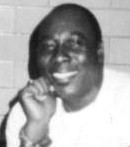
Willie Darden
Murderer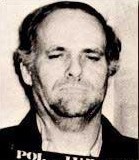 Ervil LeBaron
Murderer · USA · 1972
Ervil Morrell LeBaron (1925 to August 16, 1981) was the leader of a polygamous…
35 victims
Ervil LeBaron
Murderer · USA · 1972
Ervil Morrell LeBaron (1925 to August 16, 1981) was the leader of a polygamous…
35 victims
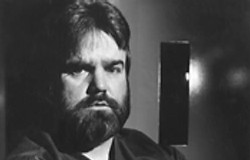 Marvin Gray
Murderer · USA · 1975
Marvin Gray was convicted killer who claimed responsibility for 23 slayings and…
23 victims
Marvin Gray
Murderer · USA · 1975
Marvin Gray was convicted killer who claimed responsibility for 23 slayings and…
23 victims
 Yahweh ben Yahweh
Murderer · USA · 1980
Yahweh ben Yahweh was born and legally named Hulon Mitchell Jr. (October 27, 19…
23 victims
Yahweh ben Yahweh
Murderer · USA · 1980
Yahweh ben Yahweh was born and legally named Hulon Mitchell Jr. (October 27, 19…
23 victims
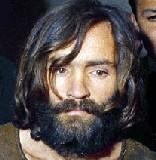 Charles Manson
Murderer · USA · 1969
Charles Milles Manson (born November 12, 1934) was an American criminal and mus…
9 victims
Charles Manson
Murderer · USA · 1969
Charles Milles Manson (born November 12, 1934) was an American criminal and mus…
9 victims
 Homer Ray Roseberry
Murderer · USA · 2000
In October 2000, Homer Roseberry, Diane Roseberry, and Charles Dvoracek were in…
1 victim
Homer Ray Roseberry
Murderer · USA · 2000
In October 2000, Homer Roseberry, Diane Roseberry, and Charles Dvoracek were in…
1 victim
 Abdulhakim Muhammad
Murderer · USA · 2009
Abdulhakim Muhammad (formerly known as Carlos Leon Bledsoe) was convicted in co…
1 victim
Abdulhakim Muhammad
Murderer · USA · 2009
Abdulhakim Muhammad (formerly known as Carlos Leon Bledsoe) was convicted in co…
1 victim
 Mary Pearcey
Murderer · United Kingdom · 1890
Mary Pearcey (Mary Eleanor Wheeler; also known as Mary Eleanor) was born in 186…
2 victims
Mary Pearcey
Murderer · United Kingdom · 1890
Mary Pearcey (Mary Eleanor Wheeler; also known as Mary Eleanor) was born in 186…
2 victims
 Dayva Cross
Murderer · USA · 1999
Dayva Michael Cross was sentenced to death for the stabbing deaths of his wife,…
3 victims
Dayva Cross
Murderer · USA · 1999
Dayva Michael Cross was sentenced to death for the stabbing deaths of his wife,…
3 victims
 Edwin Debrow
Homicide · USA · 1991
Edwin Debrow Jr. was convicted in 1992, at age 12, of a fatal shooting during a…
1 victim
Edwin Debrow
Homicide · USA · 1991
Edwin Debrow Jr. was convicted in 1992, at age 12, of a fatal shooting during a…
1 victim
- Gender
- male
- Country
- USA
- Location
- Polk County, Florida, USA
- Date of birth
- 1933
- Age at first offence
- 40
- Characteristics
- robbery, murder for hire, torture, rape
- Victim profile
- James Carl Turman (furniture store owner)
- Method of murder
- Shooting
- Date(s) of murder
- September 8, 1973
- Years active
- 1973
- Date of arrest
- Next day
- Status
-
Executed
Executed by electrocution in Florida on March 15, 1988
Case details
Willie Jasper Darden (also identified as Willie Jasper Darden, Jr.) was convicted in Florida and was executed by electrocution.
Timeline
- January 15, 1974, 9:00 a.m. — Trial in Florida began with jury selection procedures for a capital case.
- January 23, 1974 — Darden was sentenced.
- May, 1979 — A petition for writ of habeas corpus was filed in federal court and later withdrawn and abandoned on one claim.
- October 3, 1986 — Opinion in the Florida litigation reflected in “495 So. 2d 179”.
- October 16, 1986 — Opinion reflected in “496 So. 2d 136”.
- March 14, 1988 — Opinion reflected in “521 So. 2d 1103”.
- March 15, 1988 — Darden was executed by electrocution in Florida.
Background
Willie Jasper Darden was a Florida prisoner under sentence of death. He was described as 54 years old at the time of reporting about his execution schedule. He was identified as black, and the victim was described as white.
Darden’s federal litigation included the Supreme Court of the United States decision in Darden v. Wainwright, 477 U.S. 168 (1986), and subsequent related proceedings.
The offence
On September 8, 1973, at about 5:30 p.m., Darden entered Carl’s Furniture Store near Lakeland, Florida. The only other person in the store was the proprietor, Mrs. Turman, who lived with her husband in a house behind the store. Mr. Turman worked nights in a juvenile home, had awakened at about 5:00 p.m., had a cup of coffee at the store with his wife, and returned home to let their dogs out for a run.
Darden stated that he was interested in purchasing about $600 worth of furniture for a rental unit, asked to see several items, left the store briefly saying his wife would be back to look at some items, then returned asking to see some stoves and inquiring about the price.
When Mrs. Turman turned toward the adding machine, Darden grabbed her, pressed a gun to her back, and told her: "Do as I say and you won't get hurt." He took her to the rear of the store and ordered her to open the cash register. He took the money and ordered her to an area of the store where boxsprings and mattresses were stacked against a wall.
At that time, Mr. Turman appeared at the back door. Mrs. Turman screamed while Darden reached across her right shoulder and shot Mr. Turman between the eyes. Mr. Turman fell backwards with one foot partially in the building. Darden ordered Mrs. Turman not to move, tried to pull Mr. Turman into the building and close the door, but could not because one of Mr. Turman’s feet was caught in the door.
Darden left Mr. Turman face-up in the rain and told Mrs. Turman to get down on the floor approximately five feet from where her husband lay dying. While Mrs. Turman begged to go to her husband, Darden told her to remove her false teeth. Darden unzipped his pants, unbuckled his belt, and demanded that Mrs. Turman perform oral sex on him. Mrs. Turman began to cry, "Lord, have mercy."
Darden told her to get up and go towards the front of the store. A neighboring family, the Arnolds, became aware that something had happened to Mr. Turman. The mother sent her sixteen year-old son, Phillip, a part-time employee at the furniture store, to help. When Phillip reached the back door he saw Mr. Turman lying partially in the building. When Phillip opened the door to take Mr. Turman’s body inside, Mrs. Turman shouted: "Phillip, no, go back." Phillip, not knowing what she meant, asked Darden to help get Mr. Turman inside. Darden replied: "Sure, buddy, I will help you."
As Phillip looked up, Darden was pointing a gun in his face. Darden pulled the trigger and the gun misfired; he pulled the trigger again and shot Phillip in the mouth. Phillip started to run away and was shot a second time in the neck. While he was still running, he was shot a third time in the side.
Despite these wounds, Phillip managed to stumble to the home of a neighbor, Mrs. Edith Hill. Mrs. Hill testified that she heard four shots fired—one shot, then three shots in a row—at approximately 6:00 p.m. Mrs. Hill had her husband call an ambulance while she tried to stop Phillip’s bleeding. While she was helping Phillip, she saw a late model green Chevrolet leave the store and head towards Tampa on State Highway 92. Phillip survived; Mr. Turman died later that night without regaining consciousness.
Minutes after the shooting, Darden was driving towards Tampa on highway 92, a few miles away from the furniture store. He was out on furlough from a Florida prison, and was driving a car borrowed from his girlfriend in Tampa. Darden testified that because he was driving fast on a wet road he was unable to slow down as he came up on a line of cars in his lane, attempted to pass, but was forced off the road to avoid a head-on collision with an oncoming car, and crashed into a telephone pole.
John Stone testified that as he approached the car, Darden was zipping up his pants and buckling his belt. Police later identified Darden’s car as a 1969 Chevrolet Impala of greenish golden brown color. Darden paid a bystander to give him a ride to Tampa. Mary Simmons testified that she picked him up at approximately 6:30 p.m. Darden later returned with a wrecker, only to find that the car had been towed away by the police. By the time the police arrived at the accident site, Darden had left.
Police suspected Darden’s car was driven by the murderer because the car matched the description of the car leaving the scene of the murder and because the accident occurred within three and one-half miles of the furniture store and within minutes of the murder. Officers found a revolver about forty feet from the crash site. The arrangement of shells within the chambers exactly matched the pattern that should have been found in the murder weapon: one shot, one misfire, followed by three shots, with a live shell remaining in the next chamber to be fired. An FBI specialist testified that the revolver was a Smith & Wesson .38 special revolver, and an examination of the bullet that killed Mr. Turman revealed it came from a .38 Smith & Wesson Special.
On the day following the murder, Darden was arrested at his girlfriend’s house in Tampa. A few days later Mrs. Turman identified Darden at a preliminary hearing as her husband’s murderer. Phillip Arnold selected Darden’s picture out of a spread of six photographs as the man who shot him.
The offence was described as involving the murder of James Carl Turman, a robbery, assault, and sexual attack. Darden was convicted of murder, robbery, and assault with intent to commit murder.
Victims were identified as:
- James Carl Turman — killed.
- Phillip Arnold — wounded. The relationship to the defendant was described as none.
Investigation and arrest
Police estimated the time of the murder to be between 6:00 and 6:30 p.m. Darden was arrested for a traffic violation and subsequently charged with, tried, and convicted of Turman’s murder, assault, and armed robbery.
Police later searched the area after suspecting the car due to the matching description and proximity to the murder scene. An officer found a revolver about forty feet from the crash site and shells matched the sequence described. A specialist for the FBI testified about the revolver type, and forensic testimony tied the bullet that killed Mr. Turman to a .38 Smith & Wesson Special.
Trial
Darden was tried and found guilty in Florida in January 1974.
Jury selection and death qualification
Darden’s trial involved capital sentencing procedures. On January 15, 1974, 9:00 a.m., the trial court heard a motion in chambers regarding limiting voir dire examination about capital punishment. The judge explained he would disqualify jurors unwilling to recommend a death penalty based on moral, religious, or conscientious principles even if the facts and circumstances met the law’s requirements, saying: "It is my ruling if a prospective juror states on his voir dire examination that because of his moral, religious or conscientious principles and belief he would be unwilling to recommend a death penalty, even though the facts and circumstances meet the requirements of law, then he in effect has said he would be unwilling to follow the law the court shall charge upon it and disregard and be unwilling to follow it or if he did follow it, it would be going against his principles, and, therefore, I would rule that would be disqualification. If that exists, I intend to disqualify for cause." (Emphasis in the quotation as provided.)
The court then asked each prospective juror individually whether they had strong religious, moral or conscientious principles in opposition to the death penalty so strong that they would be unwilling to vote to return an advisory sentence recommending the death sentence even though the facts required it under law. The process excused two prospective jurors, then seated others; the State and Darden’s attorney questioned jurors; and attorneys exercised peremptory challenges.
Venireperson Theodore Murphy was seated and was asked: "Do you have any moral or religious, conscientious moral or religious principles in opposition to the death penalty so strong that you would be unable without violating your own principles to vote to recommend a death penalty regardless of the facts?" (Emphasis in the quotation as provided.) Murphy replied "Yes" and was immediately excused. Another venireperson, Adkins, was asked a similar question: "Do you hold such strong principles in opposition of the death penalty that you would be unable without violating them to recommend them, [sic] recommend a death penalty to the Court?" Adkins replied he held no such principles and later was accepted as an alternate.
Darden was convicted by an all-white jury. The jury was described as all white, with 4 women and 8 men. The trial judge imposed death after the jury recommended death.
Prosecution statements and alleged racial prejudice
In trial proceedings described in later materials, the prosecutor repeatedly called Darden “an animal” and said he wished he could see Darden "sitting here with no face, blown away by a shotgun." Darden also described the prosecutor’s remarks as including racist commentary.
Evidence and testimony
Eyewitness testimony was described as including the victim’s wife and Phillip Arnold, 16 at the time and wounded, with identification occurring under highly suggestive circumstances. Darden’s testimony was that he was innocent, and the defense was described as presenting discrepancies in eyewitness accounts about whether Darden had a mustache and whether he was wearing a white or maroon shirt, and that the defense counsel failed to raise these discrepancies at trial.
Forensic testimony included FBI testimony that the gun found by police could have fired the bullet that killed the victim, while also being described in another portion as not conclusively tied to either the murder or to Darden.
Sentencing
After conviction, the jury recommended death and the trial judge imposed death. The sentencing authority was described as the jury recommendation and judge imposed death.
Statutory aggravating factors were described as:
- crime committed while under sentence of imprisonment;
- crime committed while in commission of a robbery;
- crime especially heinous, atrocious, and cruel.
Non-statutory aggravating factors were described as not required to be specified by jurors under Florida law.
Mitigating factors included statements that Darden’s mother died in childbirth when he was two; Darden was considered non violent; Darden was described as very poor ex-slave; Darden was from a farming family; and that no mitigating evidence was presented at trial, with the judge considering Darden’s claims of innocence and fact that he had 7 children.
A claim about evidence of mental illness, retardation and or neurological damage was included in the materials as “No.”
Appeals and collateral proceedings
Darden’s direct appeal and federal habeas proceedings involved multiple courts and consolidated cases.
Supreme Court and related appellate outcomes
The Supreme Court of the United States reviewed claims including:
- whether the prosecution’s closing argument during the guilt phase rendered the trial fundamentally unfair and deprived the sentencing determination of reliability required by the eighth amendment;
- whether exclusion for cause of a venireperson violated principles in Wainwright v. Witt;
- whether Darden was denied effective assistance of counsel at the sentencing phase.
The Supreme Court affirmed and remanded for proceedings consistent with the opinion, with the case captioned as Darden v. Wainwright, 477 U.S. 187 and then later as Darden v. Wainwright, 477 U.S. 168 in the materials provided.
An Eleventh Circuit en banc decision previously held issues regarding juror exclusion, but was later addressed again after Supreme Court vacatur and remand.
Eleventh Circuit habeas review on juror exclusion
In an Eleventh Circuit matter, the court described the procedural posture and stated that after remand it concluded that Wainwright v. Witt controlled the juror exclusion issue and that Darden was not entitled to habeas corpus relief on that juror exclusion issue. The court stated: "AFFIRMED." It also reinstated the panel opinion as to all issues except the juror exclusion issue. The majority opinion concluded that Wainwright v. Witt compelled the holding that the voir dire record with respect to juror Murphy provided fair support for excluding Murphy.
Separate judicial opinions included in the materials
The materials include:
- A special concurrence by TJOFLAT, Circuit Judge agreeing with the decision to affirm denial of habeas corpus relief though for different reasons, discussing unexhausted claims and the Witherspoon claim under Wainwright v. Witt.
- A special concurrence by JAMES C. HILL, Circuit Judge expressing concurrence and discussing the impact of Witt.
- A dissent by JOHNSON, Circuit Judge arguing that Darden was not excluded under proper standards and that presumption and factual development issues required habeas relief.
- A dissent by CLARK, Circuit Judge concurring with Johnson’s dissent and discussing a statement by Judge Hill and the need for sufficient evidence.
- Dissenting opinions also included regarding prosecutorial misconduct and ineffective assistance as reflected in later materials on denial of rehearing.
Denial of rehearing en banc
In an Eleventh Circuit polling on a petition for rehearing directed to the en banc court, the court stated: "The petition for rehearing is, therefore, DENIED." It also stated that the stay of execution would terminate and the mandate would issue.
Third federal habeas petition outcome
In Willie Jasper Darden, Petitioner-Appellant, v. Richard L. Dugger, Secretary, Florida Department of Corrections, Respondent-Appellee, the Eleventh Circuit affirmed the district court’s order dismissing Darden’s third petition for writ of habeas corpus without a hearing. The court stated that the claims were either successive and previously heard and determined or were brought up and abandoned, constituting abuse of the writ.
Outcome
Willie Jasper Darden was executed by electrocution in Florida on March 15, 1988.
Other details
Darden’s case included multiple death warrants and stays of execution described in the materials as seven death warrants and six stays. It was also described that he came within hours of execution multiple times and faced his seventh date with the executioner.
The materials referenced:
- A new death warrant giving lawyers seven days to prepare a new appeal.
- A statement attributed to C. Ray McDaniel: "Willie Darden keeps on appealing but there is no turning aside the facts that he committed brutal crimes."
- A statement attributed to Mr. McDaniel regarding race: "There was no racist statement in my arguments," and "I don't care if he's purple. My anger at his crimes were color-blind."
- A statement attributed to Tanya Coke: "His case doesn't lack for compelling facts to get a new trial," "What is missing is the lack of will of the state of Florida to face these facts," "Governor Martinez would avoid any public appeals on Willie's behalf and this is why he has set such an early date for execution."
- A statement attributed to Magdaleno Rose-Avila: "We're shocked and dismayed that Governor Martinez would hurry to execute a man who everyone but the Governor knows has reasonable cause to receive clemency and a new trial,"
- A statement attributed to Jon Peck: "because the case has been reviewed so many times in so many courts it didn't seem appropriate to wait for a longer period." and "The bottom line is that the case has been around so long that if there's anything new out there, his lawyers should know what it is,"
- Statements attributed to Darden, including: "If I'm executed Tuesday, it won't change the facts one bit," and "All that will happen is that I will be an innocent dead person instead of an innocent live person."
- In an interview, Darden said: "I pleaded no contest to that other crime because I figured I would be railroaded for that just like the one in Lakeland," "I was very afraid of being held in Lakeland for a second trial. There was a lot of race hatred," and "I ask them not to believe what I say but to look at the evidence."
- Regarding his emotions and denial of being “an animal,” Darden said: "As a killer," and "As an animal," and "As an extremely violent person." and "I'm not any of these."
- In anticipation of the execution date, Darden said: "All I can do is hope," and "I have to keep a strong mind."
- Representative John Conyers Jr. requested that Governor Martinez meet with him to hear a personal appeal for clemency by Monday.
In the materials about the underlying crime, witnesses and timing included references to Christine F. Bass placing Darden in front of her home from 4:00 p.m. to 5:30 p.m., and references to a minister called to the scene at 5:30 p.m. and arriving at 5:55 p.m. Conflicts between police, minister testimony, and the timing were described in narrative form, and the materials stated that police disputed the accuracy of the minister’s recollection of the hour summoned.
The materials also referenced Darden’s prior imprisonment and criminal history in general terms, including an earlier rape conviction from which he was on weekend furlough, and mentions of prior sentences including a 6-year sentence for forging a check for $48, as well as a furlough from a Florida prison related to an assault with intent to rape a 70-year-old woman.
The materials included a list of appellate and post-conviction history entries, including:
- FSC affirmed on direct appeal (Darden v. State, 329 So. 2d 287) in 1976.
- USSC granted certiorari and heard argument and later dismissed the writ (430 U.S. 704) in 1977.
- Federal district court habeas denial (Darden v. Wainwright, 513 F. Supp 947) in 1981.
- US Court of Appeals panel affirmed, then rehearing en banc proceedings, then remand after Supreme Court vacatur and reconsideration under Wainwright v. Witt, followed by further denials and Supreme Court review leading up to execution.
Spotted an error, or have more information about this case?