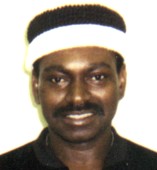
Girvies Davis
Murderer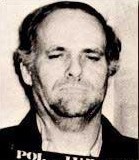 Ervil LeBaron
Murderer · USA · 1972
Ervil Morrell LeBaron (1925 to August 16, 1981) was the leader of a polygamous…
35 victims
Ervil LeBaron
Murderer · USA · 1972
Ervil Morrell LeBaron (1925 to August 16, 1981) was the leader of a polygamous…
35 victims
 Brian Kevin Rosenfeld
Murderer · USA · 1985
Brian Kevin Rosenfeld Brian Kevin Rosenfeld was sentenced to three concurrent l…
23 victims
Brian Kevin Rosenfeld
Murderer · USA · 1985
Brian Kevin Rosenfeld Brian Kevin Rosenfeld was sentenced to three concurrent l…
23 victims
 Marvin Gray
Murderer · USA · 1975
Marvin Gray was convicted killer who claimed responsibility for 23 slayings and…
23 victims
Marvin Gray
Murderer · USA · 1975
Marvin Gray was convicted killer who claimed responsibility for 23 slayings and…
23 victims
 Yahweh ben Yahweh
Murderer · USA · 1980
Yahweh ben Yahweh was born and legally named Hulon Mitchell Jr. (October 27, 19…
23 victims
Yahweh ben Yahweh
Murderer · USA · 1980
Yahweh ben Yahweh was born and legally named Hulon Mitchell Jr. (October 27, 19…
23 victims
 Andrew Yellowbear
Murderer · USA · 2004
Andrew John Yellowbear Jr. (born September 5, 1974) was the defendant in a Wyom…
1 victim
Andrew Yellowbear
Murderer · USA · 2004
Andrew John Yellowbear Jr. (born September 5, 1974) was the defendant in a Wyom…
1 victim
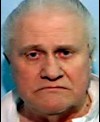 Ronald Howard Moen
Murderer · USA · 1986
Ronald Howard Moen was born on 2/23/37. He was the husband of Judith Moen. On M…
2 victims
Ronald Howard Moen
Murderer · USA · 1986
Ronald Howard Moen was born on 2/23/37. He was the husband of Judith Moen. On M…
2 victims
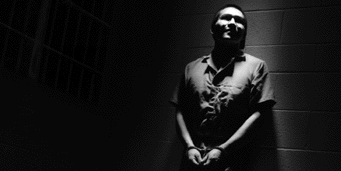 Lester Kills On Top
Murderer · USA · 1987
Lester Kills On Top No A027079 was incarcerated at Montana State Prison in Deer…
1 victim
Lester Kills On Top
Murderer · USA · 1987
Lester Kills On Top No A027079 was incarcerated at Montana State Prison in Deer…
1 victim
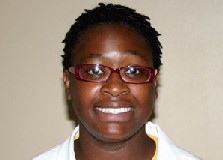 Brigitte Harris
Murderer · USA · 2007
Brigitte Harris was convicted for the suffocation and castration murder of her…
1 victim
Brigitte Harris
Murderer · USA · 2007
Brigitte Harris was convicted for the suffocation and castration murder of her…
1 victim
 Stephanie Nicole Erends
Murderer · USA · 2008
Stephanie Nicole Erends was convicted of first-degree murder with special circu…
1 victim
Stephanie Nicole Erends
Murderer · USA · 2008
Stephanie Nicole Erends was convicted of first-degree murder with special circu…
1 victim
- Gender
- male
- Country
- USA
- Location
- St. Clair County, Illinois, USA
- Date of birth
- January 20, 1958
- Age at first offence
- 20
- Characteristics
- robbery, abuse, drug addict, mentally ill, alcohol, history of mental illness, mentally retarded
- Victim profile
- 3 male and 1 female
- Method of murder
- Shooting
- Date(s) of murder
- 1978 - 1980
- Years active
- 1978–1980
- Date of arrest
- —
- Status
-
Executed
Executed by lethal injection on May 17, 1995, in Illinois
Case record: Girvies Davis
Overview
Girvies Davis was executed in Illinois on May 17, 1995.
Girvies L. Davis (c. 1958 – May 17, 1995) was convicted by an all-white jury of the murder of Charles Biebel, an 89-year-old white man. The murder occurred in Belleville, Illinois on December 22, 1978. Davis was convicted of murder and sentenced to death.
Davis later sought clemency, and Gov. Jim Edgar turned down pleas for clemency. During his execution, officials at the prison in Crest Hill said it took him six minutes to die.
Victim
- Charles Biebel, 89-year-old white man, wheelchair-bound
- Relationship to defendant: None
The offence
Charles Biebel was shot and killed during the course of a robbery of his house/mobile home. Biebel was shot twice while inside his trailer/mobile home. The burglary involved Davis and an accomplice, Richard Holman. During the burglary, a television set and a shotgun were taken from Biebel’s home.
Background
Davis was 37 at the time of execution. Davis was 20 at the time of the crime. Davis was described as a 4th-grade dropout, and he was functionally illiterate. During questioning while in police custody, officers alleged that Davis sent them a note from his cell stating that he wished to confess to a number of crimes. Davis denied that he ever sent such a note and denied ever seeing it before trial.
Davis’s lawyers argued that Davis was under extreme mental or emotional disturbance for purposes of mitigation, and they also argued that evidence about Davis’s mental health history was relevant but not presented to the jury. During sentencing matters outside the jury’s presence, defence attorney Patrick Young informed Judge Kernan that there was evidence Davis suffered from mental illness, retardation, and brain damage. Young described the evidence as sufficient to show that “the murder was committed while the defendant was under the influence of extreme mental or emotional disturbance, although not such as to constitute a defense to the prosecution.” Judge Kernan then asked Davis if Young had correctly stated his position, and Davis replied:
“That’s correct.”
While on death row, Davis learned to read and write. He earned a high school equivalency certificate and became an ordained minister, spending much of his time reading the Bible.
Davis was reared by alcoholic parents and was taught by his mother how to steal, according to a mitigation report prepared by his lawyers.
Investigation
After several days of questioning in police custody, officers alleged that Davis sent them a note from his cell stating that he wished to confess to a number of crimes.
The alleged confession process was described as occurring in the middle of the night after police took Davis out of his cell and drove him around for hours. In a telephone interview from prison, Davis said that the officers placed papers on the hood of the car, took off their gun belts, and told him he could either sign the papers or run. Davis said:
“I signed everything they had” and: “I was fearful for my life. If they would have had more there, I would have signed more. I found out later I had signed statements for 10 murders and 10 attempted murders and my Miranda rights.”
When asked if he had read the papers before signing, Davis said:
“Naw, I couldn’t even read back then. I could barely sign my name.”
The St. Clair County State’s Attorney Robert Haida conceded that some of the confessions were false because other people were convicted of those crimes. Haida conceded that someone else wrote the note from the cell, but suggested Davis dictated it to a cellmate. Davis denied ever sending a note from his cell or seeing it before trial.
A former police chief, a former prosecutor, and a retired judge worked to stop Davis’s execution, but Davis was executed in 1995 at the age of 37.
Arrest and prosecution
Davis and Richard Holman were indicted and tried for the murder of Charles Biebel. Davis and Holman burglarized Biebel’s home in addition to killing him. Davis was convicted of one count of murder in violation of section 9-1(a)(1) of the Illinois Criminal Code of 1961.
The evidence at trial established the burglary and killing during the course of the robbery. The prosecution’s principal inculpatory evidence included Davis’s confession that acknowledged participation in a home invasion during which the murder was committed but attributed the actual murder to co-defendant Richard Holman.
The prosecution’s case also included:
- Testimony of Gregory Mitchell, a self-described “fence,” who said Davis told him, “We might have something for you later on,” and that Holman later sold Mitchell the gun stolen from the victim and used to kill Biebel.
- Evidence of two prior murders of elderly women, Frieda Mueller and Esther Sepmeyer, introduced to establish modus operandi.
- Items taken from Sepmeyer’s home found in Davis’s possession.
- During sentencing, the jury was shown a video-taped interrogation of Davis in which the State’s Attorney Clyde L. Kuehn stated that Davis’s alleged accomplice, Richard Holman, had implicated Davis in several murders in which Davis allegedly was the trigger man.
Davis’s principal exculpatory evidence included testimony of two special agents of the Illinois Division of Criminal Investigation establishing that other persons had been convicted of two murders to which Davis had confessed at the same time he confessed to the Biebel, Mueller, and Sepmeyer murders.
Co-defendant
Richard Holman was a co-defendant.
- Disposition of co-defendant’s case: The case was severed, and charges were dismissed on the state’s motion. Holman had been convicted and sentenced to natural life for the Sepmeyer crime.
- During the Biebel matter, Holman was never tried in relation to the murder of Biebel.
Trial
Davis was convicted by a jury. The jury was white; three black jurors were excused by prosecutorial peremptory challenge.
Davis had no eyewitness testimony and no forensic testimony linking him to the crime scene was presented according to the case record details provided. The record also described a lack of physical evidence at the crime scene to help identify the murderer.
Davis’s confession was described as recanted before trial. Davis’s lawyers argued that Davis signed the confession after police officers drove him to a deserted road and threatened to shoot him.
During the sentencing phase, the video-taped interrogation included statements by the State’s Attorney Clyde L. Kuehn about Holman implicating Davis in several murders in which Davis allegedly was the trigger man.
Davis did not testify at trial according to the record details provided (“Defendant testimony None”).
Sentencing
At the sentencing hearing, the jury determined that necessary aggravating factors existed and that no mitigating factors were sufficient to preclude imposition of the death penalty. The jury returned a unanimous verdict directing the court to sentence Davis to death. Davis was sentenced to death.
The statutory aggravating factor was Davis’s prior murder convictions (murders of John Oertel and Frank Cash).
Mitigating factors included testimony of Davis’s wife, Cindy Davis, who testified that Davis never had been violent toward her and that, if he were allowed to live, she would visit him in prison.
Davis had a criminal history that included convictions for the murders of John Oertel and Frank Cash in St. Clair County, a conviction for attempted murder in St. Clair County, and a conviction of the murder of Esther Sepmeyer in Madison County.
Date sentenced: December 1980 Age when sentenced: 22 Trial judge: Stephen M. Kernan Trial attorney: Patrick M. Young Prosecutor: Clyde L. Kuehn, St. Clair County State’s Attorney Sentencing authority: Jury
At sentencing, discussions about Davis’s mental health history were not presented to the jury because Davis did not want such evidence presented to the jury, as noted in the record.
Appeals
Illinois Supreme Court (direct appeal)
Conviction and sentence were affirmed by the Illinois Supreme Court on February 18, 1983, People v. Davis, 95 Ill.2d 1.
- Justice Joseph Goldenhersh voted to affirm the conviction but dissented on the sentence on the ground that there was no evidence that Davis, as opposed to Holman, had been the triggerman.
- Justice Seymour Simon dissented on both conviction and sentence.
Post-conviction relief (Illinois)
Davis’s petition for post-conviction relief was dismissed by St. Clair County Circuit Court Judge Patrick J. Fleming without a hearing. The appeal was unanimously denied by the Illinois Supreme Court on December 21, 1987, People v. Davis, 119 Ill.2d 61.
- Justices Simon and Cunningham took no part in the decision.
Federal habeas corpus (district court and Seventh Circuit)
A petition for federal writ of habeas corpus was denied by U.S. District Court Judge William D. Stiehl, Southern District of Illinois. The appeal was denied by the U.S. Court of Appeals for the Seventh Circuit on January 13, 1994, Davis v. Greer, 13 F.3d 1134. A petition for rehearing en banc was denied by the Seventh Circuit on April 13, 1994, Davis v. Greer, 21 F.3d 788.
- Judges Kenneth F. Ripple, Richard D. Cudahy, and Ilana Diamond Rovner dissented.
Appellate counsel:
- On direct appeal: Daniel D. Yuhas, Charles M. Schiedel, Lawrence Bapst, and David Bergschneider, of the Illinois Appellate Defender’s Office
- Petition for post-conviction relief: Russell J. Hoover and Julia A. Martin, of Jenner & Block
- Petition for federal writ of habeas corpus: John D. Shugrue, Russell J. Hoover, Barry Levenstam (argued), and Jannice A. Hornaday, of Jenner & Block
Federal appeal content (Seventh Circuit)
On habeas review, Davis alleged that his sentencing hearing was fundamentally unfair, that the Illinois death penalty statute was unconstitutional on its face, and that the statute was unconstitutionally applied as a general matter and in his case.
The Seventh Circuit addressed issues including:
- the use of a videotaped custodial interview at the sentencing hearing, and whether it violated his right to counsel or other constitutional protections
- whether the videotaped custodial interview included issues with the right to remain silent
- whether Confrontation Clause concerns applied to sentencing
- claims of ineffective assistance of counsel based on mitigation evidence
- a claim that prosecutors excluded black venire members in violation of equal protection, evaluated under the Swain standard because Batson did not apply retroactively to Davis’s conviction
The Seventh Circuit quoted an exchange between State’s Attorney Clyde Kuehn and Davis at the beginning of the interview:
MR. KUEHN: Okay. Now, listen to me. I want you to understand your constitutional rights. You understand?
MR. DAVIS : Yes, sir.
MR. KUEHN: Do you have a lawyer?
MR. KUEHN: You don't mind talking to me without having him here?
MR. DAVIS : No, I don't mind talking to you without having him here. * * * * * *
MR. KUEHN: Now, do you understand that you have a right and you can remain silent?
MR. DAVIS : Right.
MR. KUEHN: You can have a lawyer, you've got a lawyer. Maybe if you haven't paid him, you can have one appointed. Do you understand that?
The Seventh Circuit also described Davis statements during the videotaped interview including that he wanted to be executed quickly, that he was a murderer, that Ricky Holman gave him a gun, and that he committed a series of burglaries. Davis argued these issues required constitutional relief; the Seventh Circuit concluded none did.
The Seventh Circuit affirmed denial of the writ of habeas corpus, concluding:
- there was nothing about the videotaped custodial interview, the prosecutor’s remark to the jury, the prosecutor’s use of peremptory challenges, or anything else about the sentencing hearing that violated the Constitution
- the district court’s decision to deny Davis’s petition was affirmed
Outcome
Davis was executed by lethal injection on May 17, 1995 in Illinois. Officials at the prison in Crest Hill said it took him six minutes to die.
At the time lethal chemicals were fed into his arm, Davis murmured:
“I wish Godspeed to all”
Gov.
Aftermath and additional details
Davis’s appellate and post-conviction litigation included:
- United States Supreme Court denial of certiorari after People v. Davis, 95 Ill.2d 1 (1983).
- United States Supreme Court denial of a second petition for writ of certiorari after People v. Davis, 119 Ill.2d 61 (1987).
- Later procedural developments included leave attempts in the Illinois Supreme Court for a second post-conviction petition, which was denied in an unpublished order.
Davis donated his body to the University of St. Louis medical school, saying:
“The body, as far as I’m concerned, is nothing but a shell. If it can be used to help others to continue to exist. . . I’m for that.”
Davis requested that none of the staff at Menard be involved in transporting him to the execution site, because, as he put it:
“It would be difficult . . . to maintain a humane working relationship or otherwise stable environment between condemned prisoners and any Menard correctional officers involved in removing me from my cell to be transported for execution."
While denying he helped rob or kill Charles Biebel, Davis stated:
“I'm truly, truly sorry for my involvement” and: “But I ain't never killed nobody.”
The record also included information that Davis was convicted of four murders and sentenced to die for the murder of Charles Biebel, 89, while prosecutors argued about robberies involving a string of burglaries and murders.
Timeline
- December 22, 1978 — Charles Biebel was shot and killed during the course of a robbery/burglary in his mobile home/trailer in Belleville, Illinois.
- December 1980 — Davis was sentenced to death (age 22).
- February 18, 1983 — Illinois Supreme Court affirmed conviction and sentence in People v. Davis, 95 Ill.2d 1.
- December 21, 1987 — Illinois Supreme Court denied appeal in People v. Davis, 119 Ill.2d 61.
- January 13, 1994 — Seventh Circuit denied appeal in Davis v. Greer, 13 F.3d 1134.
- April 13, 1994 — Seventh Circuit denied petition for rehearing en banc in Davis v. Greer, 21 F.3d 788.
- May 17, 1995 — Davis was executed by lethal injection in Illinois (age 37).
Spotted an error, or have more information about this case?