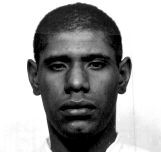
James Carl Lee Davis
Murderer Brian Kevin Rosenfeld
Murderer · USA · 1985
Brian Kevin Rosenfeld Brian Kevin Rosenfeld was sentenced to three concurrent l…
23 victims
Brian Kevin Rosenfeld
Murderer · USA · 1985
Brian Kevin Rosenfeld Brian Kevin Rosenfeld was sentenced to three concurrent l…
23 victims
 Marvin Gray
Murderer · USA · 1975
Marvin Gray was convicted killer who claimed responsibility for 23 slayings and…
23 victims
Marvin Gray
Murderer · USA · 1975
Marvin Gray was convicted killer who claimed responsibility for 23 slayings and…
23 victims
 Yahweh ben Yahweh
Murderer · USA · 1980
Yahweh ben Yahweh was born and legally named Hulon Mitchell Jr. (October 27, 19…
23 victims
Yahweh ben Yahweh
Murderer · USA · 1980
Yahweh ben Yahweh was born and legally named Hulon Mitchell Jr. (October 27, 19…
23 victims
 Russell Ellwood
Murderer · USA · 1991
Russell Ellwood was a former taxi driver. Authorities suspected him of killing…
20 victims
Russell Ellwood
Murderer · USA · 1991
Russell Ellwood was a former taxi driver. Authorities suspected him of killing…
20 victims
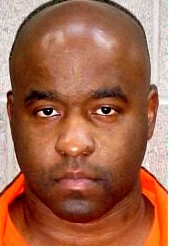 Aryon Williams
Murderer · USA · 1990
Aryon Williams was convicted in Superior Court (Pinal) of first-degree murder,…
1 victim
Aryon Williams
Murderer · USA · 1990
Aryon Williams was convicted in Superior Court (Pinal) of first-degree murder,…
1 victim
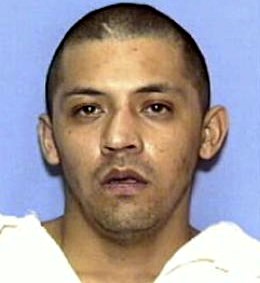 Michael Rosales
Murderer · USA · 1997
Michael Rosales was convicted of capital murder and robbery and was sentenced t…
1 victim
Michael Rosales
Murderer · USA · 1997
Michael Rosales was convicted of capital murder and robbery and was sentenced t…
1 victim
 Amy Lee Black
Homicide · USA · 1990
Amy Lee Black was 16 years and six months old at the time of the crime. She was…
1 victim
Amy Lee Black
Homicide · USA · 1990
Amy Lee Black was 16 years and six months old at the time of the crime. She was…
1 victim
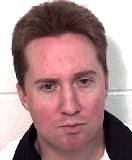 Mark Howard McClain
Murderer · USA · 1994
Mark Howard McClain was a white male. He was known by the aliases “A.K.A. MALAC…
1 victim
Mark Howard McClain
Murderer · USA · 1994
Mark Howard McClain was a white male. He was known by the aliases “A.K.A. MALAC…
1 victim
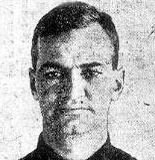 William Williams
Murderer · USA · 1905
William Williams was a Cornish immigrant who worked as a miner in Saint Paul, M…
2 victims
William Williams
Murderer · USA · 1905
William Williams was a Cornish immigrant who worked as a miner in Saint Paul, M…
2 victims
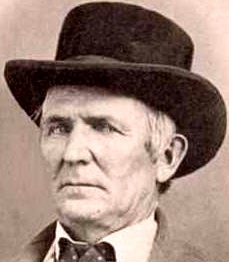 John Doyle Lee
Murderer · USA · 1857
Name: John Doyle Lee Lifespan: September 12, 1812 - March 23, 1877 Legal outcom…
120 victims
John Doyle Lee
Murderer · USA · 1857
Name: John Doyle Lee Lifespan: September 12, 1812 - March 23, 1877 Legal outcom…
120 victims
- Gender
- male
- Country
- USA
- Location
- Travis County, Texas, USA
- Date of birth
- February 8, 1963
- Age at first offence
- 21
- Characteristics
- rape, robbery
- Victim profile
- Evet Johnson, 15; Tyron Johnson, 5, and Tom Johnson, 4
- Method of murder
- Beating with a lead pipe
- Date(s) of murder
- March 3, 1984
- Years active
- 1984
- Date of arrest
- —
- Status
-
Executed
Executed by lethal injection in Texas on September 9, 1997
Timeline
- March 3, 1984 — James Carl Lee Davis entered the home of his neighbor, Pauline Johnson, without permission, and brutally attacked her young children.
- Age 6 — After foot surgery, nurses reported that Davis made obscene statements, constantly referred to sexual matters, expressed his desire to have sexual relations with them, and masturbated frequently in front of them and other patients.
- Age 13 — Davis was arrested for the attempted rape of a 35-year-old woman who lived in his neighborhood.
- 1979 — Gerald Frank McKimmey, chief social worker at Austin State Hospital’s adolescent unit, dealt with Davis during a 1979 admission when Davis was 16 years of age.
- 1976 — A physician’s report found that “Brain damage is not present.”
- April 19, 1995 — The United States Court of Appeals for the Fifth Circuit issued its decision in James Carl Lee Davis v. Wayne Scott, Director, Texas Department of Criminal Justice, Institutional Division.
Background
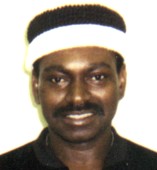
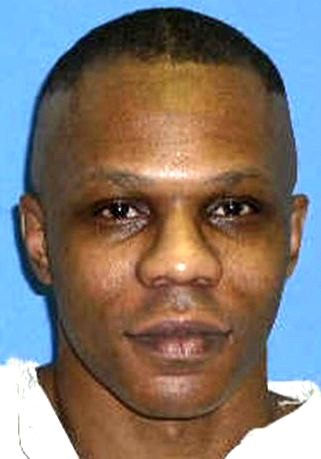
James Carl Lee Davis entered the home of his neighbor, Pauline Johnson, without permission, and brutally attacked her young children. Three of the four children died due to multiple skull fractures. A jury convicted Davis of capital murder based on the death of one child, Yvette, who exhibited evidence of sexual assault.
During the punishment phase of Davis’s trial, the court instructed the jury to answer two Texas statutory special issues. The jury unanimously answered both issues in the affirmative, and the trial court assessed punishment as death by lethal injection. The Texas Court of Criminal Appeals affirmed. The United States Supreme Court denied certiorari. Davis sought habeas relief in Texas state court, where the state judge recommended denial and the Texas Court of Criminal Appeals denied that relief in an unpublished opinion.
Davis then sought federal habeas relief pursuant to 28 U.S.C. Sec. 2254. After the State moved for summary judgment, the matter was referred to a magistrate judge, who recommended granting the motion. In November 1993, relying on intervening case law, the district court declined to follow the recommendation. The district court believed Davis raised a Penry claim that the two Texas statutory special issues prevented the jury from giving effect to mitigating evidence, including mental instability, in violation of the Eighth and Fourteenth Amendments. The district court ordered commutation of the death sentence unless the State appealed to the Fifth Circuit or conducted a new sentencing hearing within 180 days.
The district court held that Teague prohibited it from considering Davis’s contentions that TEX.CODE CRIM.PRO.CRIM.PROC. art. 37.071(g) (Supp.1986) (proscribing disclosure to a venireman or juror about the effect of a hung jury on the special issues) affected unconstitutionally the punishment phase and jury voir dire.
In the Fifth Circuit, the State challenged the Penry ruling. Davis cross-appealed, contending that Teague did not bar challenging how the punishment phase and jury voir dire were affected unconstitutionally by the statutory proscription against disclosing to the jury or venire the effect of a hung jury on the special issues.
The offence
On March 3, 1984, James Carl Lee Davis entered the home of his neighbor, Pauline Johnson, without permission, and brutally attacked her young children. Based on the death of one of the children, Yvette, who exhibited evidence of sexual assault, a jury convicted Davis of capital murder.
The facts of the sexual assaults were addressed in the appeal as follows: only one victim, Yvette Johnson, was female and assaulted sexually; the other two victims, her brothers, did not exhibit any evidence of sexual assault.
Trial
The jury convicted Davis of capital murder based on the death of Yvette, who exhibited evidence of sexual assault.
During the punishment phase, the court instructed the jury to answer two Texas statutory special issues. Because the jury unanimously answered both issues in the affirmative, the trial court assessed punishment as death by lethal injection.
The trial court instructed the jury that if it answered both special issues “yes,” the sentence would be death; if it answered “no” to either or both, the sentence would be confinement for life. The court instructed: “You may not answer any issue 'yes' unless you agree unanimously. You may not answer any issue 'no' unless ten or more jurors agree.” The court also instructed the jury that: “[e]vidence presented in mitigation of the penalty may be considered should the jury desire, in determining the answers to either of the [special] issues”.
Texas statutory special issues
The two Texas statutory special issues submitted during the punishment phase were:
- “Do you find from the evidence beyond a reasonable doubt that the conduct of the defendant that caused the death of the deceased was committed deliberately and with the reasonable expectation that the death of the deceased or another would result?”
- “Do you find from the evidence beyond a reasonable doubt that there is a probability that the defendant would commit criminal acts of violence that would constitute a continuing threat to society?”
The trial court defined “deliberately” as: “a manner of doing an act characterized by or resulting from careful consideration: 'a conscious decision involving a thought process which embraces more than mere will to engage in the conduct'”.
During punishment-phase closing argument, Davis’s attorney focused on the phrase “careful consideration”: “The two words that are so critical to deciding this question are 'careful consideration'. In other words, before you can answer [the first special issue] yes, you have to be convinced beyond any reasonable doubt that James Davis carefully considered what he was going to do before he did it. Okay? If he carefully considered what he was going to do before he did it. And I submit to you that the evidence in this case, gruesome though it may be, simply does not show that he carefully considered anything. I submit to you right now that there is a reasonable doubt on that issue, and you're going to have to answer that question no. ... The upshot of all of these [medical] records is that James Davis' mind is so diseased or damaged or whatever that, quite frankly, ladies and gentlemen, he's incapable of carefully considering anything. After suggesting that Davis may have been under the influence of drugs or alcohol, the attorney continued: “[The prosecution] says we haven't brought you any experts to tell you that. I mean, do we need to bring an expert on something like that? Of course not. Drugs or alcohol, in an already clouded mind like that, has to just take whatever little control he's got and throw it out the window. Who knows what he was under?” The attorney concluded: “Can you say beyond a reasonable doubt that James Davis carefully considered what he was going to do before he did it? No. Given his crippled mind, and given what the facts of the offense show, and what they don't show, there is no way to escape that doubt. I submit to you that question should be answered no.”
During punishment-phase closing argument, Davis’s attorney also discussed future dangerousness: “Let's focus on this future dangerousness as it really is in the concrete world. He--If he is not given the death penalty, he is going to serve a life sentence in the Texas Department of Corrections. That is his future environment that we are talking about, and I don't need to tell anybody that it is a very structured environment. ... But one of the main themes that you will see all through these reports is that when you put this little boy, or this teenager, or whatever he was at that stage, in a situation with a lot of structure, he did pretty damn good. He did good.”
Sentencing
Because the jury unanimously answered both Texas statutory special issues in the affirmative, the trial court assessed punishment as death by lethal injection.
The Fifth Circuit discussed the statutory scheme governing sentencing:
- If the jury returned an affirmative finding on each issue, the court was to sentence the defendant to death.
- If the jury returned a negative finding on or was unable to answer any issues submitted under the article, the court was to sentence the defendant to confinement in the Texas Department of Corrections for life.
Investigation
No investigation details beyond the facts of the offence and the medical/psychological evidence are stated in the provided material.
Appeals
Penry claim and jury instructions on mitigation
The Fifth Circuit addressed whether Davis’s Penry claim failed. The court stated that for a Penry claim it must determine: “(1) that the ... evidence was constitutionally relevant mitigating evidence, and, if so, (2) that the ... evidence was beyond the 'effective reach' of the jurors.”
The Fifth Circuit considered whether Davis presented constitutionally relevant mitigating evidence and whether any such evidence was beyond the effective reach of the jury.
Relevant mitigating evidence
The court stated that evidence of a disadvantaged background or emotional and mental problems did not raise a Penry claim ipso facto. The court described that evidence must show:
- “a 'uniquely severe permanent handicap[ ] with which the defendant was burdened through no fault of his own'”
- “that the criminal act was attributable to this severe permanent condition.”
Dr. Richard Coons, court-appointed psychiatrist who examined Davis just prior to trial, testified that Davis suffered from a personality/behavioral disorder and that he did not suffer from paranoid schizophrenia or any other psychotic disorder. The Fifth Circuit also noted that even assuming Davis suffered from paranoid schizophrenia or some other psychotic disorder, Davis failed to present evidence linking that condition to the crime, including any link to the murder of Yvette Johnson.
The Fifth Circuit also addressed evidence of sexually deviant behavior. After undergoing foot surgery at age six, Davis spent the next several weeks in the hospital. Nurses reported that he continually made obscene statements, constantly referred to sexual matters, expressed his desire to have sexual relations with them, and masturbated frequently in front of them and other patients.
At age 13, Davis was arrested for the attempted rape of a 35-year-old woman who lived in his neighborhood.
Regarding abusive childhood mitigation, the Fifth Circuit cited discussion that abused childhood could rise to the level of a Penry claim if traumatic events caused psychological effects to which criminal conduct was attributable. The district court had noted: “there is no documented medical evidence of Davis' childhood abuse”. The Fifth Circuit stated that there was evidence of parental neglect and that medical records indicated Davis may have been subjected to abuse. It described that Davis’s mother would leave her six young children alone at home for days at a time. It also stated that at other times Davis would be left with his grandmother. It described that when Davis cut his hand severely, his mother waited two days before taking him to the hospital, preventing the doctors from being able to suture the wound. The Fifth Circuit stated that Davis’s reliance solely on medical records from youth did not establish Penry-type evidence and that there was no evidence the incidents were traumatic enough to cause psychological effects, let alone attributable to the crime. The Fifth Circuit concluded that Davis failed to link the claimed conditions to the crime.
The Fifth Circuit concluded that the Penry claim failed on this basis alone.
Effective reach of the jury and instructions
In the alternative, the Fifth Circuit addressed whether the mitigating evidence was beyond the effective reach of the jury. It noted that after instructing on the two special issues, the trial court instructed: “[e]vidence presented in mitigation of the penalty may be considered should the jury desire, in determining the answers to either of the [special] issues”.
The Fifth Circuit analyzed the first special issue involving “deliberately,” and contrasted it with Penry. The Fifth Circuit stated that unlike Penry’s jury, Davis’s jury was given an instruction defining “deliberately” and also given a mitigation instruction. It cited that in Penry the absence of jury instructions defining “deliberately” created uncertainty about whether jurors could give effect to mitigating evidence. The Fifth Circuit described the issue as whether jurors would be able to consider the mitigating evidence and whether the additional instruction in Davis’s case provided a sufficient means to consider it. It concluded that holding the instructions inadequate would require creating a new rule of constitutional law on collateral review, barred by Teague.
Because the Fifth Circuit determined Davis’s jury had an adequate vehicle through the first special issue, it did not decide whether the second special issue provided an additional adequate vehicle. In the alternative, it discussed the continuing threat/dangerousness issue and concluded that Davis did not demonstrate that he was unable to learn from his mistakes. It described testimony by Gerald Frank McKimmey, who dealt with Davis during a 1979 admission when Davis was 16 years of age, stating Davis did well in the structured environment and referencing a social history report prepared upon admission. The report stated: “a proper placement outside the home can be obtained for this patient and he can gain some direction in a positive way. He has insight to this need and indicates he wants to find somewhere else to go other than into the home.”
The Fifth Circuit also described testimony from David Adcock, Davis’s special education teacher in sixth and seventh grades, who testified that although Davis was learning disabled and had low self-esteem, he was a “tender-hearted, a very kind young man”. Another teacher described Davis as “cooperative ... very creative, very calm, anxious to please”.
The Fifth Circuit concluded that, based on this evidence and the mitigating instruction, Davis’s jury was not “compelled” to answer the second special issue in the affirmative; it could give mitigating effect to the evidence regarding his condition.
The Fifth Circuit concluded that there were independent bases for concluding that the Penry claim failed:
- Davis failed to present constitutionally relevant mitigating evidence.
- Assuming mitigating evidence was presented, it was not beyond the effective reach of the jury under the first or second special issue.
Accordingly, the Fifth Circuit stated that because Davis did not make a claim within the ambit of Penry and was seeking a new rule on collateral review, his Penry claim was barred by Teague. The Fifth Circuit therefore reversed the district court on this issue.
Article 37.071(g) and jury voir dire/hung jury effect
The Fifth Circuit addressed Davis’s cross-appeal regarding the statutory proscription in article 37.071(g), which prohibited informing jurors or prospective jurors of the effect of a hung jury on the special issues. The Fifth Circuit noted that Davis contended the proscription affected the punishment phase and jury voir dire impermissibly.
The court discussed that:
- The statutory proscription foreclosed the jury from being advised on the effect of a hung jury on either special issue.
- The court referenced Webb v. Collins, 2 F.3d 93 (5th Cir.1993), where a similar contention was held to be precluded by Teague.
The Fifth Circuit described the trial court’s instructions related to unanimity and voting thresholds and then discussed that, pursuant to Texas law, the jury was not informed that if it was unable to satisfy the “12-10 Rule” requirements, Davis would be sentenced to life imprisonment. It explained that if the jury could not satisfy the requirements of the “12-10 Rule,” a “hung jury” would result and Davis would be sentenced to life imprisonment.
The Fifth Circuit also addressed Davis’s claim that the prohibition interfered with defense counsel’s ability to exercise peremptory challenges during voir dire. The Fifth Circuit stated that Davis failed to identify precedent indicating he was not seeking a new rule on collateral review and concluded that concerns could be addressed without disclosing the statutory effect of three or more “no” votes. It therefore held Davis’s second challenge to article 37.071(g) was foreclosed by Teague.
The court discussed Teague’s narrow exceptions for new rules, including a category-of-conduct exception and a “watershed” rules of criminal procedure exception. The Fifth Circuit stated that Davis failed to raise the “watershed” argument before the district court, and it was not properly before the appellate court for consideration for the first time on appeal. The court also discussed that even if properly before it, Davis failed to demonstrate that article 37.071(g)’s proscription was of such a nature as to “so distort” the accuracy of the jury’s answers to the special issues.
The Fifth Circuit discussed Davis encouraging the court to create an additional Teague exception where a defendant raised the constitutional complaint in every forum and it was rejected for reasons other than delay or procedural default. The Fifth Circuit stated this was raised for the first time on appeal and declined to create an additional exception.
Disposition of the appeals
The Fifth Circuit stated: “We AFFIRM in part, REVERSE in part, and REMAND with instructions to deny relief.”
The panel majority’s judgment affirmed in part, reversed in part, and remanded with instructions to deny habeas relief.
Special concurrence
KING, Circuit Judge, specially concurring. The judge stated agreement with the panel majority that the jury was able to consider Davis’s evidence as mitigating and that granting federal habeas relief would create a “new rule” barred by Teague. The concurrence also stated that Webb v. Collins controlled the outcome of the cross appeal and concurred in the judgment affirming in part, reversing in part and remanding with instructions to deny habeas relief.
Outcome
James Carl Lee Davis was executed by lethal injection in Texas on September 9, 1997.
The Fifth Circuit disposition instructed to deny habeas relief after reversing the district court’s conditional commutation of the death sentence.
Spotted an error, or have more information about this case?