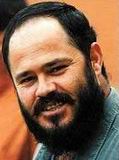
Stewart Wilken
Serial killer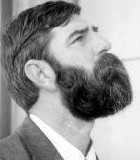 Louis Van Schoor
Serial killer · South Africa · 1986
Louis van Schoor was a security guard and an ex-policeman who was convicted and…
39 victims
Louis Van Schoor
Serial killer · South Africa · 1986
Louis van Schoor was a security guard and an ex-policeman who was convicted and…
39 victims
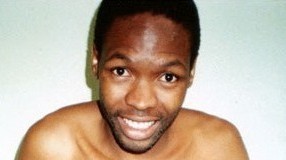 Moses Sithole
Serial killer · South Africa · 1994
Moses Sithole (November 17, 1964) was a serial rapist and serial killer in Sout…
38 victims
Moses Sithole
Serial killer · South Africa · 1994
Moses Sithole (November 17, 1964) was a serial rapist and serial killer in Sout…
38 victims
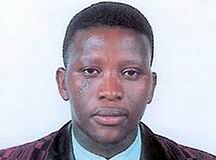 Norman Afzal Simons
Serial killer · South Africa · 1986
Norman Afzal Simons was a former teacher. He later converted to Islam in 1993,…
22 victims
Norman Afzal Simons
Serial killer · South Africa · 1986
Norman Afzal Simons was a former teacher. He later converted to Islam in 1993,…
22 victims
 Velaphi Ndlangamandla
Serial killer · South Africa · 1998
Velaphi Ndlangamandla, known as the “saloon killer”, was convicted in connectio…
19 victims
Velaphi Ndlangamandla
Serial killer · South Africa · 1998
Velaphi Ndlangamandla, known as the “saloon killer”, was convicted in connectio…
19 victims
 Randy Schoenwetter
Murderer · USA · 2000
Name: Randy Schoenwetter Date of birth: 10/27/81 Eighteenth Judicial Circuit: B…
2 victims
Randy Schoenwetter
Murderer · USA · 2000
Name: Randy Schoenwetter Date of birth: 10/27/81 Eighteenth Judicial Circuit: B…
2 victims
 David Michael Clark
Murderer · USA · 1987
David Michael Clark (offender #874) was executed by lethal injection in Texas o…
2 victims
David Michael Clark
Murderer · USA · 1987
David Michael Clark (offender #874) was executed by lethal injection in Texas o…
2 victims
 Holly Grigsby
Murderer · USA · 2011
Holly Grigsby was sentenced to life in prison without parole on July 15, 2014.…
4 victims
Holly Grigsby
Murderer · USA · 2011
Holly Grigsby was sentenced to life in prison without parole on July 15, 2014.…
4 victims
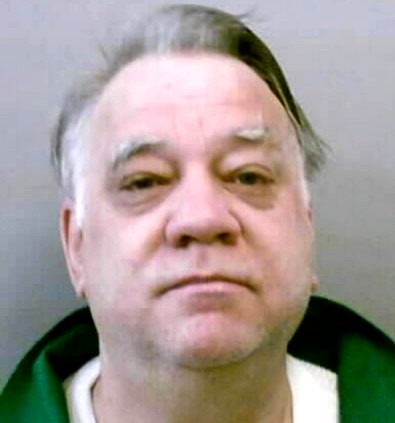 Luke Williams
Murderer · USA · 1991
Luke Williams was convicted of murdering his wife, Linda Williams, and his 12-y…
2 victims
Luke Williams
Murderer · USA · 1991
Luke Williams was convicted of murdering his wife, Linda Williams, and his 12-y…
2 victims
- Gender
- male
- Country
- South Africa
- Location
- Port Elizabeth, South Africa
- Date of birth
- November 11, 1966
- Age at first offence
- 24
- Characteristics
- rape, cannibalism, necrophilia
- Victim profile
- Monte Fiko, 15 (street child) / Virginia Gysman, 25 (prostitute) / Mercia Papenfus, 37 (prostitute) / A 14-year-old street boy / Another young street child / Georgina Boniswa Zweni, 42 (prostitute) / His 10-year-old daughter, Wuane / Katriena Claassen, 22 (prostitute) / Another street child / Henry Bakers, 12
- Method of murder
- Strangulation
- Date(s) of murder
- 1990 - 1997
- Years active
- 1990–1997
- Date of arrest
- January 31, 1997
- Status
-
Life imprisonment
Sentenced to seven terms of life imprisonment on February 23, 1998
Case record: Stewart Wilken
Status
Stewart Wilken was sentenced to seven terms of life imprisonment on February 23, 1998.
The offence
Stewart Wilken, also known as "Boetie Boer", was convicted for killings and sodomy involving two distinct victim types: female prostitutes and young boys. He was also described as having killed his adolescent daughter.
He confessed to ten murders and five counts of sodomy, and he told his lawyer about the crimes in explicit detail.
Victims and offences described in the case
Henry Bakers
On January 22, 1997, a 12-year-old boy named Henry Bakers disappeared. His mother, Ellen Bakers, became uneasy when he did not arrive home by Thursday evening after she heard that Henry had left for home on Wednesday.
Sgt. Ursula Barnard investigated the disappearance. A friend told her that the boy had to go and buy milk for his parents and later saw Henry with a man called Stewart Wilken in Dyke Way. The friend said Wilken asked Henry where he was going and that the man said it was none of his business.
Wilken was arrested and questioned. He told Sgt. Barnard that he had been with Henry on Wednesday but that he knew nothing about the disappearance, alleging he had spent the night at a lady friend's house. He was released, and Wilken was rearrested on January 31, 1997 after the alibi was found to be false.
Wilken later admitted killing Henry and told police where he had left the bodies. He took investigators to the boy’s body hidden in bushes near Algoa Park. The boy’s body was found infested with maggots.
In his confession, Wilken said he met Henry in Algoa Park, that Henry asked him about sex, and that Wilken took the boy to an open field on the outskirts of Algoa Park. Wilken said he told the boy to take off his clothes and proceeded to perform fellatio. Wilken stated that he told Henry to lie on his back and he sodomized the boy. He said Henry cried and protested and that he began to strangle Henry. Wilken stated that when the boy died, he ejaculated.
Wilken also alleged Henry was being physically abused by his parents and stated that he wanted to “send Henry's soul to God”.
His parents said they scolded Henry when naughty and hit him on his buttocks, but that they had never kicked him as Wilken alleged.
Wuane (his daughter)
Wuane was Stewart Wilken’s daughter from his first marriage. She was last seen on September 29, 1995, by her half-sister, who was Wilken’s first wife’s daughter from a previous relationship.
Wuane was never seen alive again.
Wilken’s half-sister testified that Wilken and Wuane had a good relationship and that he visited her frequently and brought her presents. The half-sister said Wilken loved Wuane.
The narrative described Wilken as visiting with Wuane’s mother and that later that afternoon the half-sister saw Wilken with Wuane sitting on a sidewalk about 150 feet from their home.
Wilken stated that he had been concerned about Wuane’s welfare and that her stepfather was molesting her and that there was not enough food in the house. Wilken’s half-sister admitted there were times when they did not have food and that the new stepfather did not like them.
Wilken claimed Wuane told him she wanted to run away. Wilken said he took her to Happy Valley, describing it as a garden filled with fairy-tale figures such as dwarves and stating those were some of his happiest memories. After Wilken left his second wife’s home, he said he went to stay in the bushes near Happy Valley.
Wilken said he inspected Wuane’s vagina and found that she was “no longer a virgin”. He said he wanted to save her from the kind of life that he had had and strangled her, thereby “sending her soul to God”.
He said he removed her clothes and kept her body, talking to it and sleeping next to it at night. When the body had decomposed, he covered the skeleton with a tarpaulin. He placed her clothes next to him as if they were still being worn.
Wilken denied having any sexual contact with Wuane both before her death and afterwards.
Sgt. Barnard was informed by a colleague that Wilken's daughter, Wuane, had disappeared in 1995 and that there were also two charges of sodomy being investigated against him connected with the two sons of his second wife, Victoria. It was said that Wuane had last been seen in Wilken’s company.
Monte Fiko
The narrative described Wilken’s first confirmed victim as murdered in February 1990: 15-year-old Monte Fiko, described as a street child. Wilken sodomized the boy at Cilliers Secondary School in Sydanham and strangled him.
Other victims and crimes described in the case
The narrative described additional killings involving prostitutes and young street boys. It included the following specific allegations and details:
- On October 3, 1990, after an argument with his first wife, Wilken picked up a prostitute, Virginia Gysman, age 25, at Russel Road. The narrative said he paid her and took her to Dagbreek Primary School where they had sex, then penetrated her anally. It said that when she complained, he strangled her with her clothing and ejaculated as she died, and that he left her body in the schoolyard.
- On January 10, 1991, Wilken was solicited by Mercia Papenfus, age 37, at the Red Lion Hotel. They went to St. George's Park. The narrative said that when Mercia demanded her payment before intercourse, Wilken flew into a rage, strangled her, then sodomized her, and left her body in the park.
- On October 21, 1991, Wilken met a 14-year-old street boy who allegedly agreed to have sex with him for money. The narrative said Wilken took the boy to St. George's Park, that the boy wanted his money which angered Wilken, and that the boy tried to flee but Wilken overpowered him and sodomized him. It said that Wilken ejaculated as he strangled his victim.
- In 1993, somewhere between June and September, Wilken met another young street child and solicited him. The narrative said they went to Target Kloof, where Wilken sodomized and strangled the boy, and that he hid the body in the ravine.
- On July 27, 1995, Wilken killed a prostitute again: Georgina Boniswa Zweni, aged 42. The narrative said he took her to Prince Alfred's Park, sodomized and strangled her, then sexually assaulted her with a knife. It described testimony that the wound was star-shaped and appeared as if the assailant “stuck in the knife, pulled it out, stuck it in and pulled it out” repeatedly. The narrative said that in all he counted at least 20 stab wounds, including a cluster of five next to her navel, and that he characterized it as “a wild knife stabbing.” It said Wilken cut off her nipples and ate them at the scene, and that her clothing was thrown into a fish pond.
- On September 29, 1995, Wilken murdered his 10-year-old daughter, Wuane.
- On May 25, 1996, Wilken solicited a 22-year-old prostitute, Katriena Claassen, at the Albany Road interchange. The narrative said they went down to the beach. It said Wilken shoved a piece of plastic bag down her throat to keep her from screaming, then sodomized and strangled her.
- Somewhere between May and August of 1996, Wilken met another street child and took him to Fort Frederick. The narrative said that after the boy masturbated him, Wilken told the boy to undress and sodomized him. It said the boy threatened to tell the police and that Wilken strangled him and hid the body. It further stated that it was clear he would have killed the boy anyway.
- The narrative also stated that Wilken returned to the bodies of the boys he had killed and rubbed vinegar and butter on the boys' feet to hide their scent from police dogs. It said he rolled up pieces of newspaper and inserted them into their anuses to keep the maggots out so he could commit necrophilia. The narrative stated that he denied sexual interaction with Wuane both before her death and afterwards.
Bodies and discovery details
The narrative said that Wilken showed police where he had left the bodies and took them to the place behind the Garden Court Holiday Inn, where he had kept Wuane's body and later her skeleton for almost six months. This was said to finally provide the identity of a skeleton found there beneath a blue-green tarpaulin on May 22, 1996. It said forensic experts at the time identified the skeleton as belonging to a white girl younger than 12. The narrative also stated that Wilken later took investigators to Henry's body, hidden in bushes near Algoa Park, and that the boy’s body was found infested with maggots.
Investigation
The Child Protection Unit contacted Sgt. Ursula Barnard to investigate Henry Bakers’s disappearance. It said Barnard discovered that Henry had been at his mother’s house on Wednesday afternoon, after which he played with a friend at a nearby park, and that the friend later saw Henry with Stewart Wilken in Dyke Way.
Barnard arrested Wilken on January 28, 1997, and questioned him. Wilken was released and then rearrested on January 31, 1997 after his alibi was found to be false.
Sgt. Barnard approached Sgt. Derrick Norsworthy of the Murder and Robbery Unit. The narrative stated that Norsworthy had been trained by Dr. Micki Pistorius in the investigation of serial murder, including advanced interviewing and interrogation techniques.
Norsworthy brought Wilken to his office. Wilken introduced himself as “Boetie Boer” (“Brother Farmer”), the name he was generally known by. The narrative described Norsworthy sitting Wilken facing a photograph of Norsworthy's daughter, almost the same age as Wuane had been, and leaving Wilken alone for a while. Upon returning, Norsworthy found Wilken staring at the photograph.
The narrative said Norsworthy drew Wilken’s attention to framed certificates on his wall signifying he had successfully completed training as an investigator of serial homicide. It then stated that Wilken’s eyes found the photograph once more and that Norsworthy told Wilken he knew Wilken had killed the two children. It said Norsworthy also knew that Wilken had revisited the bodies to fantasize and commit necrophilia.
The narrative reported that Wilken went silent and then admitted he had killed his daughter, Wuane, and Henry Bakers. It further stated that Wilken said he returned to the decomposing body of the boy that very morning to have sex with it.
After this, the narrative stated that Wilken confessed fully to his lawyer, describing the crimes in explicit detail, using particularly foul language. The narrative said this kept Norsworthy and colleagues busy for months trying to locate the murder dockets pertaining to the crimes Wilken described.
It stated that Wilken told Norsworthy that there were probably at least 10 murders.
Arrest
Stewart Wilken was arrested on January 28, 1997 and questioned. He was released and rearrested on January 31, 1997.
The narrative also stated that Wilken was arrested in January 1997 on charges of murdering his own daughter and a 12-year-old boy, Henry Baker.
Trial
Charges
Stewart Wilken was charged with 10 counts of murder and five counts of sodomy on February 3, 1997.
Court proceedings and testimony
The trial included testimony from Dr. Micki Pistorius and Prof. Tuviah Zabow. It stated that Pistorius said serial killers in general and Wilken in particular cannot be rehabilitated, and that Pistorius testified during the proceedings.
During Pistorius’s testimony, Wilken asked to be excused to go to the bathroom and indicated to Sgt. Norsworthy that he was going to masturbate.
It stated that Wilken’s defence did not contest seven of the murder charges and two of the sodomy charges. For the remaining charges, the defence argued there was not sufficient evidence to prove Wilken’s involvement beyond a reasonable doubt.
Verdict
Mr Justice Chris Jansen found Wilken guilty on seven counts of murder and two of sodomy on February 20, 1998.
The narrative stated that the murder charges related to Wuane, Henry Bakers, and Monte Fiko, as well as all four of the women.
Sentencing
On February 23, 1998, Stewart Wilken was sentenced to seven terms of life imprisonment.
Mr Justice Chris Jansen said Wilken had to be removed from the community. The narrative stated that if the death penalty had still been available, he would have imposed it. It said he mentioned that while almost everyone had turned away from the video's shown, Wilken had displayed no emotion.
The narrative stated that Wilken’s wife, Veronica, attended the proceedings and that after sentence was passed they were reconciled, spoke for a couple of minutes, and parted with a passionate kiss.
Appeals
No appeal outcome or appeal record was provided in the supplied material.
Outcome
Stewart Wilken was convicted of seven counts of murder and two counts of sodomy and received seven life sentences.
Other details
Additional quoted material by Dr. Micki Pistorius
The narrative included multiple quotations from Dr. Micki Pistorius, including:
“nil”
“raw sexual aggression”
“development”
“lone wolves”
“trial-runs”
“He has no control of himself under these circumstances. He believes that his victim deserves to die, and he cannot stop killing,”
“They become addicted to the feeling of power and control which killing gives them,”
“anything petty can set him off”.
The narrative also included other quoted phrases attributed to Pistorius, including:
- “sending her soul to God”
- “jellybean effect”
Additional quoted material related to medical testimony
The narrative included the forensic pathologist’s quoted description as:
“stuck in the knife, pulled it out, stuck it in and pulled it out”
It also included Wilken’s characterization:
“a wild knife stabbing.”
Childhood and background
The narrative described Wilken’s early childhood as follows:
- He was born on November 11, 1966, in Boksburg.
- When he was about 6 months old, he and his 2-year-old sister were left in a phone booth and later found by a domestic worker, who took them to the home of her employer.
- The narrative said the man, known only as “Doep”, subjected Stewart to terrible abuse. It said he burned Stewart with cigarettes on his genitals, fed his food to dogs, and made him eat with animals from their bowls. It stated that Doep engaged in acts of bestiality with his dogs and made Stewart lick his penis afterwards. It said Stewart’s sister disappeared at some point and he did not know what happened to her. It said this went on for a year and a half.
- When Stewart was 2 years old, the narrative said Mr and Mrs Wilken adopted him out of compassion. It said he was undernourished and infested with lice, and that Mrs Wilken later confirmed the cruelty perpetrated by Doep.
- The narrative said the Wilkens gave the boy the name of Stewart Wilken, although he called himself “Boetie Boer”.
- At some point they moved to Port Elizabeth.
- The narrative stated that Stewart did not do well at school, failed the third grade three times, and was mocked by peers because he was adopted.
- It said that Stewart assaulted the teacher the next day and was severely beaten by the principal in front of other children.
- It stated that Stewart often bit his stepmother and other children. It said his stepmother punished him by locking him in his room where he kicked over lights and other furniture and at times locked him up in a cupboard. It said he was punished for wetting his bed.
- The narrative described an incident where a boy attacked him; when Stewart fought back, he was sent home, and that Stewart recalled that his stepmother did not take his side.
- The narrative stated that Stewart decided he would be his own “mother, father, sister and auntie”.
The narrative added the following milestones and incidents:
- At the age of 8, he started smoking marijuana.
- When he was 9, a deacon invited Stewart to his home after Sunday school, and the narrative stated the deacon sodomized the boy.
- During the same year, either before or after this incident, Stewart’s stepfather died.
- It stated that Stewart’s stepmother sent him to a reformatory. It said he was locked up without clothes as punishment and that older boys sodomized him. It stated he often tried to run away but had to return.
- After he completed Standard 9 (Grade 11), the narrative said Stewart enlisted in the Army, was discharged after four months when he attempted to commit suicide, and moved in with his stepmother in Despatch.
Marriages and relationships mentioned in the narrative
- Stewart met his first wife, Lynne, in a nightclub.
- On December 25, 1985, they had a daughter whom they named Wuane.
- Lynne stated that after Wuane’s birth, Wilken would only have anal sex with her, often in very uncomfortable positions.
- The narrative said Wilken later alleged Lynne turned to prostitution at that time.
- The narrative said the marriage was not a happy one, that Wilken assaulted his wife on numerous occasions, and that she had him arrested for smoking marijuana.
- The narrative said they got divorced and that Wilken vowed he would never have sex with a white woman again, for fear it might be his long-lost sister.
- The narrative said he met a woman, Veronica, who already had two sons, and that they married and had two daughters.
- It stated that this marriage also did not fare too well and that Veronica’s parents accused Wilken of sodomising the two boys.
- It stated that Wilken left the house and went to live in the bushes near Happy Valley.
- In the sentencing narrative, it stated that Veronica attended the proceedings and reconciled with him after sentence.
- A later section of the narrative referred to Lynn Havenga as first wife of one of the killers and the mother of Wilken’s 10-year-old daughter, Wuané. It stated that Lynn Havenga went missing in Missionvale on Friday evening and that her body was found next to the salt pans in Missionvale about 06:30 on Saturday. It stated she had been hit over the head with a blunt instrument and that she was mutilated almost beyond recognition.
- The narrative quoted Hermanus Havenga saying:
- It stated that Superintendent Johan van Greunen said on Sunday the woman’s body was found next to the salt pans in Missionvale about 06:30 on Saturday and that no arrests were made and the case was being investigated.
- The narrative quoted Havenga saying:
- The narrative also quoted Havenga:
- It stated Havenga said they had been married for five years and that his wife received a state disability benefit.
- The narrative stated that after meeting Lynn, she was described as “in a bad way” and quoted Havenga:
“The experience with Wilken had Lynn on her last legs and she became a nervous wreck. “She took various tablets, but I eventually got her to the stage where she could go without them,” Havenga said.
“She was hit numerous times with a brick against her head and she was mutilated almost beyond recognition.”
“Lynn lived in Algoa Park and would have joined me in Kirkwood at the end of the month,” and “She had apparently walked to a telephone booth to phone her third husband, Hermanus Havenga.”
“I heard that three men stormed them, grabbed her, forced her into a car and raced away in a car. “The child managed to escape,” he said.”
Imprisonment and psychological condition described
The narrative stated that Stewart Wilken was currently in St. Alban's Prison where he was tormented by hallucinations and delusions of persecution and that he believed that the ghosts of his victims were haunting him. It stated Dr. Pistorius (2000) felt that in the absence of being able to portray the role of the aggressor, he had reverted back to being the victim.
Another part of the narrative stated that he was serving his seven life sentences in a prison in Bloemfontein.
Comments attributed to Sgt. Derrick Nosworthy
The narrative included a quote from Inspector Derrick Nosworthy describing the investigation and arrest:
“Wilken was arrested in January 1997 on charges of murdering his own daughter and a 12-year-old boy, Henry Baker. “Wilken previously had a relationship with Baker's mother and witnesses who knew him, saw him with Henry before the boy disappeared,” Nosworthy said.”
It also stated that later Wilken admitted that he had committed ten murders and pointed out evidence to the police, and that Wilken appeared in court on nine counts of murder and two of sodomy, with other charges concerning cannibalism and necrophilia.
Spotted an error, or have more information about this case?