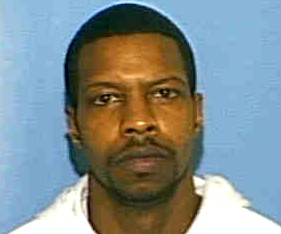
Adremy Dennis
Murderer Brian Kevin Rosenfeld
Murderer · USA · 1985
Brian Kevin Rosenfeld Brian Kevin Rosenfeld was sentenced to three concurrent l…
23 victims
Brian Kevin Rosenfeld
Murderer · USA · 1985
Brian Kevin Rosenfeld Brian Kevin Rosenfeld was sentenced to three concurrent l…
23 victims
 Russell Ellwood
Murderer · USA · 1991
Russell Ellwood was a former taxi driver. Authorities suspected him of killing…
20 victims
Russell Ellwood
Murderer · USA · 1991
Russell Ellwood was a former taxi driver. Authorities suspected him of killing…
20 victims
 Robert Martines Perez
Murderer · USA · 1994
Name: Robert Martines Perez · Other name used in proceedings: Robert Martinez P…
15 victims
Robert Martines Perez
Murderer · USA · 1994
Name: Robert Martines Perez · Other name used in proceedings: Robert Martinez P…
15 victims
 Billy Frank Vickers
Murderer · USA · 1993
Billy Frank Vickers Vickers was executed by lethal injection in Texas on Januar…
14 victims
Billy Frank Vickers
Murderer · USA · 1993
Billy Frank Vickers Vickers was executed by lethal injection in Texas on Januar…
14 victims
 Liam Reid
Murderer · New Zealand · 2007
Liam Reid was convicted of rape and murder and later described by a sentencing…
1 victim
Liam Reid
Murderer · New Zealand · 2007
Liam Reid was convicted of rape and murder and later described by a sentencing…
1 victim
 Beauford White
Mass murderer · USA · 1977
Beauford White was executed by electrocution in Florida on August 28, 1987. Whi…
6 victims
Beauford White
Mass murderer · USA · 1977
Beauford White was executed by electrocution in Florida on August 28, 1987. Whi…
6 victims
 Teresa Stone
Murderer · USA · 2010
Teresa Stone conspired with her minister and lover to kill her husband, Randy S…
1 victim
Teresa Stone
Murderer · USA · 2010
Teresa Stone conspired with her minister and lover to kill her husband, Randy S…
1 victim
 Gerald Gallego
Serial killer · USA · 1978
Gerald Armond Gallego (July 17, 1946 – July 18, 2002) was an American serial ki…
10 victims
Gerald Gallego
Serial killer · USA · 1978
Gerald Armond Gallego (July 17, 1946 – July 18, 2002) was an American serial ki…
10 victims
- Gender
- male
- Country
- USA
- Location
- Summit County, Ohio, USA
- Date of birth
- January 23, 1976
- Age at first offence
- 18
- Characteristics
- robbery, drug addict, alcohol
- Victim profile
- Kurt O. Kyle (male, 29)
- Method of murder
- Shooting ( sawed-off shotgun)
- Date(s) of murder
- June 5, 1994
- Years active
- 1994
- Date of arrest
- —
- Status
-
Executed
Executed by lethal injection on October 13, 2004 in Ohio
Case details
Adremy Dennis was convicted in Summit County, Ohio, of aggravated murder with death penalty specifications, attempted aggravated murder, aggravated robbery (3 counts), and unlawful possession of dangerous ordnance with firearms and physical-harm specifications. He was sentenced to death and was executed by lethal injection on October 13, 2004 in Ohio.
Timeline
- June 4–5, 1994 — Adremy Dennis and Leroy Lamar Anderson decided to rob people after speaking of “robbing somebody,” smoking marijuana and having drinks before encountering victims.
- June 5, 1994 — Dennis and Anderson robbed Dean R. Pizer and shot Kurt O. Kyle at point-blank range during a robbery outside Kyle’s home in Akron, Ohio.
- A few days after the murder — Akron police received an anonymous phone call stating someone at 371 Grand Avenue knew about the homicide; detectives went to the address and obtained information leading to a search and arrests.
- December 12, 1994 — A jury trial commenced.
- December 15, 1994 — The verdict form reflected guilty by jury to the indictment (date given as 12-15-94).
- December 20, 1994 — The jury returned a unanimous verdict and recommended the death penalty.
- December 29, 1994 — The Summit County Court of Common Pleas sentenced Dennis to death.
- January 5, 1995 — Dennis was admitted to prison.
- September 21, 2004 — A Death Penalty Clemency Review Hearing was held; the Ohio Parole Board voted to deny clemency.
- October 10, 2004 — A clemency-related interview occurred at the Mansfield Correctional Institution.
- October 13, 2004 — Dennis was executed by lethal injection.
The offence
During the early morning hours of June 5, 1994, Adremy Dennis and his accomplice, Leroy Lamar Anderson, decided to go to a bar and “meet some chicks.” Anderson spoke of “robbing somebody,” and the pair armed themselves with weapons: Dennis with a sawed-off shotgun and Anderson with a .25 caliber handgun. Before arriving at the bar, Dennis and Anderson smoked marijuana. After some drinks, the pair left the bar and encountered victims.
Dennis and Anderson first approached Dean R. Pizer in Akron, Ohio, telling him, “Give me your money. Don’t try and run, don’t try and run. You are going to die tonight, you are going to die.” Pizer went backwards, slid and rolled down a hill, and ran away unharmed. As he escaped, Pizer heard a gunshot “just left of me. There was a trash can or something got hit.” A shotgun shell was recovered from the area a few days later.
Minutes later, Dennis and Anderson confronted Martin Eberhart and Kurt Kyle in front of Kyle’s home. Kurt Kyle was 29 and was hosting a cookout and socializing after racing at Barberton Speedway earlier that evening. Eberhart was leaving the gathering, and Kyle walked with him to his car. While Eberhart was seated in his car talking with Kyle and they heard a loud noise described as a gunshot, Dennis and Anderson approached them in Kyle’s driveway out of the view of Kyle’s other guests.
Anderson demanded money while pointing a gun at Eberhart’s neck. Eberhart reached under the car seat for his wallet and handed Anderson $15. At the same time, Dennis demanded money from Kyle. Kyle searched his pockets and told Dennis that he had no money with him. Dennis then pulled out a sawed-off shotgun and shot Kyle in the head at point-blank range. The shot severed both carotid arteries and Kyle died instantly due to hypovolemic shock (loss of blood) from the gunshot wound. Eberhart testified that Dennis and Anderson ran away together “sprinting very fast.”
A neighbor, Anita Foraker, who lived in the neighborhood, was out walking her dog around 1:30 a.m. and heard a “loud pop type of sound.” About a minute later, she observed two young black males headed in the opposite direction and heard one say to the other, “Did you get it?”
Investigation and evidence
A few days after the murder, Akron police received an anonymous phone call stating that someone at 371 Grand Avenue knew about the homicide that past weekend. Detectives went to the address, met Anderson’s mother, and were told a possible suspect was staying at the house. The mother invited detectives in and gave permission to look around the house and to speak to her son, seventeen-year-old Lavar Anderson.
Detectives went to the basement and noticed a Miami Hurricanes jacket and a long, dark overcoat hanging up in the far corner on a bedrail. At that time, they took Anderson into custody and he provided detectives information about the location of the murder weapon.
After procuring a search warrant, police seized items from the basement, including:
- a .25 caliber pearl handle handgun,
- a 20 gauge sawed-off shotgun,
- seven shotgun shells,
- the two coats.
After the search, police received a call from officers at 120 Burton Avenue in the same general neighborhood. Police surrounded the house and apprehended Adremy Dennis.
At the police station, Dennis was advised of his Miranda rights and waived them. Dennis told several versions as to his whereabouts on June 4–5, 1994. In later statements, he admitted he and Anderson planned some robberies that night and admitted holding up Pizer, Eberhart, and Kyle. Dennis also admitted aiming the sawed-off shotgun at Kyle but claimed the gun went off accidentally. Dennis agreed to allow detectives to tape his statement. In his taped statement, Dennis said he and Anderson smoked marijuana and then drank at a bar before the robberies and murder. Dennis asserted he fired the sawed-off shotgun three times and that he “could barely focus” during the encounter with Kyle and Eberhart. After shooting Kyle, Dennis claimed he almost fell down and that Anderson had to help him flee the scene.
Yellow shotgun shell casings were found a few days after the murder. One was found in the area where the first man (Pizer) was accosted, and another was discovered in front of Kyle’s home. A forensic scientist with the Bureau of Criminal Identification and Investigation (BCI) determined that the two casings were fired from the sawed-off shotgun Dennis identified as his own. Nancy E. Bulger, a forensic scientist with BCI, was referenced as making the determination that the casings were fired from the sawed-off shotgun.
Arrest
Police arrested Adremy Dennis after surrounding a house at 120 Burton Avenue and apprehending him. Dennis waived Miranda rights and gave statements to detectives.
Trial
Charges and specifications
Dennis was indicted by a grand jury for:
- aggravated murder with two death specifications, including:
- murder during an aggravated robbery where Dennis was the principal offender (R.C. 2929.04[A][7]),
- murder committed as a course of conduct involving the killing or attempt to kill two or more persons (R.C. 2929.04[A][5]);
- attempted aggravated murder with a firearm specification (R.C. 2903.01(B) and 2923.02);
- aggravated robbery (three counts) (R.C. 2911.01(A)(1)), all with a firearm specification;
- unlawful possession of a dangerous ordnance (R.C. 2923.17) with a firearm specification and a specification for causing physical harm or actually threatening to cause harm to a person with a deadly weapon (R.C. 2941.143);
- the aggravated murder count also carried a firearm specification and death penalty specifications as stated.
Verdict
A jury trial commenced December 12, 1994. After deliberation, the jury found Dennis guilty as charged. The verdict date was given as 12-15-94 in the clemency materials, and the jury returned a unanimous verdict and recommended the death penalty on December 20, 1994.
Unsworn statements and mitigation testimony
Dennis gave unsworn testimony describing that he did not intend to shoot Kyle and that he “was drunk and nervous and the gun went off and I ran.” Dennis expressed remorse for what he had done to Kyle’s family.
During mitigation, the trial court referenced testimony from psychologists and other witnesses. Dr. James L. Brown testified on Dennis’s behalf and concluded factors that militated against imposing the death penalty, including Dennis’s development/lack of effective “parenting” until around age fifteen, Dennis’s intoxication at the time of the offense due to consuming alcohol and smoking marijuana dipped in embalming fluid, and Dennis’s youth. The court also referenced that Dennis has no adult criminal record and only two juvenile adjudications for criminal damaging and receiving stolen property.
Sentencing
On December 29, 1994, the Summit County Court of Common Pleas sentenced Adremy Dennis to death for aggravated murder with firearm specifications. The clemency materials also recorded sentencing details as follows:
- Count 1 (Aggravated Murder) — Sentenced to death; firearm specification provided 3 years prior to and concurrent with death.
- Count 2 (Attempted Aggravated Murder) — 10 to 25 years; firearm specification provided 3 years prior to and concurrent with 10–25.
- Count 3 (Aggravated Robbery) — 10–25 years; firearm specification provided 3 years prior to and concurrent with 10–25; specifications were merged as described in the sentencing notes and sentences were ordered to run concurrently as described.
- Count 4 (Aggravated Robbery) — 10–25 years; firearm specification provided 3 years prior to and concurrent with 10–25; count was ordered concurrent to counts 1 & 2 as described.
- Count 5 (Aggravated Robbery) — 10–25 years; firearm specification provided 3 years prior to and concurrent with 10–25; specifications were merged as described and count was ordered concurrent to counts 1 & 2 as described.
- Count 6 (Possession of Dangerous Ordnance) — 3–5 years; firearm specification provided 3 years prior to and concurrent with 3–5; count 6 was ordered concurrent with counts 1 and 2.
The materials recorded an aggregate sentence consisting of death consecutive with 12 years (specifications) consecutive with 23–55 years.
Appeals and habeas
Direct appeal and Ohio Supreme Court
The Ohio Court of Appeals affirmed the conviction and sentence of death in State v. Dennis (May 8, 1996) (unreported). The Ohio Supreme Court affirmed on September 24, 1997 in State v. Dennis, 683 N.E.2d 1096.
The Ohio Supreme Court held that:
- Dennis made knowing, voluntary, and intelligent waiver of his Miranda rights;
- Dennis lacked standing to object to search warrant or subsequent search of the home in which the accomplice lived;
- prosecutor’s use of peremptory challenges to exclude prospective jurors who expressed reservations about the death penalty was race-neutral;
- sufficient evidence supported conviction for attempted aggravated murder and course of conduct specification;
- the court did not err by allowing victim-impact testimony of the victim’s brother and mother during the penalty phase;
- Dennis was not denied effective assistance of counsel during voir dire and penalty phase;
- imposition of death penalty was appropriate and proportionate compared with similar cases.
Federal habeas
Dennis v. Mitchell, 68 F.Supp.2d 863 (N.D. Ohio 1999) denied habeas relief, and the case then proceeded to Dennis v. Mitchell, 354 F.3d 511 (6th Cir. 2003), which affirmed. The federal court dismissed the petition.
Clemency proceedings
Application and hearing
Clemency in Dennis’s case was initiated by the Governor of the State of Ohio, Bob Taft, and the Ohio Parole Board, pursuant to Sections 2967.03 and 2967.07 of the Ohio Revised Code and Parole Board Policy #105-PBD-05.
A previous clemency report had been sent to Governor George V. Voinovich on January 30, 1998, and that report contained a unanimous Parole Board recommendation against clemency.
A Death Row Clemency Review Hearing occurred on September 21, 2004 with eight members of the Ohio Parole Board participating. Parole Board member Jim Bedra interviewed Dennis at the Mansfield Correctional Institution on September 10, 2004.
Present at the hearing on behalf of Dennis were Assistant Public Defenders, Stephen A. Ferrell and Linda Prucha and family members including Marquita Dennis (mother), as well as Darnise Fisher, Querita St. Andre, and Irene Donnie (aunts). On behalf of the State, Summit County Assistant Prosecutor Richard Kasay and Assistant Attorney Generals Tim Prichard and Stephen Maher appeared. Victims’ family members included Doreen and Howard Kyle (parents), Craig Kyle (brother), Martin Eberhart (victim of aggravated robbery and close friend to Kyle), and Curtis Sabo (friend to Kyle).
Reasons expressed in favor of clemency
Proponents argued that mercy was appropriate and included the following statements of reason:
- Dennis was not even five months past his eighteenth birthday at the time of the offense, with emphasis that youth and lack of maturity called for mercy.
- His youth and background were characterized as leaving him almost incapable of exercising good judgment and responsible behavior.
- Dennis was raised in circumstances described as neglectful until age fifteen, with allegations of a lack of parenting and inadequate education.
- Dennis’s mother was described as being extremely unstable and unable to effectively parent, with mention of no prenatal care and an early sickness after concentrated infant formula without any liquid added.
- His father was described as abusive towards his mother and as preventing her from purchasing food, diapers, and other necessities.
- The materials described frequent fighting and arguments until the parents separated when Dennis was five years old.
- Dennis’s school absences were described as frequent, with withdrawal and grade repetition, followed by continued absences and failing grades.
- Dennis was described as removed from his home by Children Services Board when he was 15 and placed in foster care for three years.
- Psychologist James Brown testified at trial regarding lack of parenting.
- Psychologist Sandra McPherson suggested Attention Deficit with Hyperactivity Disorder and noted that the condition was never treated.
- McPherson concluded it was “too little too late,” and the materials suggested this contributed to vulnerability to substance abuse.
- The materials asserted Dennis had judgment poor and further impaired by alcohol and drug abuse on the night of the offense and that the shooting was impulsive rather than planned.
- The materials stated Dennis admitted guilt and accepted full moral responsibility and expressed remorse for killing Mr. Kyle at the penalty phase.
In his unsworn statement at the penalty phase, Dennis expressed remorse. The clemency materials stated that Dennis expressed remorse for the killing of Mr. Kyle, acknowledged that maybe no one would believe him, and said he never meant for this to happen and that it was something he lived with and thought about every day.
A specific clemency argument in the materials requested a commutation of Dennis’s death sentence to a life sentence without parole eligibility.
Reasons expressed in opposition to clemency
Opponents argued:
- evidence overwhelmingly established Dennis’s guilt and that the death penalty was imposed by a lawful jury;
- Dennis’s convictions and sentences had not been reversed after nearly ten years of judicial scrutiny by state and federal courts;
- courts held Dennis received competent representation at every stage;
- Dennis was the “principal offender” in crimes where aggravated robbery was the motive and he shot Kyle in the head with a sawed-off shotgun at point-blank range;
- the murder was committed as a course of conduct involving the killing or attempt to kill two or more persons;
- Dennis had never expressed “genuine” remorse and had provided numerous versions of his involvement;
- Dennis had acknowledged being in a leadership role with the Folks gang;
- Dennis had tattoos on his chest of the numbers 187 and 211, described as California Penal Codes for Homicide and Aggravated Robbery;
- Dennis had an established prior record of juvenile criminal conduct resulting in adjudication;
- aggravating and mitigating circumstances had been considered and upheld through appeals and affirmed by the Ohio Supreme Court.
Victim family statements included:
- Doreen Kyle and Craig Kyle described their loss; the materials stated their statements were silent as to whether the death penalty should be carried out.
- Martin Eberhart gave a statement with details of the instant offense and asked the State to carry out the sentence; Eberhart was described as currently a police officer.
- Curtis Sabo gave an oral statement urging the State to carry out the death sentence.
Board vote and recommendations
The Board reached a majority decision after review and discussion. Five (5) members voted for an unfavorable recommendation and three (3) members voted for a favorable recommendation.
The majority recommendation stated:
- evidence established Dennis’s guilt;
- Dennis minimized participation and lacked sincere remorse based on his most recent taped interview with the Board;
- Dennis was assessed to be of the same mindset today as when he committed the offences;
- prosecution proved a course of violent conduct beginning with aggravated robbery and attempted murder of Mr. Pizer and culminating in aggravated robbery and “cold blooded Aggravated Murder” of Mr. Kyle;
- Dennis made a self-reporting statement indicating he was a member of the Folks gang and in a leadership role;
- Dennis acknowledged selling drugs, described as enabling him to purchase new vehicles and other expensive items;
- reviewing courts agreed Dennis received proper representation at trial and during subsequent appeals;
- convictions and death sentence had been upheld after nearly ten years;
- the majority stated nothing suggested manifest injustice and mitigation did not outweigh aggravating circumstances.
The majority recommendation concluded that the Ohio Parole Board recommended Governor Taft not grant clemency.
The dissenting opinion stated:
- great weight should be given to arguments presented by Assistant Public Defender Stephen A. Ferrell;
- the dissent concurred that Dennis suffered severe and debilitating child neglect from birth until age fifteen, when he was removed and placed in foster care;
- Dennis’s aunts provided testimony on neglect, and Dennis’s mother testified she did the best she could;
- school records were described as indicating extreme absenteeism and routine failing grades, with no formal action by the school system to juvenile court or Children Services;
- reports from psychologists James Brown and Sandra McPherson were described as corroborating effects of childhood neglect;
- McPherson’s report was described as concluding Dennis was not an antisocial or sociopathic individual, had potential to accept authority and structure, and had characteristics of Attention Deficit with Hyperactivity Syndrome and a predisposition to drug and alcohol dependency;
- Dennis’s age at the time of the offense presented strong consideration for mercy, with emphasis that had the offence been committed five months earlier, age would have precluded the death penalty;
- the dissent stated that under the sentencing law there was a possibility of recommending life without parole and that speculation existed as to whether it might have occurred;
- the dissent stated that commutation would not demean the seriousness of the offense but would address manifest injustice in requiring the rest of his life in prison;
- the dissent recommended the Governor consider mercy and commute the sentence to life without parole.
Scheduled execution and conclusion
The conclusion recorded that Dennis was scheduled to be executed on October 13, 2004.
The Board recommendation was recorded as Executive Clemency being denied by a majority vote of five (5) to three (3), with eight (8) members participating.
Final statement, meal, and execution
Dennis requested a final meal of fried catfish, lasagna with meat sauce, garlic bread, sweet potato pie, pecan pie and pumpkin pie, all with whipped cream, as well as vanilla and chocolate ice cream.
Dennis made a final statement: “I'm in God's hands now. Everything's going to be just the way it was intended. I'll see everybody when they get there.”
Dennis was executed by lethal injection on October 13, 2004 in Ohio.
Other details
Person details and custody/commitment information
Adremy Dennis was an African-American man, male. His date of birth was given as 01/23/76. The clemency materials listed his inmate number as 306133 and showed he was received at DOC on 01/05/95. The county of conviction was Summit, and he was incarcerated at Mansfield Correctional Institution.
The clemency materials gave:
- age at admission: 18 years old,
- time served: 116 months,
- jail time credit: 210 days,
- parole eligibility: N/A,
- presiding judge: Honorable Mary F. Spicer,
- prosecuting attorney: Michael Carroll.
Companion and sentencing of accomplice
Leroy Lavar Anderson was 17 at the time of the crime. Ohio law prohibited the death penalty for those younger than 18. The materials stated Anderson was serving a life sentence for aggravated murder, attempted aggravated murder, and 3 counts of aggravated robbery.
Gang and conduct references in clemency materials
Clemency materials referenced Dennis’s alleged leadership role in the Folks gang and tattoos with the numbers 187 and 211 described as relating to homicide and aggravated robbery.
Institutional adjustment
The materials stated Dennis made a positive adjustment in prison and had only two minor rule infractions during ten (10) years of incarceration, with staff indicating he was not a problem on the unit and generally kept to himself.
Victims
Victims listed in the clemency materials included:
- Kurt O. Kyle (Victim-Agg. Murder; Agg. Robbery),
- Martin Eberhart (Victim-Agg. Robbery),
- Dean R. Pizer (Victim-Att. Agg. Murder; Agg. Robbery).
Quoted statements in the record
Dennis told Pizer: “Give me your money. You are going to die tonight, you are going to die.” A quoted description of Foraker’s heard sound included: “Did you get it?” Dennis’s taped/recorded statements included his comments to the parole board member about witness survival, and his final statement included: “I'm in God's hands now. The clemency materials included quoted remarks of Dennis about blame and witness survival, including: “I ain't saying it's all his fault, but why did he move? Every day I think about that. It ain't 'Why did you kill that man?' It's 'Why did you move?'” and: “I'm about to get (profanity) killed over $15,” and: “If my mind would have been right at the time, and if I would've made my mind up, then c'mon man, it wouldn't have been no eyewitness to that.”
Spotted an error, or have more information about this case?