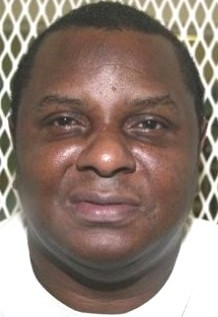
Wayne Eugene Ritter
Murderer Ervil LeBaron
Murderer · USA · 1972
Ervil Morrell LeBaron (1925 to August 16, 1981) was the leader of a polygamous…
35 victims
Ervil LeBaron
Murderer · USA · 1972
Ervil Morrell LeBaron (1925 to August 16, 1981) was the leader of a polygamous…
35 victims
 Brian Kevin Rosenfeld
Murderer · USA · 1985
Brian Kevin Rosenfeld Brian Kevin Rosenfeld was sentenced to three concurrent l…
23 victims
Brian Kevin Rosenfeld
Murderer · USA · 1985
Brian Kevin Rosenfeld Brian Kevin Rosenfeld was sentenced to three concurrent l…
23 victims
 Marvin Gray
Murderer · USA · 1975
Marvin Gray was convicted killer who claimed responsibility for 23 slayings and…
23 victims
Marvin Gray
Murderer · USA · 1975
Marvin Gray was convicted killer who claimed responsibility for 23 slayings and…
23 victims
 Yahweh ben Yahweh
Murderer · USA · 1980
Yahweh ben Yahweh was born and legally named Hulon Mitchell Jr. (October 27, 19…
23 victims
Yahweh ben Yahweh
Murderer · USA · 1980
Yahweh ben Yahweh was born and legally named Hulon Mitchell Jr. (October 27, 19…
23 victims
 Robert Poyson
Murderer · USA · 1996
Robert Poyson lived in a remote area of Mohave County with Leta Kagen (30), Let…
3 victims
Robert Poyson
Murderer · USA · 1996
Robert Poyson lived in a remote area of Mohave County with Leta Kagen (30), Let…
3 victims
 Paul Dennis Reid
Spree killer · USA · 1997
Paul Dennis Reid, Jr. was an American serial killer. He was born November 12, 1…
7 victims
Paul Dennis Reid
Spree killer · USA · 1997
Paul Dennis Reid, Jr. was an American serial killer. He was born November 12, 1…
7 victims
 Abdelkrim Belachheb
Mass murderer · USA · 1984
Abdelkrim Belachheb was a Moroccan national. Marcelle Ford, a 32-year-old woman…
6 victims
Abdelkrim Belachheb
Mass murderer · USA · 1984
Abdelkrim Belachheb was a Moroccan national. Marcelle Ford, a 32-year-old woman…
6 victims
 Henry Francis Hays
Murderer · USA · 1981
Henry Francis Hays Henry Francis Hays was a member of the Ku Klux Klan in Alaba…
1 victim
Henry Francis Hays
Murderer · USA · 1981
Henry Francis Hays Henry Francis Hays was a member of the Ku Klux Klan in Alaba…
1 victim
 Phillip Brown
Murderer · USA · 2001
Phillip Brown (DOB 8-31-80) was indicted on August 13, 2002 on case 02CR00101,…
1 victim
Phillip Brown
Murderer · USA · 2001
Phillip Brown (DOB 8-31-80) was indicted on August 13, 2002 on case 02CR00101,…
1 victim
 Matthew de Grood
Mass murderer · Canada · 2014
15 April 2014 — Matthew de Grood, an invited guest, stabbed five young adults a…
5 victims
Matthew de Grood
Mass murderer · Canada · 2014
15 April 2014 — Matthew de Grood, an invited guest, stabbed five young adults a…
5 victims
- Gender
- male
- Country
- USA
- Location
- Mobile County, Alabama, USA
- Date of birth
- January 30, 1954
- Age at first offence
- 23
- Characteristics
- armed robbery, kidnapping
- Victim profile
- Edward Nassar ( pawnshop owner )
- Method of murder
- Shooting
- Date(s) of murder
- January 5, 1977
- Years active
- 1977
- Date of arrest
- March 7, 1977
- Status
-
Executed
Executed by electrocution in Alabama on August 28, 1987
Background
Wayne Eugene Ritter was convicted of the murder of pawn shop operator Edward Nassar. He was sentenced to death in 1977 in an Alabama state court.
Ritter was convicted along with his accomplice John Louis Evans, III. The jury that convicted Ritter and Evans returned a mandatory recommendation of a death sentence for each man. The trial judge accepted the jury's verdict and sentenced both defendants to death following a hearing on aggravating and mitigating circumstances.
Ritter later pursued federal habeas corpus relief. His case reached the Eleventh Circuit in a challenge to the constitutionality of the Alabama statute under which he had been sentenced. A panel of the Eleventh Circuit held that the statutory scheme was facially unconstitutional because of its mandatory death sentence component. The court ordered the district court to grant a writ of habeas corpus unless Ritter was given a new sentencing hearing, but stayed the mandate pending review by the Supreme Court.
On October 1, 1984, the Supreme Court denied certiorari in Smith v. Ritter, 469 U.S. 869. The Eleventh Circuit then issued its mandate instructing the district court to issue the writ of habeas corpus if Alabama did not give Ritter a new sentencing hearing.
The offence
Shortly after John Louis Evans, III was released on parole from an Indiana prison in 1976, he and Wayne Eugene Ritter, who had been a fellow inmate, embarked on a cross-country crime spree. Evans testified that they committed about 30 armed robberies, 9 kidnapings, and 2 extortion schemes in seven different States during a 2-month period.
On January 5, 1977, Evans and Ritter entered a pawnshop in Mobile, Ala., intending to rob it. Ritter asked the pawnshop owner, Edward Nassar, to show him a gun. When Nassar handed the gun to Ritter, Evans pulled his own gun and announced that he intended to rob him. Nassar dropped to his hands and knees and crawled toward his office. Evans shot Nassar in the back, killing him.
Nassar’s two daughters, aged seven and nine, were in the pawnshop at the time of the murder.
Investigation
Evans and Ritter were captured by the Federal Bureau of Investigation in Little Rock, Ark., on March 7, 1977.
A gun identified by ballistics tests as the weapon used to kill Nassar was found in their motel room. The gun Nassar showed Ritter at the pawnshop was found in their car.
After being fully advised of his constitutional rights, Evans signed a detailed written confession on March 8, 1977, admitting that he shot Nassar in the back.
Trial
Wayne Eugene Ritter and John Louis Evans, III were convicted on April 26, 1977 of the murder of pawn shop operator Edward Nassar.
As required by the then-operative Alabama statute, the jury returned a mandatory recommendation of a death sentence for each man. After a hearing on aggravating and mitigating circumstances, the trial judge accepted the jury's verdict and sentenced Ritter to death.
At a sentence proceeding conducted without a jury, the trial court found four separate aggravating circumstances:
- the capital felony was committed while Ritter was under sentence of imprisonment although he was serving the remainder of his sentence on parole at the time;
- Ritter had been previously convicted of another felony involving the use or threat of violence to the person, to wit: the offense of robbery;
- Ritter had knowingly on approximately thirty-nine previous occasions created a great risk of death to many persons; and
- the capital felony was committed while Ritter was an accomplice in the commission of a robbery.
These aggravating circumstances were described with citations to Evans (and Ritter) v. State, 361 So.2d 654, 664-665 (Ala.Cr.App.1977), aff'd, 429 So.2d 928 (Ala.1983), and references to Ala. Code Sec. 13A-5-49(1)-(4) (1975).
Sentencing
Ritter was sentenced to death following the aggravating and mitigating circumstances hearing required by the statute at the time.
The sentence proceeding included four aggravating circumstances found by the trial court.
Appeals
Ritter’s first appeal at the Eleventh Circuit addressed the constitutionality of the Alabama statute under which he had been sentenced to death. In Ritter v. Smith, 726 F.2d 1505, a panel of the Eleventh Circuit held that the statutory scheme was facially unconstitutional because of its mandatory death sentence component. The Eleventh Circuit ordered the district court to grant a writ of habeas corpus unless Ritter was given a new sentencing hearing, but stayed the mandate pending review by the Supreme Court.
The Supreme Court denied certiorari in Smith v. Ritter, 469 U.S. 869, on October 1, 1984.
A district court then entered an order on December 3, 1984 making the Eleventh Circuit's mandate its judgment and giving Alabama 180 days to resentence Ritter, until June 1, 1985.
The proceedings became complicated when, on December 10, 1984, the Supreme Court granted certiorari in Baldwin v. Alabama. The Alabama Supreme Court in Ex Parte Baldwin had rejected the constitutional challenge to the statute, expressly disagreeing with the Eleventh Circuit’s Ritter opinion.
Baldwin was argued before the United States Supreme Court on March 27, 1985. The state did not file a Rule 59(e) motion to alter or amend the district court's December 3, 1984 judgment based on the grant of certiorari in Baldwin, did not seek a stay of the judgment, and did not file an appeal.
On April 15, 1985, within the 180-day period, the state moved for an extension of the time within which Alabama could resentence Ritter, based on the grant of certiorari in Baldwin and the consequences that a holding against Baldwin would have for Ritter’s case. The district court granted the extension on April 17, 1985.
On June 17, 1985, the Supreme Court decided Baldwin v. Alabama, holding that Alabama capital sentencing procedures were not facially unconstitutional. The Supreme Court resolved the conflict between the Eleventh Circuit’s Ritter opinion and the Alabama Supreme Court’s Baldwin opinion in favor of the Alabama Supreme Court.
On July 18, 1985, the Supreme Court's mandate issued in Baldwin.
On August 5, 1985, the state filed a motion in district court to dismiss Ritter’s habeas corpus petition in conformity with Baldwin. On September 9, 1985, the state filed a Rule 60(b)(6) motion for relief from the district court’s December 3, 1984 judgment.
On March 5, 1986, the district court entered an order granting the Rule 60(b)(6) motion, setting aside the December 3, 1984 order which conditionally granted the writ, and denied all habeas relief following Baldwin.
The Eleventh Circuit affirmed that March 5, 1986 order on appeal, affirming the district court’s grant of the state’s Rule 60(b)(6) motion. The Eleventh Circuit’s opinion addressed Federal Rule of Civil Procedure 60(b)(6) and whether a supervening change in law could justify relief. The court determined that the circumstances were extraordinary and that Rule 60(b)(6) relief was justified.
Ritter later filed a second petition for writ of habeas corpus. The Eleventh Circuit considered a motion for certificate of probable cause to appeal from the denial of that second habeas petition and also considered a request to stay execution set for 12:01 a.m., Friday, August 28, 1987.
In the second habeas proceedings, the district court appointed two attorneys to represent Ritter, and the case was argued on two issues:
- that it was unconstitutional to have an element of the crime used a second time and double counted as an aggravating factor (Lowenfield issue); and
- ineffective assistance of counsel because counsel yielded to defendant’s insistence that the jury not be asked to give a life sentence, rather than a death sentence.
The district court concluded that Ritter was not entitled to habeas corpus relief and that his petition was due to be dismissed with prejudice, and it denied the motion for a stay of execution. The Eleventh Circuit denied the certificate of probable cause and denied the emergency motion for a stay of execution. The court concluded both claims were barred by the abuse of the writ doctrine.
Timeline
- 1976 — John Louis Evans, III was released on parole from an Indiana prison, and he and Wayne Eugene Ritter embarked on a cross-country crime spree.
- January 5, 1977 — Evans and Ritter entered a pawnshop in Mobile, Ala., and Evans shot Edward Nassar in the back, killing him.
- March 7, 1977 — Evans and Ritter were captured by the Federal Bureau of Investigation in Little Rock, Ark.
- March 8, 1977 — Evans signed a detailed written confession admitting he shot Nassar in the back.
- April 26, 1977 — Ritter was convicted of the murder of Edward Nassar and sentenced to death.
- May 5, 1983 — Ritter filed his first habeas corpus petition and application for stay of execution.
- August 11, 1983 — The district court held an evidentiary hearing.
- February 27, 1984 — The Eleventh Circuit affirmed denial of habeas relief in part but held Ritter was entitled to a new sentencing hearing.
- October 1, 1984 — The Supreme Court denied certiorari in Smith v. Ritter.
- December 3, 1984 — The district court entered an order making the mandate its judgment and giving Alabama 180 days to resentence Ritter.
- December 10, 1984 — The Supreme Court granted certiorari in Baldwin v. Alabama.
- March 27, 1985 — Baldwin was argued before the United States Supreme Court.
- April 15, 1985 — The state moved for an extension of time for resentencing Ritter.
- April 17, 1985 — The district court granted the extension of time for resentencing Ritter.
- June 17, 1985 — The Supreme Court decided Baldwin v. Alabama.
- July 18, 1985 — The Supreme Court’s mandate issued in Baldwin.
- August 5, 1985 — The state filed a motion in district court to dismiss Ritter’s habeas corpus petition in conformity with Baldwin.
- September 9, 1985 — The state filed a Rule 60(b)(6) motion.
- March 5, 1986 — The district court granted the Rule 60(b)(6) motion and denied all habeas relief.
- June 22, 1987 — The state filed a motion in the Alabama Supreme Court asking it to set a new execution date.
- July 7, 1987 — The Alabama Supreme Court set Ritter’s execution for August 28, 1987.
- August 24, 1987 — The state’s answer to Ritter’s second federal petition was filed, accepted by the district court.
- August 26, 1987 — The case was argued in the district court and oral argument was heard in the Eleventh Circuit.
- August 27, 1987 — The Eleventh Circuit decided the motion for certificate of probable cause and emergency stay.
- August 28, 1987 — Ritter was executed by electrocution in Alabama.
Outcome
The district court’s March 5, 1986 order granting the state’s Rule 60(b)(6) relief, setting aside the earlier conditional grant of the writ, and denying all habeas relief was affirmed on appeal.
The Eleventh Circuit affirmed the district court’s denial of Ritter’s second habeas petition insofar as it denied a certificate of probable cause and denied an emergency motion for a stay of execution.
Wayne Eugene Ritter was executed by electrocution in Alabama on August 28, 1987.
Other details
Ritter’s first habeas corpus petition had been filed on May 5, 1983. Following an evidentiary hearing on August 11, 1983, the district court entered judgment denying the habeas corpus petition.
On February 27, 1984, the Eleventh Circuit affirmed the judgment except that it held Ritter was entitled to a new sentencing hearing.
Pursuant to the Eleventh Circuit’s mandate, the district court issued an order on December 3, 1984 conditionally granting the writ unless the state resentenced Ritter within a reasonable period of time.
After the Supreme Court granted certiorari in Baldwin on the same facial constitutionality issue, the Supreme Court upheld the facial constitutionality of the sentencing statute in Baldwin.
As a result of Baldwin, on March 5, 1986 the district court granted State Rule 60(b)(6) relief, set aside its earlier conditional order, and entered an order denying Ritter’s May 5, 1983 habeas petition with prejudice. The Eleventh Circuit later affirmed that order, described as Ritter v. Smith, 811 F.2d 1398, with certiorari denied in 1987.
In the second habeas petition, the district court denied habeas relief and denied the motion for a stay of execution.
In the Lowenfield issue discussion in the Eleventh Circuit decision, the court described Ritter’s capital offense as robbery when the victim was intentionally killed, in violation of Ala. Code Sec. 13A-5-40(a)(2) (1975). The sentencing proceeding was conducted without a jury, and the trial court found four separate aggravating circumstances as described in the appeals and sentencing sections.
In the ineffective assistance issue discussion, the Eleventh Circuit concluded that Ritter’s failure to raise the claim in his original 1983 habeas petition constituted an abuse of the writ.
The Eleventh Circuit also concluded that a grant of certiorari did not constitute new law for abuse of the writ purposes and that the ends of justice did not require excusing the abuse of the writ.
The court described Ritter as a confessed robber-murderer who committed multiple violent felonies in a multi-state crime spree and noted that he admitted his guilt and threatened harm to jurors should they fail to return a death sentence.
Spotted an error, or have more information about this case?