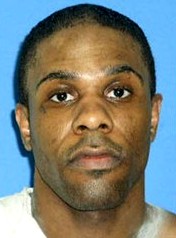
Leon Dorsey
Murderer Brian Kevin Rosenfeld
Murderer · USA · 1985
Brian Kevin Rosenfeld Brian Kevin Rosenfeld was sentenced to three concurrent l…
23 victims
Brian Kevin Rosenfeld
Murderer · USA · 1985
Brian Kevin Rosenfeld Brian Kevin Rosenfeld was sentenced to three concurrent l…
23 victims
 Russell Ellwood
Murderer · USA · 1991
Russell Ellwood was a former taxi driver. Authorities suspected him of killing…
20 victims
Russell Ellwood
Murderer · USA · 1991
Russell Ellwood was a former taxi driver. Authorities suspected him of killing…
20 victims
 Robert Martines Perez
Murderer · USA · 1994
Name: Robert Martines Perez · Other name used in proceedings: Robert Martinez P…
15 victims
Robert Martines Perez
Murderer · USA · 1994
Name: Robert Martines Perez · Other name used in proceedings: Robert Martinez P…
15 victims
 Billy Frank Vickers
Murderer · USA · 1993
Billy Frank Vickers Vickers was executed by lethal injection in Texas on Januar…
14 victims
Billy Frank Vickers
Murderer · USA · 1993
Billy Frank Vickers Vickers was executed by lethal injection in Texas on Januar…
14 victims
 Johnny Frank Garrett
Homicide · USA · 1981
Johnny Frank Garrett was born December 24, 1963, and was executed on February 1…
1 victim
Johnny Frank Garrett
Homicide · USA · 1981
Johnny Frank Garrett was born December 24, 1963, and was executed on February 1…
1 victim
 Carl Panzram
Serial killer · Angola · 1920
Carl Panzram (28 June 1891 – 5 September 1930) was an American serial killer. C…
22 victims
Carl Panzram
Serial killer · Angola · 1920
Carl Panzram (28 June 1891 – 5 September 1930) was an American serial killer. C…
22 victims
 Andrew Lackey
Murderer · USA · 2005
Andrew Lackey · October 31, 2005 — Athens Police Department received and record…
1 victim
Andrew Lackey
Murderer · USA · 2005
Andrew Lackey · October 31, 2005 — Athens Police Department received and record…
1 victim
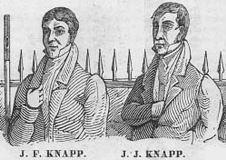 Francis & Joseph Knapp
Murderers · USA · 1930
Francis Knapp and Joseph Jenkins Knapp were the brothers known as the Knapps. T…
1 victim
Francis & Joseph Knapp
Murderers · USA · 1930
Francis Knapp and Joseph Jenkins Knapp were the brothers known as the Knapps. T…
1 victim
- Gender
- male
- Country
- USA
- Location
- Dallas County, Texas, USA
- Date of birth
- November 17, 1975
- Age at first offence
- 19
- Characteristics
- robbery
- Victim profile
- James Armstrong, 26, and Brad Lindsey, 20 ( video store employees) / Hyon Suk Chon, 51 (female convenience store clerk)
- Method of murder
- Shooting (9 millimeter pistol)
- Date(s) of murder
- April/September 1994
- Years active
- 1994
- Date of arrest
- —
- Status
-
Executed
Executed by lethal injection in Texas on August 12, 2008
Case details
Leon David Dorsey IV (TDCJ Number 999359) was executed by lethal injection in Texas on August 12, 2008. He was scheduled for execution and was described as having been convicted of capital murder and sentenced to death.
Timeline
- 11/17/1975 — Leon David Dorsey IV was born.
- 04/04/1994 — Leon Dorsey entered a video store in Dallas and robbed and killed two employees.
- 1998 — The Dallas video store case was reopened; Dorsey was questioned again and confessed.
- May 2000 — Leon Dorsey was convicted of capital murder and sentenced to death.
- 10/02/2002 — The Texas Court of Criminal Appeals affirmed Dorsey’s conviction and sentence.
- 05/06/2002 — Dorsey filed a petition for state writ of habeas corpus.
- 02/18/2004 — The Texas Court of Criminal Appeals adopted the trial court’s findings and denied relief on Dorsey’s state writ of habeas corpus.
- 12/17/2004 — Dorsey filed his federal habeas petition.
- 07/31/2006 — The federal district court denied Dorsey’s petition for federal habeas relief.
- 07/30/2007 — The Fifth Circuit Court of Appeals affirmed the federal district court’s denial of federal habeas relief.
- 02/25/2008 — The U.S. Supreme Court denied Dorsey’s petition for certiorari review.
- 08/12/2008 — Leon Dorsey was executed by lethal injection in Huntsville, Texas; he was pronounced dead at 6:27 p.m.
Background
Dorsey had 12 years of education. His occupation was described as delivery driver and laborer. He was from Dallas and was Black. He was male. His hair color was black, and his eye color was brown. He was 05' 11" tall and weighed 174 lb. At execution, he was 32.
Prior prison record was listed as none at the time this offense was committed. After this offense was committed and prior to being convicted for this offense, Dorsey committed murder with a deadly weapon and unauthorized use of a motor vehicle in Ellis County. In that Ellis County matter, Dorsey and one co-defendant entered a food store, fatally shot a 51 year old Oriental female, and then fled the scene with an unknown amount of money. Dorsey received a 60 year sentence for that offense and was serving that sentence when he was convicted of capital murder and sentenced to death for the current offense.
Dorsey called himself “Pistol Pete.” In interviews, he described himself using that nickname.
The offence
Dallas Blockbuster Video store robbery and murders (April 4, 1994)
Around midnight on April 4, 1994, two employees at a Blockbuster Video store in Dallas were robbed and murdered. The in-store video camera recorded the crime and showed that the killer was a black male with short hair.
Dorsey entered a video store at night in Dallas and used a 9 millimeter pistol to rob and kill a 26 year old white male employee, James Armstrong (also referred to as James Lloyd Armstrong), and a 20 year old white male employee, Brad Lindsey. He forced them into the back office, where he shot and killed them.
Armstrong was shot twice and Lindsey was shot once in the back. When Armstrong had trouble opening a safe, Dorsey shot him in the side. Lindsey was shot in the back when he tried to run away. Dorsey shot Armstrong again.
Dorsey took $392 from the business. The robbery and the first two gunshots were recorded on in-store video cameras, including a visit earlier that day when Dorsey came to check out the store. He was described as caseding the place on Easter Sunday night in 1994 and returning after midnight.
In the narrative of the crime as presented in procedural history, the evidence showed that later that day Dorsey admitted committing the robbery and murders to his girlfriend, Arrietta Washington, and to an acquaintance, Antwan Hamilton. Police interviewed Dorsey but he denied involvement. At the time, police erroneously believed Dorsey was too tall and he was not charged, and the case remained unsolved until reopened in 1998.
Confessions and evidence link (1998 reopening)
In 1998, while Dorsey was serving the 60-year sentence from the earlier Ellis County murder and unauthorized use of a motor vehicle conviction, a Dallas cold case unit reopened the case. Police sent the videotape of the robbery-murder to the Federal Bureau of Investigation for an analysis of the perpetrator’s height. Based on the new estimate of the perpetrator’s height and accurate information about Dorsey’s height, police questioned Dorsey again, and he confessed.
Dorsey confessed to multiple people about the murders, including his girlfriend, an acquaintance, police, a news reporter, and a fellow inmate. While awaiting trial, he confessed again during an interview with Dallas Morning News reporter Jason Sickles. A week before trial, Dorsey admitted committing the murders to inmate Raymond Carriere. Dorsey also sent a letter to another inmate, Rodrick Finley, offering him $5000.00 to take the blame for the murders, and the police had previously suspected Finley of committing the crime.
In the FBI analysis referenced in the material, the shooter was between 5'7" tall and 6' tall and Dorsey was 5'10" tall; in other parts of the record Dorsey’s height was given as 05' 11".
During the initial investigation after Dorsey’s girlfriend reported admissions, police erroneously believed he was too tall to be the killer based on images from the security tape, and he was not charged.
Ennis convenience store robbery and murder (five months later)
Five months after committing the Blockbuster killings, Dorsey killed a convenience store clerk during a robbery in Ennis, Texas. Dorsey and a co-defendant entered a food store in that matter, fatally shooting a 51 year old Oriental female convenience store clerk, Hyon Suk Chon, then fled the scene with an unknown amount of money. Dorsey pled guilty to murder with a deadly weapon and was sentenced to sixty years in prison.
Investigation
The Blockbuster Video store robbery and murders were recorded on in-store video cameras. The case was not immediately charged due to police believing Dorsey was too tall to be the perpetrator. The case remained unsolved until the investigation was reopened in 1998.
During the 1998 investigation, police sent the videotape of the robbery-murder to the FBI for analysis of the perpetrator’s height. Based on the FBI’s height estimate and accurate information about Dorsey’s height, police questioned Dorsey again and he confessed.
Trial
Dorsey was convicted of capital murder in May 2000 and sentenced to death.
In the procedural history, it was stated that Dorsey was convicted for intentionally and knowingly causing the death of James Lloyd Armstrong by shooting him with a firearm in the course of committing or attempting to commit robbery. The Criminal District Court No. 5 of Dallas County, Texas sentenced Dorsey to death based on the jury’s answers to special punishment issues.
He was convicted of capital murder in May 2000 and sentenced to death. The Texas Court of Criminal Appeals affirmed the conviction and sentence on October 2, 2002.
Confession-related trial statements and excerpts
Dorsey made statements that were used as evidence related to sentencing. He made the following statements in an interview while awaiting trial and while on death row:
“They're dead,” he said, “That's over and done with. I could have came in here and been, 'Oh, I'm sorry, I'm so bad.' But I don't feel like that. That's not being honest with myself.”
He also said the families of his victims should treat the loss like losing money in a craps game, rather than dwelling on it.
In the Dallas Morning News interview while awaiting trial, Dorsey stated:
“I've done cut folks; I've done stabbed folks; I've killed folks,” he said, “but it don't bother me.”
He also said:
“But they didn't use their choice wisely,” he said.
He said:
“They're dead. That's over and done with,” he said. “Why are you going to sit there and worry yourself about that? Move on. I could have came in here and been, 'Oh, I'm sorry, I'm so bad.' But I don't feel like that. That's not being honest with myself.”
He told the reporter he was drunk and high when he went to the Blockbuster in search of cash and that one of the men probably angered him, and that he did not remember who or how:
“One of them had to be bumping me or talking sh.t,” he said. “One of them did, or I wouldn't have did it like that. I killed the second person because the first person fu.ked up. I had a tendency to dehumanize a person in a situation,” Dorsey said. “If I was robbing you, and you studded up, I could fu.k you up and say that was business. If you cooperated, you could walk away from it easily.”
He also told the reporter:
“It ain't my homeboys that turned on me,” he said. “It's this b.tch that I used to put $100 shoes on her feet and take care of her kids. She better hope I never get out of this penitentiary.”
In the procedural history quoted excerpt of the Court of Criminal Appeals’ summary, the following statements were attributed to Dorsey in his interview with a newspaper reporter:
“[Dorsey] stated that he had burned the jacket he had worn that night and would not disclose the location of the murder weapon.”
Jury and mistrial issue referenced in federal habeas proceedings
In federal habeas proceedings, it was described that during deliberations guilt-innocence, a juror discovered the full transcript of Dorsey’s interview (88 pages long) and that during deliberations “all the evidence” were provided to the jury, with the full unedited transcript inadvertently included with exhibits. The note to the court was described as signed by the jury foreman, Mark Pennington, and read:
“Should we have this? It appears to have evidence not brought out on the witness stand.”
Dorsey moved for a mistrial after the jury wrongly considered State’s Exhibit No. 123, consisting of the full unedited transcript labeled Exhibit 123. The motion for mistrial was denied.
Sentencing
Dorsey was sentenced to death after his capital murder conviction in May 2000. He remained under sentence of death through subsequent state and federal appeals.
Appeals
State direct appeal
The Texas Court of Criminal Appeals affirmed Dorsey’s conviction and sentence on October 2, 2002. The Texas Court of Criminal Appeals adopted the trial court’s findings and denied state writ relief on February 18, 2004.
Petition for writ of certiorari to the U.S. Supreme Court
The U.S. Supreme Court denied Dorsey’s petition for writ of certiorari on June 23, 2003. The U.S. Supreme Court denied Dorsey’s petition for certiorari review on February 25, 2008.
State and federal habeas corpus proceedings
Dorsey filed a petition for state writ of habeas corpus on May 6, 2002. The petition was denied by the Texas Court of Criminal Appeals on February 18, 2004.
Dorsey filed his federal habeas petition on December 17, 2004. On July 31, 2006, the federal district court denied Dorsey’s petition for federal habeas relief. The Fifth Circuit Court of Appeals affirmed the federal district court’s denial of federal habeas relief on July 30, 2007.
The material also included reference to the case name and holding:
- Dorsey v. Quarterman, 494 F.3d 527 (5th Cir. 2007) (Habeas), where the Court of Appeals held that any trial error related to the unedited transcript exposure was harmless; a Batson claim was procedurally barred; and other venire bias claims were denied or procedurally barred as described.
Other details
Prior acts and disciplinary issues described in the record
Dorsey was written up at least 95 times for disciplinary infractions in eight years on death row. Authorities found another shank in Dorsey’s cell less than two weeks before he was executed. A 2004 attack was described in which he used an 8½-inch shank to stab an officer 14 times in the back; the officer’s body armor prevented serious injury.
Dorsey attempted to stab another inmate while in prison in connection with his earlier murder sentence.
In interviews and descriptions, Dorsey referenced violent and criminal acts from childhood and adolescence, including:
- at fourteen, taking a gun to school and discharging it in a classroom;
- at fifteen, committing property crimes including a residential robbery, theft from a vehicle, and theft of items from lockers at a base gymnasium;
- when police investigated and found stolen items at Dorsey’s home, they also discovered 20 to 25 bullet holes in the basement wall and numerous spent shells;
- at sixteen, firing a gun at a young couple in another car and verbally threatening to kill them;
- at ten, stabbing a pee-wee football teammate and trying to burn down his babysitter’s house (as recorded by his statement calling himself “Pistol Pete”).
In addition, at eighteen, five months after the double slaying at the Blockbuster store, Dorsey was arrested for unauthorized use of a motor vehicle. He was convicted and his sentence was probated.
Dorsey was described as having been a delivery driver and laborer.
Last statement and execution details
Dorsey’s last statement included the following:
“I love all y’all. I forgive y’all. See y’all when you get there,” he said in his last statement. “Do what you're going to do.”
He acknowledged his sister, who watched from a viewing room, and did not acknowledge the victims’ witnesses. In one described version, his only words before his last statement were “Hey, sis,” directed to his sister, Tameka Finklea.
He was executed at a Texas Department of Criminal Justice Walls Unit. He was pronounced dead at 6:27 p.m. after the lethal injection.
Texas Department of Criminal Justice spokeswoman Michelle Lyons said Dorsey did not put up a fight, and force was not used to take him to the execution chamber.
Victims and family statements included
James Armstrong’s parents Gerald and Nanci Armstrong were described as releasing a statement after the execution. Nanci Armstrong struggled with forgiving Dorsey.
Brad Lindsey’s mother Joan Coleman did not make a formal statement following the execution in one description; in another description she was characterized as having felt better this week than she had in 4 1/2 years, and as saying:
“I'll feel even better when I watch him die,” she said. “They'd better not screw this up. Now that they've got him, they'd better kill him.”
A statement letter released by Gerald and Nancy Armstrong included the following text:
“Losing James has been and always will be painful; it doesn’t get any easier, but we’ve gotten stronger,” the letter read. “Viewing Dorsey’s execution will not bring any happiness, but we’ve lived to see justice for James 14 years later and today we pray for Dorsey’s father.”
In a segment of the letter, more detail about Nanci Armstrong’s feelings was included:
“While Gerald has said it was different for him, I have struggled with forgiving Dorsey for killing our son,” she said. “Perhaps Dorsey is as evil as Charles Manson and has no remorse, but I knew that I had to forgive him. “I could do it in my head, but not in my heart.”
Gerald and Nanci Armstrong’s feelings were also described alongside those quotations.
Another quoted remark attributed to Greg Armstrong stated:
“That is just about par for the course,” said Greg Armstrong, James Armstrong's brother. “If he has no remorse about it, then he deserves the death penalty.”
Spotted an error, or have more information about this case?