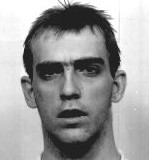
Johnny Frank Garrett
Homicide Jack Kevorkian
Homicide · USA · 1990
Jack Kevorkian (born May 26, 1928) was a controversial American pathologist. He…
130 victims
Jack Kevorkian
Homicide · USA · 1990
Jack Kevorkian (born May 26, 1928) was a controversial American pathologist. He…
130 victims
 Edward Charles Allaway
Homicide · USA · 1976
Edward Charles Allaway Edward Charles Allaway was found not guilty by reason of…
7 victims
Edward Charles Allaway
Homicide · USA · 1976
Edward Charles Allaway Edward Charles Allaway was found not guilty by reason of…
7 victims
 Clinton Bankston
Homicide · USA · 1987
15 August 1987 — Ann Morris (63), her sister Sally Nicholson (59), and Sally’s…
5 victims
Clinton Bankston
Homicide · USA · 1987
15 August 1987 — Ann Morris (63), her sister Sally Nicholson (59), and Sally’s…
5 victims
 Hamida Djandoubi
Murderer · France · 1974
1968 — Hamida Djandoubi started living and working in Marseille, France, as a p…
1 victim
Hamida Djandoubi
Murderer · France · 1974
1968 — Hamida Djandoubi started living and working in Marseille, France, as a p…
1 victim
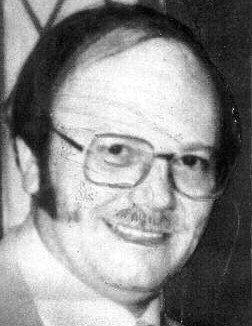 Robert Healey
Murderer · United Kingdom · 1986
Robert Healey Sentenced to life in prison on April 1, 1987 · 30 March 1987 — Ro…
2 victims
Robert Healey
Murderer · United Kingdom · 1986
Robert Healey Sentenced to life in prison on April 1, 1987 · 30 March 1987 — Ro…
2 victims
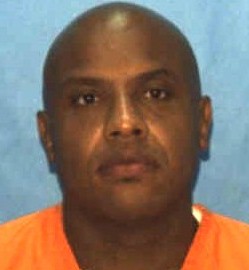 Toney Deron Davis
Murderer · USA · 1992
Toney Deron Davis (DOB: 03/12/70) was tried in the Fourth Judicial Circuit, Duv…
1 victim
Toney Deron Davis
Murderer · USA · 1992
Toney Deron Davis (DOB: 03/12/70) was tried in the Fourth Judicial Circuit, Duv…
1 victim
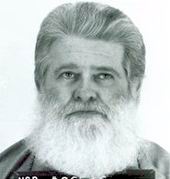 Michael Wayne Ryan
Murderer · USA · 1984
Michael Wayne Ryan (born 3 August 1948) was an American white supremacist and m…
2 victims
Michael Wayne Ryan
Murderer · USA · 1984
Michael Wayne Ryan (born 3 August 1948) was an American white supremacist and m…
2 victims
- Gender
- male
- Country
- USA
- Location
- Potter County, Texas, USA
- Date of birth
- December 24, 1963
- Age at first offence
- 18
- Characteristics
- juvenile (17), rape, alcoholic, abuse, history of mental illness, drug addict
- Victim profile
- Sister Tadea Benz, 76 ( Roman Catholic nun )
- Method of murder
- St abbing with knife
- Date(s) of murder
- October 31, 1981
- Years active
- 1981
- Date of arrest
- November 9, 1981
- Status
-
Executed
Executed by lethal injection in Texas on February 11, 1992
Case record: Johnny Frank Garrett
Background
Johnny Frank Garrett was born December 24, 1963, and was executed on February 11, 1992.
Garrett was convicted of murder committed during the course of rape and burglary.
Garrett’s notoriety included being only 17 years old when sentenced. Amnesty International and other opponents of the death penalty opposed his execution.
At issue in clemency and appeals included the contention of Garrett’s lawyers that he was insane and suffered from multiple personality syndrome as a result of physical and sexual abuse he had endured as a child. Prosecutors insisted that while Garrett might not be normal, he was aware of his crime and understood the punishment.
A mental health expert described Garrett as “one of the most virulent histories of abuse and neglect...I have encountered in 28 years of practice.” Another description in the material said Garrett was extremely mentally impaired, chronically psychotic, and brain-damaged.
One expert described Garrett’s case as “one of the most virulent histories of abuse and neglect...I have encountered in over 28 years of practice.” The material also stated that Garrett had paranoid delusions, including a belief that the lethal injection would not kill him.
The offence
On October 31, 1981, the nude body of Sister Tadea Benz was found in her bedroom on the second floor of the St. Francis Convent in Amarillo, Texas, at approximately 7:00 a.m. Sister Benz was seen alive late the previous evening.
Although there was blood on Sister Benz’ face, the nun who discovered her body did not suspect foul play, and the body was transported to a funeral home.
Police recovered bed linens and the victim’s night clothes. A kitchen knife was recovered under the bed. Fingerprints and palm prints were lifted from the knife blade and handle and from the bed headboard.
A cut window screen and a second knife—a steak knife—were found in the convent driveway.
By the time the body was recovered from the funeral home it had been partially cleansed and arterial embalming completed. The autopsy revealed multiple injuries, including contusions to the head, stab wounds to the chest, and excoriation and abrasive injuries to the front and back of the neck. The pathologist, Dr. Erdmann, determined that death was caused by manual strangulation.
The autopsy revealed evidence of forcible rape. Dr. Erdmann found signs of external bleeding and internal trauma in the vaginal area. Tests of vaginal contents revealed the presence of sperm and prostate secretions.
In the punishment phase context, the government offered testimony of Garrett’s bad reputation in the community and his past acts of aggression.
Garrett’s conviction and sentence followed the jury’s affirmative answers to the special issues submitted under the Texas Code.
Investigation
After Sister Benz’ body was found, an hour or so later the sisters found a broken window, unlatched and open, in the community room located on the first floor of the convent, and called the Amarillo police. The police arrived at approximately 9:00 a.m. and secured the crime scene.
Fingerprints and palm prints were lifted from the kitchen knife blade and handle and from the bed headboard. Pubic hairs recovered from the scene were determined to have the same individual characteristics as Garrett’s.
The state also offered the testimony of Lonnie Watley, an inmate and trusty of the Potter County Jail during Garrett’s pretrial incarceration. Watley testified that Garrett originally denied committing the offense, but eventually admitted to breaking into the convent and killing the nun.
During the investigation described in other portions of the material, investigators initially thought the killing was tied to the July 9, 1981 rape and murder of Narnie Cox Bryson, 77, in her home in the 700 block of North Houston Street in Amarillo.
On November 9, 1981, Amarillo police Sgt. Walter Yerger linked Garrett, then 17, to fingerprints in Benz’s room. Danny Hill, the 47th district attorney at the time, had said that Yerger knew Garrett and “knew some of his habits.”
In the other material, it was stated that evidence was gathered by a unit that combined deputies from Potter and Randall counties and Amarillo police, and that it was the first multi-agency cooperative law enforcement investigation in Amarillo and led to the creation of a Special Crimes Unit in 1981.
Arrest
The material stated that Johnny Frank Garrett, 17, was arrested Nov. 9, 1981, and charged with the murder of Benz.
In the state-offered rebuttal described in the material, Garrett was also described as being seen running from the direction of the convent on the night of the murder.
Trial
Garrett was tried in August-September 1982 and received the death penalty for the crime.
The conviction and sentence were affirmed by the Texas Court of Criminal Appeals. Garrett v. State, 682 S.W.2d 301 (Tex.Crim.App.1984).
At trial, Garrett testified in his own defense and denied raping or murdering Sister Benz. Garrett testified that he entered the convent two days before the murder looking for items to steal.
Garrett testified that he entered the convent through the front door shortly after noon and proceeded into the medication room and the cafeteria, where he picked up the kitchen knife. He testified that he then went into several of the bedrooms, and in one bedroom bent the knife in prying open a locked drawer. He explained his fingerprints on the headboard of Sister Benz’ bed by stating that he grabbed the headboard so he could lean over and reach a cross on the wall. He testified that he heard a noise in the convent and fled.
Garrett testified that he went to his mother’s house at approximately 10:20 p.m. on October 30 and did not leave until later the next morning.
The state sought to impeach Garrett with an oral statement that he allegedly gave the police shortly after his arrest on November 9, 1981. Two police officers testified that after they reduced Garrett’s statement to writing, Garrett agreed that it was true but refused to sign it until after he consulted counsel. After consulting counsel, Garrett declined to sign the statement.
In the statement attributed to Garrett by the police, Garrett admitted breaking into the convent by knocking out a window on the bottom floor. He admitted going into a nun’s room. He stated:
There was a nun in bed and she acted as if she was going to scream. I covered her mouth so she couldn't make any noise. I started choking her until she passed out. I had sex with her. I left the convent the way I came in.
Garrett denied making the statement. He testified that the police officer would “say something, and I would say, 'put it down,' he would say something else and I said 'go ahead and put it down.' Then he said 'sign this.' I said, 'I ain't signing nothing.' "
On rebuttal Sister Bernice Noggler testified that, contrary to Garrett’s testimony, the front door of the convent is ordinarily locked and no one could enter the cafeteria around the noon hour without being noticed. She also denied that any of the chests in the convent were locked or that any valuables had been reported missing. She also denied that Sister Benz ever had a cross hanging above her headboard.
The state also presented rebuttal witnesses who lived near Garrett’s mother. One neighbor testified that Garrett was seen prowling around an elderly woman’s home in the neighborhood on the night of the murder. The second neighbor testified that Garrett came to his house at approximately 11:00 the same evening.
At the punishment phase, the defense presented Garrett’s mother, who made a personal plea for mercy on Garrett’s behalf, and testified about Garrett’s relationship with his brothers and sisters. The defense also called several officers who testified that Garrett had caused no trouble while awaiting trial in the Potter County jail.
As required by the jury’s verdict, the trial court imposed a death sentence.
Sentencing
The jury answered affirmatively the special issues submitted under the Texas Code, and the trial court imposed a death sentence.
Appeals
United States Supreme Court
A petition for writ of certiorari was denied by the United States Supreme Court. Garrett v. Texas, 471 U.S. 1009, 105 S.Ct. 1876, 85 L.Ed.2d 168 (1985).
Federal habeas corpus: Fifth Circuit (1988)
Garrett appealed from the denial of his habeas corpus petition under 28 U.S.C. Sec. 2254. The district court denied habeas relief but granted a stay of execution and a certificate of probable cause.
The Fifth Circuit affirmed the denial of the writ of habeas corpus and dissolved the stay of execution.
The opinion described Garrett as appealing his conviction for murder committed during the course of rape and burglary. It stated that the district court denied habeas relief on all claims after an evidentiary hearing and after earlier procedural steps.
Garrett restricted his federal appeal to a single claim: “By destroying potentially exculpatory evidence, the state denied him a fair trial and deprived him of due process of law.”
The claim concerned alleged failure of a pathologist to test the deceased’s vaginal contents for the rapist’s blood type or to preserve the specimen so that the defense could have those tests conducted.
The opinion explained that Dr. Erdmann used the entire vaginal contents sample in making the tests he considered necessary and that no evidence remained to be preserved once the sample was used.
The Fifth Circuit concluded that the district court correctly denied habeas relief on this claim. The conclusion was: the district court’s denial of habeas corpus relief was affirmed; the stay of execution was vacated. AFFIRMED. STAY VACATED.
Federal habeas corpus: Fifth Circuit (1992)
James A. Collins, Director, Texas Department of Criminal Justice Institutional Division, appealed the district court’s order staying the execution of Garrett.
The execution was scheduled for January 7, 1992, between midnight and dawn. The Fifth Circuit’s per curiam decision stated that the district court’s order of January 5 outlined critical steps, including that the sentence had been affirmed and certiorari denied, and that Garrett had unsuccessfully prosecuted his first federal habeas corpus petition.
In the second federal habeas petition, the district court had denied relief on all claims but stayed execution and issued a certificate of probable cause regarding a Ford v. Wainwright issue, with substantial questions presented about whether Garrett’s condition prevented his execution under the Ford standard.
The Fifth Circuit disagreed with the district court’s conclusion about substantial questions and stated that it was “unable to find a substantial ground upon which relief might be granted.” It granted Collins’ motion to vacate the stay of execution and vacated the certificate of probable cause entered by the district court.
In describing the Ford v. Wainwright standard, the per curiam opinion noted psychiatric testimony that Garrett understood the nature of the proceedings and understood that the state sought to execute him and the reasons the state sought the penalty. It also referenced counsel’s argument that Garrett was not fully aware of the consequences because he believed his dead aunt would protect him from the effects of the sedative and toxic agents used.
The Fifth Circuit found that belief or hope did not prevent execution under the Ford v. Wainwright standard, quoting Justice Powell’s concurrence:
If the defendant perceives the connection between his crime and his punishment, the retributive goal of the criminal law is satisfied, and only if the defendant is aware that his death is approaching can he prepare himself for his passing. Accordingly, I would hold that the Eighth Amendment forbids the execution only of those who are unaware of the punishment they are about to suffer and why they are to suffer it.
It stated that it was persuaded the state habeas court was entitled to find Garrett was not so incompetent that the state could not execute him.
Outcome
With all appeals exhausted, Garrett was executed by lethal injection on February 11, 1992, in Texas.
In the material, the execution was described as proceeding after the United States Supreme Court’s rejection of two appeals and a third shortly before he was put to death.
The material stated that Garrett proclaimed his innocence until death and his last act was described as one of vengeance against the people who sent him to the death chamber, and he declared a curse on those involved.
Garrett’s last words were: “I'd like to thank my family for loving me and taking care of me. And the rest of the world can kiss my ass.”
Aftermath
The material stated that Garrett was executed for the rape and murder of Sister Tadea Benz, 76, at the St. Francis Convent in Amarillo in 1981.
The material also included later activity connected to efforts to prove innocence. It stated that Jesse Quackenbush pursued arguments and asked the Potter County District Attorney Rebecca King in a Nov. 23 letter to release evidence for testing, and that King said her office would provide whatever evidence a judge found should be released and that procedures had to be met.
It described a documentary titled “The Last Word” by Jesse Quackenbush aiming to exonerate Garrett, and it included details about the investigation and trial evidence described within that material.
The material stated that Leoncio Perez Rueda, a Cuban refugee, remained in jail in Bryson’s slaying and that Rueda was indicted in July after authorities matched his DNA with semen samples collected during Bryson’s autopsy.
The material further stated that Rueda pleaded guilty in 2005 to the rape and murder of Bryson.
It also included information that the Amarillo Police Department has the case file from the Benz murder, though a coordinator said he was not sure what evidence it held, and a Potter County District Clerk confirmed her office had evidence from Garrett’s trial, including hair samples, but said much of it had not been well preserved.
It included statements from current 47th District Attorney Randall Sims about procedures to subject evidence to further testing and ethical obligations to release evidence that would exonerate anybody.
Other details
Garrett’s case was described as a focus of efforts by opponents of the death penalty.
The material stated that the Catholic Diocese of Amarillo, 16 Catholic bishops, and Amnesty International opposed his execution.
A clemency process described included that Pope John Paul II’s urging was involved and that then-Governor Ann Richards granted Garrett a 30-day executive reprieve to “exhaust if there was another remedy” for the sentence.
The Texas Board of Pardons and Paroles voted by 17 to 0, with one abstention, for the death sentence, and later voted against commutation despite arguments that Garrett was mentally ill as a result of physical and sexual abuse as a child.
One of Garrett’s lawyers, Warren Clark, said: “I think he's simply too crazy to kill.”
The material stated that Garrett was arrested Nov. 9, 1981, for the Oct. 31, 1981 murder of Sister Tadea Benz, 76. It also stated that Garrett was 17 at the time of arrest and that he was executed Feb. 11, 1992.
It stated that Garrett proclaimed his innocence until death.
The material included a list of key players:
- Johnny Frank Garrett: executed Feb. 11, 1992; arrested Nov. 9, 1981 for the murder of Sister Tadea Benz; 17 at the time.
- Danny Hill: 47th district attorney at the time; sought the death penalty; committed suicide April 9, 1995.
- Jimmy Don Boydston: led detectives and identification technicians from sheriff’s offices in Randall and Potter counties and Amarillo Police Department; elected Potter County sheriff in 1983, held until retirement in 2000; died July 17, 2007.
- Walt Yerger: Amarillo police detective who matched Garrett’s prints with those found at St. Francis Convent.
- George Dowlan: 181st State District Court judge who presided over Garrett’s trial.
- Ralph Erdmann: pathologist in the Benz murder; pleaded no contest in 1994 to six felonies tied to falsified evidence and botched autopsies in three counties; dozens of bodies were exhumed for new autopsies following his conviction. A news report in 1998 said a 1992 investigation showed at least 100 of his 300 autopsies were flawed.
- Amarillo Police Sgt. Claude Stephens: testified that fingerprints found in the room of the slain nun could “not have been made by any other person” than Garrett.
- Sister Bernice Noggler: testified on rebuttal about convent entry and locked chests and denied that Sister Benz had a cross hanging above her headboard.
- Lonnie Watley: inmate and trusty who testified that Garrett eventually admitted breaking into the convent and killing the nun.
- Janet Dobbins: Garrett’s sister, described as 12 at the time of his arrest; she said Garrett “didn't finish high school” and had “always a little slow” and was a follower; she said she was not bitter anymore but could not forgive those who sent Garrett to the death chamber until there was an official apology.
- Jesse Quackenbush: local attorney who released the documentary; he said “No reasonable mind would believe otherwise,” and that the evidence of Johnny Frank Garrett's innocence was “so compelling it will cause even the most bloodthirsty proponents of the death penalty to shake their heads in doubt.”
- Rebecca King: Potter County District Attorney; she said: “We're not trying to hide anything. It's whether the case needs to be reopened or not. That's for a judge to determine.”
- Caroline Woodburn: Potter County District Clerk; confirmed her office had evidence from Garrett’s trial, including hair samples, and said much of it had not been well preserved.
- Lt. Gary Trupe: coordinator of the Potter-Randall Special Crimes Unit; said: “Generally, anything to do with a capital murder isn't going to be destroyed,” and that he was not sure what evidence it held.
The material also included a timeline of events:
- July 9, 1981: Narnie Cox Bryson, 77, was raped and murdered in her home in the 700 block of North Houston Street in Amarillo.
- October 31, 1981: Sister Tadea Benz, 76, was raped and murdered in her bedroom at St. Francis Convent, 4301 N.E. 18th Ave.
- Nov. 1-9, 1981: Police initially focused their investigation of the Benz murder on a number of Cuban refugees living in Amarillo; the two murders were thought to be connected.
- Nov. 9, 1981: Johnny Frank Garrett, 17, was arrested and charged with the murder of Benz.
- August-September 1982: Garrett was tried and convicted for Benz's murder and sentenced to death.
- Feb. 11, 1992: With all appeals exhausted, Garrett, now 28, was executed for the Benz murder.
- March 2004: Amarillo police connected Leoncio Perez Rueda to the Bryson murder, matching his DNA with that on a bed sheet from the crime scene.
- Jan. 3, 2005: Rueda, 55, pleaded guilty to the rape and murder of Bryson.
In the detailed Fifth Circuit opinions, Garrett’s status and claims included that he was under a sentence of death, that he filed and prosecuted habeas corpus petitions, and that his second successive petition raised claims including a mental incompetency issue under Ford v. Wainwright and other grounds.
The Fifth Circuit’s 1988 disposition included that the district court’s denial of habeas corpus relief was affirmed and the stay of execution vacated, and the 1992 disposition included that the Fifth Circuit vacated the district court’s stay of execution and vacated as improvidently granted the certificate of probable cause.

Spotted an error, or have more information about this case?