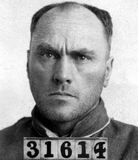
Carl Panzram
Serial killer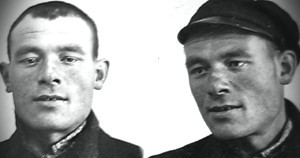 Bruno Lüdke
Serial killer · Germany · 1928
Bruno Lüdke (3 April 1908 – 26 April 1944) was an alleged German serial killer.…
84 victims
Bruno Lüdke
Serial killer · Germany · 1928
Bruno Lüdke (3 April 1908 – 26 April 1944) was an alleged German serial killer.…
84 victims
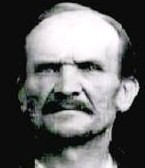 Georg Karl Grossmann
Serial killer · Germany · 1913
Georg Karl Grossmann, who commonly called himself just Karl Grossman (also give…
50 victims
Georg Karl Grossmann
Serial killer · Germany · 1913
Georg Karl Grossmann, who commonly called himself just Karl Grossman (also give…
50 victims
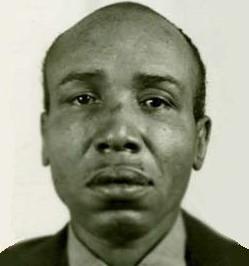 Jake Bird
Serial killer · USA · 1930
October 30, 1947 — Jake Bird broke into the home of Bertha Kludt and her daught…
44 victims
Jake Bird
Serial killer · USA · 1930
October 30, 1947 — Jake Bird broke into the home of Bertha Kludt and her daught…
44 victims
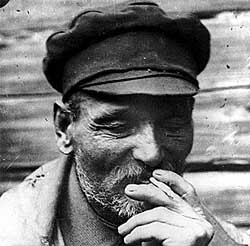 Vasili Komaroff
Serial killer · Russia · 1921
Vasili Komaroff was a horse-trader who maintained a stable at his home in Mosco…
33 victims
Vasili Komaroff
Serial killer · Russia · 1921
Vasili Komaroff was a horse-trader who maintained a stable at his home in Mosco…
33 victims
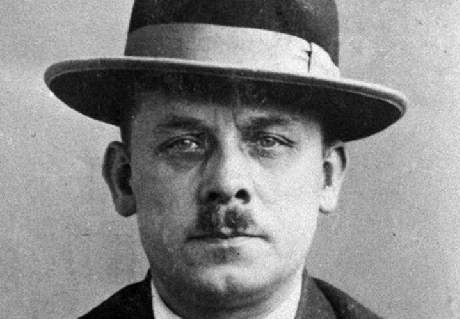 Friedrich Haarmann
Serial killer · Germany · 1918
Friedrich "Fritz" Haarmann (October 25, 1879 – April 15, 1925) was a serial kil…
27 victims
Friedrich Haarmann
Serial killer · Germany · 1918
Friedrich "Fritz" Haarmann (October 25, 1879 – April 15, 1925) was a serial kil…
27 victims
 Matthew Macon
Serial killer · USA · 2004
Matthew Emmanuel Macon was 27 when police said he was suspected of killing five…
6 victims
Matthew Macon
Serial killer · USA · 2004
Matthew Emmanuel Macon was 27 when police said he was suspected of killing five…
6 victims
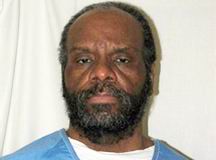 Albert G. Brown
Murderer · USA · 1980
Albert Greenwood Brown, Jr. (born August 18, 1954) Albert Greenwood Brown, Jr.…
1 victim
Albert G. Brown
Murderer · USA · 1980
Albert Greenwood Brown, Jr. (born August 18, 1954) Albert Greenwood Brown, Jr.…
1 victim
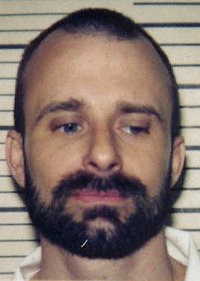 Eric Randall Nance
Murderer · USA · 1993
Eric Randall Nance was a white male who was born on 01/09/60. He was convicted…
1 victim
Eric Randall Nance
Murderer · USA · 1993
Eric Randall Nance was a white male who was born on 01/09/60. He was convicted…
1 victim
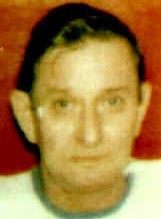 James Hutchins
Murderer · USA · 1979
Name: James W. Hutchins Full name used: James W. Hutchins; James W. Hutchins (A…
3 victims
James Hutchins
Murderer · USA · 1979
Name: James W. Hutchins Full name used: James W. Hutchins; James W. Hutchins (A…
3 victims
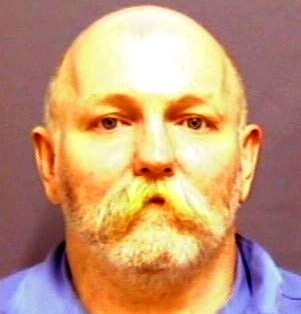 Glen Burton Ake
Homicide · USA · 1979
Glen Burton Ake was sentenced to death and later had that death sentence overtu…
2 victims
Glen Burton Ake
Homicide · USA · 1979
Glen Burton Ake was sentenced to death and later had that death sentence overtu…
2 victims
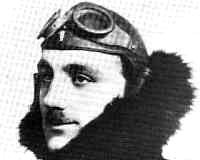 Ronald True
Murderer · United Kingdom · 1922
Ronald True was sentenced to death for the murder of 25-year-old Olive Young, a…
1 victim
Ronald True
Murderer · United Kingdom · 1922
Ronald True was sentenced to death for the murder of 25-year-old Olive Young, a…
1 victim
- Gender
- male
- Country
- Angola
- Location
- New York/Massachusetts/Connecticut/Maryland/Pennsylvania/Kansas, USA - Luanda, Angola
- Date of birth
- J une 28, 1891
- Age at first offence
- 29
- Characteristics
- serial rapist, rape, abuse, arson, burglary
- Victim profile
- Boys and men
- Method of murder
- Shooting - Strangulation - Beating with rock or iron bar
- Date(s) of murder
- 1920 - 1929
- Years active
- 1920–1929
- Date of arrest
- August 16, 1928
- Status
-
Executed
Executed by hanging in Kansas on September 5, 1930
Case identification
Carl Panzram (28 June 1891 – 5 September 1930) was an American serial killer.
Status / outcome
Carl Panzram was executed by hanging in Kansas on September 5, 1930. When the hood was secured, he spit in the executioner’s face and snarled: "Hurry up you bastard, I could kill 10 men while you're fooling around!" When asked by the executioner if he had any last words, Panzram barked: "Yes, hurry it up, you Hoosier bastard! I could kill ten men while you're fooling around!" He also allegedly declared: "I wish all mankind had one neck so I could choke it!"
Characteristics (crime-related descriptors)
Panzram was described as having committed sodomy on more than 1,000 male human beings and was associated with rape. He was also described as engaging in vandalism and arson, including burglary and theft. He was described as an alcoholic.
Aliases
Panzram used aliases including "Carl Baldwin", "Jack Allen" and "Jefferson Baldwin" in Oregon; "Jeff Davis" in Idaho and Montana; "Jefferson Davis" in California and Montana; "Jeff Rhodes" in Montana; "John King"; and "John O'Leary" in New York. He was also described as using "Jeff Baldwin" in Oregon, and "John O'Leary" during a 1923 period.
Background
Panzram was born Charles Panzram in Minnesota, the son of Prussian immigrants, Johann "John" and Matilda Panzram, and he was raised on his family's farm. He was described as having a childhood marked by repeated trouble with the authorities. His brothers and father left; his father left the family in 1899. He had five brothers and one sister.
Panzram ran away from home at the age of 14. He claimed that, in a boxcar, he was gang raped by four hobos. He was described as an alcoholic by his teens and as repeatedly in trouble with authorities, usually for burglary and theft. He was also described as having been repeatedly in trouble with authorities for burglary and theft, and later for attacking guards and refusing to follow their orders.
Other details (early life claims, discipline, and philosophy)
Panzram wrote that he was "rage personified." He wrote: "In my lifetime I have murdered 21 human beings, I have committed thousands of burglaries, robberies, larcenies, arsons and, last but not least, I have committed sodomy on more than 1,000 male human beings. For all these things I am not in the least bit sorry". He also wrote: "I prefer to die that way, and if I have a soul and if that soul should burn in Hell for a million years, still I prefer that to a lingering, agonizing death in some prison dungeon or a padded cell in a mad house... The only thanks you or your kind will ever get from me for your efforts on my behalf is that I wish you all had one neck and that I had my hands on it... I have no desire to reform myself. My only desire is to reform people who try to reform me, and I believe that the only way to reform people is to kill'em." He wrote: "The only thanks you and your kind will ever get from me for your efforts on my behalf is that I wish you all had one neck and that I had my hands on it. I have no desire whatever to reform myself. My only desire is to reform people who try to reform me, and I believe that the only way to reform people is to kill 'em!" He wrote to President Herbert Hoover: "I do not want another trial. I absolutely refuse to accept either a pardon or a commutation should either or the other be offered to me." In an autobiography description, he wrote: "I believe the only way to reform people is to kill them."
Timeline
- June 28, 1891 — Carl Panzram was born in Minnesota.
- September 18, 1917 — Panzram escaped from prison.
- May 12, 1918 — Panzram escaped again after seeinged through prison bars.
- June 1, 1915 — Panzram burglarized a house in Astoria, Oregon and was arrested soon after.
- August 1920 — Panzram burglarized William Howard Taft’s New Haven home.
- July 18, 1922 — Panzram attacked and killed a 12-year-old boy in Salem, Massachusetts.
- 1922 (later that year) — Panzram asserted he strangled another boy in New Haven, Connecticut.
- July 26, 1928 — An alleged murder victim Alexander Uszacke was described in an arrest warrant context.
- August 16, 1928 — Panzram was arrested following a series of burglaries in Washington, D.C.
- June 20, 1929 — Panzram killed Robert Warnke, foreman of the prison laundry in Leavenworth.
- April 14, 1930 — Trial began for Warnke's murder.
- April 16, 1930 — Judge Walter McCoy sentenced him in an earlier trial context; later Menninger wrote a letter to Warden T. B. White in the Warnke-related assessment context.
- September 5, 1930 — Panzram was executed by hanging in Kansas.
The offence
Panzram’s crimes included burglaries, theft, arson, vandalism, and murders described in multiple locations. He lured sailors, committed sodomy/rape, and shot them, disposing of remains in a river or sea.
Murders and related acts described
Panzram burglarized a house in Astoria, Oregon, and was arrested soon after while attempting to sell stolen items. He was described as using a .45 caliber handgun in several murders after the August 1920 burglary of William Howard Taft’s home. He lured sailors in New York away from bars, got them drunk, raped and shot them, and dumped their remains into the river. He claimed to have killed ten in all; he was stopped when the vessel he was in was shipwrecked near Atlantic City, New Jersey, and the last two potential victims escaped. Panzram claimed that he raped and killed an 11- or 12-year-old boy in Luanda, Angola. In his confession to this murder, he wrote: "His brains were coming out of his ears when I left him and he will never be any deader." Panzram also claimed that he hired a rowing boat, shot the rowers and threw their bodies to the crocodiles. In another set of claims, he stated that he raped and killed two small boys: one beaten to death with a rock on July 18, 1922 in Salem, Massachusetts, and another strangled later in New Haven, Connecticut. In one narration, he was described as strangling a New York woman on June 16, 1928 and was also described as committing a murder between Baltimore and Washington, D.C. while burglarizing homes, plus a Philadelphia murder in 1928; three of these last five killings were described as confirmed.
Evidence / identification described for the Salem killing
Panzram’s involvement in the Salem killing was described as being identified later by witnesses. He was described as being seen on the afternoon of July 18, 1922 near where George Henry McMahon was killed. A witness identified as Mrs. Margaret Lyons later told the court: "About 2:15 I sent him to the A&P store for the milk, giving him fifteen cents," A witness identified as Mrs. Margaret Crean later told the court: "In the afternoon of July 18th, while sitting in front of a window in my home, I saw a boy and a man walking up the avenue. The man was dressed in a blue suit and wore a cap," Panzram told the court and/or described in his confession that the boy was with him for about three hours and that he committed sodomy on the boy six times before killing him by beating his brains out with a rock. He also stated: "I had stuffed down his throat several sheets of paper out of a magazine."
Investigation
Panzram was interrogated and brought into custody in Washington, D.C. During his interrogation and jail time, he voluntarily confessed to killing two boys. Two Salem witnesses later identified him as the person they saw near the battered body of George Henry McMahon, during the 1928 custody period in Washington, D.C.
An arrest warrant context described an indictment from Philadelphia charging Panzram with "homicide on an Alexander Uszacke, by strangling and choking on July 26, 1928, at Point House Road ."
Panzram wrote a letter to District Attorney Clark in Salem, Massachusetts. In the letter he wrote: "I made a full confession of this murder of McMahon.You sent a number of witnesses from Salem to identify me, which they done. I do not change my former confession in any way. I committed that murder. I alone am guilty. I not only committed that murder but 21 besides and I assure you here and now that if I ever get free and have the opportunity I shall sure knock off another 22!"
Arrest
Panzram was arrested multiple times under various aliases, including "Jefferson Baldwin," "Jeff Davis," "Jeff Rhodes," "John O’Leary," and "John King." On June 1, 1915, he burglarized a house in Astoria, Oregon and was arrested soon after while attempting to sell stolen items. After escaping from Oregon State Penitentiary in September 1917 and again in May 1918, he changed his name to John O’Leary and shaved off his moustache. In August 1920, he burglarized William Howard Taft’s New Haven home. In 1928 he was arrested in Washington, D.C. for burglary. On June 29, 1923, Panzram was arrested aboard/with a 38-foot yacht moored off Nyack, New York. He was charged with sodomy, burglary and robbery. He was held in a city jail while awaiting court appearance.
Trial
Warnke murder trial / death sentence context
Panzram was tried for the murder of Robert Warnke, foreman of the prison laundry in Leavenworth, where Panzram was described as having battered Warnke to death with an iron bar. When asked if he had an attorney, he refused counsel and replied: "No, and I don't want one!" He also replied to the court regarding his plea: "I plead not guilty! Now you go ahead and prove me guilty, understand?" The jury took just 45 minutes to arrive at a verdict. He was found guilty of murder with no recommendation for mercy. The judge remanded him back to Leavenworth until "the fifth day of September, nineteen thirty, when between the hours of six to nine o'clock in the morning you shall be taken to some suitable place within the confines of the penitentiary and hanged by the neck until dead." After receiving the sentence, Panzram said: "Visit me!" and later, in court, told the judge: "I certainly want to thank you, judge, just let me get my fingers around your neck for 60 seconds and you'll never sit on another bench as judge!"
Sanity evaluation described
A meeting was arranged under court supervision with Dr. Karl Menninger. In that encounter, Panzram said: "I want to be hanged and I don't want any interference by you or your filthy kind," and also said: "I just know the more about the world and the essential evil nature of man and don't play the hypocrite. I am proud of having killed off a few and regret that I didn't kill more!" During the interview he also said: "I am saying I am responsible and I am guilty and the sooner they hang me the better it will be and gladder I will be. So don't you go trying to interfere with it!" Afterward, Menninger wrote to Warden T. B. White and asked for further access: "For purely scientific purposes I should like to look into the case of Carl Panzram a little more in detail. His case was an extraordinary one as you know and I am very interested in finding out what the earlier evidences of his mental instability were."
Salem-related trial / jury verdict described
A trial for burglary and house breaking charges opened on November 12, 1928. Panzram acted as his own attorney and terrified the jury with unpredictable, combative behavior. When a witness, Joseph Czerwinksi of Baltimore, testified, Panzram said: "Do you know me?" and "Take a good look at me!" He then dragged his fingers across his neck, indicating a slit throat. Panzram took the stand and admitted to burglary, telling the court he intentionally remained in the house for several hours hoping the owners would come home so he could kill them. On November 12, 1928, he was found guilty on all counts. Judge Walter McCoy sentenced him to 15 years on the first count and 10 years on the second to run consecutively.
Sentencing
Panzram received various prison sentences described in the narrative, including a seven-year prison sentence at the Oregon State Penitentiary in Salem after his June 1, 1915 arrest. He was described as receiving a 25-year sentence to be served at Leavenworth Federal Penitentiary after a 1928 burglary arrest and confessions. After he was sentenced for the murder of Robert Warnke, he was sentenced to death. He refused to appeal, even threatening to kill human rights groups that attempted to appeal on his behalf. He was executed by hanging on September 5, 1930.
Appeals
Panzram refused to appeal.
Aftermath
Henry Lesser befriended Panzram while Panzram was in Washington, D.C. during interrogation and jail time. Lesser gave Panzram writing materials used to write his autobiography. Lesser later pressed for the manuscript to be published for forty years; it was released in 1970 as Killer: A Journal of a Murder. It underwent reprints, with the latest described as being in 2002. A 1996 movie Killer: A Journal Of Murder was described as being based on Panzram’s final years, with James Woods as Panzram and Robert Sean Leonard as Lesser. Lesser donated the Carl Panzram papers (archival material) to the San Diego State University in 1980. Robert Stroud later wrote that Panzram was restless the night before execution, walking the floor of his cell, singing a pornographic little song he had composed himself. After execution, Panzram’s body remained unclaimed; it was carted to the prison cemetery in a wheelbarrow, and the only identification on his tombstone was the number "31614".
Quantities and victims as stated
Panzram claimed to have killed ten sailors in New York-related episodes. He claimed to have raped and killed an 11- or 12-year-old boy in Luanda, Angola. He claimed to have raped and killed two small boys (one on July 18, 1922 in Salem, Massachusetts; another later that year in New Haven, Connecticut). He confessed during his time at Washington, D.C. to killing two boys. He confessed in his autobiography to having murdered 21 human beings, and he claimed sodomy on more than 1,000 male human beings.
Key named people (as stated in the record)
- Carl Panzram — defendant/executed person.
- Prussian immigrants Johann "John" Panzram and Matilda Panzram — parents.
- William Howard Taft — former Secretary of War; burglary victim of his New Haven home; Taft’s .45 caliber handgun was described as used later in murders.
- Harry Minto — warden at Oregon State Penitentiary in Salem.
- Otto Hooker — helped escape; later killed Minto while evading capture.
- Henry Lesser (1902-1983) — prison guard who befriended Panzram; supplied writing materials; later published an autobiography based on Panzram’s writings.
- Robert Warnke — foreman of the prison laundry in Leavenworth; Panzram killed him with an iron bar.
- Judge Walter McCoy — sentenced Panzram on burglary and house breaking counts.
- Judge Hopkins — presided during the Warnke-related proceedings.
- Warden T. B. White — presided over institutional rules and sentence context.
- Dr. Karl Menninger — requested sanity-related interviews; conducted an assessment meeting.
- Alexander Uszacke — named in an arrest warrant context.
- George Henry McMahon — a 12-year-old boy described as killed in Salem, Massachusetts.
- Robert Stroud — mentioned as later writing about Panzram.
- President Herbert Hoover — corresponded with by Panzram.
- Henry Lesser — mentioned repeatedly as the guard associated with manuscript publication and donated papers.
- Joseph Czerwinksi — witness called against Panzram (in the Salem-related context).
Spotted an error, or have more information about this case?