Arthur Eggers
Murderer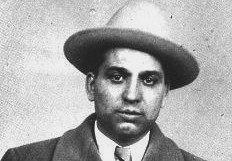 Harry Maione
Murderer · USA · 1937
Harry “Happy” Maione (1908 – February 19, 1942) was a New York mobster who serv…
12 victims
Harry Maione
Murderer · USA · 1937
Harry “Happy” Maione (1908 – February 19, 1942) was a New York mobster who serv…
12 victims
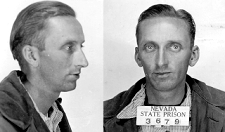 Luther Jones
Murderer · USA · 1936
Luther Jones Luther Jones was executed by asphyxiation-gas in Nevada on January…
4 victims
Luther Jones
Murderer · USA · 1936
Luther Jones Luther Jones was executed by asphyxiation-gas in Nevada on January…
4 victims
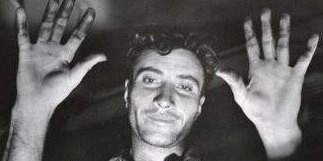 Albert Dyer
Murderer · USA · 1937
Albert Dyer was a 32-year-old WPA crossing guard and traffic guard at Centinela…
3 victims
Albert Dyer
Murderer · USA · 1937
Albert Dyer was a 32-year-old WPA crossing guard and traffic guard at Centinela…
3 victims
 George Sitts
Murderer · USA · 1945
George Sitts was executed by the State of South Dakota on April 8, 1947 for the…
3 victims
George Sitts
Murderer · USA · 1945
George Sitts was executed by the State of South Dakota on April 8, 1947 for the…
3 victims
 Joseph Medley
Murderer · USA · 1940
Joseph Medley was a male White person identified as being associated with robbe…
3 victims
Joseph Medley
Murderer · USA · 1940
Joseph Medley was a male White person identified as being associated with robbe…
3 victims
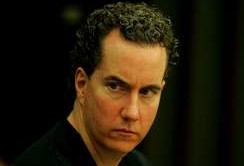 Stephen Grant
Murderer · USA · 2007
February 14, 2007 — Stephen Grant contacted the Macomb County sheriff's departm…
1 victim
Stephen Grant
Murderer · USA · 2007
February 14, 2007 — Stephen Grant contacted the Macomb County sheriff's departm…
1 victim
 Julia Andrews
Murderer · USA · 2012
Julia Andrews was sentenced to 44 years in prison on August 8, 2013. A jury of…
1 victim
Julia Andrews
Murderer · USA · 2012
Julia Andrews was sentenced to 44 years in prison on August 8, 2013. A jury of…
1 victim
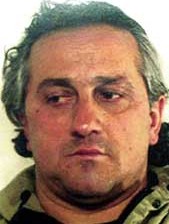 Maurizio Minghella
Serial killer · Italy · 1978
Maurizio Minghella was born in Genova on 16 luglio 1958. He lived in the Bolzan…
9 victims
Maurizio Minghella
Serial killer · Italy · 1978
Maurizio Minghella was born in Genova on 16 luglio 1958. He lived in the Bolzan…
9 victims
 Willie Ray Williams
Murderer · USA · 1980
Willie Ray Williams was executed by lethal injection in Texas on January 31, 19…
1 victim
Willie Ray Williams
Murderer · USA · 1980
Willie Ray Williams was executed by lethal injection in Texas on January 31, 19…
1 victim
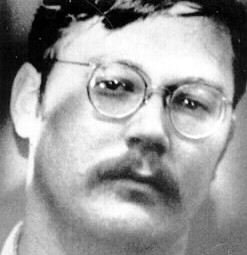 Edmund Kemper
Serial killer · USA · 1964
Edmund Emil Kemper III was born December 18, 1948. He was also known as “The Co…
10 victims
Edmund Kemper
Serial killer · USA · 1964
Edmund Emil Kemper III was born December 18, 1948. He was also known as “The Co…
10 victims
- Gender
- male
- Country
- USA
- Location
- San Bernardino, California, USA
- Date of birth
- 1894
- Age at first offence
- 51
- Characteristics
- parricide, dismemberment, abuse
- Victim profile
- Dorothy Eggers ( his wife )
- Method of murder
- Shooting ( .32 caliber automatic pistol)
- Date(s) of murder
- December 29, 1945
- Years active
- 1945
- Date of arrest
- January 22, 1946
- Status
-
Executed
Executed by asphyxiation-gas on October 15, 1948
Case record — Arthur Eggers
Background
Arthur R. Eggers was convicted of first degree murder and was sentenced to death for the killing of his wife, Dorothy Eggers. The proceedings to be reviewed included the trial upon the merits, a hearing regarding the issue presented by his plea of not guilty by reason of insanity, and a motion for a new trial.
Eggers lived in Temple City, a suburb of Los Angeles. He was assigned to duty in the Temple City substation of the sheriff's office. A room in the back of the house was rented to one Loomis, who had occupied it for more than two years.
Eggers told the jury that his marriage to Dorothy had been a happy one until two years before her death. He testified that she informed him that she was starting the change of life and that subsequently she had been difficult to get along with. Eggers also mentioned having heard rumors that his wife had gone to dances and picked up men, but he testified that because he trusted her he "did not give it much thought."
Just prior to her "disappearance," Eggers and his wife had an argument about Christmas presents. Eggers testified that she reproached him for not getting a present for Loomis and called him a "cheap skate," but that she "had a mad on." Eggers also testified that around the same time Dorothy told him that the certificate showing ownership of their automobile had been burned accidentally. He obtained an application for a duplicate certificate which he "got her to sign" although "she was reluctant." The title to the car was in her name, and she also signed a power of attorney, which he prepared, authorizing him to transfer or otherwise deal with the automobile. Eggers explained that the reason for wanting the change in title was that she had been involved in two accidents and he wished to protect his interest in the automobile if she was "killed or something."
Eggers reported Dorothy Eggers as missing in a written report filed the same day that her headless, handless torso was found.
The offence
On the morning of January 2d, the headless, handless torso of a woman was found in a ravine off a mountain highway in San Bernardino county. The body was wrapped in a blanket and tied with a rope. Newspaper publicity was given the same afternoon.
The body was later identified as that of Dorothy Eggers. She had two bullet wounds, one of which penetrated the heart and caused death. The missing head and hands were never recovered.
Investigation
Hikers came across a woman's body in a remote area of the San Bernardino Mountains in California in January 1946. The head and hands had been chopped off, making identification very difficult, and the body had only been lying there for less than a day, so there was still hope.
Investigators noticed that Dorothy Eggers had been reported missing by her husband around the time that the corpse was found and followed through on the lead. The initial report described Dorothy as thinner and taller than the unidentified body. Upon talking with her doctors, detectives discovered that Eggers had been treated for a bunion on her foot, which matched the one on the body.
Investigators had good reason to be suspicious of Arthur Eggers but did not have evidence to connect him to the crime. Investigators developed evidence after Eggers happened to sell his car to a police officer. The officer noticed spots of dried blood in the trunk, and in 1946 Eggers was arrested.
After the arrest, a subsequent search turned up pieces of Eggers' wife's flesh, a gun, and a handsaw in Eggers' home. Pieces of tissue, bone, and fatty debris were found on and around the gun. A ballistics expert testified that the bullets found in the body of Mrs. Eggers were fired from this gun.
The blanket in which the body had been wrapped was identified as one belonging to Eggers. The gun and saw were found by following the directions Eggers gave in a statement. On the gun there was a fatty, greasy substance and human blood. There were numerous bits of tissue, bone and fatty debris. One piece of bone, a rather large fragment, was forcibly wedged between the clip and frame.
The saw bore the initials "A E," which appeared to have been there for some time.
Expert testimony also addressed cleaning and blood in the automobile and at Eggers' residence. The trunk compartment of the automobile appeared to have been cleaned recently, and small spots of human blood were found in it. Human blood was also found in some grease on the floor of the garage at the Eggers' residence and in the bathroom of the house.
Arrest
Eggers was arrested on January 22d, and statements were taken from him.
In one statement, Eggers wrote out the directions to follow to find the place where he had thrown his gun and also a saw which the prosecution maintained was the instrument used in severing the head and hands from the body.
Trial
Evidence presented
The trial included evidence that the headless, handless torso was found and that it was identified as Dorothy Eggers. The record established that at the time of the homicide Eggers and his wife, with two of her young nieces, lived in Temple City. Witnesses other than Eggers testified that they had last seen Dorothy alive on the morning of December 28th.
Eggers testified in his own behalf and stated that on December 29th he went to work at 5 p. m. and returned home at approximately 1 a. m. on the following morning. As he came near his home, he heard the front door slam and saw a man, after coming from the house, walk hurriedly down the street. Eggers testified that he entered from the rear of the house and, upon turning on the lights, found his wife standing without any clothes on in their bedroom. He testified that he then said:
"Well, I am going to fix that old Doc from ever coming back here again."
Eggers testified that he grabbed a gun out of the chiffonier and that Dorothy stepped into the hallway to intercept him. He testified that he tried to get out toward the front door and that she struggled with him. After some struggling, they worked their way to the bathroom. Eggers testified:
"I was trying to shove her away," and "she was trying to pull me, and then we both fell in the bathroom and the gun went off."
Eggers testified that he only remembers one shot. He next testified:
"sitting on the toilet seat, crying and scared, and then I know I got in the car, and somebody else was in that car and kept saying, 'She is in back, she is in back.' "
Eggers testified that he could not identify the other person and that he drove out to Long Beach where he stayed until daylight, then returned home, went to his bedroom, and slept.
Eggers testified that he did not get a doctor for Dorothy after he shot her, explaining:
"I do not know whether she was hurt badly, or hurt at all, but I got an idea she was shot, and the next thing I know I was in the car."
Testimony offered by the State showed that the day after the body was discovered, Eggers went to San Bernardino to look at it. He called at the sheriff's office there, but after some discussion with the deputy in charge, left without viewing the body. Before returning to Temple City, Eggers telephoned to his brother-in-law in Los Angeles, and, being unable to reach him, had the call transferred to his own home where he talked with Loomis. Eggers testified that he told Loomis to call the brother-in-law and tell him that the body was not that of Mrs. Eggers because the feet were too large; Eggers testified that they:
"were as big as Garbo's."
Eggers testified that he told Loomis he had seen the body, when he had not done so, because he did not want anyone to know that he had been given the "brush-off" by the sheriff's office. He also testified that in response to his inquiries, he was informed that the body could not be that of his wife for it measured 58 inches from the shoulders to the soles of the feet. Eggers testified that his wife was 5 feet, 5 inches tall, and he at other times fixed her height as 5 feet, 2 inches. Other evidence tended to prove that she was 5 feet, 7 or 8 inches in height.
At one time Eggers told the Sheriff of San Bernardino County that the body was that of his wife and that he would claim it for burial if he were in a position to do so, but at trial he insisted that he believed her to be alive.
The record included evidence that on January 4th, Eggers sold his wife's engagement and wedding rings to a jeweler for $10, using an assumed name and giving a fictitious address. Eggers explained that he knew his fellow employees in the sheriff's office were suspicious of him, and if his wife's rings were found at his home it would implicate him. Evidence also showed that Eggers at one time stated that he found the rings in a bureau drawer after her "disappearance"; previously, he had told officers that he removed the rings from her body after the fatal shot.
A witness testified that on January 3d, she had seen Eggers working on the back of his automobile, appearing to be cleaning the baggage compartment. The record showed that two weeks later Eggers sold the car to one of the deputies in his office. The buyer noticed that the registration certificate was in the wife's name and, knowing of the missing person report, asked Eggers how the car could be transferred without her signature. Eggers replied that she was available and he would get her signature; everything would be all right.
Marie, the eldest of Dorothy's nieces living at the Eggers home, testified that he asked her to go to the Division of Motor Vehicles with him and sign her aunt's name to the papers. Marie testified that she practiced writing Dorothy's name several times, but Eggers finally signed his wife's name to the ownership certificate and obtained another one in the buyer's name. After Eggers was arrested, the certificate showing that the car was owned by Mrs. Eggers was found among her effects.
Jury verdict and sanity issue
The jury returned a verdict of guilty of murder of the first degree, without recommendations as to the punishment to be imposed. The court then ordered that the issue as to the sanity of Eggers be submitted to the same jury.
Before the sanity hearing commenced, the trial judge was informed by one of the jurors that she had "a closed mind" upon the question. The jury foreman "practically served notice" upon him "that if the same jury were retained it would be a hung jury." The jury was dismissed and another jury was impaneled to hear the sanity issue because, in the judge's opinion, "the members of the jury have disregarded the instructions we gave them about discussing the sanity of the defendant on the first issue."
The hearing proceeded notwithstanding objections of counsel for Eggers, who moved for a mistrial. Following denial of the motion, the jury found that Eggers was sane at the time of the commission of the crime.
Issues raised on appeal
Eggers challenged the judgment upon four grounds. He contended that (1) the evidence was insufficient to support a conviction of murder in the first degree, (2) the court erred prejudicially in instructing the jury, (3) the procedure for impaneling a second jury for the determination of sanity rendered the trial upon the merits a mistrial and the subsequent hearing a nullity, and (4) the district attorney's argument was unfair and prejudicial in determining the degree of the crime.
Eggers argued that if his testimony was not worthy of belief and was disregarded by the jury, then the only proof showed Dorothy Eggers was killed by him, presumably in an unlawful manner, but not facts affirmatively showing malice aforethought, an abandoned and malignant heart, or intentional, willful, deliberate premeditation. He asserted that he was guilty of no more than murder in the second degree.
The court discussed definitions of murder and murder of the first degree, including that murder was defined as "the unlawful killing of a human being, with malice aforethought." It discussed Penal Code provisions for first degree murder.
The appellate discussion included that deliberation, premeditation, and willfulness could be inferred from circumstances, and it described that deliberation and premeditation could not be inferred from the killing alone, but were matters of fact not implied as matters of law. The appellate court concluded that the record established more than the fact that Dorothy Eggers was unlawfully killed by her husband and that a deliberate intention to kill was fairly deducible. The appellate court noted that it was only Eggers' testimony that tended to show lack of premeditation, and that the jury apparently rejected his explanation of how the killing occurred.
Eggers also made nine assignments of error concerning jury instructions. He contended it was prejudicial error to state that every killing perpetrated by means of torture is murder of the first degree. He asserted the evidence was insufficient to prove that Dorothy Eggers died as the result of torture, and that giving any instruction on this subject amounted to a statement to the jury that there was evidence from which killing by torture might be found and made the basis of a verdict carrying the death penalty.
He further challenged an instruction quoted by the appellate court:
"The law does not require demonstration or that degree of proof which, excluding all possibility of error, produces absolute certainty, for such degree of proof is rarely possible. Only that degree of proof is necessary which convinces the mind and directs and satisfies the conscience of those who are bound to act conscientiously upon it."
Eggers argued that the use of the word "conscience" improperly told the jury to let their conscience be their guide and ignore reasonable doubt and burden of proof. The appellate discussion addressed that such an instruction, together with one defining reasonable doubt, was not erroneous, and that in the present case reasonable doubt was defined in the language of Penal Code section 1096.
Eggers also complained of the refusal to give an instruction he conceded was covered by instructions given, but from a prosecution viewpoint. He also challenged an instruction on deliberation and the time test, quoted by the appellate court:
"The law does not undertake to measure in units of time the length of the period during which the slayer must deliberate and premeditate or ponder over the killing before he has formed the intent to kill. The true test is not the duration of the time but the extent of the reflection. Thoughts may follow each other with great rapidity and cold, calculating judgment may be arrived at quickly. It is for you to say from all the evidence in this case whether or not the defendant premeditated the slaying of Dorothy Eggers, if you find from the evidence beyond a reasonable doubt that he did kill her."
The appellate court addressed objections regarding other proposed instructions, including one on conjecture or surmise, another on the effect of disbelief of the testimony of a witness, and one relating to extrajudicial statements made by Eggers being induced by threats, menace, or promises of reward. The appellate court discussed that no extrajudicial statements of Eggers amounted to a confession and that his testimony did not show threats or menace, and it noted that the promise of being sent to Mendocino was allegedly made by Jones and Rotchford, whose conversations with Eggers were not in evidence.
Eggers also argued that his theory of defense was ignored by refusal to give an instruction requested concerning killing in the heat of passion or with considerable provocation. The appellate court noted that he testified the shooting was accidental and had not asserted that he shot his wife in the heat of passion or with provocation, and that the refusal was therefore not error.
Sanity jury dismissal and procedure
The appellate discussion described an unusual situation related to the jury for the sanity issue. After the trial judge was informed by one of the jurors that she had "a closed mind" upon the issue of insanity and after the foreman declared no verdict would be returned if the same jury was retained, the judge called counsel into his chambers. The judge explained what had occurred and stated that "in the interest of the defendant, the State and ... the taxpayers ... it would be better to dismiss this jury and impanel another one." Counsel for Eggers objected to dismissal, declaring that he would move for mistrial and request a new trial. The judge dismissed the jury over these objections. Motions for an order declaring a mistrial and for a new trial were denied, and a new jury was impaneled to determine the insanity issue.
Eggers objected to introduction of any evidence as to his sanity on grounds that the court lacked jurisdiction because (1) it had erred in dismissing the former jury and (2) it should have declared a mistrial for misconduct of the first jury. The appellate court discussed a presumption that jurors performed their duty with fidelity and that this presumption could be overthrown only by showing some act of positive misconduct. It concluded the motions for a new trial and for an order declaring a mistrial were properly denied because there was no misconduct.
On a further argument about dismissal after the jury was directed to try the second issue and whether jeopardy had attached, the appellate court discussed that determination of issues presented by the pleas of not guilty and not guilty by reason of insanity constituted but one trial with separate issues tried separately. It concluded that error in the trial of the issue of sanity did not entitle the defendant to a retrial upon the issue presented by the plea of not guilty, and that the dismissal of the jury did not affect the validity of the determination of guilt. It also discussed Penal Code section 1026 and the court's discretion to retain or dismiss the jury that tried the first action.
Sentencing
The jury returned a verdict of guilty of murder of the first degree, without recommendations as to punishment. The court then ordered that the issue of sanity be submitted to the jury. After the jury found Eggers sane at the time of the commission of the crime, the sentence of death was imposed.
Appeals
A decision reviewed proceedings including the trial upon the merits and the sanity hearing issue, as well as the motion for a new trial.
The appellate court affirmed the judgment and the order denying a new trial. The appellate court concluded that the evidence justified a conviction for murder of the first degree, and it rejected claims of prejudicial error regarding jury instructions, the second jury procedure for sanity, and the district attorney's argument.
Gibson, C.J., Shenk, J., Carter, J., Schauer, J., Traynor, J., and Spence, J., concurred.
The case citation included: People v. Eggers (1947) 30 C2d 676 [Crim. 4761 Cal Sup Ct Oct., 3, 1947]
The appellate record referred to the proceedings “to be reviewed include not only the trial upon the merits, but also the hearing in regard to the issue presented by his plea of not guilty by reason of insanity and the motion for a new trial.”
Outcome
Eggers was executed by asphyxiation-gas in the gas chamber at San Quentin Prison.
He was executed on October 15, 1948.
Aftermath
The appellate decision stated that the judgment and the order denying a new trial were affirmed.
Spotted an error, or have more information about this case?