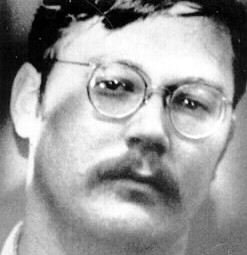
Edmund Kemper
Serial killer Donald Henry Gaskins
Serial killer · USA · 1969
Donald Henry Gaskins, also known as Donald “Pee Wee” Gaskins, was a serial kill…
200 victims
Donald Henry Gaskins
Serial killer · USA · 1969
Donald Henry Gaskins, also known as Donald “Pee Wee” Gaskins, was a serial kill…
200 victims
 Carl Eugene Watts
Serial killer · USA · 1974
Carl Eugene Watts (born November 7, 1953; died September 21, 2007), also known…
100 victims
Carl Eugene Watts
Serial killer · USA · 1974
Carl Eugene Watts (born November 7, 1953; died September 21, 2007), also known…
100 victims
 Donald Harvey
Serial killer · USA · 1970
Donald Harvey was known as an American serial killer and a self-professed “Ange…
87 victims
Donald Harvey
Serial killer · USA · 1970
Donald Harvey was known as an American serial killer and a self-professed “Ange…
87 victims
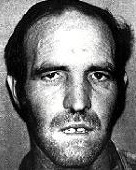 Ottis Toole
Serial killer · USA · 1961
Ottis Elwood Toole (sometimes misspelled as “Otis”) was an American serial kill…
65 victims
Ottis Toole
Serial killer · USA · 1961
Ottis Elwood Toole (sometimes misspelled as “Otis”) was an American serial kill…
65 victims
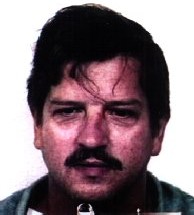 William George Bonin
Serial killer · USA · 1972
William George Bonin was executed by lethal injection in California on February…
44 victims
William George Bonin
Serial killer · USA · 1972
William George Bonin was executed by lethal injection in California on February…
44 victims
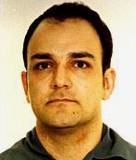 Gerald Stano
Serial killer · USA · 1969
Gerald Eugene Stano (September 12, 1951 – March 23, 1998) was executed by elect…
41 victims
Gerald Stano
Serial killer · USA · 1969
Gerald Eugene Stano (September 12, 1951 – March 23, 1998) was executed by elect…
41 victims
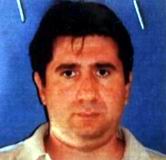 Lino Renzi
Homicide · Italy · 2013
Lino Renzi, aged 45, was ordered to closed psychiatric confinement on July 2013…
1 victim
Lino Renzi
Homicide · Italy · 2013
Lino Renzi, aged 45, was ordered to closed psychiatric confinement on July 2013…
1 victim
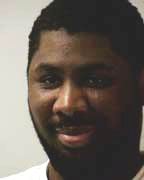 Milton E. Taylor
Murderer · USA · 2000
Milton E. Taylor was convicted of Murder 1st and sentenced to death on July 6,…
1 victim
Milton E. Taylor
Murderer · USA · 2000
Milton E. Taylor was convicted of Murder 1st and sentenced to death on July 6,…
1 victim
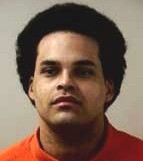 Luis Reyes
Murderer · USA · 1996
Name: Luis Reyes (Luis E. Reyes) · Date of birth: 02/08/1977 · Race: White · Ge…
2 victims
Luis Reyes
Murderer · USA · 1996
Name: Luis Reyes (Luis E. Reyes) · Date of birth: 02/08/1977 · Race: White · Ge…
2 victims
 Anthony Green
Murderer · USA · 1987
Anthony Green was executed by lethal injection in South Carolina on August 23,…
1 victim
Anthony Green
Murderer · USA · 1987
Anthony Green was executed by lethal injection in South Carolina on August 23,…
1 victim
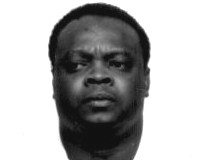 Charles Milton
Murderer · USA · 1977
Charles Milton was convicted of capital murder by a Fort Worth, Texas jury and…
1 victim
Charles Milton
Murderer · USA · 1977
Charles Milton was convicted of capital murder by a Fort Worth, Texas jury and…
1 victim
- Gender
- male
- Country
- USA
- Location
- California, USA
- Date of birth
- December 18, 1948
- Age at first offence
- 16
- Characteristics
- necrophilia, cannibalism, dismemberment
- Victim profile
- His grandparents / Six female hitchhikers / His mother and one of her friends
- Method of murder
- Shooting - Hitting with a hammer
- Date(s) of murder
- 1964 / 1972 - 1973
- Years active
- 1964–1973
- Date of arrest
- April 24, 1973 (surrenders)
- Status
-
Life imprisonment
Sentenced to life in prison on November 1973
Case record: Edmund Emil Kemper III
Background
Edmund Emil Kemper III was born December 18, 1948. He was also known as “The Co-ed Killer.”
Kemper was born in Burbank, California, to Clarnell Stage and Edmund Emil Kemper Jr. He had an IQ of 136 and displayed sociopathic behavior from a young age. He tortured and killed animals, acted out bizarre sexual rituals with his sisters’ dolls, and once said that, in order to kiss a teacher he had a crush on, he would have to kill her.
Kemper’s mother, Clarnell (later known as Clarnell Strandberg), constantly berated and humiliated him and often made him sleep in a locked basement due to a fear that he would molest his sisters. Clarnell apparently suffered from Borderline Personality Disorder, which resulted in her rages and abuse against her son.
Kemper’s parents separated when he was nine and divorced four years later. He pined for his absent father through a succession of stepfathers. In a home in Helena, Montana, his mother and sisters belittled him and banished him to the basement because they considered his sharing a room with his sister unseemly.
Kemper was sent to live with his father and stepmother in Los Angeles. He was then sent away again, and he was eventually taken during the Christmas holidays of 1963 to live with his paternal grandparents on their 17-acre farm in North Fork, California. His teachers at Sierra Joint Union High School in nearby Tollhouse, California found him quiet and meek, making average grades and drawing no undue attention apart from his size.
At home with his grandparents, the situation was tense but bearable. Kemper kept busy and out from underfoot with his dog and a .22 rifle given by his grandfather. He shot rabbits and gophers and shot birds despite having been warned not to.
Upon returning to his mother and sisters in Helena, Kemper seemed to regress, and after two weeks he was back at the farm. He imagined killing his grandmother and brooded on an insult he felt regarding her taking precautions around his access to weapons.
Kemper was committed to Atascadero State Hospital, where he befriended his psychologist and became his assistant. He gained trust, obtained access to prisoners’ tests, and later was able to impress his doctor at the hospital enough to be let out.
Kemper was released into his mother’s care in Santa Cruz, California, against the wishes of several doctors at the hospital. He later convinced psychologists that he was well, had his juvenile records sealed forever, and demonstrated to them that he was reformed.
The offspring of Kemper’s family
Clarnell Strandberg (as she was later known) held a responsible position as an administrative assistant on the University of California at Santa Cruz campus.
Kemper had a sister six years older and a sister two and a half years younger.
The Burbank and California setting
Kemper was described as very intelligent and socially awkward, with a height reaching 6 feet 9 inches and weight more than 300 pounds (136 kg) by the time of the spree in the early 1970s.
He worked a series of odd jobs before securing work with the State of California’s Department of Public Works/Division of Highways in District 4 (now known as Department of Transportation or Caltrans).
The basis of the case
Kemper later killed and dismembered six female hitchhikers in the Santa Cruz, California, area. He then murdered his mother and one of her friends before turning himself in to authorities.
Offence
Early killings on the 17-acre ranch (grandparents)
On August 27, 1964, Kemper shot his grandmother while she sat at the kitchen table putting the finishing touches on her latest children’s book. When his grandfather came home from grocery shopping, Kemper shot him as well. Kemper then called his mother, who urged him to call the police.
When questioned, Kemper said he “just wanted to see what it felt like to kill Grandma,” and that he killed his grandfather because he knew he would be angry at him for what he had done to his grandmother.
Kemper was 15 at the time.
Murder spree of female hitchhikers
Between May 1972 and February 1973, Kemper embarked on a spree of murders picking up female students hitchhiking, taking them to isolated rural areas and killing them.
He stabbed, shot, or smothered the victims, then took the bodies back to his apartment where he had sex with them and then dissected them. He dumped bodies in ravines or buried them in fields. He buried the severed head of a 15-year-old girl in his mother’s garden as a “sick joke,” later remarking that his mother “always wanted people to look up to her.”
He killed six college girls, including two students from UC Santa Cruz and one from Cabrillo College.
Murder of his mother and her best friend
In April 1973, Kemper battered his mother to death with a pick hammer while she slept. He decapitated her, raped her headless body and used her head as a dartboard. He put her vocal cords in the garbage disposal, but the machine could not break the tough tissue down and regurgitated it back into the sink.
“That seemed appropriate,” Ed said after his arrest, “as much as she'd bitched and screamed and yelled at me over so many years.”
He then invited his mother’s best friend over and killed her too by strangulation.
Investigation and arrest
Turn-in to Santa Cruz police
Kemper drove eastward after killing his mother and her friend. When no word of the crimes reached the radio airwaves, he became discouraged, stopped the car, called the police and confessed to being the Co-ed Killer.
He told them what he had done and waited for them to pick him up. During his confession, he waited for police and “seemingly unashamed” as he confessed to necrophilia and cannibalism.
In another account, on April 23, 1973, Santa Cruz police received a call from a phone booth in Pueblo, Colorado from a twenty-four-year-old man who had eaten with them, drank with them, and talked with them for hours. The caller was Edmund Kemper. He said he had committed murder—a double homicide four days earlier—and described killing his mother and removing her head, then inviting his mother’s friend, Sara “Sally” Hallett, who he killed and removed her head from as well. He said both bodies were stuffed into closets in his mother’s duplex on Ord Drive.
A party of investigators traveled to Pueblo to question him. Investigators convinced the caller not to be a crank caller, and helped find him.
Custody and investigators’ findings
After a call and scene access, investigators found evidence consistent with his confession, including two bodies. The bodies were decapitated, and his mother had been battered. Her tongue and larynx had been chopped up and placed in a garbage disposal that had spit them back out.
Kemper talked for hours and gave explicit and detailed confessions to eight murders. He led investigators to the disposal sites he had used and continued his confession, leaving his court-appointed public defender, James Jackson, no avenue for defense except that of insanity.
Public defender
Kemper’s court-appointed public defender was James Jackson.
Trial
Charges and plea
Kemper was indicted on eight counts of first-degree murder on May 7, 1973.
At his trial he pleaded insanity. He was found guilty of eight counts of murder.
Kemper asked for the death penalty, but capital punishment was suspended at that time, and he instead received life imprisonment.
Sentencing
Kemper was sentenced to life imprisonment.
A judge placed Kemper in a maximum-security prison at Folsom for the rest of his life after a period at Vacaville Medical Facility for observation.
The court recommended in the strongest terms possible that Kemper not be released for the rest of his natural life.
Appeals
No appeal information was provided.
Outcome
Kemper remained incarcerated and “is incarcerated at Vacaville State Prison.”
Other details
Victims list as provided
- Maude Kemper — August 27, 1964
- Ed Emil Kemper — August 27, 1964
- Mary Anne Pesce — May 5, 1972
- Anita Luchese — May 5, 1972
- Aiko Koo — September 14, 1972
- Cindy Schall — January 8, 1973
- Rosalind Thorpe — February 5, 1973
- Alice Lui — February 5, 1973
Additional victim details included:
- Clarnell Strandberg was described as his mother and was murdered in April 1973.
- Sara Hallett (Sara “Sally” Hallett) was murdered after being invited over for dinner and a movie.
Confessions, statements, and quotations
Kemper said:
- “just wanted to see what it felt like to kill Grandma”
- “as much as she'd bitched and screamed and yelled at me over so many years”
- “Appx. 5:15 A.M. Saturday. No need for her to suffer anymore at the hands of this horrible 'murderous butcher.' It was quick, sleep, the way I wanted it.”
- “Big Ed” was the name associated with him by police in Santa Cruz.
- “What do you think, now, when you see a pretty girl walking down the street?” and answering himself: “One side of me says, 'Wow, what an attractive chick. I'd like to talk to her, date her.' The other side of me says, 'I wonder how her head would look on a stick.'”
- “I just wanted the exaltation over the party. In other words, winning over death. They were dead and I was alive. That was the victory in my case.”
Kemper also was quoted:
- “I pulled the gun out to show her I had it...she was freaking out. Then I put the gun away and that had more effect on her than pulling it out.”
- “She could have reached over and grabbed the gun,” he said later, “but I think she never gave it a thought.”
- “It was stupid for anyone to hitchhike,” and “but to these people who thought it was fun and exciting and maybe even a little bit daring -- it is if they're dead.”
In court context, he testified:
- “death never entered as a factor” in the coed killings.
- “Alive, they were distant, not sharing with me. I was trying to establish a relationship and there was no relationship there... ”
- “When they were being killed, there wasn't anything going on in my mind except that they were going to be mine ... That was the only way they could be mine.”
Jury deliberation and verdict timing details
One account said the jury deliberated for only five hours and found him guilty of first-degree murder on all eight counts.
Another account said the trial lasted less than three weeks, and on November 8 a six-man, six-woman jury deliberated for five hours.
Psychiatric and trial testimony details
Dr. Joel Fort testified against the insanity defense. Fort said Kemper was not a paranoid schizophrenic, was obsessed with sex and violence, and craved attention. Fort also said that if Kemper were released he would kill again and would kill the same sort of victim.
A psychiatrist diagnosed Kemper as paranoid and psychotic at the time of the juvenile case and committed him to Atascadero State Hospital.
At trial, prosecution psychiatrists found Kemper to be sane. Under truth serum, Dr. Joel Fort said Kemper probably engaged in cannibalism and related that he cooked and ate parts of the girls’ flesh after dismembering them. Fort found that Kemper knew what he was doing, was thrilled by notoriety, and was aware it was wrong.
Suicide attempts and prison events mentioned
Kemper tried twice to commit suicide by slashing his wrists while awaiting trial.
After arrest, a jail nurse changed the bandage on his wrist where he had slashed his own wrists during trial in an ostensible suicide attempt.
Prison interviews and profiling
FBI Special Agents John Douglas and Robert R. Ressler became part of the Behavioral Science Unit at Quantico during the early years of the 1970s and visited prisons to interview killers.
Kemper agreed to be interviewed. Ressler described an encounter in a small locked cell near death row for four hours.
Popular culture and books
Kemper’s case was referenced in multiple music works and books, including:
- The Berzerker’s song “Forever” using samples from Ed Kemper’s testament.
- Church of Misery’s song “Killfornia” containing a long testament by Kemper.
- Optimum Wound Profile’s song “Crave” using segments of Kemper’s testimony.
- Macabre’s 1993 album Sinister Slaughter, song “Edmund Kemper Had a Horrible Temper.”
- The mention of a quote used in Bret Easton Ellis’ American Psycho, mistakenly attributed to Ed Gein.
- Thomas Harris based Buffalo Bill in The Silence of the Lambs in part upon Kemper.
A list of books was provided:
- Cheney, Margaret, Why: The Serial Killer in America (1992).
- Damio, Ward, Urge to Kill (1974).
- Leyton, Elliott, Hunting Humans: The Rise Of The Modern Multiple Murderer (2005).
- Ressler, Robert K., Whoever Fights Monsters: My Twenty Years Tracking Serial Killers for The FBI.
- West, Don, Sacrifice Unto Me (1974).
- Douglas, John, Mind Hunter (1995).
- Lawson, Christine Ann (2002). Understanding the Borderline Mother -- Helping Her Children Transcend the Intense, Unpredictable, and Volatile Relationship.
Condensed descriptions of methods and victim handling
Kemper stabbed, shot, or smothered victims. He kept bodies and severed parts, engaged in sexual acts after death, dissected bodies, and decapitated victims. He disposed of remains in ravines, buried them in fields, and discarded some parts so they were discovered later.

Spotted an error, or have more information about this case?