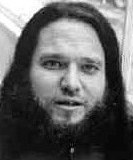
Ira Einhorn
Murderer Ervil LeBaron
Murderer · USA · 1972
Ervil Morrell LeBaron (1925 to August 16, 1981) was the leader of a polygamous…
35 victims
Ervil LeBaron
Murderer · USA · 1972
Ervil Morrell LeBaron (1925 to August 16, 1981) was the leader of a polygamous…
35 victims
 Brian Kevin Rosenfeld
Murderer · USA · 1985
Brian Kevin Rosenfeld Brian Kevin Rosenfeld was sentenced to three concurrent l…
23 victims
Brian Kevin Rosenfeld
Murderer · USA · 1985
Brian Kevin Rosenfeld Brian Kevin Rosenfeld was sentenced to three concurrent l…
23 victims
 Marvin Gray
Murderer · USA · 1975
Marvin Gray was convicted killer who claimed responsibility for 23 slayings and…
23 victims
Marvin Gray
Murderer · USA · 1975
Marvin Gray was convicted killer who claimed responsibility for 23 slayings and…
23 victims
 Yahweh ben Yahweh
Murderer · USA · 1980
Yahweh ben Yahweh was born and legally named Hulon Mitchell Jr. (October 27, 19…
23 victims
Yahweh ben Yahweh
Murderer · USA · 1980
Yahweh ben Yahweh was born and legally named Hulon Mitchell Jr. (October 27, 19…
23 victims
 Linda Henning
Murderer · USA · 1999
Linda Henning was convicted of felony murder and kidnapping in connection with…
1 victim
Linda Henning
Murderer · USA · 1999
Linda Henning was convicted of felony murder and kidnapping in connection with…
1 victim
 Charles Mayhew
Murderer? · USA · 1998
Charles “Chuck” Mayhew Jr. (age 49; son of Charles “Charlie” Mayhew Sr.) · Char…
1 victim
Charles Mayhew
Murderer? · USA · 1998
Charles “Chuck” Mayhew Jr. (age 49; son of Charles “Charlie” Mayhew Sr.) · Char…
1 victim
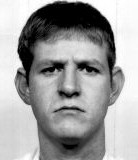 William Kitchens
Murderer · USA · 1986
William Joseph Kitchens was convicted of the capital murder of Patricia Webb an…
1 victim
William Kitchens
Murderer · USA · 1986
William Joseph Kitchens was convicted of the capital murder of Patricia Webb an…
1 victim
 Crystal Wagner
Murderer · USA · 2005
Crystal Mae Wagner (also referred to as Crystal Wagner), 29, was accused of kil…
1 victim
Crystal Wagner
Murderer · USA · 2005
Crystal Mae Wagner (also referred to as Crystal Wagner), 29, was accused of kil…
1 victim
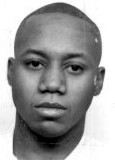 Willie Tyrone Trottie
Murderer · USA · 1993
Willie Tyrone Trottie was a Black male. He had black hair, was 5' 5", and weigh…
2 victims
Willie Tyrone Trottie
Murderer · USA · 1993
Willie Tyrone Trottie was a Black male. He had black hair, was 5' 5", and weigh…
2 victims
 Joanna Dennehy
Murderer · United Kingdom · 2013
Name: Joanna Dennehy · March 2013 — Three murders were carried out in the Unite…
3 victims
Joanna Dennehy
Murderer · United Kingdom · 2013
Name: Joanna Dennehy · March 2013 — Three murders were carried out in the Unite…
3 victims
- Gender
- male
- Country
- USA
- Location
- Philadelphia, Pennsylvania, USA
- Date of birth
- May 15, 1940
- Age at first offence
- 37
- Characteristics
- fugitive, drug dealer, abuse, rape, serial rapist, torture
- Victim profile
- Helen "Holly" Maddux ( his girlfriend )
- Method of murder
- Beating
- Date(s) of murder
- September 9, 1977
- Years active
- 1977
- Date of arrest
- September 22, 1998 (France)
- Status
-
Life imprisonment
Sentenced to life in prison October 17, 2002
Case information
- Name: Ira Samuel Einhorn
- Date of birth: May 15, 1940
Timeline
- September 9, 1977 — Holly Maddux returned to Philadelphia after breaking up with Ira Einhorn.
- Fall 1977 — Holly Maddux disappeared.
- September 1977 — Maddux broke up with Einhorn; she went to New York and became involved with Saul Lapidus.
- September 9, 1977 — Maddux was never seen in public again.
- March 28, 1979 — Detective Mike Chitwood led a search of Einhorn’s apartment.
- October 17, 2002 — A Philadelphia jury found Ira Einhorn guilty, after deliberating for two hours, and he was sentenced to life in prison without parole.
- October 17, 2002 — “A Philadelphia jury found former hippie guru Ira Einhorn, 62, guilty of the 1979 murder of his girlfriend, Holly Maddux.”
Background
Ira Samuel Einhorn was an activist in the 1960s and 1970s. He was known to some of his supporters as “the Unicorn.” Einhorn studied in Pennsylvania and had a five-year relationship with Holly Maddux. Maddux was from Tyler, Texas, and graduated from Bryn Mawr College in suburban Philadelphia.
Einhorn was active in ecological and antiwar groups in the 1960s. He was at one time a friend and contemporary of Jerry Rubin and Abbie Hoffman. He claimed he had been instrumental in creating Earth Day in 1970 and he participated in the Earth Day rally in Philadelphia that year. Other organizers disputed his account. Einhorn later became known as an ecological and anti-war activist and as a hippie guru.
The offence
In 1977, Holly Maddux broke up with Ira Einhorn. When Einhorn found out Maddux had become involved with Saul Lapidus, he angrily called Maddux to come back to Philadelphia. Maddux did return to Philadelphia on September 9, and she was never seen in public again.
When questioned, Einhorn stated to police that Maddux left to make a call and never came back. Eighteen months later, Maddux’s decomposing corpse was found by police in a trunk stored in a closet in Einhorn’s apartment. The corpse was found in styrofoam, with air fresheners and newspapers.
Investigation
Neighbors complained about a foul smell coming from Einhorn’s Powelton Village apartment.
Detective Mike Chitwood led the search of Einhorn’s apartment on March 28, 1979. In a wardrobe, Chitwood found Maddux’s suitcase, handbag, driver’s licence and social security card. In the same wardrobe, Chitwood found Maddux’s body in a trunk packed in styrofoam, air fresheners and newspapers. Maddux’s decomposing body was partially mummified, and the remains weighed only 37 pounds.
A post-mortem revealed trauma to Maddux’s head and her skull was smashed in several places. Other accounts in the material described that the body’s position and size of the trunk meant she had been alive and semi-conscious when placed in the trunk and had died trying to claw her way out.
In the material, it was also stated that Maddux’s body was found in a trunk stored in a closet in Einhorn’s apartment, and that her remains were discovered after neighbors complained about the stench.
Arrest and bail
Einhorn was arrested after the search found Maddux’s body.
Einhorn’s bail was set at $40,000.00 at the request of his attorney, Arlen Specter. Einhorn was released from custody in advance of his trial by paying 10% of the bond’s value, or $4,000.00. This bail was paid by Barbara Bronfman, a Montreal, Canada, socialite, who owned the world’s largest distillery, Seagrams.
Flight
In 1981, days before his murder trial was to begin, Einhorn evaded bail and escaped to Europe.
The material stated that Einhorn traveled in Europe for the next 16 years and that he married Annika Flodin during that time.
A state conviction in absentia was described as occurring in 1993, when Einhorn was convicted of the murder of Maddux.
Trial
In absentia
Back in Pennsylvania, the state convicted Einhorn in absentia in 1993 of the murder of Maddux. He was sentenced to life in prison without the possibility of parole.
Extradition and right to retrial
After extradition proceedings, the material described an arrest in Champagne-Mouton, France, where Einhorn had been living under the name “Eugene Mallon.” The extradition process involved disputes between interpretations of the “right to a fair trial” between France and the United States.
The material described arguments that Einhorn would face the death penalty if returned to the U.S., while Pennsylvania authorities pointed out that at the date of the murder, Pennsylvania did not have the death penalty.
A second issue described in the material involved French law and the European Court of Human Rights requiring a new trial when a defendant was sentenced in absentia and was unable to present his defence. The court of appeals of Bordeaux rejected the extradition request.
The material also stated that thirty-five members of Congress sent a letter to President Jacques Chirac asking for Einhorn’s extradition, and that the President could not give orders to courts.
To secure extradition, the Pennsylvania legislature passed a 1998 bill nicknamed the “Einhorn Law” allowing in absentia defendants to request another trial. The material stated that the bill was criticized as being unconstitutional, and that Einhorn’s attorneys tried to use this to get French courts to deny extradition again. The French court ruled itself incompetent to estimate the constitutionality of foreign laws.
The material stated that another point of friction involved French laws restricting remand and that Einhorn was freed by a court under police supervision; French police then conducted intense surveillance. The matter went before Prime Minister Lionel Jospin, and he eventually issued an extradition decree. The material stated that Jospin was criticized for caving in to political pressure from U.S. President Bill Clinton.
Einhorn litigated against the decree before the Conseil d’État, which ruled against him. He then attempted to slit his throat and litigated before the European Court of Human Rights.
It was stated that, on July 20, 2001, Einhorn was extradited to the United States after French authorities were promised that he would receive another trial and would not face the death penalty under any circumstances.
Taking the stand
In the material, it was stated that Einhorn took the stand in his own defense and claimed that Maddux was murdered by CIA agents who attempted to frame Einhorn for the crime, due to Einhorn’s investigations on the Cold War and psychotronics.
The material stated that the jury did not find his testimony credible.
Conviction and sentencing
On October 17, 2002, the material stated that a Philadelphia jury affirmed Einhorn’s conviction after only two hours of deliberation.
The material also stated: “Einhorn is currently incarcerated in the state prison at Houtzdale, in central Pennsylvania.”
The material described the jury as a racially mixed jury of six men and six women. It stated that Judge William Mazzola sentenced Einhorn to life in prison without parole.
It included closing-argument quotation attribution:
- William Cannon, Einhorn’s attorney, said: “just a piece of circumstantial evidence.. It doesn't mean at all that Ira Einhorn is responsible for her murder.”
- Prosecutor Joel Rosen said: “the evidence of Einhorn's guilt is overwhelming.”
Appeals
The material described that Einhorn litigated against the extradition decree before the Conseil d’État, and that he then attempted to slit his throat and litigated before the European Court of Human Rights. It also stated that final appeals occurred and that he lost his appeal to fight extradition.
Outcome
- In absentia conviction: The material stated that the state convicted Einhorn in absentia in 1993 and sentenced him to life in prison without the possibility of parole.
- After extradition and new trial: The material stated that Einhorn was convicted on October 17, 2002 and sentenced to life in prison without parole, and that he was incarcerated at Houtzdale State Prison in Pennsylvania.
Other details
Einhorn was released on bail after bail was paid by Barbara Bronfman, who was described as a Montreal socialite and linked to Seagrams.
The material described that Einhorn evaded bail and escaped to Europe in 1981.
The material described extradition events involving Champagne-Mouton, France, and the alias “Eugene Mallon.”
The material included a quotation attributed to District Attorney Lynne Abraham: “He has proved to be elusive and resourceful in the past,” and “My guess is that he will do everything he can to flee the country.”
The material included a quotation attributed to Deputy Attorney General Eric Holder, calling on France to take “the necessary steps” to ensure Einhorn is returned to the United States if extradition is upheld.
The material stated that Einhorn attempted to slit his throat on July 12, 2001. It included a quotation attributed to his lawyer, Dominique Delthil: “I think he had really decided to end his life,” and “but at the last minute he changed his mind. It wasn't just an act... He tried to cut his throat with a knife... It was not very pretty.”
The material included a quotation attributed to Einhorn: “There's no doubt that I ought to be executed for what I think,” and “But not for what I did.”
The material also stated, regarding Annika Einhorn, that she said: “Honestly Neil, I cannot say that I know if Ira killed or did not kill Holly.”
The material referenced Ted Simon as an attorney engaged to fight extradition, and it referenced Arlen Specter as Einhorn’s attorney at the bail hearing.
The material referenced William Cannon as an attorney who made a closing argument.
The material referenced Norris Gelman and Richard DiBenedetto.
The material referenced Judge William Mazzola as the judge who sentenced Einhorn.
The material referenced Holly Maddux’s family hiring private detectives.
The material referenced a search warrant being obtained and served after evidence was pieced together, including leaking liquid and reports of sounds around the disappearance period.
The material stated that a trunk containing Maddux’s body was found in a closet in Einhorn’s apartment.
The material stated that the remains were partially mummified and weighed 37 pounds.
The material referenced the made-for-TV film “The Hunt for the Unicorn Killer,” including casting for Naomi Watts and Kevin Anderson.


Spotted an error, or have more information about this case?