Joseph Ernst
Murderer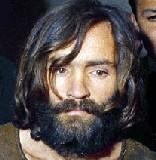 Charles Manson
Murderer · USA · 1969
Charles Milles Manson (born November 12, 1934) was an American criminal and mus…
9 victims
Charles Manson
Murderer · USA · 1969
Charles Milles Manson (born November 12, 1934) was an American criminal and mus…
9 victims
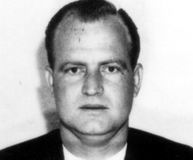 Gary Gene Tison
Murderer · USA · 1967
Gary Gene Tison was serving life sentences at the Arizona state prison. He had…
7 victims
Gary Gene Tison
Murderer · USA · 1967
Gary Gene Tison was serving life sentences at the Arizona state prison. He had…
7 victims
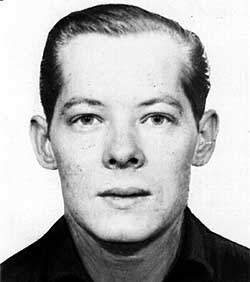 Richard Lee Tingle
Murderer · USA · 1968
Richard Lee Tingle was born out of wedlock in December 1940. He was raised by a…
6 victims
Richard Lee Tingle
Murderer · USA · 1968
Richard Lee Tingle was born out of wedlock in December 1940. He was raised by a…
6 victims
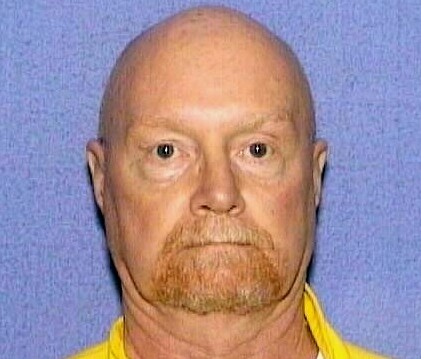 Gary Duane Rardon
Murderer · USA · 1962
Gary Duane Rardon killed a man in 1962 and later served 4 years for manslaughte…
4 victims
Gary Duane Rardon
Murderer · USA · 1962
Gary Duane Rardon killed a man in 1962 and later served 4 years for manslaughte…
4 victims
 Manuel Machado Alvarez
Murderer · USA · 1987
Manuel Machado Alvarez was tried with co-defendant Belinda Denise Ross. · May 7…
1 victim
Manuel Machado Alvarez
Murderer · USA · 1987
Manuel Machado Alvarez was tried with co-defendant Belinda Denise Ross. · May 7…
1 victim
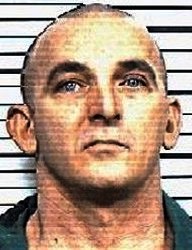 Jimmy Dale Bland
Murderer · USA · 1975
Jimmy Dale Bland was executed by lethal injection in Oklahoma on June 26, 2007.…
2 victims
Jimmy Dale Bland
Murderer · USA · 1975
Jimmy Dale Bland was executed by lethal injection in Oklahoma on June 26, 2007.…
2 victims
 Parramore Sanborn
Murderer · USA · 1983
Parramore Lee Sanborn was born 8-3-45. The case involved the kidnapping, rape,…
1 victim
Parramore Sanborn
Murderer · USA · 1983
Parramore Lee Sanborn was born 8-3-45. The case involved the kidnapping, rape,…
1 victim
 Peter Howse
Murderer · New Zealand · 1982
Peter Howse was a convicted murderer and rapist who was sentenced to life in pr…
1 victim
Peter Howse
Murderer · New Zealand · 1982
Peter Howse was a convicted murderer and rapist who was sentenced to life in pr…
1 victim
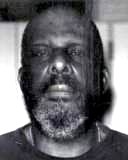 William Baker
Mass murderer · USA · 2001
William D. Baker, 66, returned to the Navistar International engine plant in Me…
4 victims
William Baker
Mass murderer · USA · 2001
William D. Baker, 66, returned to the Navistar International engine plant in Me…
4 victims
 Ramon Torres Hernandez
Murderer · USA · 1994
Ramon Torres Hernandez was convicted in Bexar County, Texas, and sentenced to d…
3 victims
Ramon Torres Hernandez
Murderer · USA · 1994
Ramon Torres Hernandez was convicted in Bexar County, Texas, and sentenced to d…
3 victims
- Gender
- male
- Country
- USA
- Location
- Camden County, New Jersey, USA
- Date of birth
- 1936
- Age at first offence
- 23
- Characteristics
- —
- Victim profile
- Joann Connor, 17 (his ex-girlfriend)
- Method of murder
- Shooting ( .38 caliber handgun)
- Date(s) of murder
- March 14, 1959
- Years active
- 1959
- Date of arrest
- Same day
- Status
-
Executed
Executed by electrocution on July 31, 1962
Case information
- Defendant: Joseph Ernst
- Also referenced as: Joseph R. Ernst
- Age at the time of the homicide: 22
- Death date: July 31, 1962
- Place of execution: New Jersey State Prison electric chair
- Victim: Joann Connor
- Victim age: 17
- Victim relationship: ex-girlfriend
Timeline
- March 14, 1959 — Joseph Ernst was convicted of shooting and killing his 17-year-old ex-girlfriend, Joann Connor, on March 14, 1959.
- July 31, 1962 — Joseph Ernst was executed by electrocution on July 31, 1962.
Background
Joseph R. Ernst (d. July 31, 1962) was convicted of murder in the first degree and was sentenced to death under New Jersey law. Under the verdict, New Jersey law made a death sentence mandatory.
At the time of the homicide, Joseph Ernst was 22 years old and a parolee from the Bordentown Reformatory. Both Joseph Ernst and Joann Connor lived in Camden. Joann Connor was a 17-year-old former girl friend of Joseph Ernst.
In the course of a quarrel some ten days before the homicide, Joseph Ernst struck Joann Connor, inflicting a scalp wound serious enough to require sutures. Joann Connor’s father signed a criminal complaint against Joseph Ernst. Joseph Ernst fled to Newark.
When Joseph Ernst got out of prison, he went to try to rekindle his friendship with Joann Connor, and she rebuffed him. Joseph returned to her house a short time later armed with a .38 caliber handgun.
The offence
On the evening of the homicide, Joseph Ernst, accompanied by a friend named Robert Lee, returned to Camden. Joseph Ernst was armed with a revolver. He visited the home of a neighbor and stole a second revolver.
Joseph Ernst spoke to a neighbor about having returned to Camden seeking revenge. He and his companion then set out to find Joann Connor and a man named Linden, whom Joseph Ernst mistakenly believed to have made the criminal complaint against him. They located Joann Connor at the Linden home.
When Joann Connor came to the door, there was a brief exchange of words. According to Joseph Ernst, Joann Connor spoke insultingly to him and slammed the door in his face. Almost immediately revolver shots were fired through the door, fatally injuring Joann Connor, who was standing behind the door. Three shots were fired through the door, and all three shots struck and killed Joann Connor.
Joseph Ernst fled and was subsequently apprehended.
Investigation and confessions
After his apprehension, Joseph Ernst made three confessions, which were described as admittedly voluntary. In two confessions, Joseph Ernst admitted doing the shooting. In the third confession, Joseph Ernst claimed that Robert Lee fired the fatal shots.
Arrest
Trial
A jury in the County Court of Camden County, New Jersey, convicted Joseph Ernst of murder in the first degree without recommendation of life imprisonment. Under such a verdict, New Jersey law made a death sentence mandatory, and Joseph Ernst was so sentenced.
The Supreme Court of New Jersey affirmed the conviction and sentence.
Joseph Ernst did not obtain counsel for his own defense. The court assigned Joseph P. DeLuca, an active trial lawyer in Camden County with more than twenty years of experience at the bar, to be defense counsel. Since his conviction, Joseph Ernst had retained another attorney who represented him at later proceedings.
Appeals
Joseph Ernst’s petition for habeas corpus was denied without the taking of testimony, and the denial was appealed.
The matter proceeded to the United States Court of Appeals for the Third Circuit under case details: 294 F.2d 556 Petition of Joseph ERNST for a Writ of Habeas Corpus. No. 13562. United States Court of Appeals Third Circuit. Argued June 8, 1961. Decided August 31, 1961 Before BIGGS, Chief Judge, and HASTIE and FORMAN, Circuit Judges.
Issues raised
Joseph Ernst raised principal contentions on collateral attack, including that the conduct of the defense by trial counsel was so deficient as to constitute a denial of the benefit of counsel as required by the Fourteenth Amendment for a person accused of a capital offense.
The Court discussed United States ex rel. Darcy v. Handy, 3 Cir., 1953, 203 F.2d 407, and the limited reach of the due process clause in a case where the accused challenges the defense handling by counsel. The majority recited the following statement about due process and representation:
"It is true, as the relator urges, that a denial of due process of law by the state would result if the representation of a defendant by his counsel should be so lacking in competence or good faith that it would become the duty of the trial judge or the prosecutor, as officers of the state, to observe and correct it. For in such a trial the defendant would be practically without representation and it would, therefore, be but a farce and a mockery of justice. It is the duty both of the trial judge and the prosecutor to see that the essential rights of the defendant are preserved. As officers of the state their failure to do so is imputed to the state. But they, and through them the state, may not be convicted of a denial to the defendant of due process of law in this regard unless the incompetence of the defense is so apparent as to call for intervention between counsel and client." 203 F.2d at page 427.
The Court also discussed how the case differed from Darcy because counsel was assigned by the court rather than chosen by the accused.
Joseph Ernst also argued that the New Jersey statute under which he was sentenced was unfair and discriminatory, denying due process and equal protection.
The New Jersey statute quoted in the decision provided:
"Every person convicted of murder in the first degree, his aiders, abettors, counselors and procurers, shall suffer death unless the jury shall by its verdict, and as a part thereof, upon and after the consideration of all the evidence, recommend life imprisonment, in which case this and no greater punishment shall be imposed. "Every person convicted of murder in the second degree shall suffer imprisonment for not more than 30 years." N.J.S. 2A:113-4, N.J. S.A.
Joseph Ernst’s objections included that the statute provided no standard to guide the jury in deciding whether the penalty for first degree murder should be death or life imprisonment, and that the jury did not have the benefit of a pre-sentence investigation and report.
The Court addressed exhaustion of state remedies and discussed Section 2254 of Title 28 U.S.C. and Section 2241, and the ability to deny on the merits under Section 2241 even if state remedies had not been exhausted.
Majority holding
The Court concluded that the petitioner's constitutional contentions were without merit and that the judgment would be affirmed.
The judgment was affirmed by BIGGS, Chief Judge, and HASTIE and FORMAN, Circuit Judges.
Dissent
BIGGS, Chief Judge (dissenting), said that the decision overruled United States ex rel. Auld v. Warden, 3 Cir., 1951, 187 F.2d 615, sub silentio. He would have vacated the judgment and remanded with direction to allow the petitioner a reasonable opportunity to exhaust state remedies, retaining jurisdiction and staying the execution of the state sentence in the meantime. He stated:
Comity between the state and federal processes requires this result.
Higher review
The Supreme Court of the United States denied certiorari. The denial is described as: 1961, 364 U.S. 943, 81 S.Ct. 464, 5 L.Ed.2d 374.
Sentencing
Joseph Ernst was sentenced to death under New Jersey law due to the first degree murder conviction without recommendation of life imprisonment.
The decision included discussion of the New Jersey statute under which first degree murder was punishable by death unless the jury recommended life imprisonment. The decision also addressed the procedure in connection with mercy and the role of the jury.
Outcome
The judgment in the habeas corpus appeal was affirmed. Joseph Ernst was executed by electrocution on July 31, 1962.
Other details
- Joseph Ernst was described as the 159th convict to be executed in the New Jersey electric chair since 1907.
- Joseph Ernst’s trial counsel was Joseph P. DeLuca.
- Joseph Ernst’s friend was Robert Lee.
- Joseph Ernst mistakenly believed that Linden made the criminal complaint against him.
- The deceased was described as Joan Connor in the appellate discussion.
- A contested point in the confessions was whether Joseph Ernst or Robert Lee fired the fatal shots.
- The decision quoted defense counsel’s opening statement about the degree of the shooting:
- The decision also quoted defense counsel’s statement concerning the capital statute’s requirement that “every letter of that statute must be met,” and stated:
"If this boy did the shooting * * * it is nothing more, and I mean nothing more, and I want to say it, that it is a fact that it is second degree. I say to you * * * that all the evidence will not substantiate any verdict of first degree. It has got to be the lesser."
"Where there is doubt, it should not be upheld, because once a life is taken, you cannot erase that error * * *."
Spotted an error, or have more information about this case?