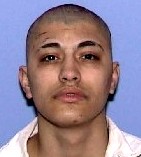
Licho Escamilla
Murderer Russell Ellwood
Murderer · USA · 1991
Russell Ellwood was a former taxi driver. Authorities suspected him of killing…
20 victims
Russell Ellwood
Murderer · USA · 1991
Russell Ellwood was a former taxi driver. Authorities suspected him of killing…
20 victims
 Robert Martines Perez
Murderer · USA · 1994
Name: Robert Martines Perez · Other name used in proceedings: Robert Martinez P…
15 victims
Robert Martines Perez
Murderer · USA · 1994
Name: Robert Martines Perez · Other name used in proceedings: Robert Martinez P…
15 victims
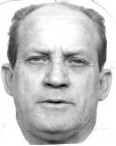 Billy Frank Vickers
Murderer · USA · 1993
Billy Frank Vickers Vickers was executed by lethal injection in Texas on Januar…
14 victims
Billy Frank Vickers
Murderer · USA · 1993
Billy Frank Vickers Vickers was executed by lethal injection in Texas on Januar…
14 victims
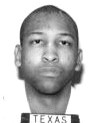 Paul Wayne Slater
Murderer · USA · 1995
Paul Wayne Slater was an African male inmate on Texas death row. He was 26 year…
2 victims
Paul Wayne Slater
Murderer · USA · 1995
Paul Wayne Slater was an African male inmate on Texas death row. He was 26 year…
2 victims
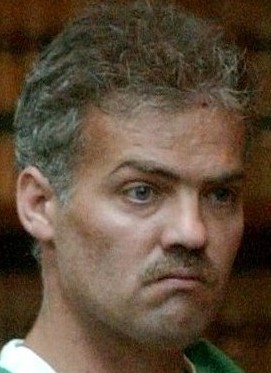 William Downs
Murderer · USA · 1991
William Downs was executed by lethal injection in South Carolina on July 14, 20…
2 victims
William Downs
Murderer · USA · 1991
William Downs was executed by lethal injection in South Carolina on July 14, 20…
2 victims
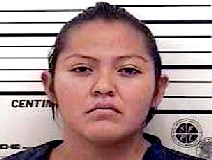 Patricia Ignacio
Murderer · USA · 2008
Patricia Ignacio was a 21-year-old woman of Nageezi accused of beating another…
1 victim
Patricia Ignacio
Murderer · USA · 2008
Patricia Ignacio was a 21-year-old woman of Nageezi accused of beating another…
1 victim
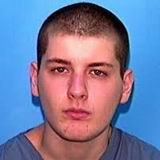 John Anthony Silva
Homicide · USA · 2000
John Anthony Silva was convicted of first-degree murder for strangling a 12-yea…
1 victim
John Anthony Silva
Homicide · USA · 2000
John Anthony Silva was convicted of first-degree murder for strangling a 12-yea…
1 victim
 Eric Christopher Payne
Murderer · USA · 1997
Eric Christopher Payne v. Commonwealth of Virginia (Record No. 980559); Eric Ch…
2 victims
Eric Christopher Payne
Murderer · USA · 1997
Eric Christopher Payne v. Commonwealth of Virginia (Record No. 980559); Eric Ch…
2 victims
- Gender
- male
- Country
- USA
- Location
- Dallas County, Texas, USA
- Date of birth
- J uly 3, 1982
- Age at first offence
- 19
- Characteristics
- murder for hire, police officer, shooting spree, escape attempt, domestic violence
- Victim profile
- Christopher K. James, 34 (off-duty Dallas police officer)
- Method of murder
- Shooting
- Date(s) of murder
- November 25, 2001
- Years active
- 2001
- Date of arrest
- Same day (wounded by police)
- Status
-
Sentenced to death
Sentenced to death November 1, 2002
Case record: Licho Escamilla
Timeline
- 11/25/2001 — Licho Escamilla was engaged in a fight in the parking lot of a nightclub in Dallas.
- 11/25/2001 — When Dallas City police officers arrived to stop the fight, Escamilla shot an adult white male police officer two times; the officer died en-route to the hospital.
- 11/25/2001 — Escamilla was arrested and transported to a hospital after suffering a minor gunshot wound in an exchange of gunfire with one of the other off-duty police officers.
- 11/25/2001 — At Parkland, Escamilla commented about how he had shot a "faggot cop."
- 11/19 — A murder warrant for Escamilla was issued.
- 11/01/2002 — Education level listed as 11/01/2002.
- 11/01/2002 — Age listed as 20.
- 11/25/2002 — Age at the offense listed as 20 and the county listed as Dallas.
- 06/30/2004 — On direct appeal from Dallas County, Hervey, J., delivered the opinion of the Court of Criminal Appeals of Texas; the judgment was affirmed.
- 11/01/2002 — Escamilla was sentenced to death.
Background
Licho Escamilla had a TDCJ number of 999432. His date of birth was 07/03/1982. His age was 20 when received and 20 at the time of the offense. His education level was listed as 8.
Escamilla was Hispanic, male. His hair color was brown. His height was 5 ft 6 in and his weight was 156. His eye color was brown. His prior occupation was a laborer in Dallas, Texas. His prior prison record was listed as n/a.
The offence
On 11/25/2001 in Dallas, Escamilla was engaged in a fight in the parking lot of a nightclub.
When Dallas City police officers arrived to stop the fight, Escamilla shot an adult white male police officer two times. The officer died en-route to the hospital.
The victim was an off-duty Dallas police officer working extra jobs at a nightclub. The indictment alleged that appellant shot and killed a peace officer who was “then and there acting in the lawful discharge of an official duty, and the said [appellant] then and there knew the said deceased to be a peace officer.” See § 19.03(a)(1), Tex.Pen.Code.
A valet parking employee testified that appellant shot two uniformed police officers as they were approaching the scene of the disturbance at the parking valet station. The off-duty police officer who was wounded in the shooting testified that he was walking toward a disturbance in the valet parking area when the shooting started.
Escamilla fired one to three shots at the victim, and then exchanged fire with the two approaching officers before fleeing. He attempted to steal a car about a block away, but was tackled by two people. Police said Escamilla began shooting again before being captured with the help of some witnesses. Police said Escamilla used more than 12 bullets and was out of them when he was detained.
Investigation
Dallas police spokesman Hollis Edwards said four Dallas police officers were working security at Club DMX when a fight broke out inside the club. A patron removed from the club then pulled a gun and shot two of the officers, one fatally, authorities said.
Police said Escamilla was also wanted in connection with the Nov. 8 slaying of a man in west Dallas. Police Chief Terrell Bolton said preliminary information indicated the slain officer was trying to help the suspect: “Once the facts come out, I think they will show that this was a senseless murder of a police officer and the attempt on another one,” Bolton said.
According to preliminary information, the victim and another officer were attempting to break up a scuffle between the suspect and several other people outside the club. One witness told The Dallas Morning News that Escamilla pulled a gun out and began firing randomly. Police said the victim and the other off-duty police officer did not have time to pull out their guns.
Arrest
Escamilla attempted to flee after the exchange of fire. He was later arrested.
The evidence also showed that soon after the shootings at the club, appellant was arrested and transported to a hospital because he suffered a minor gunshot wound in an exchange of gunfire with one of the other off-duty police officers. Several witnesses at the hospital heard appellant commenting about how he had shot a "faggot cop."
Escamilla was treated for a gunshot wound at Parkland Memorial Hospital before being transported to the Lew Sterrett Justice Center on Sunday afternoon.
Trial
Conviction and sentence at trial
In the Court of Criminal Appeals of Texas, in No. 74,494, Licho Escamilla, Appellant V. The State of Texas, the court described the case as follows:
A jury convicted appellant of capital murder. The trial court sentenced appellant to death pursuant to the jury’s answers to the special issues submitted at the punishment phase.
Evidence and witness testimony (guilt/innocence discussion)
An employee of the club (Bravo) testified: “Well, then after that, all of the fighting and whatever. Then, the cops were like on their way to help.” Q. “The cops were on their way to help, is that what you said?” A. “Yes.” Q. “All right. Go ahead?” A. “And, well, as soon as, well, they didn't even get the chance to get to the guy, when the guy just bring out a gun and started shooting.” Q. “And, what happens then?” A. “Well, it sounded like the first cop got shot, then the [victim]. The shooting just like keep going on and on. Then the guy tried to took [sic] off and he stopped like midway where [the victim] was on the floor. He was like, shoot him a couple of times, and then just took off, and a couple of cops-a couple of policemen just followed him.”
A valet parking employee (Gonzales) testified: Q. “And, what happened?” A. “When I turned around, I saw two police officers coming and [appellant] fired at them.” Q. “And, the two persons that you saw coming, you could tell that they were police officers; is that right?” A. “Yes.” Q. “And, where did you see the two police officers coming from?” A. “Further away in front of where we were at.” Q. “Could you take your pointer and point to the area that you first saw the two police officers on State's Exhibit 10?” A. “Yes.” Q. “Go ahead, please?” A. “(Witness did as requested.)” Q. “And, you are pointing to an area that looks like it is on the driveway area, pretty close to the front of Club DMX-the front porch of DMX; is that right?” A. “Yes.” Q. “And, they were in uniform?” A. “Yes.”
The off-duty police officer who was wounded (Lockett) testified: “Okay. At that time, I was standing there. They,-the disturbance was in the valet area. And, I started walking toward where I thought this disturbance was. And, as I was walking over there, the people that's in the valet area, as I last recall, three Latin males and one Latin male running away, or several Latin males that were running toward me, I see these, at this time, three Latin males trying to attack this one Latin male. And, I grabbed the one Latin male from behind, and as I am pulling him to the ground, we fall to the ground and we begin to struggle as I hear gunfire. And, as I hear gunfire, the next thing I know I am shot and on the ground. I am shot in my left wrist and the bullet goes from my left wrist into the palm of my hand. And that is basically the last thing that I remember.”
Lockett also testified that his and the victim's clothing “clearly identified” them as police officers.
A police officer (Rivera) testified that he unbuttoned the victim's “uniform shirt” and ballistic vest to perform CPR. Rivera testified: “Yes, sir. I unbuttoned his uniform shirt, unbuckled the front of his Sam Brown Belt. He was wearing his ballistic vest. There are velcro straps that come to the front. And, basically, I pulled the straps out and removed the front panel, so that-we can work on him medically.”
Hospital statements included comments heard by police officer (Hay). Hay testified: “Once we were in the actual trauma room, the doctor asked him, if he knew where he was at. And, he replied, I am at Parkland because I shot a faggot cop.” “He made several more statements along those lines. He repeated that phrase several times. I recall, that after the attending physicians conducted their initial examination and the nurses started to file out to get-to do their business, he looked at myself and another Officer, Joe Allen, and started laughing and said, yeah, yeah, mother fuckers, I thought I was invincible like that cop thought he was, but I guess, I am not. And, then he made another statement and was laughing and said that he would be-he said, yeah, mother fucker, I will be out of here in forty-eight hours.”
During a videotaped interview with a television reporter, appellant admitted he knew he was shooting at a police officer. The record reflects: Q. “Now, you've, you've told me already you knew you were shooting at a police officer-the first one...” A. “[APPELLANT]: Yeah.” Q. “...so there's no question that you knew you were shooting at a police officer the first time.” A. “Yeah.” Q. “You think you killed him?” A. “Yeah. Hell yeah. I killed that MF.”
The jacket introduced into evidence was admitted as State’s Exhibit 24. The testimony included: A. “This is the jacket that [the victim] was wearing that evening, removed at the hospital.”
During closing jury arguments, the State referred to police insignias on the jacket. The appellate opinion included the statement that the jacket “clearly identifies him as a Dallas Police Officer.”
Appellant claimed during closing jury arguments that he was not guilty of capital murder because the State presented no evidence that the victim was performing an “official duty.” The appellate opinion rejected this argument by citing Moore v. State.
Key appellate points during the guilt/innocence review
Appellant claimed on appeal that the State presented no evidence that appellant knew the victim was a police officer when appellant killed him. The appellate court described arguments made by appellant, including claims that no witnesses positively stated the victim was wearing a police uniform or anything identifying him as a police officer and claims that statements at the hospital had no probative value because appellant could have learned of the identity during arrest.
The appellate court concluded that Rivera testified he unbuttoned the victim’s “uniform shirt,” Lockett testified the victim’s clothing “clearly identified” him as a police officer, and Gonzales testified the officers were in “uniform,” and that appellant admitted during a television interview that he knew the victim was a police officer when he killed him.
The appellate court overruled points of error five and six.
Trial objections and evidentiary issues
Appellant raised thirty-one points of error. The appellate opinion discussed multiple points including:
- Points of error one through four: challenges for cause to veniremembers Denton, Medley, Overton, and Fletcher. The court stated that Fletcher was not challenged for cause and that appellant failed to preserve error. Points of error one through four were overruled.
- Points of error seven and eight: denial of a motion to suppress a custodial videotaped interview. Points of error seven and eight were overruled.
- Point of error nine: admission of oral statements to law enforcement personnel while in custody; the appellate court overruled it.
- Point of error ten: admission of custodial oral statements to hospital personnel; the appellate court overruled it.
- Point of error eleven: admission of nine (possibly ten) autopsy photographs; the appellate court overruled it.
During the autopsy photograph dispute, the medical examiner testified: “I think they are all necessary and represent the injuries that were seen at the time of the autopsy.”
The trial court made the following rulings on the record: [THE COURT]: “Mr. Huff, your objections to State's Exhibits 131 through 140 are overruled. The Court finds that the probative value of State's Exhibits 131 through 140 is not substantially outweighed by the danger of unfair prejudice. Therefore, the Court overrules your objection.”
Punishment phase issues and extraneous offenses
Appellant claimed the trial court erred in allowing the State to present evidence of extraneous offenses not proved beyond a reasonable doubt in the punishment stage. The appellate opinion described an objection made by the defense and stated that the record reflected that the State “clearly proved” adjudicated and unadjudicated extraneous offenses dating back to when appellant was a juvenile.
During the defense objection, the following statement appeared: “Your Honor, with regard to the certified copies and to the proper extraneous offenses, the Defense makes the following objections. First of all, to the extent that any of these extraneous offenses include offenses which may have occurred when the Defendant was a juvenile, that is under the age of seventeen. We object for the reason, that the introduction into evidence of juvenile offenses violate our client's right to Due Process of Law pursuant to the Equal Protection Clause-pursuant to the Due Process and Equal Protection Laws of the United States Constitution and the Due Course of Law Provisions of the Constitution of the State of Texas. In addition, we would object to any of the offenses offered for which there has not been a final judgment, for the reason that such offenses have not been proved in a court of law and the introduction into evidence of such offenses at this stage of the trial, even if the court were to instruct the jury that they have to be proved beyond a reasonable doubt, would cause the Defendant to be denied Due Process of Law pursuant to the United States Constitution. And in addition, it would deprive the Defendant of Due Course of Law pursuant to the Constitution of the State of Texas. We further would object to any of the offenses that maybe [sic] admitted by the State to the extent they do not show, that they do not reflect upon any special issue that should be answered by the jury. Particularly, with regard to the unauthorized use of a motor vehicle, the evading arrest and the high speed chase. We submit to the Court, that such offenses bear little relevance, if any, to the first special issue of potential future dangerousness and that they are not acts of violence. And, that the probative value of such offenses is greatly outweighed by the prejudicial effect, the introduction of such offenses would have on the jury. And, this would be-this would be to such an extent that it would be a Due Process violation under the Fourteenth Amendment to the United State's [sic] Constitution and the Due Course of Law Provisions of the State of Texas. And, for all these reasons, we object to the introduction of these extraneous offenses, Your Honor.”
The trial court responded: “Your objections are overruled. The court finds that the probative value of this proffer-the evidence as stated by [the State] in his proffer, it is not substantially outweighed by the prejudicial effect, and the Court will admit the same.”
The appellate court overruled point of error twelve. It also overruled point of error thirteen regarding use of juvenile records.
In point of error fourteen, appellant claimed error in overruling a motion to exclude evidence of unadjudicated extraneous offenses at the punishment stage. The appellate court declined to revisit well-settled jurisprudence. Point of error fourteen was overruled.
In point of error fifteen, appellant claimed the death penalty had been unconstitutionally imposed in violation of Atkins v. Virginia because the State made no affirmative showing appellant was not mentally retarded. The appellate court overruled point of error fifteen.
Points of error sixteen, twenty-three, twenty-four, and twenty-seven challenged Texas death-penalty law on constitutional grounds; the appellate court rejected the claims. Points of error seventeen, eighteen, nineteen, twenty, twenty-one, twenty-two, and twenty-five through twenty-eight and twenty-nine through thirty-one were also overruled based on the appellate court’s cited precedents.
The appellate court affirmed the judgment.
Appeals
The Court of Criminal Appeals of Texas, No. 74,494, stated that “We affirm” the judgment. It delivered the opinion on June 30, 2004.
Appellant raised thirty-one points of error, and the appellate court overruled each set of points it addressed.
The opinion stated: “The judgment of the trial court is affirmed.” Hervey, J. delivered the opinion, and it noted the joining justices: Keller, PJ., Meyers, Womack, Keasler, Holcomb and Cochran, JJ.; and Price and Johnson, JJ., concurred.
Outcome
Escamilla was convicted of capital murder and sentenced to death pursuant to the jury’s answers to the special issues submitted at the punishment phase.
The Court of Criminal Appeals of Texas affirmed the judgment on June 30, 2004.
Other details
- The victim was described in the case as a white male police officer (off-duty Dallas police officer) who was killed in the shooting.
- Officer Christopher K. James was identified as 34 in the newspaper excerpt included in the case summary; he was flown to Parkland Memorial Hospital and later died.
- Clarence D. Lockett was treated and released early Sunday from Parkland.
- The appellate opinion included quotations from witnesses and courtroom statements concerning jury selection, suppression issues, and evidence admission.
- A note in the appellate opinion stated that Fletcher stated during voir dire that she could be “open to the possibility of a life sentence even on a dangerous police officer killing.”
- The appellate opinion contained numbered footnotes including references to Article 38.22 and Miranda.
- The appellate opinion included discussion of whether the reporter was a “state agent” for purposes of suppression issues, and it concluded it could not conclude the reporter was acting as a state agent when he interviewed appellant.
Spotted an error, or have more information about this case?