Martin Gonzalez Escamilla
Serial killer Glen Edward Rogers
Serial killer · USA · 1993
Glen Edward Rogers was a spree killer whose cross-country rampage in 1994-95 le…
70 victims
Glen Edward Rogers
Serial killer · USA · 1993
Glen Edward Rogers was a spree killer whose cross-country rampage in 1994-95 le…
70 victims
 Efren Saldivar
Serial killer · USA · 1989
Efren Saldivar (born 30 September 1969) was an American serial killer who murde…
50 victims
Efren Saldivar
Serial killer · USA · 1989
Efren Saldivar (born 30 September 1969) was an American serial killer who murde…
50 victims
 Lonnie Franklin
Serial killer · USA · 1985
Lonnie Franklin was convicted as the “Grim Sleeper” serial killer, a nickname u…
25 victims
Lonnie Franklin
Serial killer · USA · 1985
Lonnie Franklin was convicted as the “Grim Sleeper” serial killer, a nickname u…
25 victims
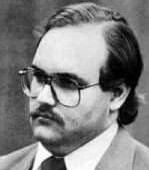 Richard Angelo
Serial killer · USA · 1987
Richard Angelo was 26 years old when he went to work at Good Samaritan Hospital…
25 victims
Richard Angelo
Serial killer · USA · 1987
Richard Angelo was 26 years old when he went to work at Good Samaritan Hospital…
25 victims
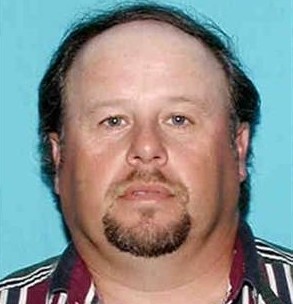 Ronald Dominique
Serial killer · USA · 1997
Ronald Joseph Dominique (born 1964) was an American serial killer from the Bayo…
23 victims
Ronald Dominique
Serial killer · USA · 1997
Ronald Joseph Dominique (born 1964) was an American serial killer from the Bayo…
23 victims
 Jeremy Jones
Serial killer · USA · 1992
Name: Jeremy Jones · Aliases/identities mentioned: John Paul Chapman · Age (as…
21 victims
Jeremy Jones
Serial killer · USA · 1992
Name: Jeremy Jones · Aliases/identities mentioned: John Paul Chapman · Age (as…
21 victims
 Lawrence Libberton
Murderer · USA · 1981
Lawrence Libberton Juan Maya (Hispanic) On November 16, 1981, Juan Maya picked…
1 victim
Lawrence Libberton
Murderer · USA · 1981
Lawrence Libberton Juan Maya (Hispanic) On November 16, 1981, Juan Maya picked…
1 victim
 Pedro Alberto Vargas
Mass murderer · USA · 2013
Pedro Alberto Vargas carried out a shooting rampage at an apartment complex in…
6 victims
Pedro Alberto Vargas
Mass murderer · USA · 2013
Pedro Alberto Vargas carried out a shooting rampage at an apartment complex in…
6 victims
 Igor Suprunyuck
Serial killer · Ukraine · 2007
Name: Igor Suprunyuck · Also known as (Ukr): Ігор Супрунюк · Also known as (Rus…
21 victims
Igor Suprunyuck
Serial killer · Ukraine · 2007
Name: Igor Suprunyuck · Also known as (Ukr): Ігор Супрунюк · Also known as (Rus…
21 victims
 Tooba Yahya
Murderer · Canada · 2009
Tooba Yahya was a 41-year-old second wife in the polygamous Shafia household. H…
4 victims
Tooba Yahya
Murderer · Canada · 2009
Tooba Yahya was a 41-year-old second wife in the polygamous Shafia household. H…
4 victims
 David Dewayne Johnson
Murderer · USA · 1989
David Dewayne Johnson was convicted of capital murder and was sentenced to deat…
1 victim
David Dewayne Johnson
Murderer · USA · 1989
David Dewayne Johnson was convicted of capital murder and was sentenced to deat…
1 victim
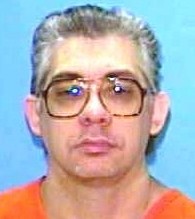 George Michael Hodges
Murderer · USA · 1987
George Michael Hodges was sentenced to death on August 10, 1989. · 01/08/87 — A…
1 victim
George Michael Hodges
Murderer · USA · 1987
George Michael Hodges was sentenced to death on August 10, 1989. · 01/08/87 — A…
1 victim
- Gender
- male
- Country
- USA
- Location
- Austin, Texas, USA
- Date of birth
- 1953
- Age at first offence
- 42
- Characteristics
- parricide, kidnapping
- Victim profile
- Sylvia Victoria Garcia Gonzalez, 44 (his wife) / Olivia Estrada, 54 / Maria Gladys Flores, 53
- Method of murder
- Beating with a hammer - Shooting
- Date(s) of murder
- 1995 / 1998
- Years active
- 1995–1998
- Date of arrest
- November 1998
- Status
-
Life imprisonment
Sentenced to life in prison
Case details
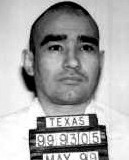
Martin Gonzalez Escamilla (also known as Martin Gonzalez) was a 46-year-old man of Austin. He had been in the Travis County Jail since November. He was charged with kidnapping Olivia Perez Estrada of Austin, who had been missing since 29 October 1998.
Skeletal remains found more than three years earlier were identified as those of one of four missing women linked to Martin Gonzalez. The remains were those of Sylvia Victoria Garcia Gonzalez, the wife of Martin Gonzalez.
Police identified Gonzalez as a suspect in what they believed was a serial killer case. Police said there were several people they were looking for, but they were not real sure of their status, and they believed he was a serial killer.
Police have not charged Gonzalez in his wife's death.
Timeline
- 1994 (May) — Martin Gonzalez married Sylvia Garcia in Monclova, Mexico.
- 1994 (late) — Martin Gonzalez moved to Austin late that year.
- 1995 (March) — Sylvia Garcia followed Martin Gonzalez to Austin.
- 1995 (June 8) — Sylvia Garcia sent her last letter, received by her daughter.
- 1995 (June 24) — Sylvia Garcia was last seen at the Austin residence she shared with Martin Gonzalez.
- 1995 (June 25) — Martin Gonzalez moved from the Austin residence, taking all the furnishings he and Sylvia Garcia had brought to it.
- 1995 (late September) — Human skeletal remains were found in a nearby vacant lot.
- 1998 (May 20) — Maria Flores left for work with Martin Gonzalez; she never returned.
- 1998 (October 29) — Olivia Estrada’s daughter called the police after Olivia Estrada did not answer her telephone for two days and family members found her house unoccupied.
- 1998 (November) — Martin Gonzalez was arrested for the kidnapping of Olivia Estrada.
- 1998 (December) — Investigators became concerned about the whereabouts of Martin Gonzalez’s wife and Erica Perez, who had worked with him on a number of temporary jobs.
- 1999 (November 22) — Maria Flores’s skeletal remains were found in a field in southeast Austin.
- 1999 (October 18) — Olivia Estrada’s skeletal remains were found in a field in Bastrop County.
- 2000 — DNA tests confirmed the 1995 remains were those of Sylvia Garcia.
- 2001 (October 18) — The judgment of conviction was affirmed.
- 28 January 1999 — Police identified skeletal remains found more than three years ago as those of one of four missing women linked to Martin Gonzalez.
The offence
Capital murder charge and scheme-or-course-of-conduct theory
Martin Gonzalez was indicted for the murders of Sylvia Garcia, Maria Flores, and Olivia Estrada pursuant to the same scheme or course of conduct. He was indicted under Tex. Pen. Code Ann. § 19.03(a)(7)(B) (West 1994).
At trial, the district court authorized Martin Gonzalez’s conviction for capital murder if the jury found that he murdered all three women, or any two of them, under the requisite circumstances.
The jury returned a general verdict of guilty. Because the jury later answered the mitigation issue affirmatively, the district court assessed punishment at imprisonment for life.
Kidnapping
Martin Gonzalez was charged with kidnapping Olivia Perez Estrada of Austin, who had been missing since 29 October 1998.
Background
Sylvia Garcia (wife)
Martin Gonzalez married Sylvia Garcia in Monclova, Mexico, in May 1994. Sylvia Garcia was forty-four and divorced from her first husband.
Martin Gonzalez moved to Austin late that year, and Garcia followed in March 1995.
Garcia telephoned her daughter in Monclova almost daily, and seemed nervous and unhappy. The last call to her daughter came on June 8, which also was when Garcia’s last letter was received.
Garcia was last seen at the Austin residence she shared with Martin Gonzalez on June 24, 1995. Martin Gonzalez moved from this residence the following day, taking all the furnishings he and Garcia had brought to it.
Human skeletal remains were found in a nearby vacant lot in late September 1995, but the body was not positively identified until 2000, when DNA tests confirmed that the remains were those of Sylvia Garcia.
The cause of death was determined to be blunt force trauma to the skull, which had multiple fractures.
Authorities later compared DNA from the body with dried saliva found on flaps of letters Sylvia Gonzalez sent to her family in Mexico. Detective Robert Merrill of the Austin Police Department described that method of identification.
Other victims and missing women linked to Martin Gonzalez
Maria Flores
Maria Flores, a native of Panama, moved to Austin in 1994 with two of her children. She met Martin Gonzalez in 1998 when she was fifty-three, and soon began living with him.
Flores’s daughter testified that Martin Gonzalez was a jealous man and was physically abusive to her mother. Flores worked at two jobs and was forced to give all her money to Martin Gonzalez.
Flores, accompanied by Martin Gonzalez, left for work on May 20, 1998, and never returned. Flores’s daughter said Martin Gonzalez appeared nervous when she asked him if he knew the whereabouts of her mother.
Martin Gonzalez reported Flores’s disappearance to the police, but the case was closed in June 1998.
Maria Flores’s skeletal remains were found in a field in southeast Austin on November 22, 1999. The medical examiner found evidence of at least fifteen blunt force injuries to the head and face caused by an object such as a hammer.
Police discovered that Martin Gonzalez had reported Flores missing last May. Officers said Flores had lived with him briefly. Martin Gonzalez curiously denied knowing either his wife or Flores.
Olivia Estrada
Olivia Estrada was fifty-four years old. She met Martin Gonzalez at a dance hall in 1998 and formed a relationship with him.
Martin Gonzalez proved to have a violent temper. Estrada told her doctor that Martin Gonzalez threatened to choke her if she tried to leave him. Estrada was afraid to call the police, fearing it would provoke Martin Gonzalez to greater violence.
Estrada’s family grew increasingly concerned for her safety, and in October 1998 urged her to obtain a restraining order against Martin Gonzalez. They also devised a plan by which members of the family would be with Estrada when she broke up with Martin Gonzalez.
Estrada’s daughter called the police on October 29, 1998, after Estrada did not answer her telephone for two days and family members found her house unoccupied.
Estrada’s hall carpet was soaked with water, and blood spatters were found on a bedroom doorframe, in the hallway, and on the kitchen door. Blood and a ring belonging to Estrada were found in the carport, next to her car.
Olivia Estrada’s skeletal remains were found in a field in Bastrop County on October 18, 1999. The skull showed evidence of blunt force trauma to the forehead and just above the right eye. Estrada had also been shot in the back of the head.
Martin Gonzalez was arrested for the kidnapping of Olivia Estrada in November 1998. Further police investigation connected him to Sylvia Garcia and Maria Flores. Martin Gonzalez was indicted for capital murder after the bodies of the three women were found and identified.
Investigation
Human skeletal remains were identified as those of Sylvia Victoria Garcia Gonzalez, and police said that the remains were found in a vacant lot in East Austin on September 1995.
Police said Sylvia Gonzalez died from being bludgeoned in the head.
Authorities identified the remains by comparing DNA from the body with dried saliva found on flaps of letters Sylvia Gonzalez sent to her family in Mexico, Detective Robert Merrill said.
Detective Robert Merrill also described police uncertainty about other people they were looking for, and said they believed Martin Gonzalez was a serial killer.
Before he was arrested, Martin Gonzalez told police he was last at Estrada’s house Oct. 27 but left after another man arrived and began fighting with him. Police discounted the story, saying the man Martin Gonzalez identified had been in jail at the time.
Authorities identified blood in the hallway of Estrada’s house and in the back seat of her car. Estrada’s ring was found in the driveway of the home at the 2700 block of Webberville Road, and the ring had blood on it.
The search for the women began 29 October, after Estrada’s relatives received a phone call warning them to check on her. The caller also said Estrada was last seen with a man named Martin.
Soon after Gonzalez was arrested, police discovered he had reported Flores missing last May. Officers said Flores had lived with Gonzalez briefly.
In December investigators became concerned about the whereabouts of Gonzalez’s wife and Erica Perez, who worked with him on a number of temporary jobs.
Arrest and custody
Trial
Indictment and jury verdict
Martin Gonzalez was indicted for the murders of Sylvia Garcia, Maria Flores, and Olivia Estrada pursuant to the same scheme or course of conduct, Tex. Pen. Code Ann. § 19.03(a)(7)(B) (West 1994).
At trial, the district court authorized Gonzalez’s conviction for capital murder if the jury found that he murdered all three women, or any two of them, under the requisite circumstances.
See Tex. Code Crim. Proc. Ann. art. 37.071, §§ 2(e)(1), (g) (West Supp. 2001).
Evidence and legal arguments addressed on appeal
Martin Gonzalez did not challenge the sufficiency of the evidence showing that he murdered the three women.
He contended that the evidence was legally and factually insufficient to sustain the finding that the murders were committed pursuant to the same scheme or course of conduct. He also argued that section 19.03(a)(7)(B) was unconstitutionally vague as applied to him.
He also urged that the court should have granted a mistrial when the State elicited hearsay testimony from a witness.
The court overruled these contentions and affirmed the judgment.
Appeals
Court and case designation
The Texas Court of Appeals, Third District, at Austin handled the matter under No. 03-00-00668 -CR. The case caption was: Martin Gonzalez a/k/a Martin Gonzalez Escamilla, Appellant v. The State of Texas, Appellee.
The trial court was the District Court of Travis County, 147th Judicial District, No. 0996134, with Honorabile Wilford Flowers as judge presiding.
Appellate discussion included quoted testimony
In connection with the mistrial argument, Detective Robert Merrill was described as the lead investigator. He was asked by the prosecutor to describe the "consistencies among the disappearances and murders of these women."
Merrill answered:
"Well, he was romantically involved with all three of them. He had lived with all three of them. We had indications that he showed signs of jealousy if they talked with anyone."
Martin Gonzalez objected to the latter statement as being based on hearsay. The objection was sustained and the jury was instructed to disregard, but his mistrial motion was overruled.
The court concluded that the instruction to disregard was adequate and that any residual prejudice was clearly harmless.
Sentencing
The district court assessed punishment at imprisonment for life.
Outcome
The judgment of conviction was affirmed.
The matter was affirmed on October 18, 2001.
Jan P. Patterson, Justice, authored the decision. The opinion listed Before Chief Justice Aboussie and Justices Yeakel and Patterson.
Other details
Missing women linked to Martin Gonzalez
Police said three other women linked to Martin Gonzalez were still missing. The other missing women were Erica S. Perez and Maria Gladys Flores.
Erica S. Perez was described as a woman in her 30s whom police listed as missing in December.
Maria Gladys Flores was described as 53 and reported missing by Gonzalez in May.
All missing women dated Martin Gonzalez at some point.
Police said they believed Martin Gonzalez might also be responsible for the disappearances of other people.
Statements about relationships and denial
Police said the caller warned Estrada’s relatives to check on her and said Estrada was last seen with a man named Martin.
Curiously, Martin Gonzalez had denied knowing either his wife or Flores.
Legal standard for scheme or course of conduct (as addressed in the appellate decision)
A person committed capital murder if he murdered more than one person “during different criminal transactions but the murders are committed pursuant to the same scheme or course of conduct.” Tex. Pen. Code Ann. § 19.03(a)(7)(B).
The appellate court addressed the claim that similarity of motive and method were required and discussed whether the statute required an “over-arching objective or motive.”
The appellate decision discussed Corwin v. State and included a quoted passage from the Corwin court:
In abducting, raping, and killing or attempting to kill five women in more or less the same way over the course of some thirteen years, . . . [Corwin] can reasonably be said to have engaged in "a regular mode or pattern of . . . behavior." The evidence shows that [the three victims] were each murdered pursuant to this same "regular mode or pattern of behavior." Perhaps in hypothetical cases, as the time and distance between murders committed during different transactions increases, and as the actor's motive or modus operandi vary, it will become more difficult for putative defendants and law enforcement agencies to say with certainty that the murders occurred "pursuant to the same . . . course of conduct." But [Corwin] demonstrates no such uncertainty on the present facts, and the evidence was sufficient for a rational jury to find it was in fact "pursuant to the same . . . course of conduct that" [Corwin] committed these murders. . . . Whatever doubt may exist at the periphery, we think that the "core" conduct proscribed by [the statute] is clear enough, and that [Corwin's] conduct fell within it. Id . at 28-29 (footnote omitted).
The appellate decision cited Jackson v. Virginia, Geesa v. State, and Griffin v. State in affirming the scheme-or-course-of-conduct finding.

Spotted an error, or have more information about this case?