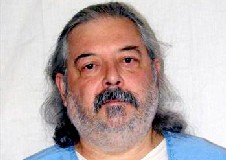
James Karis
Murderer Ervil LeBaron
Murderer · USA · 1972
Ervil Morrell LeBaron (1925 to August 16, 1981) was the leader of a polygamous…
35 victims
Ervil LeBaron
Murderer · USA · 1972
Ervil Morrell LeBaron (1925 to August 16, 1981) was the leader of a polygamous…
35 victims
 Brian Kevin Rosenfeld
Murderer · USA · 1985
Brian Kevin Rosenfeld Brian Kevin Rosenfeld was sentenced to three concurrent l…
23 victims
Brian Kevin Rosenfeld
Murderer · USA · 1985
Brian Kevin Rosenfeld Brian Kevin Rosenfeld was sentenced to three concurrent l…
23 victims
 Marvin Gray
Murderer · USA · 1975
Marvin Gray was convicted killer who claimed responsibility for 23 slayings and…
23 victims
Marvin Gray
Murderer · USA · 1975
Marvin Gray was convicted killer who claimed responsibility for 23 slayings and…
23 victims
 Yahweh ben Yahweh
Murderer · USA · 1980
Yahweh ben Yahweh was born and legally named Hulon Mitchell Jr. (October 27, 19…
23 victims
Yahweh ben Yahweh
Murderer · USA · 1980
Yahweh ben Yahweh was born and legally named Hulon Mitchell Jr. (October 27, 19…
23 victims
 Russell Ellwood
Murderer · USA · 1991
Russell Ellwood was a former taxi driver. Authorities suspected him of killing…
20 victims
Russell Ellwood
Murderer · USA · 1991
Russell Ellwood was a former taxi driver. Authorities suspected him of killing…
20 victims
 David Ray Harris
Murderer · USA · 1985
David Ray Harris was convicted of capital murder for the pre-dawn shooting of M…
1 victim
David Ray Harris
Murderer · USA · 1985
David Ray Harris was convicted of capital murder for the pre-dawn shooting of M…
1 victim
 Robert Black
Serial killer · United Kingdom · 1969
Robert Black was sentenced to life in prison (minimum 35 years) on May 19, 1994…
4 victims
Robert Black
Serial killer · United Kingdom · 1969
Robert Black was sentenced to life in prison (minimum 35 years) on May 19, 1994…
4 victims
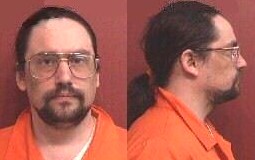 William Gollehon
Murderer · USA · 1985
William Jay Gollehon was sentenced to death in 1992 after he and Douglas Turner…
7 victims
William Gollehon
Murderer · USA · 1985
William Jay Gollehon was sentenced to death in 1992 after he and Douglas Turner…
7 victims
 Stacey Eugene Johnson
Murderer · USA · 1993
Stacey Eugene Johnson v. State of Arkansas · Defendant: Stacey Eugene Johnson ·…
1 victim
Stacey Eugene Johnson
Murderer · USA · 1993
Stacey Eugene Johnson v. State of Arkansas · Defendant: Stacey Eugene Johnson ·…
1 victim
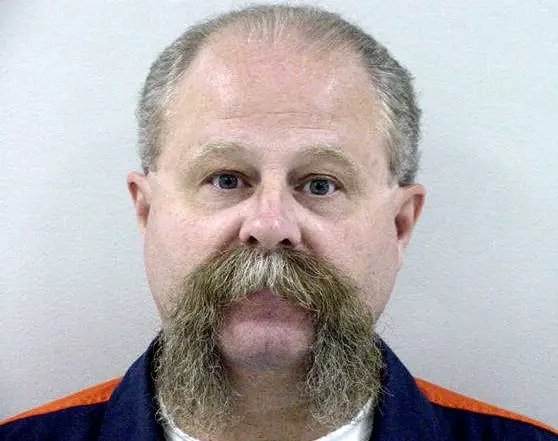 Leslie Allen Williams
Serial killer · USA · 1991
Leslie Allen Williams was sentenced to life in prison without parole on one cou…
4 victims
Leslie Allen Williams
Serial killer · USA · 1991
Leslie Allen Williams was sentenced to life in prison without parole on one cou…
4 victims
 Jens Soering
Murderer · USA · 1985
Jens Soering was born August 1, 1966, in Bangkok, Thailand. He was a German cit…
2 victims
Jens Soering
Murderer · USA · 1985
Jens Soering was born August 1, 1966, in Bangkok, Thailand. He was a German cit…
2 victims
- Gender
- male
- Country
- USA
- Location
- El Dorado County, California, USA
- Date of birth
- 1951
- Age at first offence
- 30
- Characteristics
- kidnapping, rape, drug addict, financial gain, history of mental illness, torture, domestic violence
- Victim profile
- Peggy Pennington, 34
- Method of murder
- Shooting
- Date(s) of murder
- July 8, 1981
- Years active
- 1981
- Date of arrest
- —
- Status
-
Died in custody
Sentenced to death on September 17, 1982; re-sentenced to death on April 25, 2007 after original sentence overturned; died in prison on January 31, 2013
Case identification
James Karis (full name: James Leslie Karis Jr.) was convicted in connection with the kidnapping, rape, and murder of El Dorado County employees in July 1981, and he was later sentenced to death and died in prison.
Status
He was sentenced to death on September 17, 1982. His death sentence was overturned, and he was re-sentenced to death on April 25, 2007. He died in prison on January 31, 2013.
The offence
On July 8, 1981, Karis kidnapped two El Dorado County welfare department employees, Peggy Pennington and Patty Vander Dussen, during their morning break. Karis took them at gunpoint to a remote area near Placerville. He forced both women to remove their clothes, raped one of them, let them get dressed, marched them to another spot, and shot both of them.
Peggy Pennington died, while Patty Vander Dussen survived and later testified at trial.
Victims
- Peggy Pennington, 34, was shot and died.
- Patty Vander Dussen, 27, survived and later testified at trial.
Investigation
The surviving victim directed authorities to the shallow grave off Rock Creek Road where Pennington was declared dead at the scene.
Police, tipped off by Karis’ parole officer, apprehended Karis in Sonoma County one week later.
Arrest
Karis was arrested in Sonoma County one week after the July 8, 1981 offence.
Trial
In July 1982, Karis was tried in Sacramento because of extensive pretrial publicity about the crime. The surviving victim testified at the 1982 trial.
At the 1982 trial:
- The jury found Karis guilty.
- The jury deliberated for two days to find him guilty.
- The jury took 2 1/2 days to sentence him to death.
During the death penalty phase, the judge did not allow evidence about Karis’ childhood abuse to be used and ordered Karis sent to death row.
Karis’ public defender in the original trial was Stephen Tapson.
Sentencing
Karis was sentenced to death on September 17, 1982.
Karis was sent to death row on September 20, 1982.
Appeals
A federal judge overturned Karis’ death sentence in 1998. The federal judge overturned the death sentence after hearing evidence that Karis’ tormented and abusive childhood had not been presented as evidence during the penalty phase.
A federal appeals court ruling described how trial attorneys had failed to adequately investigate Karis’ childhood, including beatings and molestations. The panel ruled that trial attorneys’ failures were deficient and prejudiced Karis’ case. The 9th Circuit also sustained the ruling of the federal district judge upholding the guilty verdict against Karis.
The conviction and death sentence had previously been upheld by the California Supreme Court, and the U.S. Supreme Court declined review.
Second trial and re-sentencing
Karis faced a second penalty phase trial in Sacramento in 2007. He refused to allow his lawyers to offer evidence of his childhood abuse or anything else that might win him a life sentence.
Jurors concluded that Karis should die, and he was returned to death row.
Karis was re-sentenced to death on April 25, 2007.
Death and custody
Karis was an inmate on death row at San Quentin State Prison.
On January 31, 2013, Karis, 61, was found unresponsive in his single cell and pronounced dead at 6:40 a.m. The cause of death was pending autopsy results. An autopsy was performed, and the death was described as not being a state-ordered execution.
He had been on death row since September 20, 1982.
Other details
Parole and earlier convictions referenced in related proceedings
At the time of his arrest, Karis had been free on parole six months from the 1976 rape of a 17-year-old high school student in Santa Clara County.
He had been imprisoned from 1971 to 1975 for a rape in Orange County.
As a condition of parole, he registered as a mentally ill sex offender and attended monthly therapy sessions.
Refusal to present mitigating evidence
During the 2007 proceeding, Karis refused to allow his lawyers to offer evidence of his childhood abuse or anything else that might win him a life sentence.
At sentencing-related proceedings referenced in later accounts, Karis took over the case himself and told the judge that the evidence “didn’t ‘amount to a hill of beans.’”
Verbatim statements and quotations
James Karis Jr. told his attorney:
“Mike, I hate to do this to you, but I’m going to have to go Faretta.”
In an account of what Karis told counsel, Bigelow recalled Karis saying:
“Look, you can present anything you want as long as I don’t have to be there. You keep me from being in that courtroom and you can present anything you want.”
Bigelow recalled Karis’ later courtroom statement:
“I know everything Bigelow is going to put on,” “I can’t live it again.”
A public defender described Karis’ decision in reported terms and included the remark attributed to counsel recollections:
“They spent hours digging up all these terrible things about his childhood to present to a jury in hopes they would not send him to death and he basically said ‘(Screw) you,’ ”
The quoted phrase attributed to Karis regarding the mitigation evidence was:
“amount to a hill of beans”
El Dorado County District Attorney Vern Pierson was quoted:
“It’s a shame that a monster like Karis was permitted to die of natural causes,” “Obstructionist tactics and weak representatives in Sacramento allowed this to happen. ” “It’s time for the governor to enact real reforms to the death penalty system.”
Spotted an error, or have more information about this case?