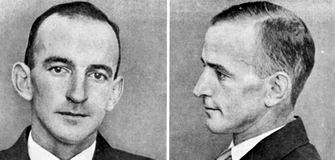
William Alfred Bayly
Murderer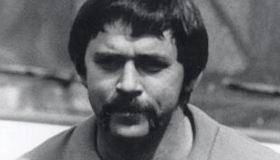 David Tamihere
Murderer · New Zealand · 1972
David Tamihere was sentenced to life imprisonment with a 10-year non-parole per…
3 victims
David Tamihere
Murderer · New Zealand · 1972
David Tamihere was sentenced to life imprisonment with a 10-year non-parole per…
3 victims
 William Dwane Bell
Murderer · New Zealand · 2001
William Dwane Bell (born 1978) was a convicted murderer in New Zealand. Bell wa…
3 victims
William Dwane Bell
Murderer · New Zealand · 2001
William Dwane Bell (born 1978) was a convicted murderer in New Zealand. Bell wa…
3 victims
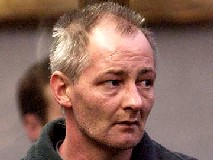 Bruce Howse
Murderer · New Zealand · 2001
Bruce Howse was the partner of Charlene Aplin and the stepfather of Saliel Apli…
2 victims
Bruce Howse
Murderer · New Zealand · 2001
Bruce Howse was the partner of Charlene Aplin and the stepfather of Saliel Apli…
2 victims
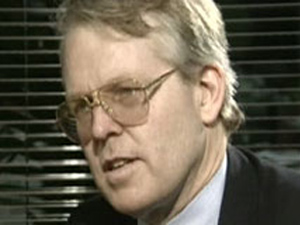 John Barlow
Murderer · New Zealand · 1994
16 February 1994 — Financial dealers Eugene and Gene Thomas, father and son, we…
2 victims
John Barlow
Murderer · New Zealand · 1994
16 February 1994 — Financial dealers Eugene and Gene Thomas, father and son, we…
2 victims
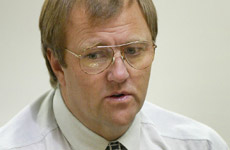 Mark Edward Lundy
Murderer · New Zealand · 2000
Mark Edward Lundy was the husband and father of the victims Christine Marie Lun…
2 victims
Mark Edward Lundy
Murderer · New Zealand · 2000
Mark Edward Lundy was the husband and father of the victims Christine Marie Lun…
2 victims
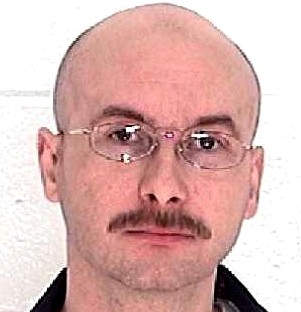 William Sallie
Murderer · USA · 1990
William C. Sallie was sentenced to death and convicted by a jury of malice murd…
1 victim
William Sallie
Murderer · USA · 1990
William C. Sallie was sentenced to death and convicted by a jury of malice murd…
1 victim
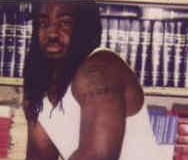 Shawnfatee Bridges
Murderer · USA · 1996
Shawnfatee M. Bridges was sentenced to death on February 23, 1998. On Saturday,…
2 victims
Shawnfatee Bridges
Murderer · USA · 1996
Shawnfatee M. Bridges was sentenced to death on February 23, 1998. On Saturday,…
2 victims
 Perry Steven Miller
Murderer · USA · 1990
Perry Steven Miller admitted to being guilty of the 1990 murder of Christel Hel…
1 victim
Perry Steven Miller
Murderer · USA · 1990
Perry Steven Miller admitted to being guilty of the 1990 murder of Christel Hel…
1 victim
 Tina Lunney
Murderer · USA · 2009
Tina Lunney was sentenced to 40 years in prison on August 13, 2013. · July 22,…
1 victim
Tina Lunney
Murderer · USA · 2009
Tina Lunney was sentenced to 40 years in prison on August 13, 2013. · July 22,…
1 victim
 George Clifton Gilmore
Murderer · USA · 1979
George Clifton Gilmore was executed on August 31, 1990. George Clifton Gilmore…
5 victims
George Clifton Gilmore
Murderer · USA · 1979
George Clifton Gilmore was executed on August 31, 1990. George Clifton Gilmore…
5 victims
- Gender
- male
- Country
- New Zealand
- Location
- Ruawaro, New Zealand
- Date of birth
- J uly 15, 1906
- Age at first offence
- 27
- Characteristics
- —
- Victim profile
- His neighbours, Samuel and Christobel Lakey
- Method of murder
- Shooting
- Date(s) of murder
- October 14, 1933
- Years active
- 1933
- Date of arrest
- —
- Status
-
Executed
Executed by hanging in Mount Eden prison, Auckland, on July 30, 1934
Status and outcome
William Alfred Bayly was executed by hanging in Mount Eden prison, Auckland, on July 30, 1934.
Background
Bayly was William Alfred Bayly, also referred to as a farmer and as a convicted murderer.
Bayly was the son of Constance Ivy Walker and her husband, Frank Bayly, a farmer. He was born in Auckland on 15 July 1906. The family subsequently lived on farms in Waikato and to the south and east of Auckland.
In June 1925 Bill Bayly moved to Papamoa, a few miles from Te Puke, to work on a farm his father had purchased. The rest of the family followed in 1926.
Bill Bayly married Phyllis Dorothy Palmer, a stenographer, in Auckland on 29 August 1928. The couple lived briefly in Auckland and Henderson.
On 5 October 1928 the body of Bayly’s 17-year-old cousin Elsie Walker was found in bushes near a quarry at Panmure. Elsie had a small bruise on her head, but it was initially unclear whether this was the cause of death. Elsie had been living with the Baylys at Papamoa for the past year and had gone missing on the night of 1 October.
Local rumours said Bill Bayly was involved in Elsie Walker’s death. Public disquiet grew as an implausible scenario was constructed by the police: Elsie, a young woman who probably could not drive, was said to have stolen a car and negotiated 150 miles of back-country roads at night before abandoning the vehicle and walking eight miles to the quarry, whereupon she died, either from exposure or exhaustion.
In December, doctors decided that Elsie Walker had probably died of “concussion following a blow on the head”. There was semen on her underclothing, but “no sign of rape”.
The coroner’s inquest was held in January 1929. The inquest found that there was no evidence to say whether the death had been accidental or homicidal.
Bill Bayly and other members of his family testified that he was in Auckland when Elsie Walker disappeared.
The coroner, F. K. Hunt, criticised police bungling in the early stages of the investigation. He said:
“suspicion may rest against a perfectly innocent man for the rest of his life”
He called for a public inquiry.
A commission of inquiry, conducted by Edward Page, a stipendiary magistrate, reported in March 1929 that police enquiries had been “prompt, thorough and exhaustive”, and that existing procedures were satisfactory.
In August, New Zealand Truth revealed that two women were claiming to have seen Bill Bayly at Papamoa on the day of Walker’s disappearance. There were suggestions that one of the women had been attempting to blackmail his mother.
Demands from women’s groups for a reopening of the inquest were supported by the coroner.
A petition of over 15,000 signatures was recommended for favourable consideration by the parliamentary public petitions committee. Minister of Justice Thomas Wilford declared that because the women’s conflicting statements would not stand up in court, he would not amend the Coroners Act 1908 to enable a second inquest. He said:
“because the women’s conflicting statements would not stand up in court, he would not amend the Coroners Act 1908 to enable a second inquest”
The act was amended the following year, but the case was never reopened.
Meanwhile, Bill and Phyllis Bayly had been dairy farming at Ruawaro, near Huntly, since November 1928. Their immediate neighbours were Samuel and Christobel Lakey, who had bought their property from Frank Bayly.
Samuel had earlier worked as a carpenter for Frank at Ruawaro and at Karaka and Papamoa.
Relations between Bill Bayly and the Lakeys were initially friendly, but deteriorated to the point where Christobel Lakey is said to have accused Bayly of having murdered Elsie Walker. She also said that she and her husband expected the same fate.
The offence
On 16 October 1933, Christobel’s body was discovered lying face down in a pond near the Lakeys’ farmhouse.
Some speculation arose that her husband had killed her and perhaps himself, but it soon became evident that both Lakeys had been the victims of foul play.
On 18 October, bloodstains were found on a wheeled frame near the boundary between the Lakey and Bayly farms.
Investigation
The following day, the police began searching the Baylys’ property.
Bloodstains were discovered on Bill’s sledge.
Guns missing from the Lakeys’ house were found buried in his swamp.
Chemical tests revealed charred bone fragments on a shovel taken from his cowshed.
In December, Bayly had been under surveillance by the police. He disappeared, leaving a suicide note. He soon surfaced in Auckland and was arrested for the murder of Christobel Lakey.
As the search continued, human bones and items of clothing were found in Bayly’s garden. It appeared that Lakey, his best suit, and a pair of boots belonging to a friend had been incinerated.
In addition, on 16 October 1933, the body of Mrs Christobel Lakey had been found dead in a duck pond. Her husband Samuel could not be found.
Also missing were two guns. Those guns were found on the land of a neighbouring farm owned by William Alfred Bayly.
When the police spoke to Bayly, he was very quick to point the finger of blame. He suggested that Mr Lakey had murdered his wife.
When the police started investigating, they found that, due to arguments over fences and access roads, there had been quite a lot of bad blood between Bayly and the Lakeys.
During the police search of Bayly’s farm, evidence was found that a body had been burnt in an oil drum and then the remains scattered over the orchard and fields. Human hair and fragments of bone plus blood and denture material helped to accuse him.
The police also found a watch and lighter belonging to the dead man.
On 10 January 1934, Bayly was charged with Samuel Lakey’s murder.
Arrest
Bayly disappeared in December, leaving a suicide note.
He then surfaced in Auckland and was arrested for the murder of Christobel Lakey.
Trial
The trial before Justice A. L. Herdman opened in Auckland on 21 May 1934.
The prosecution, led by Vincent Meredith, took more than three weeks to present its case. It included:
“Pathology, physics, ballistics, and photography contributed evidence…the probative force of which was convincing almost to a startling degree.”
The defence called no evidence.
Senior counsel Erima Northcroft spent nearly four days attacking the Crown’s case. On the 29th day of the trial, the jury took barely an hour to find Bayly guilty on both counts.
Sentencing
Petitions seeking commutation of the death sentence or a new trial were unsuccessful.
Bayly was hanged in Mount Eden prison, Auckland, at 8 am on 20 July 1934.
Appeals
Outcome
Bayly was found guilty on both counts and was executed by hanging in Mount Eden prison, Auckland.
Aftermath
Bayly survived by his wife and two young sons.
The Bayly case aroused unprecedented interest at the time and continued to fascinate the New Zealand public.
Spotted an error, or have more information about this case?