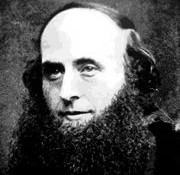
Edward Pritchard
Murderer Frederick Baker
Murderer · United Kingdom · 1867
Frederick Baker was a solicitor’s clerk in Alton, Hampshire, England. On Saturd…
1 victim
Frederick Baker
Murderer · United Kingdom · 1867
Frederick Baker was a solicitor’s clerk in Alton, Hampshire, England. On Saturd…
1 victim
 Henry Wainwright
Murderer · United Kingdom · 1874
Henry Wainwright was executed by hanging outside Newgate on 21st December 1875.…
1 victim
Henry Wainwright
Murderer · United Kingdom · 1874
Henry Wainwright was executed by hanging outside Newgate on 21st December 1875.…
1 victim
 John Mapp
Murderer · United Kingdom · 1867
Name: John Mapp Catherine Lewis was the eldest of the five children of farm lab…
1 victim
John Mapp
Murderer · United Kingdom · 1867
Name: John Mapp Catherine Lewis was the eldest of the five children of farm lab…
1 victim
 Jesse Clarence Pratt
Murderer · USA · 1986
Jesse Clarence Pratt was sentenced to death on February 22, 1988. His convictio…
1 victim
Jesse Clarence Pratt
Murderer · USA · 1986
Jesse Clarence Pratt was sentenced to death on February 22, 1988. His convictio…
1 victim
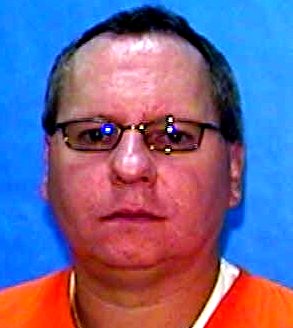 Duane Eugene Owen
Murderer · USA · 1984
Name: Duane Eugene Owen · Date of birth: 02/13/61 · Jurisdiction: Fifteenth Jud…
2 victims
Duane Eugene Owen
Murderer · USA · 1984
Name: Duane Eugene Owen · Date of birth: 02/13/61 · Jurisdiction: Fifteenth Jud…
2 victims
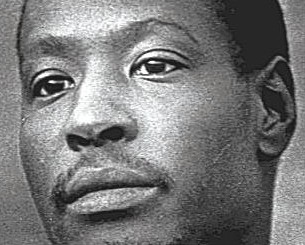 Coleman Gray
Murderer · USA · 1995
Coleman Gray was put to death by lethal injection in Virginia on February 26, 1…
1 victim
Coleman Gray
Murderer · USA · 1995
Coleman Gray was put to death by lethal injection in Virginia on February 26, 1…
1 victim
 Chad Jason Anderson
Murderer · USA · 1999
Chad Jason Anderson, 27, committed a domestic dispute-related shooting at a Gra…
3 victims
Chad Jason Anderson
Murderer · USA · 1999
Chad Jason Anderson, 27, committed a domestic dispute-related shooting at a Gra…
3 victims
 Scott Robin Roston
Murderer · USA · 1988
Scott Robin Roston was convicted of second-degree murder on the high seas after…
1 victim
Scott Robin Roston
Murderer · USA · 1988
Scott Robin Roston was convicted of second-degree murder on the high seas after…
1 victim
- Gender
- male
- Country
- United Kingdom
- Location
- Glasgow, Scotland, United Kingdom
- Date of birth
- 1825
- Age at first offence
- 40
- Characteristics
- poisoner
- Victim profile
- Jane Cowan, 70 (his mother-in-law) / Mary Jane Taylor, 38 (his wife)
- Method of murder
- Poisoning (antimony)
- Date(s) of murder
- February 28/March 18, 1865
- Years active
- 1865
- Date of arrest
- March 21, 1865
- Status
-
Executed
Executed by hanging in Glasgow on July 28, 1865
Case details
Edward Pritchard was a Scottish doctor who was convicted of poisoning his wife and mother-in-law.
STATUS and legal outcome
Edward Pritchard was executed by hanging in Glasgow on July 28, 1865.
Timeline
- 1863 — A fire occurred at the Pritchards' Berkeley Terrace house in Glasgow, which killed a young servant girl.
- December 1864 — Mary Pritchard became seriously ill.
- 25 February 1865 — Jane Taylor died at Sauchiehall Street after becoming ill while nursing Mary Pritchard.
- 18 March 1865 — Mary Pritchard died at the age of 38 after an illness in which she had been treated by Edward Pritchard.
- 31 March 1865 — Jane Taylor’s body was exhumed.
- 3 July 1865 — Edward Pritchard was taken to court in Edinburgh just after 8am.
- July 1865 — Edward Pritchard was convicted after a five-day hearing in Edinburgh.
- 28 July 1865 — Edward Pritchard was hanged in Glasgow.
Background
Edward William Pritchard was born on 6 December 1825. He died on 28 June 1865.
Pritchard was born in Southsea, Hampshire, into a naval family. His father was John White Pritchard, a captain.
He claimed to have studied at King’s College Hospital in London and to have graduated in 1846. He served in the Royal Navy as an assistant surgeon with HMS Victory and later served on various ships travelling around the world before returning to Portsmouth.
In Portsmouth, Pritchard met his future wife Mary Jane Taylor. The couple married in 1851. After a period apart, Pritchard resigned from the Navy.
He took a job as a general practitioner in Yorkshire and lived for a time in Hunmanby. In Scarborough, he became a prominent freemason and was Master of the Royal Lodge in 1857 and Master of Old Globe Lodge in 1858 and 1859. In 1859, he left under a cloud and in debt, moving to Glasgow.
Pritchard later lived with Mary Jane Taylor at a home in Glasgow. He had five children with Mary.
The offence
Victims and relationship
Jane Cowan (also described as Mrs Jane Taylor) was Pritchard’s mother-in-law and was aged 70. She died on 28 February (and is also described as having died on 25 February 1865).
Mary Pritchard (also described as Mary Jane Pritchard and as Mary Jane Taylor’s daughter) was Pritchard’s wife and was aged 38. She died on 18 March 1865.
Poisoning and cause of death
Edward Pritchard was convicted of poisoning two family members.
Both victims were treated by Pritchard. He signed off on death certificates without an autopsy.
When the bodies were exhumed or examined after suspicions were raised, antimony poisoning was found.
During the trial, it was proved that Pritchard added antimony and aconite to an opium preparation called Battley’s Solution that Mrs Taylor used frequently. Pharmacists were interviewed, and it was acknowledged that a doctor could acquire quantities of antimony without drawing unwanted attention.
Pritchard had certified his wife’s death as gastric fever and his mother-in-law’s death as paralysis/apoplexy, with durations stated in minutes and hours.
Investigation
An anonymous letter was sent to the authorities, and the case was investigated after the letter.
When the suspicions were acted on, the police launched an investigation. A post-mortem investigation was carried out on Mrs Pritchard which confirmed antimony in her liver. Mrs Taylor’s body was exhumed on 31 March 1865, and a medical report found she had suffered the same fate.
Arrest
Dr Pritchard was arrested on the evening after the anonymous letter was received, at Queen Street station, Glasgow, and taken into custody.
Trial
Court and presiding judge
The trial took place in Edinburgh in July 1865.
A judge Lord Inglis presided.
Pritchard was convicted after a five-day hearing.
Charges and verdict
A jury took a short time to deliver a unanimous verdict of guilty on both charges.
The jury found him guilty of murder involving his wife and his mother-in-law.
Evidence mentioned
Much of the evidence during the trial came from servants in the Pritchard household, including a 15-year-old servant, Mary MacLeod, who testified about her relationship with Pritchard and told a washerwoman that if Mrs Pritchard were taken away she would take her place.
It was alleged that there had been a forced miscarriage in August 1864. It was also alleged that Mrs Pritchard had caught Pritchard and MacLeod together in November, shortly before she first became ill.
During the trial, it was also established that antimony and aconite were added to Battley’s Solution.
Pritchard appeared in court dressed in mourning. He was described as appearing “sad and thoughtful” and “cool and collected” throughout the proceedings.
The case also involved the funeral arrangements and exhumation ordering after the anonymous letter.
Sentencing
The jury took a short time to deliver a unanimous verdict of guilty on both charges. Pritchard was sentenced to death.
After conviction, Pritchard was moved to Glasgow’s North Prison.
Appeals
No appeal outcome was stated.
Outcome and execution
Execution details
On 28 July 1865, Edward Pritchard was executed by hanging in Glasgow.
The execution took place at the Saltmarket end of Glasgow Green, and it was described as starting at 8am.
The spectators were permitted to witness the condemned man’s final moments. A noose was placed around his neck and a white cap placed on his head. The executioner released the trap, and Pritchard dropped to his death. The hangman climbed below the gallows to pull on the dead man’s legs to ensure strangulation.
Women screamed and men cheered in the crowd as the body spun slowly.
Pritchard was buried in the South Prison’s “Murderers’ Graveyard,” where plots were identified by initials of the dead.
Attendance and public execution status
The hanging was attended by more than 80,000 people and attracted tens of thousands of onlookers.
It was described as the last public execution in Scotland.
It was also described as the last person to be publicly executed in Glasgow.
Burial identification
In 1910, when rebuilding work was carried out, a grave was discovered with the initials EWP. The corpse was examined and was found to be wearing patent leather boots.
Workmen later found a pair of shoes under a stone marked “EWP,” which were described as perfectly preserved patent shoes. One of the workmen took the shoes and sold them in a nearby pub.
Other details
Pritchard was described as treating his wife and mother-in-law during their illnesses.
A doctor named Dr Paterson was mentioned as being asked to write the death certificates and as refusing, after which Pritchard wrote them himself.
A doctor named Dr James Paterson was also mentioned as being asked to certify a death and as concluding that a person was under the influence of opium.
A servant girl named Elizabeth McGirn and another maid were mentioned as being in the Pritchard household.
A fire in the Pritchards’ Berkeley Terrace house killed a young servant girl and was thought to have started in her room; no charges were brought, but the procurator fiscal looked into the incident.
Pritchard was described as being involved in a relationship with Mary MacLeod and as having been suspected in connection with the fire.
A newspaper quotation included in the material stated:
"No one who saw the intelligent, thoughtful and mild-looking individual seated in the dock on the first morning, could be prepared for anything like the consummate villainy and diabolic cruelty which each day brought to light ... the whole murderous plot."
Pritchard’s statement to the sentence included:
"The sentence is just. I am guilty of the deaths of my mother-in-law and wife. I can assign no motive beyond terrible madness. I alone - not Mary McLeod - poisoned my wife."
Multiple accounts also referred to nicknames for Pritchard, including “The Human Crocodile” and “The Poisoning Philanderer.”
Pritchard’s qualifications and claims about studying were described in multiple ways, including a claim of graduation from King’s College Hospital in 1846 and also mention of other qualifications described as possibly doubtful.
After conviction, he maintained his innocence and his family supported him.
Works subsequently written about his case were listed, including:
- Trail of Dr Pritchard, edited by William Roughead WS (1906)
- South Side Story (1962)
- Some Reflections on the Case of Dr Pritchard by Rt Hon Lord Cullen (1997)
- A Christmas lecture in aid of charity, published in the Proceedings of the Royal College of Physicians, Volume 28 (1998)
- The Poisoning Philanderer: Incredible true story of the Scots doctor driven to double murder by Tom Hamilton (DailyRecord.co.uk)
A statement about Pritchard kissing his dead wife on the lips was included, and it was described as “a great deal of feeling”.
Spotted an error, or have more information about this case?