
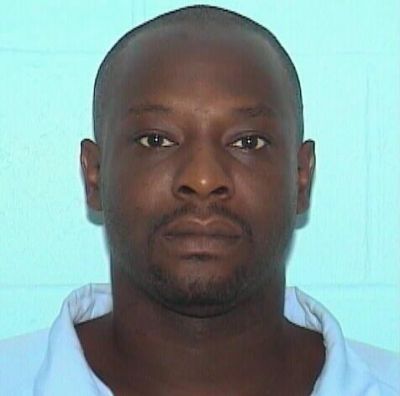
Leroy Fears
Murderer Brian Kevin Rosenfeld
Murderer · USA · 1985
Brian Kevin Rosenfeld Brian Kevin Rosenfeld was sentenced to three concurrent l…
23 victims
Brian Kevin Rosenfeld
Murderer · USA · 1985
Brian Kevin Rosenfeld Brian Kevin Rosenfeld was sentenced to three concurrent l…
23 victims
 Russell Ellwood
Murderer · USA · 1991
Russell Ellwood was a former taxi driver. Authorities suspected him of killing…
20 victims
Russell Ellwood
Murderer · USA · 1991
Russell Ellwood was a former taxi driver. Authorities suspected him of killing…
20 victims
 Robert Martines Perez
Murderer · USA · 1994
Name: Robert Martines Perez · Other name used in proceedings: Robert Martinez P…
15 victims
Robert Martines Perez
Murderer · USA · 1994
Name: Robert Martines Perez · Other name used in proceedings: Robert Martinez P…
15 victims
 Billy Frank Vickers
Murderer · USA · 1993
Billy Frank Vickers Vickers was executed by lethal injection in Texas on Januar…
14 victims
Billy Frank Vickers
Murderer · USA · 1993
Billy Frank Vickers Vickers was executed by lethal injection in Texas on Januar…
14 victims
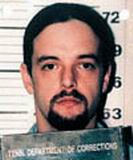 David Scott Poe
Murderer · USA · 1986
David S. Poe was convicted of felony-murder in the Criminal Court of Montgomery…
1 victim
David Scott Poe
Murderer · USA · 1986
David S. Poe was convicted of felony-murder in the Criminal Court of Montgomery…
1 victim
 Charles Anthony Boyd
Murderer · USA · 1986
Charles Anthony Boyd was a previously convicted felon who was convicted of capi…
3 victims
Charles Anthony Boyd
Murderer · USA · 1986
Charles Anthony Boyd was a previously convicted felon who was convicted of capi…
3 victims
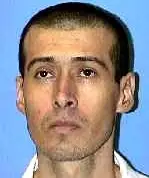 Virgilio Maldonado
Murderer · USA · 1995
Defendant: Virgilio Maldonado TDCJ Number: 999249 Date of Birth: 11/12/65 Age a…
1 victim
Virgilio Maldonado
Murderer · USA · 1995
Defendant: Virgilio Maldonado TDCJ Number: 999249 Date of Birth: 11/12/65 Age a…
1 victim
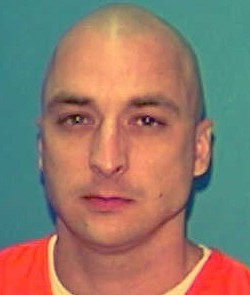 Johnny Kormondy
Murderer · USA · 1993
Name: Johnny Shane Kormondy DOB: 05/20/72 DC#: 200754 Case number: 93-3302 Cour…
1 victim
Johnny Kormondy
Murderer · USA · 1993
Name: Johnny Shane Kormondy DOB: 05/20/72 DC#: 200754 Case number: 93-3302 Cour…
1 victim
- Gender
- male
- Country
- USA
- Location
- Hazelwod, Pennsylvania, USA
- Date of birth
- 1962
- Age at first offence
- 32
- Characteristics
- child molester, rape
- Victim profile
- Shawn Hagan (male, 12)
- Method of murder
- Strangulation
- Date(s) of murder
- June 18, 1994
- Years active
- 1994
- Date of arrest
- —
- Status
-
Sentenced to death
Sentenced to death on February 7, 1995
Background
Leroy Fears was 43 years old when Gov. Edward G. Rendell signed a warrant for his execution. Leroy Fears had a history of mental illness described in connection with severe conditions such as hallucinations and paranoid thoughts. The material described his birth as premature to a 12-year-old girl. Shortly after his birth, he went into cardiac arrest due to congestive heart failure. His birth mother had no real contact with him after he was born, and he was bounced around in foster care. When he was around 11-13 years of age, he was sexually abused and had what Dr. Tarter deemed attachment anxiety, described as an inability to form attachment/anxiety to people or family.
The material stated that the argument in his defense included psychological factors examined by Dr. Ralph E. Tarter, and that those factors were: (1) throughout his life Fears was under the influence of extreme mental/emotional disturbance and (2) Fears had the capacity to appreciate criminality of conduct or conforming conduct to requirements of law.
The material also stated that Fears had been a known pedophile and had been convicted before of sexual molestation, though not something as serious as murder.
The offence
On June 18, 1994, Leroy Fears admitted he molested and strangled 12-year-old Shawn Hagan on the banks of the Monongahela River in an area known as Duck Hollow. Shawn Hagan had gone expecting a day of fishing, swimming and playing on a rope swing with a couple of friends. Later that day, Fears lured Shawn to a secluded area of the river and performed oral sex on the boy.
Fears then asked Shawn what happened and if Shawn was going to tell his parents. Shawn threatened to tell, and Fears strangled him in fear that Shawn would tell his parents.
After Hagan’s death, Fears had anal intercourse with him and then tied a tire rim around Hagan’s neck. Fears then threw the boy’s body into the Monongahela River. Shawn Hagan’s body was found floating in the river on June 21 with a tire rim attached to his neck.
Investigation
After Hagan’s death, Fears confessed to the murder of the boy. The material stated that Fears then took detectives to the scene and explained what had happened.
Arrest
Fears entered a guilty plea to the charges in December 1994.
Trial
Leroy Fears was represented in a manner described as involving a Public Defender. The material stated that the Public Defender pled Fears guilty of 1st degree murder and allowed only Common Pleas Judge David S. Cercone to present sentence.
Ms. Caroline Roberto was the District Attorney for Fears’ trial. The material described Ms. Roberto cross-examining Dr. Ralph E. Tarter, the Clinical Psychologist/Neuropsychologist who examined Fears on October 1999. The material described Ms. Roberto’s testimony as part of the official court briefing and stated that Fears did not get a fair sentence.
The material included a verbatim quote attributed to Ms. Roberto, stating:
"He was acting under a diminished capacity which would mitigate crime from 1st to 3rd degree murder based on cognitive malfunctioning at the time of the crime,"
The material described Dr. Tarter’s diagnosis of Fears as including attachment anxiety and psychotic episodes. It stated that Dr. Tarter’s diagnosis determined Fears might have had a psychotic episode at the time of Hagan’s death. It also stated that the diagnosis concluded Fears’ actions were wrong, but that based on his condition he should not have had so harsh a penalty.
Sentencing
Fears entered a guilty plea to the charges in December 1994 and was sentenced to die in February 1995. The material stated that the date of sentence was Feb. 7, 1995.
The material stated that there were mitigating factors of Pennsylvania legislature regarding the Death Penalty and that, according to Dr. Tarter’s diagnosis and Ms. Roberto’s cross-exam, Fears had circumstances that should have exempted him from receiving the Death Penalty. It further stated that Dr. Tarter’s diagnosis indicated both that Fears was under the influence of extreme mental/emotional disturbance and that his capacity to appreciate criminality of his conduct or of the law was impaired. The material described the conclusion as that Fears could not have been sane or under normal conditions at the time of the murder.
Appeals
The material referenced “The Supreme Court of Pennsylvania Eastern Distric opinion J-17-2003” in relation to Leroy Fears.
Outcome
Fears was sentenced to death on February 7, 1995.
The material described that the execution of a Hazelwood man convicted of first-degree murder for the strangulation and sexual molestation of a 12-year-old boy was scheduled for Dec. 8, 2005. Gov. Edward G. Rendell signed a warrant for the execution on a Tuesday referenced in the material.
Other details
The material described that Fears was acting under conditions described as extreme mental/emotional disturbance. It also described that Fears was never able to connect with his needs and emotions despite being brought up by his adoptive mother. The material described the argument that he was not brought up by his birth mother and rarely got in contact with her, and that being bounced around in foster care so many times helped to trigger poor rational judgment and decision-making. The material stated that no one was able to teach him the difference between right and wrong and that his depression syndrome made him grow up slowly and immaturely both physically and mentally.
The material asked whether Fears’ Miranda Rights were read and acknowledged prior to his confession of the crime, but it did not provide a quoted answer. The material also referenced alcohol consumption prior to the crime as something that should have been brought up in the judge’s decision.
The material included a characterization of Shawn Hagan’s death as “tragic and gruesome.” It also stated that the community and the criminal justice system should not focus on giving Fears death, and should focus on treating problems of child abuse and mental health conditions so that incidents never happen again and so the community is not angry and struggling to find answers.
Spotted an error, or have more information about this case?